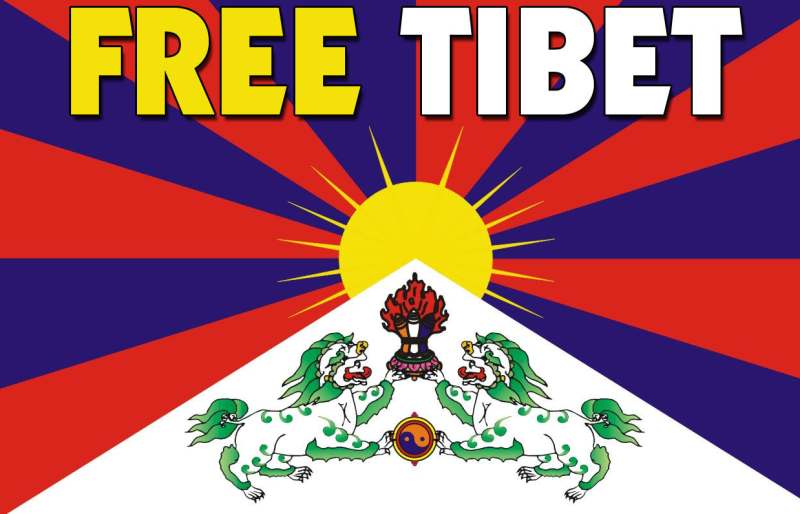
Whole Alert – Red China is guilty of Cultural Genocide in Tibet

Red China – Red Alert – Tibetan Cultural Genocide

Whole Alert – Red China is guilty of Cultural Genocide in Tibet

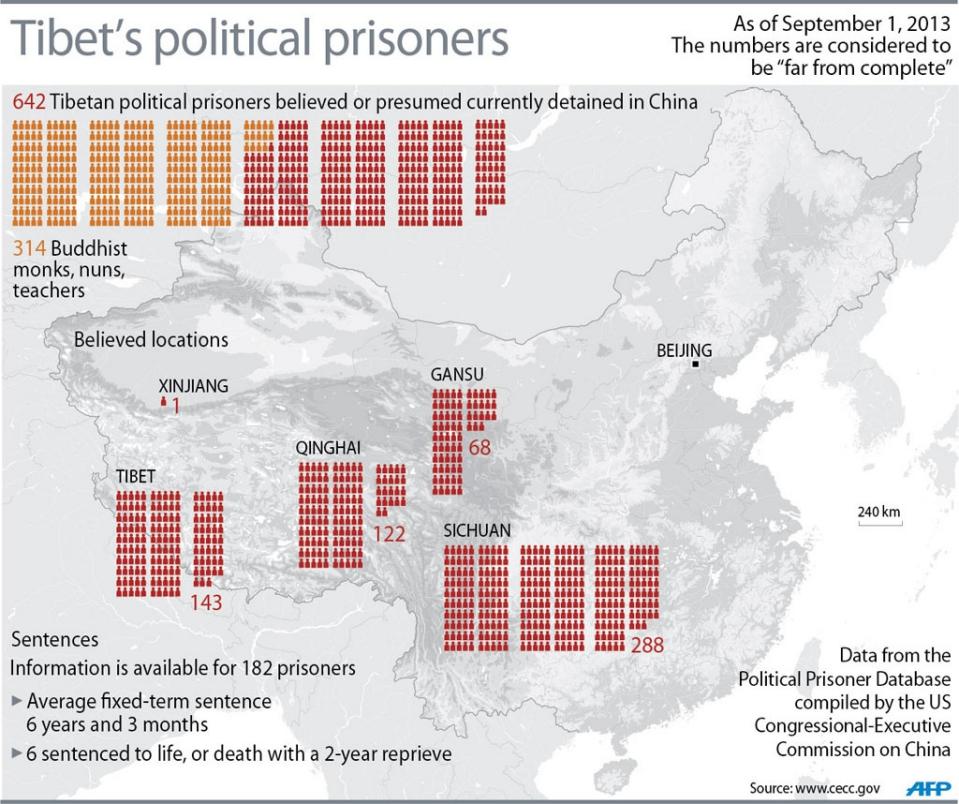
I oppose Tibet’s military occupation, and support Freedom, Democracy, and Peace in occupied Tibet. I promote Tibet Awareness and I am asking my readers to give their kind attention to the problem of “Cultural Genocide” which has already destroyed the lives of over 140 Tibetan lives, victims of Red China’s brutal military occupation.

Whole Alert – Red China is guilty of Cultural Genocide in Tibet
The Washington Post

TIBET’S TOUGH ROAD AHEAD

DV2071367-1567.jpg?uuid=R3vc0CG0EeWE1es37o6qYQ
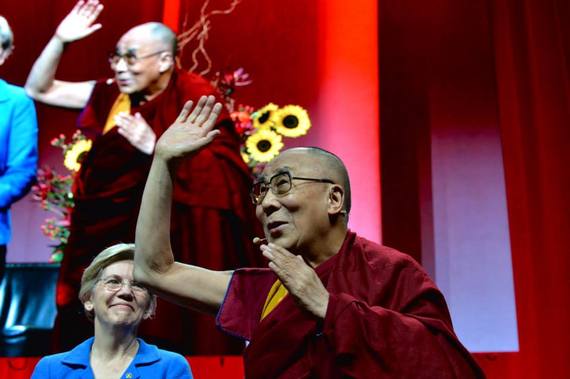
The Dalai Lama prepares to speak in Aldershot, southern England, in June. (Ben Stansall/Agence France-Presse/Getty Images)

By Carl Gershman July 5 at 7:06 PM

Carl Gershman is president of the National Endowment for Democracy.

The 80th birthday Monday of the Dalai Lama, Tibet’s spiritual leader, is an occasion to celebrate the life of an extraordinary individual. Since his flight from Tibet to India in 1959, the Dalai Lama has built religious, educational and political institutions to serve and unite the Tibetan community in exile. He has travelled the world to promote the Tibetan cause and expound the teachings of Tibetan Buddhism. And he has formulated a conciliatory “Middle Way Approach” to resolving the Sino-Tibetan conflict that respects China’s sovereignty and territorial integrity even as it seeks to preserve Tibet’s culture, religion and identity. These accomplishments, and the Dalai Lama’s infectious laugh and warmth, explain why he is such a beloved and respected figure throughout the world.

As joyful as the occasion of his 80th birthday is, however, it comes at a grim time for the Dalai Lama and the Tibetan freedom movement. The Chinese government has broken off negotiations on Tibet’s status, accusing the Dalai Lama of deceitfully trying to split China and of inciting the 2008 Lhasa uprising, charges that are offensive in addition to being entirely untrue. In April, it issued a white paper saying that talks would not be reopened until the Dalai Lama acknowledged that “Tibet has been an integral part of China since antiquity,” something he cannot agree to since it is contradicted by the historical record and overlooks the fact that Communist China invaded Tibet and illegally annexed it in 1959.

Having rejected compromise and dialogue as the way to end Tibetan resistance to its rule, the Chinese government has opted for harsh repression, forced assimilation and the systematic effort to destroy the Tibetan religion, language and distinct national identity. Tibet has been flooded with Han Chinese settlers; monasteries have been placed under direct government control; writers have been arrested and tortured; and more than 2 million nomads have been forcibly resettled in urban areas, destroying their traditional way of life and disrupting the fragile ecosystem of the Tibet Plateau.

In response to these and other harsh measures, which the Dalai Lama has called “cultural genocide,” more than 140 Tibetans have immolated themselves in desperate protest against Chinese oppression. This further enraged the regime, which called upon local security forces to “smash disorder, in order to maintain general harmony and stability.” But as 29 dissident Chinese intellectuals said in a call for dialogue with the Dalai Lama, “A country that wishes to avoid the partition of its territory must first avoid divisions among its nationalities.”

With the Dalai Lama turning 80, a contest is already developing over his succession. In Tibetan Buddhism, reincarnation is a fundamental tenet, and only the Dalai Lama has the authority to choose whether and through whom he will reincarnate. Yet Beijing has already approved guidelines giving the communist government control of the process. This contest takes place against the background of Chinese authorities having kidnapped in 1995 the 6-year-old boy identified by the Dalai Lama as the incarnation of the Panchen Lama, the second most important figure in Tibetan Buddhism, and replaced him with another boy.

The fact that the Chinese-imposed Panchen Lama continues to be categorically rejected by Tibetans should indicate how inflammatory it would be if Beijing tried to impose its choice for the next Dalai Lama. But that’s exactly what it intends to do, except that the Dalai Lama has hinted that he might not reincarnate at all. Zhu Weigun, a top Communist Party official dealing with Tibet, angrily called the Dalai Lama’s statement “a betrayal” of Tibetan Buddhism and accused him of taking “a frivolous attitude toward his own succession.” Such shameless impudence by a spokesman for an atheistic party would be laughable were his words not the official policy of the Chinese government.

The Dalai Lama has said that he will consult with the high Lamas of Tibetan Buddhism, as well as with the Tibetan public and other concerned people, before taking a decision on “whether the institution of the Dalai Lama should continue or not.” These words reflect a spirit of democratic inclusiveness that has characterized his leadership, including his decision to devolve political authority to a democratically elected exile government.

It is ironic that at a time of democratic malaise in the West, this “simple Buddhist monk,” as he calls himself, from a remote non-Western civilization has emerged as a fervent defender of democratic values and arguably the world’s leading exponent of nonviolence and religious freedom.

As we celebrate the Dalai Lama’s 80th birthday, let us remember the suffering of the Tibetan people and pray that it will come to an end.

Washingtonpost.com © 1996-2015 The Washington Post
Whole Alert – Red China is guilty of Cultural Genocide in Tibet

Whole Alert – Freedom in Tibet is at Extreme Danger

Red China Poses Red Alert – Freedom in Tibet is at Extreme Danger

Whole Alert – Red China poses Red Alert – Freedom in Tibet is at Extreme Danger
Whole Alert – Red China poses Red Alert -Freedom in Tibet is at Extreme Danger

On behalf of Special Frontier Force I share my concern about Tibet’s Freedom. Decades of military occupation and repressive rule by Red China could not wipe out Tibetan Identity. As long as Tibetan Identity lives, Tibetans will continue to resist military occupation and will continue to seek their natural rights. The problem is indeed about the loss of American Identity. Americans have lost connection with values that shaped founding of their nation. Democracy, Freedom, Human Rights, and Peace do not continue to inspire the minds of American people. Tibet’s Freedom is at risk as American Values have evaporated.

RED CHINA - RED ALERT - TIBET'S FREEDOM : ON BEHALF OF SPECIAL FRONTIER FORCE I SHARE MY CONCERN ABOUT TIBET'S FREEDOM. IF NOT NOW, WHEN ???
Whole Alert – Red China poses Red Alert – Freedom in Tibet is at Extreme Danger

Tibet Isn’t Free Yet; That Doesn’t Mean the Dalai Lama Has Failed

Freya Putt Headshot
Freya Putt, Human rights activist & Deputy Director at Tibet Action Institute: Tibet Isn’t Free Yet; That Doesn’t Mean the Dalai Lama Has Failed

Posted: 06/25/2015 3:38 pm EDT

In recent years, I’ve noticed an increasing trend of articles and commentaries examining the Dalai Lama’s life and legacy that conclude Tibetans, and he as their leader, have failed in their cause to restore freedom to Tibet. Having worked for this movement for 18 years, I can understand having doubts about what the future holds. But really? Failed? It’s a done deal?

2015-06-25-1435264174-3698126-HHDL.jpg
Tibet Isn’t Free Yet; That Doesn’t Mean the Dalai Lama Has Failed

Some voiced similar sentiments in the 1960s and 1970s, when most people had never heard of Tibet, and certainly no countries were bothering to advocate for Tibetan political prisoners or other rights. China had been “lost” by the west and Tibetans were unfortunate casualties.

But the gloom-and-doom analysis proved to be misguided then, as the mere handful of Tibetan refugees who had resettled globally built awareness and inspired activism. Huge protests in Lhasa in the late 1980s, as well as the Dalai Lama’s Nobel Peace Prize, Hollywood and the Tibetan Freedom Concerts, drove Tibet into international public consciousness. Likewise, this frame of analysis is misguided now.

2015-06-25-1435267455-9869619-TFC.jpg
Tibet Isn’t Free Yet; That Doesn’t Mean the Dalai Lama Has Failed

Perhaps I’m just too invested to acknowledge that the cause is lost. But I don’t think so.

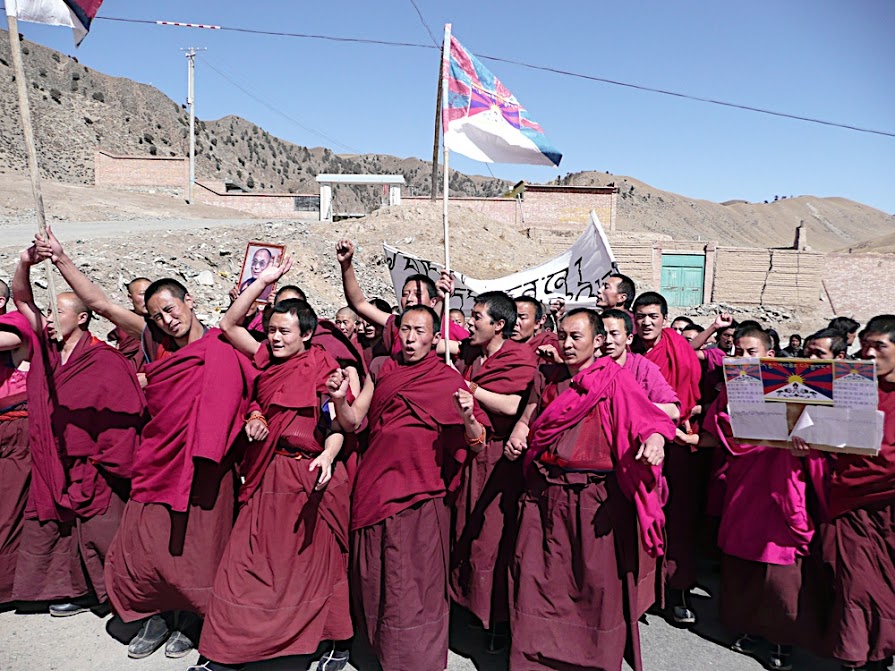
First of all, it’s human nature that where there’s injustice, there’s struggle. People don’t just give up trying to make their lives better because the odds are against them; the daily effort to resist indignities and oppose oppression continues regardless of what the endgame might be. Tibetans demonstrate this constantly, showing their opposition to China’s occupation by wearing traditional clothes, patronizing Tibetan-owned shops, holding onto their language and fighting for its use in schools, deploying art, music and poetry to express themselves and rally each other, using blockades and other direct action to protect lands, and even making the extreme choice to light themselves on fire in defiance of Chinese rule.

In fact, while state oppression has increased in recent years, resistance in Tibet has grown and deepened. A decade ago, opposition to Chinese rule seemed to manifest mainly through small, unplanned protests, which though symbolically powerful, are easily countered by China. Today, resistance is constant, sophisticated, and waged on many fronts.

2015-06-25-1435266564-2796226-Rebkong.jpg
Tibet Isn’t Free Yet; That Doesn’t Mean the Dalai Lama Has Failed

And while our collective memory is short, it shouldn’t be too much of a stretch to remember that many — perhaps most — conflicts about rights, territory and self-governance have taken decades or centuries to resolve. Think slavery and civil rights in the U.S.A., Irish independence, the anti-apartheid struggle in South Africa, Indian independence and decolonization the world over.

The conditions affecting rights and freedom for Tibet are daunting, to say the least. China has steadily gained economic clout and countries increasingly react in fear when it flexes its economic muscle. Tibetans number roughly six million, Chinese 1.3 billion. Tibet’s high, mountainous plateau has kept it isolated and made it easier for China to severely limit both physical and virtual interaction between Tibetans and the outside world. And Tibet’s mineral and water resources and strategic location in the heart of Asia make it an economic and geopolitical prize.

Looking at these factors, it shouldn’t be a big surprise that the Tibetan struggle hasn’t yet been won.

But not having yet won a struggle is very different from having lost it. Bill Moyer, an American theorist and activist, developed a strategic model for explaining the progress of social movements and used case studies to illustrate eight distinct phases. He emphasized that after substantial gains, such as building a mass movement, achieving popular support and defining an issue as a problem on society’s agenda, movements often find themselves mired in a sense of despair and powerlessness based on a misperception of their progress. 

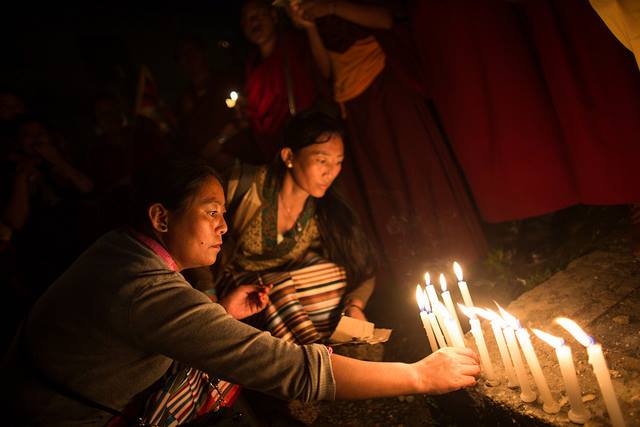
Tibetan freedom movement has made significant strides toward its goals: establishing the legitimacy of Tibetans’ claims to freedom, building a mass base of popular global support, overpowering China’s propaganda factory in the media, and making Tibet a constant challenge to China’s reputation on the global stage. There is much more to be done, clearly, but the critical foundation has already been built.

2015-06-25-1435268540-5096752-Vigil.jpg
Tibet Isn’t Free Yet; That Doesn’t Mean the Dalai Lama Has Failed

In fact, amidst all the tragedy, suffering and daily hardship that Tibetans face, there is much to celebrate. Far from having failed, the Dalai Lama should be recognized as one of the global leaders of the 20th and 21st century who has made an indelible, positive impact on the world.

The Dalai Lama brought the issue of Tibet to the world and inspired tens if not hundreds of thousands of people to support the cause. He bridged the various religious, regional and other divides within the Tibetan community to unify Tibetans behind a strategic approach to the struggle that included making it visible internationally — despite China’s constant objections and best efforts

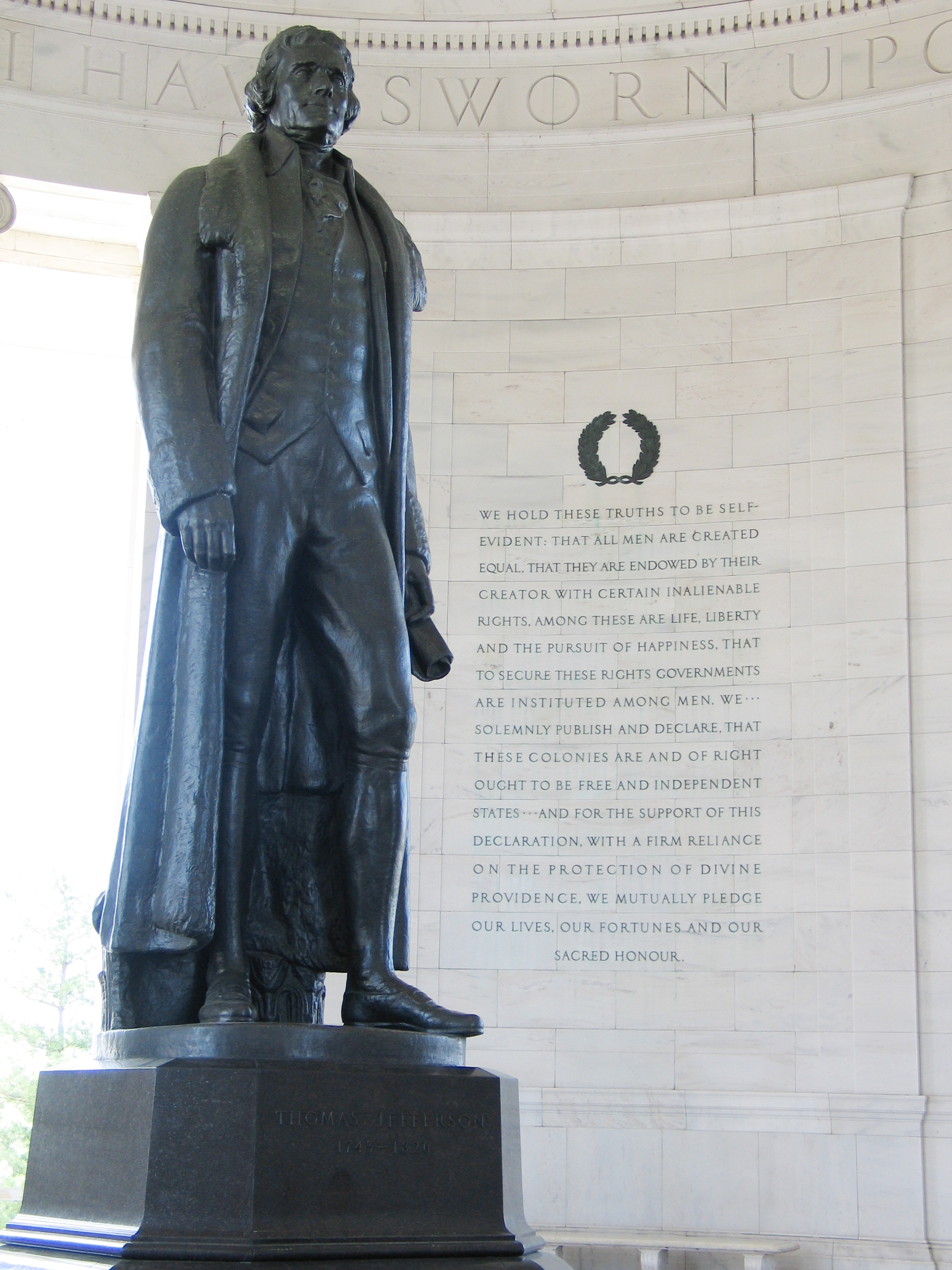
RED CHINA - RED ALERT - TIBET'S FREEDOM : TIBETANS NATURAL RIGHT TO FREEDOM IS AT RISK. WHERE ARE THOSE VALUES ENSHRINED IN THE DECLARATION OF INDEPENDENCE ???
RED CHINA – RED ALERT – TIBET’S FREEDOM: TIBET’S NATURAL RIGHT TO FREEDOM IS AT RISK. WHERE ARE THOSE VALUES ENSHRINED IN THE DECLARATION OF INDEPENDENCE?
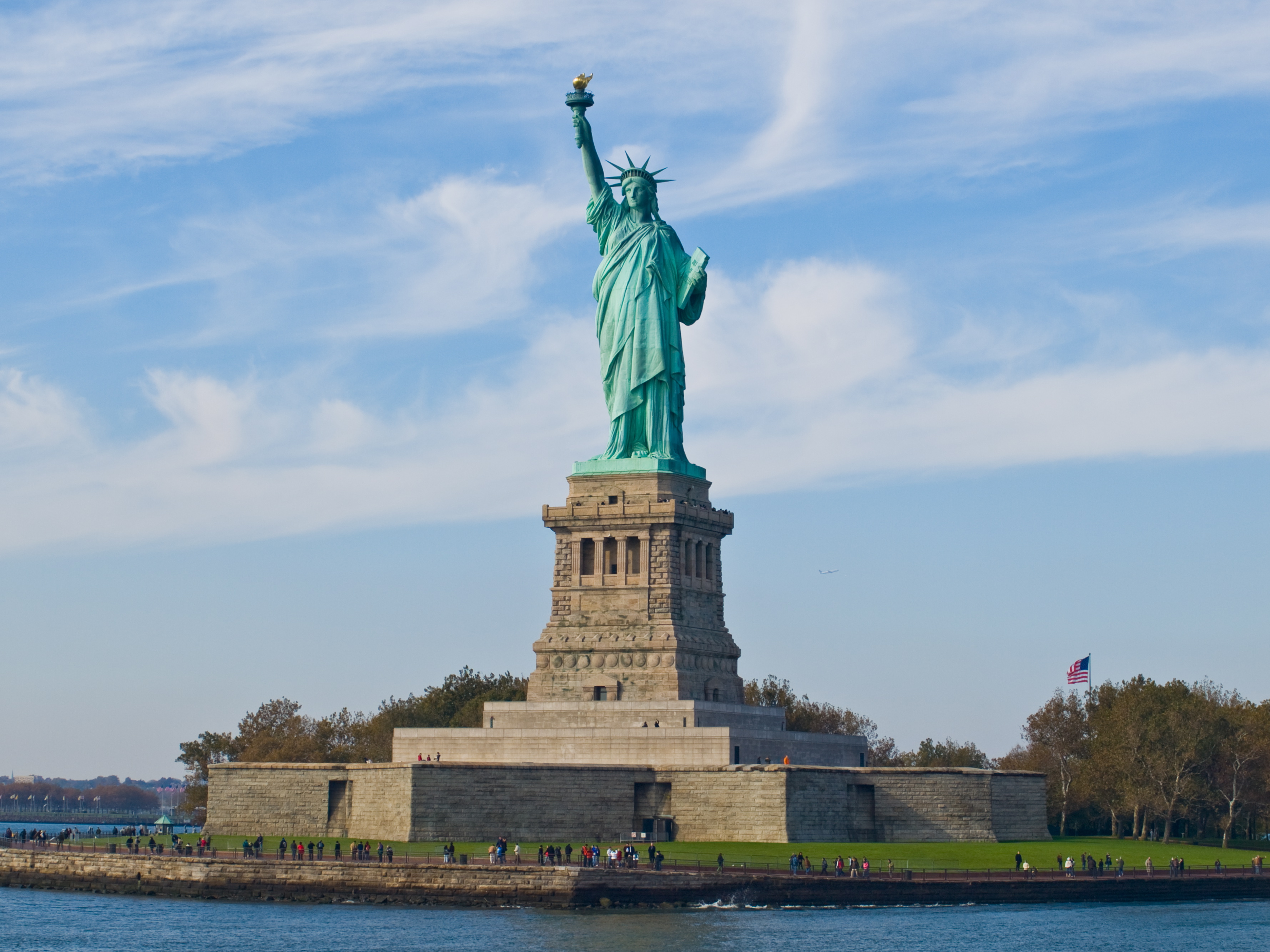
RED CHINA - RED ALERT - TIBET'S FREEDOM : AMERICA HAS TO REDISCOVER HER OWN VALUES THAT DEFINE HER NATIONAL IDENTITY . Statue of Liberty seen from the Circle Line ferry, Manhattan, New York
RED CHINA – RED ALERT – TIBET’S FREEDOM : AMERICA HAS TO REDISCOVER HER OWN VALUES THAT DEFINE HER NATIONAL IDENTITY.
RED CHINA - RED ALERT - TIBET'S FREEDOM : AMERICANS HAVE TO RECALL THEIR PAST TO REDISCOVER VALUES THAT DEFINE AMERICAN NATION.
RED CHINA – RED ALERT – TIBET’S FREEDOM: AMERICANS HAVE TO RECALL THEIR PAST TO REDISCOVER VALUES THAT DEFINE AMERICAN NATION.
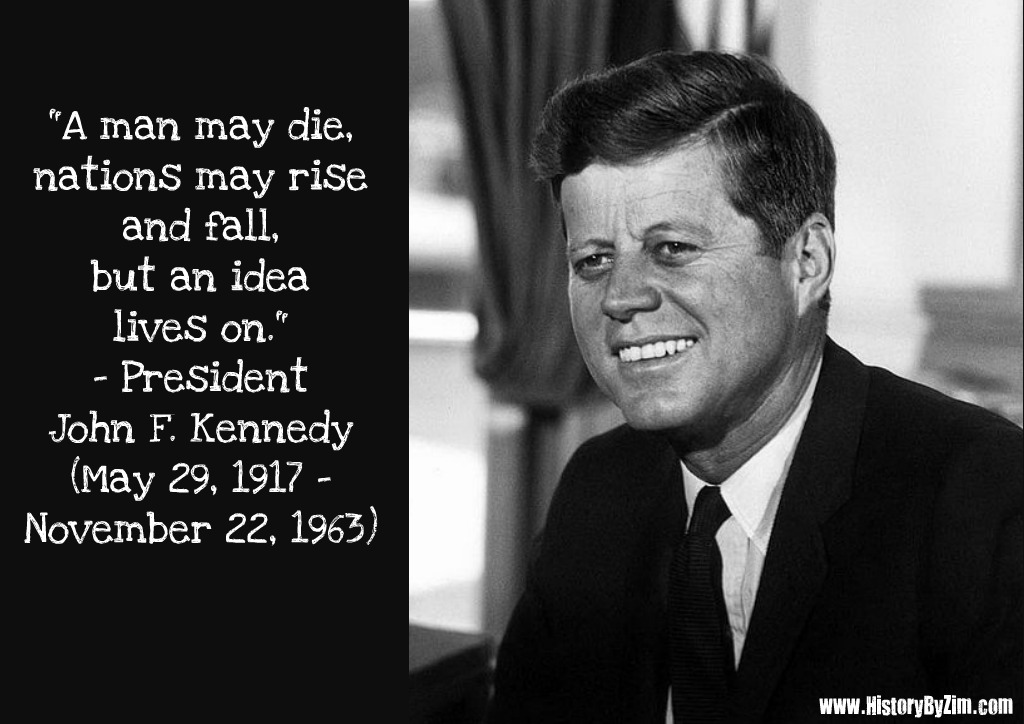
RED CHINA - RED ALERT - TIBET'S FREEDOM: I ASK AMERICANS TO RECALL PRESIDENT KENNEDY'S VITAL CONTRIBUTION TO TIBETAN RESISTANCE MOVEMENT.
RED CHINA – RED ALERT – TIBET’S FREEDOM: I ASK AMERICANS TO RECALL PRESIDENT KENNEDY’S VITAL CONTRIBUTION TO TIBETAN RESISTANCE MOVEMENT.
RED CHINA - RED ALERT - TIBET'S FREEDOM : TIBET'S FREEDOM IS AT RISK. IT IS TIME TO REVITALIZE AMERICANS.
RED CHINA – RED ALERT – TIBET’S FREEDOM: TIBET’S FREEDOM IS AT RISK. IT IS TIME TO REVITALIZE AMERICANS.
Whole Alert – Red China poses Red Alert – Freedom in Tibet is at Extreme Danger