
Celestial Mechanics – Whole Determinsim

Yes indeed, Life is complicated. The complexities of Life do not perplex me for I am totally unaware of the realities of motion. 1. I exist on the surface of Whole Planet without experiencing the speed of Earth, and 2. I may think that I am at a perfect rest, lying in the comfort of my bed while the living matter or the living substance of my body never ceases its motion. Protoplasm or Cytoplasm is the organ of motion or movement and Life ceases to happen if the motion or movement of Protoplasm or Cytoplasm stops.

The concept of Equilibrium explained by Physics must be reconciled with the information provided by Biological Science which describes the Life in Motion.

I ask my readers to learn about the importance of the motion or movement of Cytoplasm often described as Cytoplasmic Streaming. I am sharing the information from a Text Book of Medical Physiology that explains the role of Cytoplasmic Streaming in the transportation of Neuropeptides in the Nervous System.
Organization of the Nervous System, Basic Functions of Synapses, and Neurotransmitters
John E. Hall PhD, in Guyton and Hall Textbook of Medical Physiology, 2021
Neuropeptides
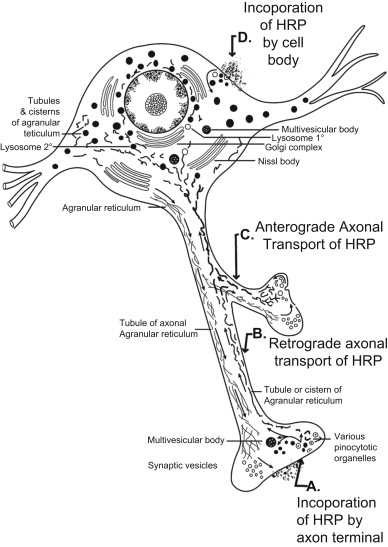
Neuropeptides are synthesized differently and have actions that are usually slow and in other ways different from those of the small-molecule transmitters. The neuropeptides are not synthesized in the cytosol of the presynaptic terminals. Instead, they are synthesized as integral parts of large-protein molecules by ribosomes in the neuronal cell body.
The protein molecules then enter the spaces inside the endoplasmic reticulum of the cell body and subsequently inside the Golgi apparatus, where two changes occur. First, the neuropeptide-forming protein is enzymatically split into smaller fragments, some of which are either the neuropeptide itself or a precursor of it. Second, the Golgi apparatus packages the neuropeptide into minute transmitter vesicles that are released into the cytoplasm. Then, the transmitter vesicles are transported all the way to the tips of the nerve fibers byaxonal streaming of the axon cytoplasm, traveling at the slow rate of only a few centimeters per day. Finally, these vesicles release their transmitter at the neuronal terminals in response to action potentials in the same manner as for small-molecule transmitters. However, the vesicle is autolyzed and is not reused.
Because of this laborious method of forming the neuropeptides, much smaller quantities of neuropeptides than the small-molecule transmitters are usually released. This difference is partly compensated for by the fact that the neuropeptides are generally a thousand or more times as potent as the small-molecule transmitters. Another important characteristic of the neuropeptides is that they often cause much more prolonged actions. Some of these actions include prolonged closure of calcium channels, prolonged changes in the metabolic machinery of cells, prolonged changes in activation or deactivation of specific genes in the cell nucleus, and/or prolonged alterations in numbers of excitatory or inhibitory receptors. Some of these effects last for days, but others last perhaps for months or years. Our knowledge of the functions of the neuropeptides is only beginning to develop.
Neuropeptide and Small-Molecule Transmitters May Coexist in the Same Neurons
Slowly acting neuropeptide transmitters and rapidly acting, small-moleculetransmitters are often stored and released from the same neurons. In some cases, two or more of these transmitters areco-localized in the same synaptic vesicles and areco-released when an action potential reaches the presynaptic terminal. In other cases, these transmitters may be localized in different populations of synaptic vesicles of the same neuron and contribute toco-transmission of signals to a postsynaptic neuron. Moreover, their release may be differentially regulated because of different calcium ion sensitivities or spatial segregation of the vesicles on different boutons.
Whole Dynamics vs Laplacian Determinism:

The view called “Laplacian Determinism” is not the basis for Peace, Harmony, Tranquility, and Equilibrium that plays a central role in sustaining human existence. Laplace proposed his theory without making the distinction between animate, and inanimate material bodies.
The French astronomer and mathematician, Pierre Simon De Laplace (b. March 28, 1749, d. March 5, 1827) confirmed the long-term stability of the Solar System by mathematically demonstrating the long-term periodicity of three sets of irregularities in the motions of Solar System bodies; 1. the acceleration of the mean motions of the mutually perturbing planets Jupiter and Saturn, 2. the acceleration of the mean motions of the mutually perturbing inner three Galilean satellites of Jupiter, and 3. the acceleration of the mean motion of the Moon. He published a monumental 5-volume work, “Traite de Mecanique Celeste” Treatise on Celestial Mechanics during 1799 to 1825. He applied Newtonian Gravitation to the entire Solar System. Issac Newton believed that divine intervention was periodically required to preserve the Solar System in equilibrium. Laplace demonstrated the invariability of planetary mean motions, Jupiter’s orbit appeared to be continuously shrinking while Saturn’s continually expanded. Laplace offers a complete mechanical interpretation of the Solar System by devising methods for calculating the motions of the planets and their satellites and their perturbations. Laplace proposed a view that is called “Laplacian Determinism.” He claims the attribute of universe to run on like a machine with no capacity for caprice or free choice in any of its behavior, including that of the living beings who are also subject to Newtonian Mechanics. Laplace describes that Classical Mechanics has a fully deterministic character; given the masses, and the forces, and the initial positions and velocities exactly, exact predictions of future and past behavior can be found. Laplace supports his theory on the basis of valid, mathematical calculations but his view cannot be applied to the living beings.

In my view, no exact, or precise predictions can be made about the past or future behavior of living beings. Human existence is conditioned, and at any given instant, the fact of existence demands the operation of a Fundamental Force that I would call ‘Love’. While Newton’s Classical Mechanics is useful for all practical applications to large-scale systems, it cannot account for the ‘Equilibrium’ that is the basis for human existence; the Equilibrium in which any number of forces balance each other and thereby cancel giving rise to the experience of Peace, Harmony, and Tranquility in the living condition. I prefer the term “Whole Equilibrium” to account for human existence as it demands a study of equilibrium that goes beyond Mechanics, Statics, and Dynamics.


Mechanics is the branch of Physics that deals with the motion of material bodies and the phenomena of the action of forces on bodies in motion. Dynamics is the branch of Mechanics dealing with the motions of material bodies under the action of given, or applied forces. Dynamics includes Kinematics which is the study of motion without regard to the forces producing it, and Kinetics which is the study of the forces that produce or change motion. The branch of Mechanics called Statics deals with bodies at rest or in equilibrium. The maintenance of equilibrium in bodies depends upon the interaction of forces acting upon them. In a state of equilibrium the resultant of all outside forces acting on a body is zero, thus keeping the body at rest.
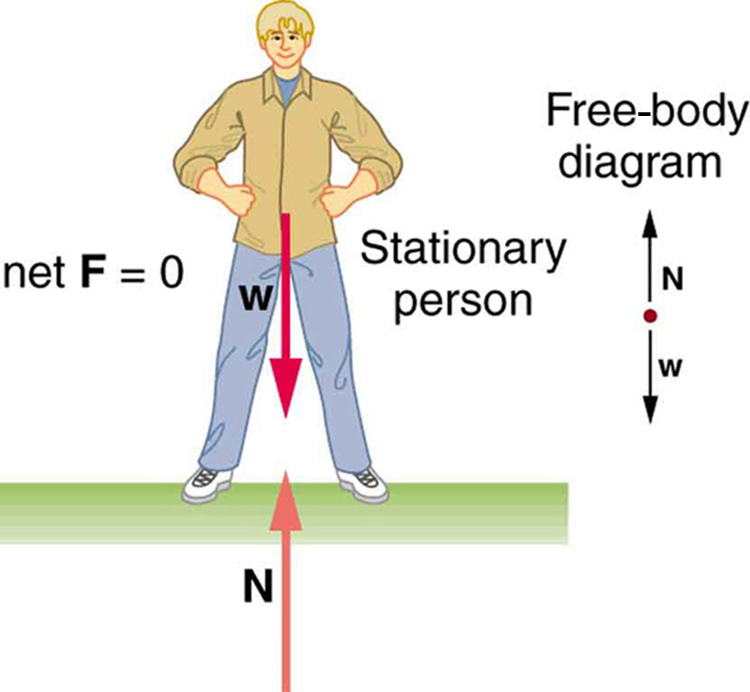
The term ‘Equilibrium’ refers to a state of balance or equality between opposing forces. When applied to living things, equilibrium refers to the ability of the animal body to keep itself properly oriented or positioned; bodily stability or bodily balance. However, the term ‘Equilibrium’ when applied to man, it may refer to a state of balance or adjustment of conflicting desires, interests, etc., Very often, equilibrium is used to describe a mental state of equanimity which demands mental or emotional stability or balance, or poise. In Physics, a motionless person is in Static Equilibrium because the forces acting on the person add up to zero. In the above image, both forces acting on the stationary person are vertical. However, the fact of Static Equilibrium may not describe the presence or absence of Mental Equilibrium.

Static Equilibrium is a state of equilibrium in which the ne external force and torque acting on a system is zero. Dynamic Equilibrium is a state of equilibrium in which the net external force and torque on a system moving with constant velocity are zero. In the above image, the car is in Dynamic Equilibrium because it is moving at constant velocity. There are horizontal, and vertical forces, but the net external force in any direction is zero. The weight of the car is supported by the normal forces shown to be equal for all four tires. The applied force F app between the tires and the road is balanced by air friction, and ‘w’ the weight of the car. Dynamic Equilibrium is applied in Thermodynamics for systems involving reversible reactions. In a dynamic equilibrium, the rate of loss is equal to the rate of gain.

Man is a living system that demands a condition called ‘Whole Equilibrium’ to maintain its existence as a living being. Health is relative equilibrium of body form and function which results from its successful dynamic adjustment to forces tending to disturb it.

To describe ‘Equilibrium’ as applied to man, the concept of “Homeostatis” as defined by the French physician Claude Bernard is very important. Bernard (1813-78) is recognized as the founder of experimental medicine. He states, “All the vital mechanisms, varied as they are, have only one object; that of preserving constant the conditions of life.” All living things maintain a constant internal environment and try to make adjustments to gross changes in the external environmental conditions. Dr Bernard developed the concept of “Milieu Interieur”, the theory of “Inner Environment”; blood, and body fluids constitute the “internal environment” in which cells carry out their activities. The term “Homeostasis” in Physiology refers to the tendency to maintain, or the maintenance of, normal, internal stability in an organism by coordinated responses of the organ systems that automatically compensate for environmental changes. At any given instant, man’s existence as a material body depends on conditions like Fluid and Electrolyte Balance, Acid-Base Regulation that is concerned with Hydrogen ion (H+) concentration and Bicarbonate concentration in blood. Life is possible only if the Hydrogen ion concentration of body fluids is kept within a narrow range; pH value of 7.37 to 7.45 is maintained by several closely integrated but widely differing mechanisms. The chemical events collectively called Metabolism require the concentration of Hydrogen ions and electrolytes to remain within narrow limits in the tissue cells and in the fluids which bathes them. This concept of “Homeostasis” is also applicable to any analogous maintenance of stability or equilibrium in any given social group. Man fundamentally exists as a Social Being and Social Equilibrium as a factor governing living bodies must be given due recognition. Gravitation, Electricity, and Magnetism are different kinds of physical forces, and Mechanics as a Physical Science can explain the manner in which bodies move under the action of physical forces. In Physics, the simplest mechanical system is the ‘Particle’, a small body and its internal structure and its dimensions are of no consequence in the given problem. Planet Earth may be considered as a rigid – body in which each point is always at a fixed distance from every other. Earth behaves like a Particle as it moves around the Sun and can be treated as a rigid- body in its rotation about its axis. In Classical Mechanics, the bodies are stiff and their deformations have no effect on their motions. Newton’s Laws of Motion assume that the body is a Particle for it covers only the overall motion of a body i.e., the motion of its center of mass and not any rigid-body motion such as rotation. These concepts of ‘Particle’, ‘Rigid-Body’, and ‘Motion’ that are used in Physics and Celestial Mechanics cannot be easily applied in the study of living bodies.

I agree that the Laws of Mechanics, with Time, Space, and Mass as their fundamental variables have a universality that is adequate for describing a variety of natural phenomena. All changes in material non-living things are either the local motions of bodies or the result of the local motions of their parts. Motions are determined in their magnitude and direction by the impressed force which one body exerts upon another and the resistance of that other body.

Can Life be explained in terms of the Laws of Mechanics, that is, the “Push” or “Pull” of one body upon another? I agree that Mechanics signifies a whole philosophy of Nature, a set of fundamental principles under which all the physical sciences can be unified. The principles of Mechanics are applied in Statics, Dynamics, Acoustics, Optics, Thermodynamics, Magnetism, and Electricity. It covers a variety of phenomena from Celestial Mechanics to motions of indivisible particles or Quantum Mechanics. I have no particular concern for Quantum Mechanics, for the operation of the Living Systems is concerned with the structural, and functional organization that mostly involves chemical molecules. The Living Substance is always in motion; the man is also always in motion; but the living thing exists as a rigid-body measuring its lifespan using the clues of time intervals or duration between Sunrise and Sunset which track the apparent motion of Sun across earthly sky.

The realities of Celestial Mechanics do not operate the Living Systems as Life demands the intervention called illusion and the blocking of the ability to experience the real motions of planets, satellites, and stars. For man to experience the condition called ‘rest’, or ‘equilibrium’, or ‘static equilibrium’, or ‘dynamic equilibrium’ needs the operation of a Fundamental Force called Love that counteracts all the forces acting upon human body at any given instant.

In my view, the terms rest, equilibrium, static equilibrium, and dynamic equilibrium cannot be applied to living bodies, and living systems. If the term Love is used to describe the Fundamental Force that acts upon living bodies, and living systems, the study of Life in Motion must be described as Whole Dynamics, and Whole Equilibrium.
PLANET EARTH IS MOVING ALL THE TIME AT AN AMAZING SPEED. HUMAN BODY HAS A BUILT IN TIMING MECHANISM THAT OPERATES ON A 24 HOUR CYCLE THAT OPERATES A DAILY ROUTINE FROM REST TO ACTIVITY. THE TIME-KEEPING PROCESSES ARE AT WORK ALL THE TIME AND FORCE MAN TO MARK HIS TIME ON EARTH BY SUBMITTING TO THE ETERNAL LAW OF AGING.

 Whole Dude - Whole Concept