IN MICHIGAN, MARIJUANA IS LEGAL, BUT FREE SPEECH IS ILLEGAL
Marijuana faces the second phase of legalization in small-town Michigan
Joel Bissell | MLive.com
(Joel Bissell | MLive.com file photo)
By Amy Biolchini | abiolch1@mlive.com
The promise of marijuana legalization was attractive to voters in November 2018: even in many parts of small-town Michigan, the proposal passed.
But that doesn’t mean rural Michigan is ready for a weed shop.
Now marijuana in Michigan is undergoing its second phase of legalization as every city, township and village is grappling with if — or where — they want the cannabis industry.
Not on Main Street: Michigan communities confront legal weed
More than a quarter of Michigan cities and townships have banned retail recreational marijuana businesses.
Of the 792 cities and townships that passed Proposal 1, 308 have ended up banning adult-use marijuana businesses so far, according to an analysis by MLive. That’s about 39 percent.
Put another way: of the 600-plus communities that have banned recreational marijuana businesses, about half passed Proposal 1, according to an analysis by MLive.
Map: Michigan communities that have banned adult-use marijuana businesses
Scroll over cities and townships to see how they voted on the marijuana legalization ballot question — Proposal 1 — in November 2018.
Bruce Barcott, deputy editor of the marijuana news and information website Leafly, called the phenomenon of local bans on cannabis businesses the “second phase of legalization.”
“Smaller municipalities tend to want the big cities to go first and offer them reassurance that the sky won’t fall, that crime rates won’t skyrocket, that teen access won’t go up,” Barcott said.
The trend repeats itself throughout states that have legalized marijuana for adult-use, Barcott said.
“California really has a problem with local bans, and it’s stifling the transition from the illicit market to the legal regulated market,” Barcott said. “They’re not seeing as much tax revenue as they had planned for because so many counties and towns have prohibited farmers and stores from opening up shop.”
Banning legal marijuana businesses in a community only allows the black market to thrive, Barcott said.
“You’re enabling and encouraging the illicit sale of cannabis,” Barcott said.
Emergency rules for the adult-use marijuana industry were released by state officials in July, giving Michigan’s local governments a matter of months to react. Communities without a ban on businesses in place by the time the state starts taking business license applications Nov. 1 risk losing control over how and where the industry operates in their towns.
Residents recently tried to overturn bans on marijuana businesses in two Michigan towns by collecting signatures and putting initiatives on the ballot. But in Highland Park, a city of 11,776 people in Wayne County, and in Vanderbilt, a village of 562 people in northern Michigan, the efforts failed at the polls.
Voters say no to marijuana businesses across Michigan
Three Michigan communities decided to ban marijuana businesses at the polls Tuesday.
Both communities had passed Proposal 1 in November 2018. The bans on marijuana businesses still stand.
Barcott said that’s partly due to the timing of elections. The big legalization proposals tend to be timed with large-turnout elections with presidential or gubernatorial races on the ballot, he said.
“The theory is that you get a wide and deep pools of voters in those legalization votes and then when the town votes on it, it tends to be in the very small turnout primary elections,” Barcott said. “Those are the hardcore city council-watching voters. They tend to be more conservative they tend to be older.”
— Amy Biolchini is the marijuana beat reporter for MLive. Contact her with questions, tips or comments at abiolch1@mlive.com. Read more from MLive about medical and recreational marijuana.
WholeDude
Comment History
You posted on Marijuana faces the second phase of legalization in small-town Michigan:
Content disabled.
“Reply to @WholeDude: Why the content of my comment is disabled? I am speaking the Plain Truth.”
You posted on Marijuana faces the second phase of legalization in small-town Michigan:
Content disabled.
“Reply to @higgy78: I am not free to respond to your view. I tickled the censor dragon. One of my posts is disabled and another post’s content is awaiting moderation.”
You posted on Marijuana faces second phase of legalization in small-town Michigan:
“Reply to @seattle slew: The usual guy may fall asleep like the usual guy going back to his work aft…”
You posted on Marijuana faces second phase of legalization in small-town Michigan:
“Reply to @seattle slew: Thank you. I am glad for you brought up the issue of sex in this conversati…”
You posted on Marijuana faces the second phase of legalization in small-town Michigan:
Content disabled.
“Reply to @Heyspike: Thank you. For me, the US seems like a prison. My mental “highs” do not give me…”
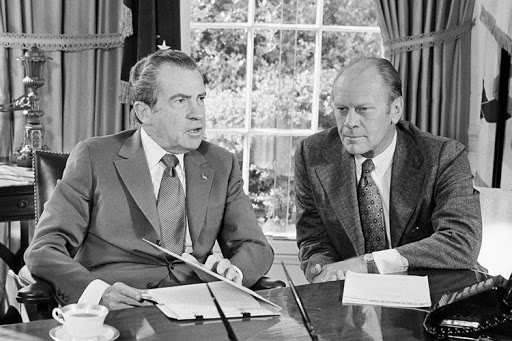
REMEMBERING AUGUST 08, 1974 – NIXON RESIGNS. I AM A REFUGEE. A SLAVE IN FREE NATION.
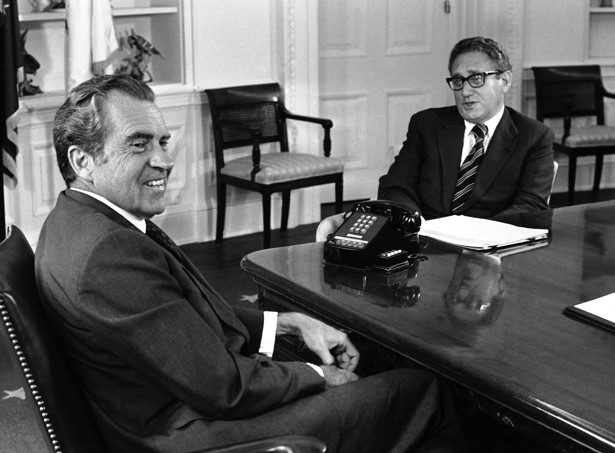
On August 08, 1974, I was stationed at Military Hospital Wing, Headquarters Establishment Number. 22, C/O 56 APO, of Special Frontier Force. Because of my lifetime regimental affiliation to Special Frontier Force, Nixon/Kissinger lives in my memory for his actions providing aid and comfort to Enemy while we dedicated our lives to secure Democracy, Freedom, Peace, and Justice in Occupied Tibet.
REMEMBERING AUGUST 08, 1974 – NIXON RESIGNS. I AM A REFUGEE. A SLAVE IN FREE NATION.
In my analysis, Nixon-Kissinger Vietnam Treason predetermined my Refugee Status, the Status of a Slave living in a Free Nation.
Remembering August 08, 1974 – Nixon Resigns.I am a Refugee.A SLAVE IN FREE NATION.
On this day in 1974, on an evening televised address, President Richard M. Nixon announces his intention to become the first president in American history to resign. With impeachment proceedings underway against him for his involvement in the Watergate affair, Nixon was finally bowing to pressure from the public and Congress to leave the White House. “By taking this action,” he said in a solemn address from the Oval Office, “I hope that I will have hastened the start of the process of healing which is so desperately needed in America.”
In an evening televised address, President Richard M. Nixon announces his intention to become the first president in American history to resign. With impeachment proceedings underway against him for his involvement in the Watergate affair, Nixon was finally bowing to pressure from the public and Congress to leave the White House. “By taking this action,” he said in a solemn address from the Oval Office, “I hope that I will have hastened the start of the process of healing which is so desperately needed in America.”
Just before noon the next day, Nixon officially ended his term as the 37th president of the United States. Before departing with his family in a helicopter from the White House lawn, he smiled farewell and enigmatically raised his arms in a victory or peace salute. The helicopter door was then closed, and the Nixon family began their journey home to San Clemente, California. Minutes later, Vice President Gerald R. Ford was sworn in as the 38th president of the United States in the East Room of the White House. After taking the oath of office, President Ford spoke to the nation in a television address, declaring, “My fellow Americans, our long national nightmare is over.” He later pardoned Nixon for any crimes he may have committed while in office, explaining that he wanted to end the national divisions created by the Watergate scandal.
On June 17, 1972, five men, including a salaried security coordinator for President Nixon’s reelection committee, were arrested for breaking into and illegally wiretapping the Democratic National Committee headquarters in the Washington, D.C., Watergate complex. Soon after, two other former White House aides were implicated in the break-in, but the Nixon administration denied any involvement. Later that year, reporters Carl Bernstein and Bob Woodward of The Washington Post discovered a higher-echelon conspiracy surrounding the incident, and a political scandal of unprecedented magnitude erupted.
In May 1973, the Senate Select Committee on Presidential Campaign Activities, headed by Senator Sam Ervin of North Carolina, began televised proceedings on the rapidly escalating Watergate affair. One week later, Harvard law professor Archibald Cox was sworn in as special Watergate prosecutor. During the Senate hearings, former White House legal counsel John Dean testified that the Watergate break-in had been approved by former Attorney General John Mitchell with the knowledge of White House advisers John Ehrlichman and H.R. Haldeman and that President Nixon had been aware of the cover-up. Meanwhile, Watergate prosecutor Cox and his staff began to uncover widespread evidence of political espionage by the Nixon reelection committee, illegal wiretapping of thousands of citizens by the administration, and contributions to the Republican Party in return for political favors.
In July, the existence of what was to be called the Watergate tapes–official recordings of White House conversations between Nixon and his staff–was revealed during the Senate hearings. Cox subpoenaed these tapes, and after three months of delay President Nixon agreed to send summaries of the recordings. Cox rejected the summaries, and Nixon fired him. His successor as special prosecutor, Leon Jaworski, leveled indictments against several high-ranking administration officials, including Mitchell and Dean, who were duly convicted.
Public confidence in the president rapidly waned, and by the end of July 1974, the House Judiciary Committee had adopted three articles of impeachment against President Nixon: obstruction of justice, abuse of presidential powers, and hindrance of the impeachment process. On July 30, under coercion from the Supreme Court, Nixon finally released the Watergate tapes. On August 5, transcripts of the recordings were released, including a segment in which the president was heard instructing Haldeman to order the FBI to halt the Watergate investigation. Three days later, Nixon announced his resignation.
At the Republican National Convention in Miami, Richard M. Nixon and Spiro T. Agnew are chosen as the presidential and vice-presidential nominees for the upcoming election. In his speech accepting the nomination, Nixon promised to “bring an honorable end to the war in Vietnam.”
1973 Vice President Agnew under attack Vice President Agnew branded reports that he took kickbacks from government contracts in Maryland as “damned lies.” Agnew had taken a lot of heat in the media when he assumed a leadership position as Nixon’s point man on Vietnam. He frequently attacked the student protest movement.
Remembering August 08, 1974. Nixon Resigns. I am a Refugee. A Slave in Free Nation.
I am a Refugee. When will I find my Refuge? Father’s Day Lesson.
I believe in the doctrine called ‘Predestination’. I do not believe in Free-Will, or Will to Choose. I am not running away from God. I cannot choose to disobey God. It may seem that I am making choices and that I may have preplanned my moves. My Life’s Journey began in Mylapore, Madras, Chennai, India. Amongst other places, my Journey took me to Doom Dooma, Tinsukia District, Assam, India during 1972. While I worked in Doom Dooma, I got married during January 1973 as per God’s Plan. Eventually, I arrived in Ann Arbor, Michigan, the USA with the thoughts of Fear forcing me to live as a Refugee.
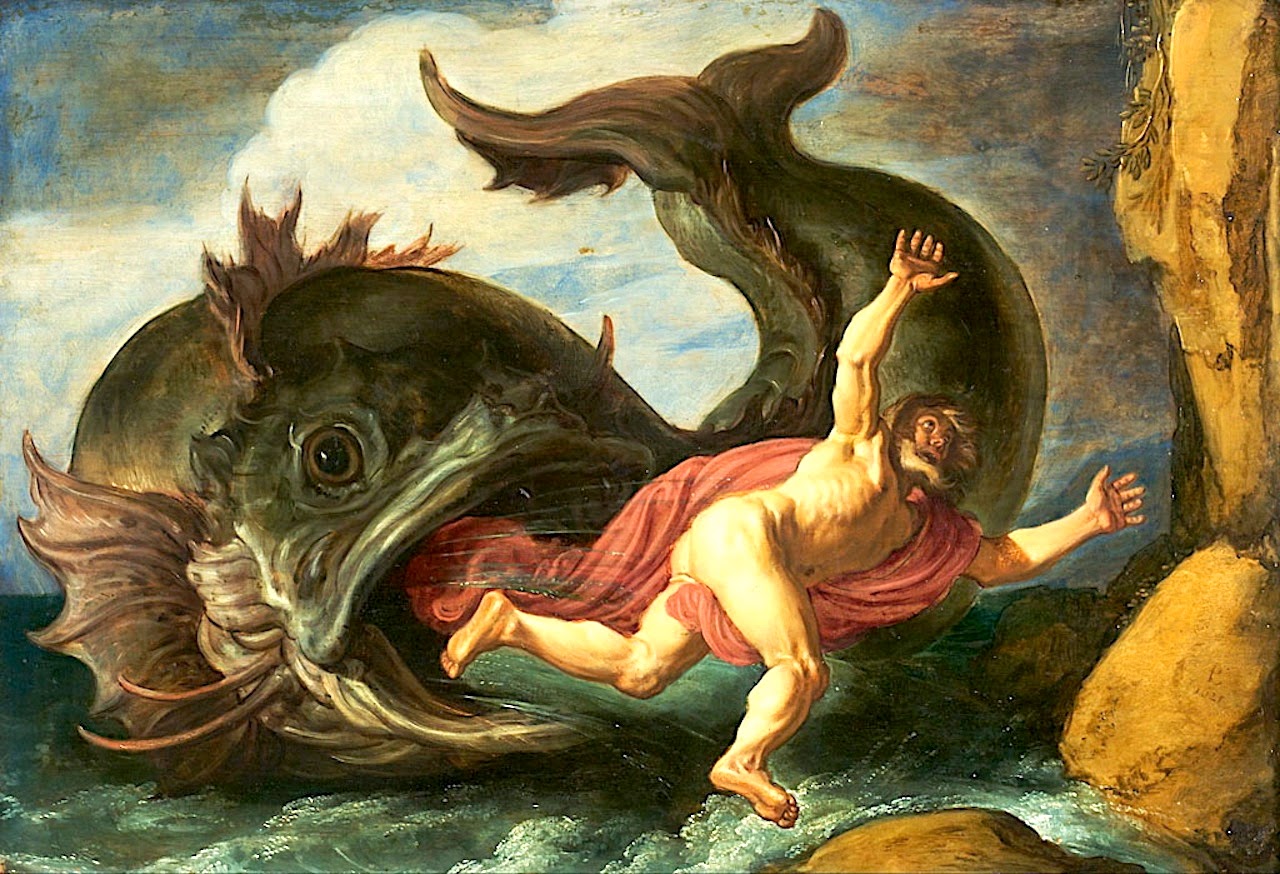
I find myself living and surviving inside the belly of a Big Fish or Great Whale. Prophet Jonah survived his ordeal just for three days and three nights. The Son of Man remained in the heart of the earth just for three days, and three nights.
I am living with the Hope that God has not forsaken me. God has not forgotten my plight or ordeal. God has a Plan for my Salvation. I am a Refugee for it is Predestined. But when will I find my Refuge?
Rudranarasimham Rebbapragada
SPECIAL FRONTIER FORCE
I am a Refugee. When will I find my Refuge? Father’s Day Lesson.I am a Refugee. When will I find my Refuge? Father’s Day Lesson. I am a Refugee. When will I find my Refuge? Father’s Day Lesson.I am a Refugee. When will I find my Refuge? Father’s Day Lesson.I am a Refugee. When will I find my Refuge? Father’s Day Lesson. I am a Refugee. When will I find my Refuge? Father’s Day Lesson. I am a Refugee. When will I find my Refuge? Father’s Day Lesson. I am a Refugee. When will I find my Refuge? Father’s Day Lesson. I am a Refugee. When will I find my Refuge? Father’s Day Lesson.
10 Great Lessons from the Book of Jonah
By Wayne Jackson
I am a Refugee. When will I find my Refuge? Father’s Day Lesson.
The prophet Jonah lived in the Galilean city of Gath-Hepher (about four miles north of Nazareth) during the reign of Jeroboam II (793-753 B.C.), king of Israel (cf. 2 Kgs. 14:25). Jeroboam II was northern Israel’s most powerful king, and during his administration, the borders of the nation were expanded to their greatest extent since the time of David and Solomon.
Assyria, however, five hundred miles to the east, was a constant threat. The fact of the matter is, due to Israel’s progressive rebellion, the prophets Hosea and Amos, contemporaries of Jonah, had declared that Jehovah would use Assyria as an instrument of punishment against his people (cf. Hos. 11:5; Amos 5:27). Any patriotic Israelite would have longed for Assyria’s destruction!
One can scarcely imagine, therefore, the consternation that must have filled Jonah’s heart when he received the Lord’s word instructing him to proceed to Nineveh, the capital city of Assyria, with a divine message.
Jonah’s Resistance
Although the prophet’s brief declaration to Nineveh was one of judgment, nonetheless, Jonah was aware of the fact that Jehovah is a “gracious God and merciful, slow to anger, and abundant in loving kindness” (Jon. 4:2). Hence, it was certain that if the inhabitants of that great city were responsive to his message, Heaven would certainly spare them. And Jonah did not want that.
Accordingly, Jonah went to Joppa where he boarded a ship bound for Tarshish, a Phoenician colony on the southwest coast of Spain some two thousand miles to the west. The express design of his trip was to flee from the presence of Jehovah (Jon. 1:3).
But, as every Bible student knows, his plans were soon thwarted. Where men propose, God can dispose!
When a great storm arose, and the inmates of the vessel feared for their very lives, Jonah confessed that he, as a refugee from the Lord, was the cause of the calamity. Though the prophet’s sailing companions did not like the idea, they ultimately were forced to accept Jonah’s suggestion that he be thrown overboard.
Down he went into the dark depths of the Mediterranean, seaweed swirling about his head (cf. Jon. 2:5). Presently, he was devoured by a great creature of the deep. One might almost say that the Lord sent Jonah to school for three days, and the classroom was the belly of a great sea-monster. The prophet matriculated wonderfully well, graduating with a diploma in “mission responsibility”!
Jonah Preaches to Nineveh
Making his way to Nineveh, a journey that would have taken more than a month and thus provided ample time for sober reflection, Jonah entered the great city with his blunt message (consisting of only five words in the Hebrew text):
“Yet forty days and Nineveh shall be overthrown.”
Amazingly, there was mass repentance, from the king (Ashur-dan III, according to Assyrian records) down to the commoner.
Jonah was quite distraught at this turn of events and he despaired, even to the point of wanting to die. Resolutely, he perched himself on a hilltop nearby, eagerly watching the city in hopes that the Lord would yet destroy it. His education was still incomplete!
As he sat in the scorching sun, God caused a shady vine to grow up for his refreshment and the prophet was glad. On the following day, however, Jehovah sent a worm to smite Jonah’s vine, and as the blistering sun beat upon his head, the man of God again lapsed into a state of abject depression.
Then came Heaven’s stinging rebuke. The Lord in effect said: “Jonah, why is it that you are so concerned with this vine—a mere plant which is temporal, and for which you did not labor; and yet, you evidence utterly no concern for the hapless inhabitants of Nineveh?”
The penetrating inquiry threw a divine floodlight upon the pathetic values of the man from Gath-Hepher.
10 Timeless Lessons from the Book of Jonah
The book of Jonah is filled with valuable information and timeless lessons. Perhaps we could reflect upon a few of these matters.
Jonah’s Story Validated by Christ
First, we should note that this marvelous narrative has suffered the brunt of the critics’ barbs for a long while. Because of the incident of Jonah being swallowed by the sea-creature, many modern scholars contend that the document is pure fiction (cf. Goodspeed 1946, 149).
Jesus Christ, however, did not so view it. He appealed to the narrative as genuine history (cf. Mt. 12:39-41), and this settles the issue for all who have any regard for the Savior’s deity.
Aside from the fact that this event doubtless involved a miracle, the circumstances are not beyond the realm of possibility even from a natural viewpoint (as employed in the providential operations of God). In fact, a number of similar cases have been documented in relatively modern times.
In 1891, a seaman was swallowed by a large sperm whale near the Falkland Islands. After three days, he was recovered, unconscious but alive, though there was some damage to his skin (Wilson 1927, 636). Some, however, dispute the credibility of this story.
Moreover, some critics argue that the book of Jonah depicts the prophet as being swallowed by a “great fish” (Jon. 1:17), while the New Testament suggests that the creature was a “whale” (Mt. 12:40). And, as any schoolboy knows, a whale is a mammal, not a fish.
The fallacy of this ill-conceived argument lies in the fact that both the Hebrew word dag and the Greek word, ketos are generic terms that can apply to any aquatic creature (cf. ASV fn). There is no error here.
The Sovereignty of Jehovah
The book of Jonah demonstrates the sovereignty of the Almighty as he employs his creation to accomplish the divine plan. The Lord controlled the elements of weather (Jon. 1:4, 11, 13, 15; 4:8), and he prepared a sea-creature, a vine, and a worm to do his bidding (Jon. 1:17; 4:6, 7).
God’s Interest in All People
This inspired document reveals the international interest of God, even in the Mosaic era.
Though Jehovah was working primarily through the Hebrew nation as an instrument for the sending of the promised Seed (Gen. 22:18), nevertheless, his compassion for all the people of the earth was abundantly manifested. And the sending of the “missionary,” Jonah, to these Gentile Ninevites was a clear demonstration of this.
God Is in Control
This narrative illustrates a truth so frequently suggested in the Old Testament, namely, that the Lord, not man, is in control of the destiny of nations.
Jehovah rules in the kingdoms of men and disposes of them according to his divine standard (cf. Psa. 22:28; Prov. 14:34; Dan. 2:21; 4:17). Those who think that nations stand or fall because of a “strong national defense” are woefully ignorant of biblical principles.
Nineveh was given forty days to repent. As a result, the nation was spared destruction for about a century and a half. Later, however, when Assyria degenerated again, she was destroyed and the prophet, Nahum, addresses this very matter. Nineveh fell to the Babylonians in 612 B.C.
Mankind is Accountable to the Lord
The book of Jonah demonstrates that ancient peoples who were outside of that Mosaic covenant relationship with Jehovah were nonetheless accountable to Heaven’s moral law.
Jehovah looked down upon Nineveh and observed the wickedness of these people (Jon. 1:2). Since sin is the transgression of divine law (1 Jn. 3:4; cf. Rom. 4:15), the Ninevites were obviously subject to such.
This powerful truth is in direct conflict with the modern theory which contends that those who are “outside of the church” are not subject to the marriage law of God (the design of which is to regulate human morality — cf. 1 Cor. 7:1ff; Heb. 13:4). The whole purpose of this novel concept, of course, is to justify adulterous relationships within the family of God!
People Can Change
This record reveals the power inherent within the word of God when such comes into contact with honest and good hearts (cf. Lk. 8:15). Though Jonah’s message was very brief (as indicated above), it produced the desired effect.
Again, some critics have faulted the divine account at this point, claiming that so trifling a sermon could hardly have produced the results described. But the objection, which stems strictly from subjective bias, ignores the biblical evidence, not the least of which is the testimony of Christ that “the men of Nineveh repented at the preaching of Jonah” (Mt. 12:41).
Besides that, historical records reveal that the notable city had suffered severe plagues in 765 and 759 B.C. The soil had thus been conditioned for Jonah’s “revival.”
Too, somehow or another the citizens of Nineveh had learned of the prophet’s “resurrection” from the belly of the “fish,” for, as Jesus noted, Jonah was a “sign” to that generation even as the raised Lord would be to his (cf. Lk. 11:30).
Repentance Requires Works
This instructive account, together with the inspired New Testament commentary which discusses it, underscores an important dimension to repentance.
Jesus declared that “the men of Nineveh repented at the preaching of Jonah” (Mt. 12:41), while the book of Jonah itself informs us that God “saw their [the people of Nineveh] works, that they turned from their evil way” (Jon. 3:10).
Thus, repentance is not, as some allege, a mere sorrow for sin. Rather, it requires turning away from evil conduct.
Moreover, this passage reveals that repentance is a work, and since repentance is essential to salvation (Lk. 13:3, 5; Acts 17:30), it conclusively follows that salvation is not exclusive of all types of works!
The Punishment of Hell
An intriguing passage in the book of Jonah illustrates a vital point about the punishment of the wicked after death.
In graphically poetic language, the agonizing prophet described his horrible ordeal in the sea monster’s belly as an experience akin to being in “hell.” He exclaims:
“I cried by reason of my affliction unto the Lord . . . out of the belly of hell cried I” (Jon. 2:2).
The Hebrew term is Sheol. Here it denotes the abode of the wicked prior to the Judgement.
Since crying out by reason of affliction certainly indicates conscious suffering, one may conclude that the state of the wicked dead is that of conscious torment—a truth affirmed elsewhere in the sacred record (cf. Lk. 16:23; 2 Pet. 2:9, ASV).
J.W. McGarvey has an excellent discussion of this point in his essay, “Destiny of the Wicked” (n.d., 429, 430).
Conditional Prophecy
Jonah’s message to Nineveh reveals that prophecy is sometimes conditional.
The prophet declared that the great city would be destroyed in forty days. But it survived for a century and a half beyond that time.
Clearly, therefore, the prediction of doom was conditioned upon Nineveh’s response to the prophetic message.
Millennialists would do well to learn from this principle of prophecy.
For example, Israel was promised inheritance of the land of Canaan. That promise, however, was conditioned upon their fidelity to God (cf. Josh. 22:4, 5; 23:1ff), and the time eventually came when they lost their deed to Palestine.
Typology in the Book of Jonah
The book of Jonah presents a beautiful type of the resurrection of Christ from the dead.
Though some modernists argue that the concept of a bodily resurrection of Christ from the dead was unknown in Old Testament times, Jesus demonstrated otherwise. He declared:
“[F]or as Jonah was three days and nights in the belly of the sea-monster; so shall the Son of man be three days and three nights in the heart of the earth” (Mt. 12:40).
Clearly, the Lord viewed Jonah’s three-day entombment as a foreshadowing of his resurrection from the grave, by which, of course, Christ was declared to be the Son of God with power (Rom. 1:4).
Conclusion
In his epistle to the Romans, Paul wrote:
“For whatsoever things were written aforetime [i.e., the Old Testament Scriptures] were written for our learning, that through patience and through the comfort of the scriptures we might have hope” (Rom. 15:4).
Surely the foregoing points of truth, as gleaned from the delightful book of Jonah, are illustrative of the truth of this rich passage.
Why not take some time and refresh yourself with a review of the edifying material in the book of Jonah.
Works Cited
Goodspeed, E. J. 1946. How to Read the Bible. Philadelphia, PA: John C. Winston Co.
McGarvey, J. W. n.d. The destiny of the Wicked. Lard’s Quarterly. Vol. 2.
Wilson, A. J. 1927. Princeton Theological Review, XXV, October.
Scripture References
Hosea 11:5; Amos 5:27; Jonah 4:2; Jonah 1:3; Jonah 2:5; Matthew 12:39-41; Jonah 1:17; Matthew 12:40; Jonah 1:4, 11, 13, 15, 4:8; Jonah 1:17, 4:6, 7; Genesis 22:18; Psalm 22:28; Proverbs 14:34; Daniel 2:21, 4:17; Jonah 1:2; 1 John 3:4; Romans 4:15; Hebrews 13:4; Luke 8:15; Matthew 12:41; Luke 11:30; Jonah 3:10; Luke 13:3, 5; Acts 17:30; Jonah 2:2; Luke 16:23; 2 Peter 2:9; Joshua 22:4, 5, 23:1; Romans 1:4; Romans 15:4
The CNN-FBI Collusion transforms the United States into a Police State
The CNN-FBI Collusion transforms the United States into a Police State.
The exclusive Roger Stone arrest video released by CNN bears mute testimony to the fact of the CNN-FBI Collusion to undermine the basic principles of democratic governance. In democracy, the news media play a critical role to defend the Individual Freedoms. Media uses the Free Speech rights to safeguard personal liberties. The news media have the duty to report any excessive use of police force that is detrimental to the rights entitled to the citizens.
I ask my readers to join me in my demand for an independent investigation to expose the sordid relationship between the CNN and FBI. It is very disheartening to note that the CNN has failed in its duty to defend Freedom and Human Rights from abuse by law enforcement forces acting against the core values enshrined in the US Constitution. The CNN video serves no purpose other than that of revealing the Gestapo Tactics of the FBI to execute a simple arrest warrant.
Rudranarasimham Rebbapragada
SPECIAL FRONTIER FORCE
The CNN-FBI Collusion transforms the United States into a Police State.
Roger Stone arrest video: Shows moments FBI stormed his Florida home
The CNN-FBI Collusion transforms the United States into a Police State.
Watch exclusive CNN footage of the FBI arresting longtime Trump associate Roger Stone. Stone has been indicted by a grand jury on charges brought by special counsel Robert Mueller. https://t.co/5QHKDB2mfApic.twitter.com/UeKo7CmXWo
Armed FBI agents storm Roger Stone’s home in CNN video of his arrest
In a surprise arrest, heavily armed FBI agents storm Roger Stone’s Florida home on Friday morning. CNN has aired the footage multiple times Friday.
Armed FBI agents storm Roger Stone’s home in CNN video of his arrest
Ashley May, USA TODAY Published 8:22 a.m. ET Jan. 25, 2019 | Updated 9:23 a.m. ET Jan. 25, 2019
The FBI arrested Roger Stone, longtime campaign associate of President Donald Trump. Stone is indicted for lying about the Russian investigation in the 2016 election. USA TODAY
A group of heavily armed FBI agents stormed Roger Stone’s Florida home on Friday morning, as seen in a dramatic CNN video.
Stone, a longtime associate of President Donald Trump, is accused by a federal grand jury of lying about the investigation of Russian meddling in the 2016 election, according to Special Counsel Robert Mueller.
Law enforcement vehicles with flashing lights, but without sirens, are seen parked nearby Stone’s Fort Lauderdale home shortly after 6 a.m. ET Friday, CNN reports. The network has aired the footage multiple times Friday.
About a dozen officers outfitted with flashlights, bullet-proof vests and tactical gear surrounded the home.
In the video, an agent is heard pounding on the door and announcing “FBI! Open the door!” Then, he shouts “FBI! Warrant!”
The door opens and a shadow that appears to be Stone can be seen. CNN reports Stone answered the door wearing his glasses and sleepwear.
This type of surprise arrest is unusual, as no other person tied to this investigation, including Trump’s former chairman Paul Manafort, has been arrested in this way, CNN reports.
Stone will make an initial appearance in federal court at 11 a.m. Friday in Fort Lauderdale.
The CNN-FBI Collusion transforms the United States into a Police State. The FBI illegally shared its information with the CNN agents allowing it to exploit the information for commercial gain.
MONDAY, JANUARY 21. THE CELEBRATION OF THE CIVIL RIGHTS MOVEMENT
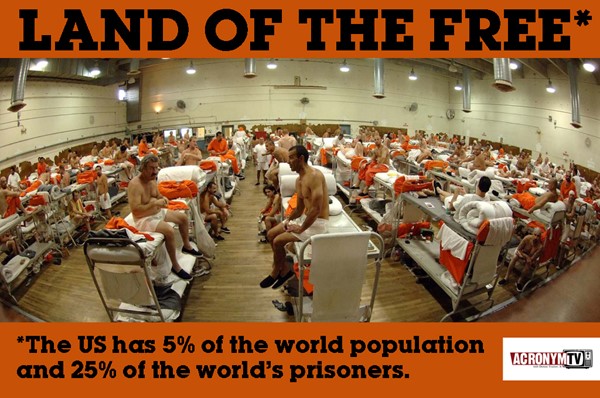
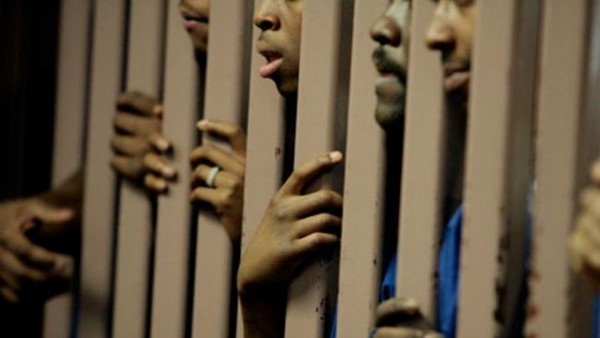
On Monday, January 21, 2019, I celebrate Dr. Martin Luther King Jr.Day reflecting on America’s March from the Civil Rights Movement to the founding of a Police State that houses nearly half-a-million African Americans apart from others in its vast Prison System.
Rudranarasimham Rebbapragada
SPECIAL FRONTIER FORCE
Monday, January 21. The Celebration of the Civil Rights Movement.
Reverend Martin Luther King Jr., considered one of the greatest Americans to ever live, was assassinated 50 years ago on a balcony at the Lorraine Motel in Memphis, Tennessee.
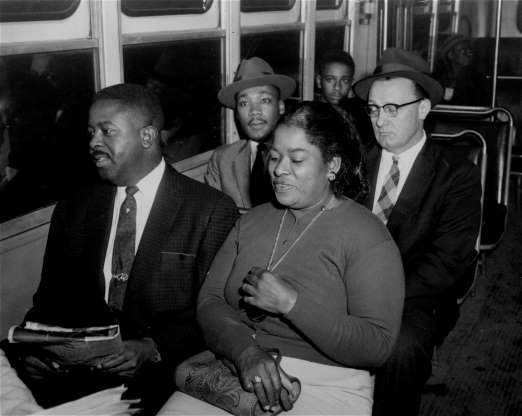
King rose to prominence after helping lead the Montgomery bus boycott, which led to a US Supreme Court decision that desegregated Alabama’s bus system.
King went on to be the first president of the Southern Christian Leadership Council, leading marches from Selma to Montgomery. A moving orator, King delivered his famous “I Have a Dream” speech at the March on Washington in 1963.
Inspiring generations to come, King’s work and activism led to the Civil Rights Act of 1964, the Voting Rights Act of 1965, and more.
Here are 11 of the most iconic photos of King ever taken:
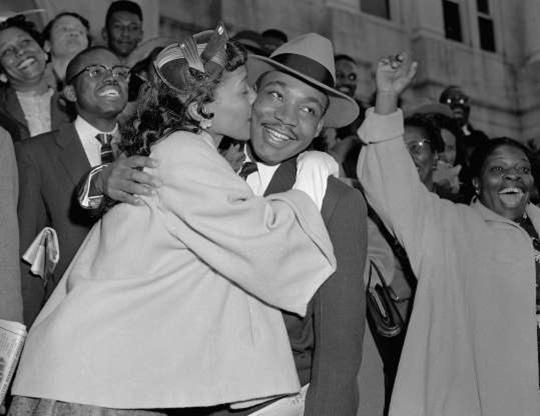
King receives a kiss from his wife, Coretta Scott King, on March 22, 1956, after being released from a Montgomery jail.
King was instrumental in leading the more than year-long Montgomery bus boycott to desegregate the bus system, which was sparked by Rosa Parks’ refusal to give up her seat. The picture was taken after King had been found guilty of conspiracy to boycott the buses, but the judge suspended his $500 fine.
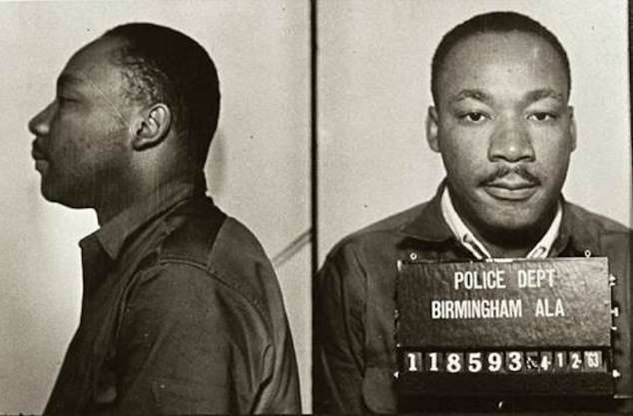
King’s mugshot after he was arrested in Birmingham on April 12, 1963 — Good Friday — for violating an anti-protest injunction.
In April 1963, King and the Southern Christian Leadership Council organized the Birmingham Campaign to protest segregation, which involved a series of sit-ins and marches.
After King was arrested, and while in solitary confinement, he penned his famed “Letter From a Birmingham Jail,” which responded to a number of local religious leaders who criticized the Birmingham campaign.
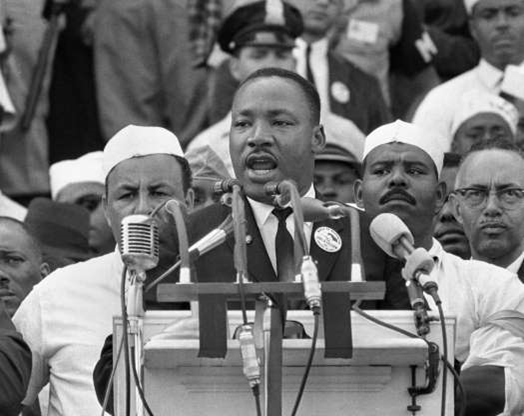
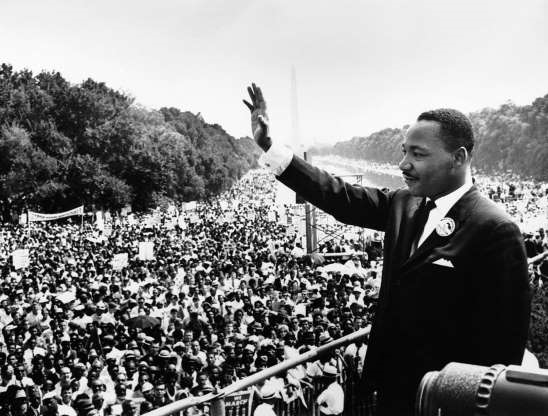
King delivers his famous “I Have a Dream” speech at the Lincoln Memorial in Washington DC on August 28, 1963.
“I have a dream that my four little children will one day live in a nation where they will not be judged by the color of their skin but by the content of their character,” King said in perhaps his most famous line of the speech. “I have a dream today.”
The March on Washington for Jobs and Freedom, in which about 250,000 people gathered, drew attention to the continuing inequality and struggles of African Americans.
King shakes hands with Malcolm X in Washington DC in March 1964.
The picture was taken shortly after Malcolm X split with the Nation of Islam.
Malcolm X would later travel to Mecca, where he learned that orthodox Muslims preach equality of the races, leading him to abandon the belief that all white people are devils.
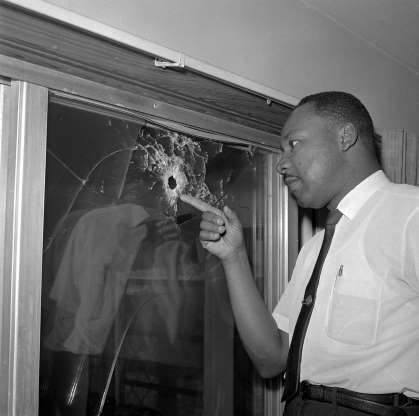
King points to a bullet hole in his rented St. Augustine, Florida home on June 5, 1964.
King was in St. Augustine to help end segregation in one of the US’ oldest cities, hoping that it would also garner more support for the pending Civil Rights Act, which was passed less than a month later.
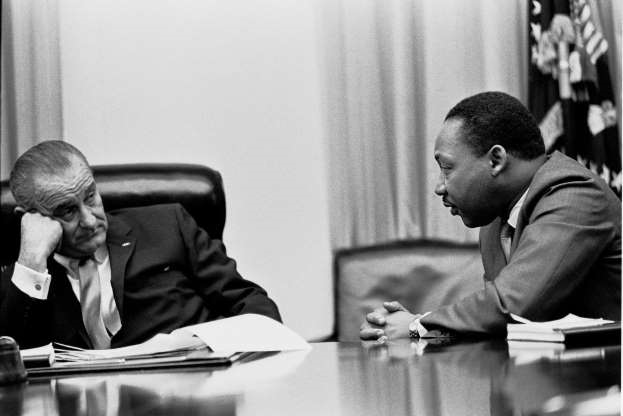
King meets with President Johnson in January 1965 at the White House to discuss the Voting Rights Act of 1965, which would be passed about eight months later.
King marches and civil rights marchers cross the Edmund Pettus Bridge in Selma, Alabama, on March 21, 1965, during their 50-mile march to Montgomery to protest voting laws.
King organized three marches from Selma to Montgomery in March 1965, the first of which later became known as “Bloody Sunday” after state troopers brutally assaulted the activists, galvanizing Congress to pass the Voting Rights Act of 1965.
King delivers his last speech on April 3, 1968, at the Mason Temple in Memphis, Tennessee.
“I just want to do God’s will,” King said at the end of his speech. “And he’s allowed me to go up to the mountain. And I’ve looked over. And I’ve seen the promised land. I may not get there with you. But I want you to know tonight that we as a people will get to the promised land. So I’m happy tonight, I’m not worried about anything – I’m not fearing any man. My eyes have seen the coming of the Lord.”
King was assassinated the next day, April 4th, on a balcony at the Lorraine Motel.
THE CLINTON CURSE – CLINTON’S IMMORAL SOCIAL SECURITY POLICY
The Clinton Curse. Clinton’s immoral Social Security Policy.
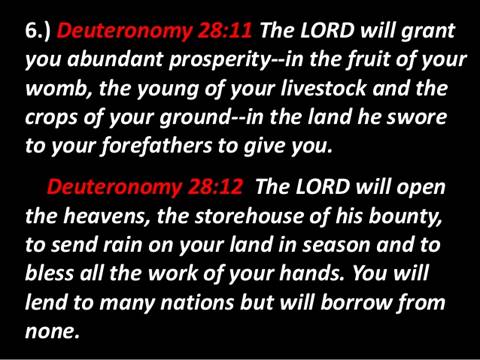
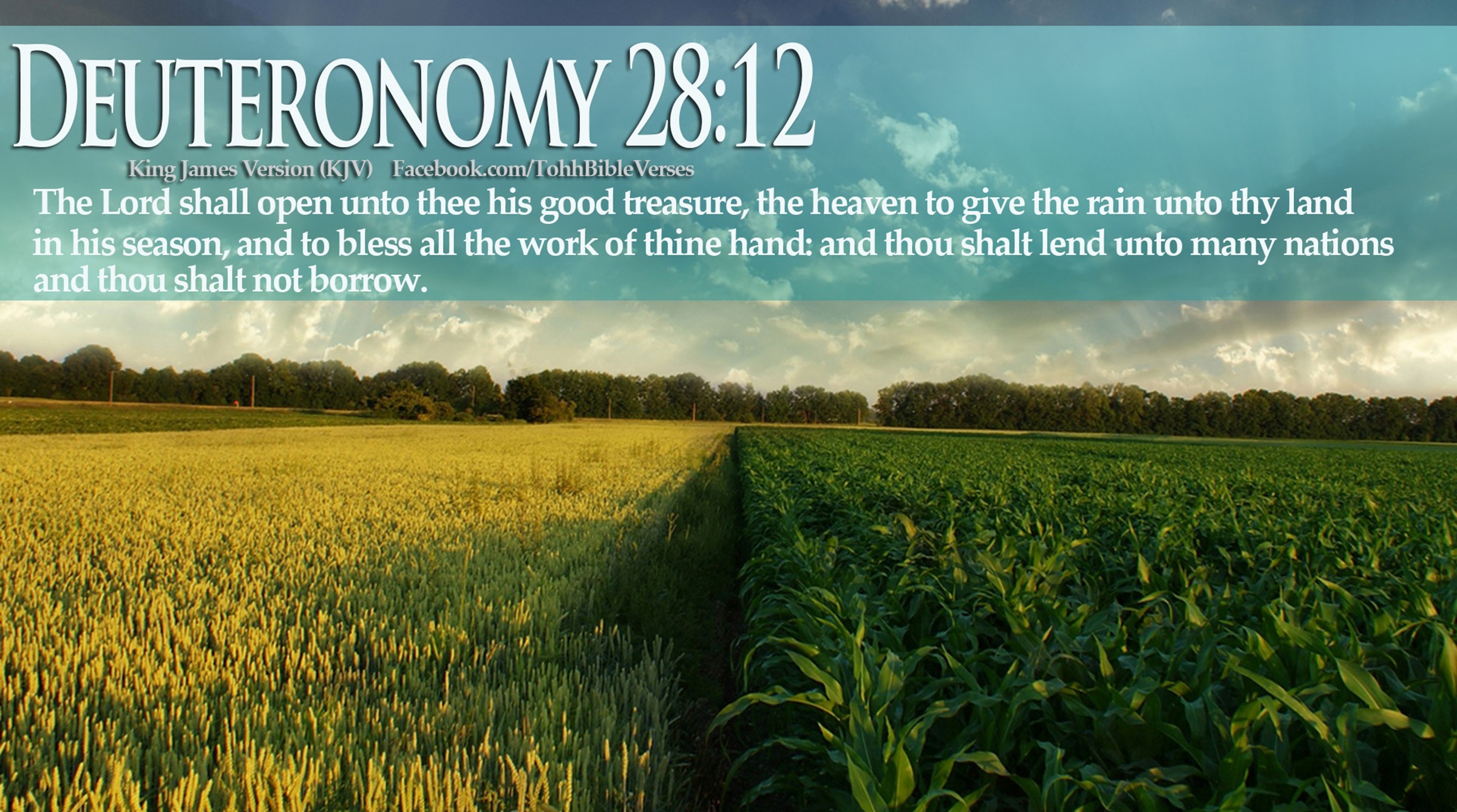
Social Security is the largest owner of the US Debt. In 1996, President Clinton amended the Social Security Act of 1945 by approving Public Law 104 – 193. President Clinton made an immoral choice to address the problem of mounting US Debt. His plan to reduce the US Debt by denying the payment of Old Age Retirement Income Benefits to senior alien workers has backfired. God has given His Promise. It delivers Blessings for the obedience of Commandments. Disobedience of God’s Commandments has consequences. The Clinton Curse reveals the consequences of President Clinton’s corrupt conduct. As of today, the US satisfies the government’s need for revenue by borrowing from foreign nations.
The Clinton Curse. Clinton’s immoral Social Security Policy.
To satisfy the U.S. government’s need for revenue, Washington collects taxes and fees. What happens if this isn’t enough? What happens if the federal government needs more? That is the subject of this article in which we’ll reveal who owns the most U.S. debt and how much of it is owned by foreign nations. We’ll begin by explaining, in simple terms, how the debt market functions.
Debt 101
An individual takes on debt when they finance a new car, house, etc. The U.S. government does so when it issues securities. Specifically, the federal government issues Treasury bills, notes, and bonds. The primary difference is in their maturity. For example, Treasury bills have a maturity of less than one year. Treasury notes mature in one to ten years. Treasury bonds have maturities greater than 10 years.
To issue its debt, the government holds periodic Treasury auctions. A successful auction indicates a strong demand for U.S. Treasury securities. If the auction doesn’t go well, it means demand for Treasuries is weak. Who owns the most Treasury’s?
Owners of U.S. Debt
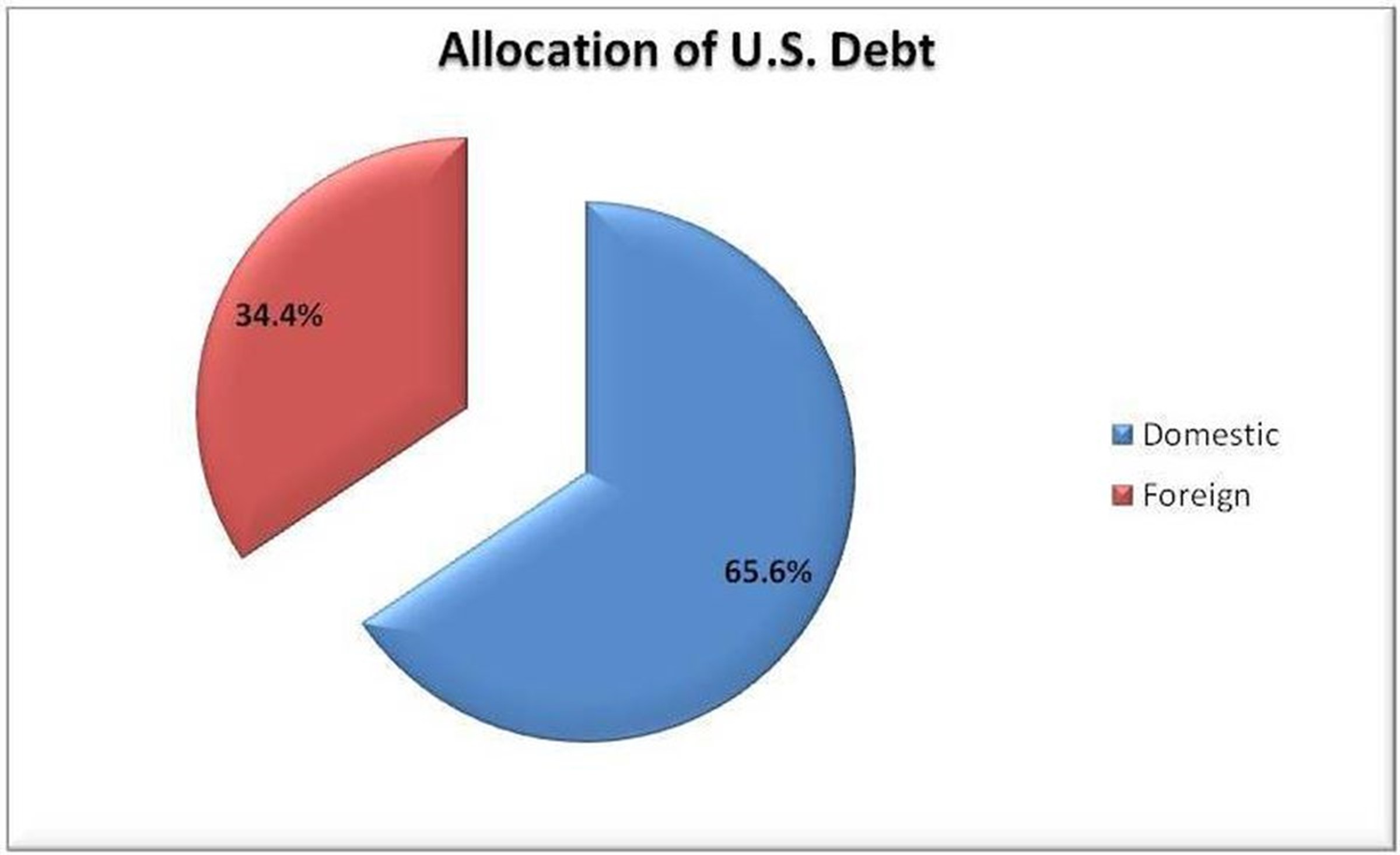
The largest owner of U.S. debt is Social Security. Since the Social Security system is a government entity, how can the government own its own debt? Good question. This is where the “house of cards” theory resides. Some believe the federal government is merely moving the IOUs from one shell to another, hoping to escape the watchful eye of its citizens. In any event, Social Security owns about 16% of the debt followed by other federal government entities (13%), and the Federal Reserve (12%). How much is owned by foreign governments? The following chart contains the answer.
The Clinton Curse. Clinton’s immoral Social Security Policy.
According to the U.S. Treasury Department, at the end of August 2014, more than a third of the debt was owned by foreign countries (34.4%). The largest foreign holders of U.S. debts are Mainland China (7.2%) and Japan (7.0%). What is the consequence of having such a large percentage of debt held by foreign nations? It depends. It depends on the relationship between the U.S. and the specific foreign country. It also depends on the global interest rate environment. Finally, it depends on the geopolitical climate and the degree of fear around the globe. This is the case because when fear rises money flows into U.S. Treasuries which is viewed as a safe place to invest. The percentage of debt owned by countries that are less friendly to America is about 10%. This includes China, several oil exporters (Ecuador, Venezuela, Iran, Iraq, Libya, etc.), and a few others. The worst case would materialize if the largest holders decided to sell their Treasury securities at the same time. This could potentially decrease demand which would push yields higher. If yields rose, the federal government would find it more difficult to service the debt, pushing the deficit higher. If the deficit rose, the total debt burden would accelerate and, unless demand for U.S. debt was to increase, it could get ugly. Will this transpire? It’s not too likely. At least not for the foreseeable future anyway.
Conclusion
Given the state of the global markets, the U.S. is still considered to be the best house in a bad neighborhood. Even though more than one-third of the debt is owned by foreign nations, as long as there are no safer places to invest, money will find its way here. Therefore, global turmoil would be in the best interest of the federal government. Anything which raises fear will bring money to the Treasury and allay the need for higher taxes. However, one day this unsustainable path we’re on will reach its day of reckoning. However, that’s probably not any time soon.
The Clinton Curse. Clinton’s immoral Social Security Policy.
THE CLINTON CURSE – THE US ECONOMY ON A SLIPPERY SLOPE
The Clinton Curse. The US Economy on a Slippery Slope.
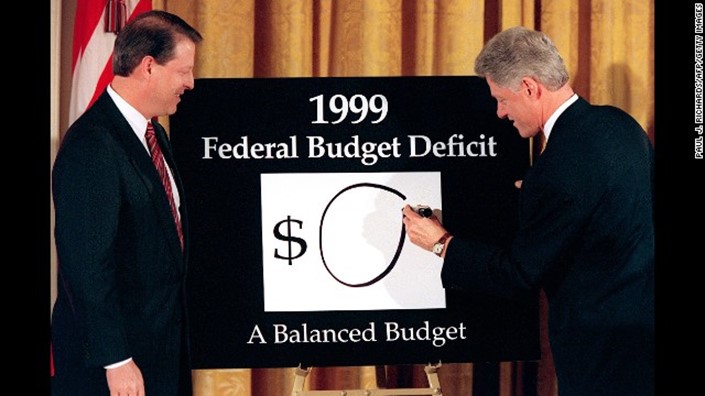
Antislavery Campaign of 2018 demands the Repeal of PRWORA of 1996 as it triggered ‘The Clinton Curse’ placing the US economy on a slippery slope. In my analysis, President Clinton did not Balance the US Budget for he acted in violation of God’s Commandments.
President Clinton missed the opportunity to save the country from foreign debt because he denied the payment of the Old Age Retirement Income and Health Insurance Benefits to alien workers who fully subscribed to the Social Security and Medicare Plans by paying the necessary taxes. To the same extent, ‘The Clinton Curse’ invites Americans to live their lives paying taxes to repay the foreign debt.
How Bill Clinton’s Balanced Budget Destroyed The Economy – Business Insider
The Clinton Curse. The US Economy on a Slippery Slope.
Bill Clinton is giving the keynote speech at the Democratic National Convention tonight.
The idea is to make people feel nostalgic for the last time when the economy was really booming, and hope that some of that rubs off on Obama.
However, in the New York Post, Charlie Gasparino uses the occasion to remind everyone that the seeds of our current economic malaise were planted during the Clinton years.
Basically, it was under Clinton that Fannie and Freddie really began blowing the housing bubble, issuing epic amounts of mortgage-backed debt.
The story that Gasparino tells is basically: Liberal Bill Clinton thought he could use government to make everyone a homeowner and so naturally this ended in disaster.
Gasparino specifically cites the controversial Community Reinvestment Act, a popular conservative bogeyman:
How did they do this? Through rigorous enforcement of housing mandates such as the Community Reinvestment Act, and by prodding mortgage giants Fannie Mae and Freddie Mac to make loans to people with lower credit scores (and to buy loans that had been made by banks and, later, “innovators” like Countrywide).
The Housing Department was Fannie and Freddie’s top regulator — and under Cuomo, the mortgage giants were forced to start ramping up programs to issue more subprime loans to the riskiest of borrowers.
That’s interesting. But the truth is far more complicated. And more interesting.
Clinton’s Budget Legacy
In addition to being remembered for a strong economy, Bill Clinton is remembered as the last President to preside over balanced budgets.
Given the salience of the national debt issue in American politics today, the surpluses are a major mark of pride for the former President (and arguably the entire country). They shouldn’t be.
“I think it is safe to say that we are still suffering the harmful effects of the Clinton budget surpluses,” says Stephanie Kelton, an economics professor at the University of Missouri Kansas City.
To understand why you first need to understand that the components of GDP look like this:
In the above equation, C is private consumption (spending). ‘I’ is investment spending. ‘G’ is government spending. And ‘X-M’ is exports-minus imports (essentially the trade surplus).
Here’s a chart of the government budget around the years during and right after Clinton, in case you need a reminder that the government was in surplus near the end of his tenure.
The Clinton Curse. The US Economy on a Slippery Slope.
Business Insider, Bloomberg
If the government is in surplus, it means that the government is taking in more cash than it is spending, which is the opposite of stimulus.
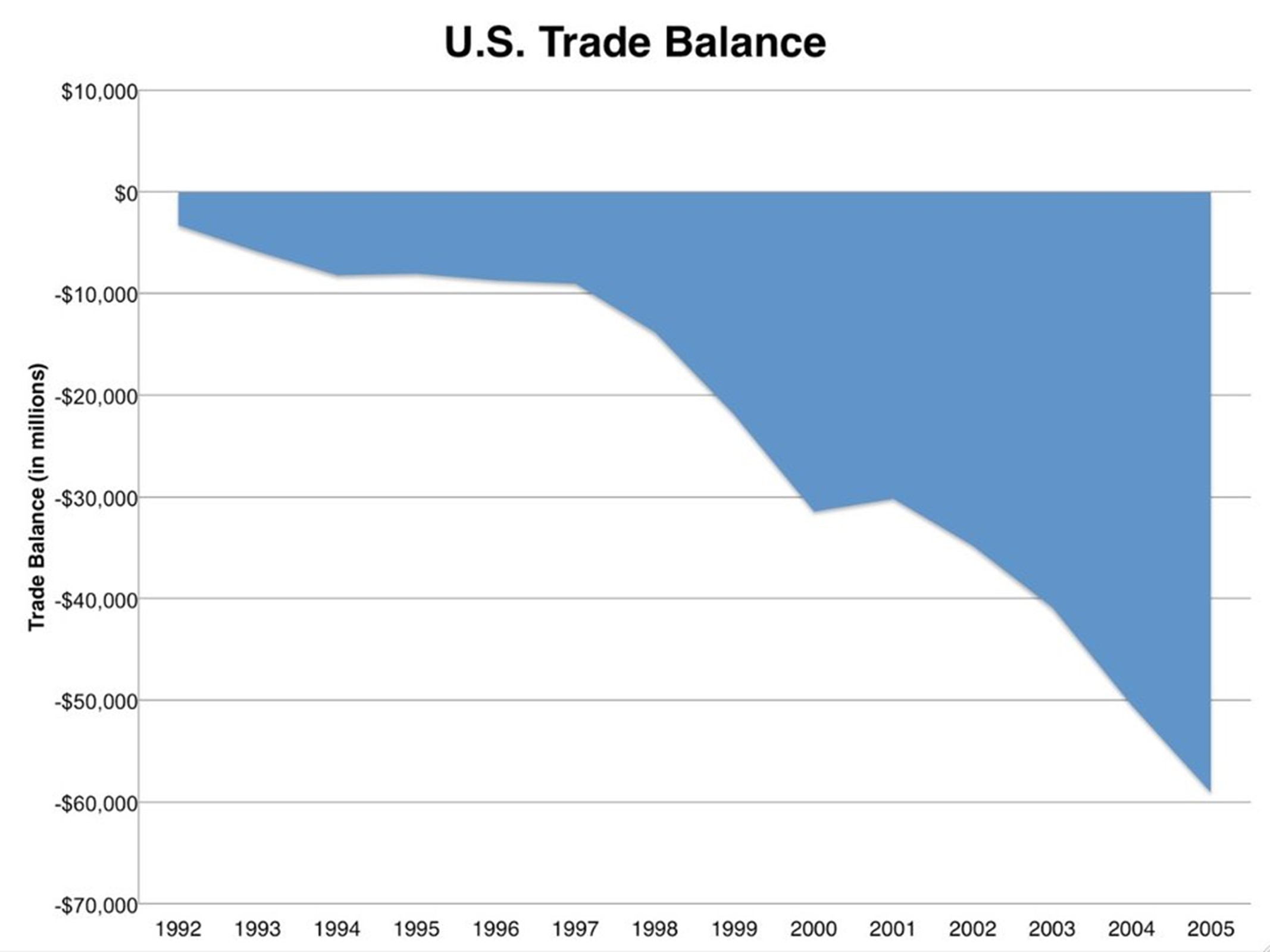
It’s also well-known that the US trade deficit exploded during the late 90s, which means that ‘X-M’ was also a huge drag on GDP during his years.
The Clinton Curse. The US Economy on a Slippery Slope.
Business Insider, Bloomberg
So the trade deficit was subtracting from GDP, and the government was sucking up more money from the private sector than it was pushing out.
There was only one “sector” of the economy left to compensate: Private consumption. And private consumption compensated for the drags from government and trade in two ways.
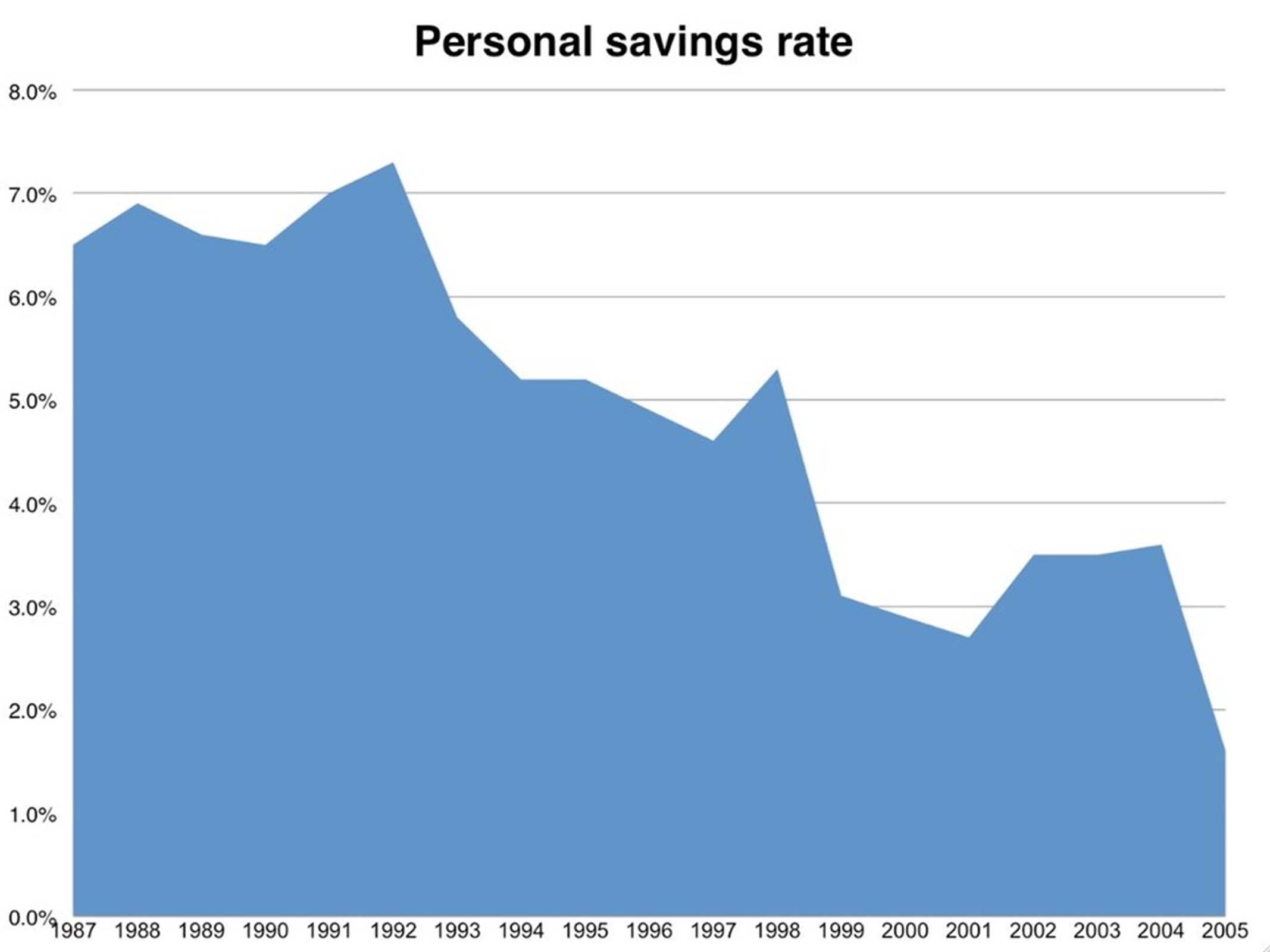
First, the household savings rate collapsed during the Clinton years.
The Clinton Curse. The US Economy on a Slippery Slope.
Business Insider, Bloomberg
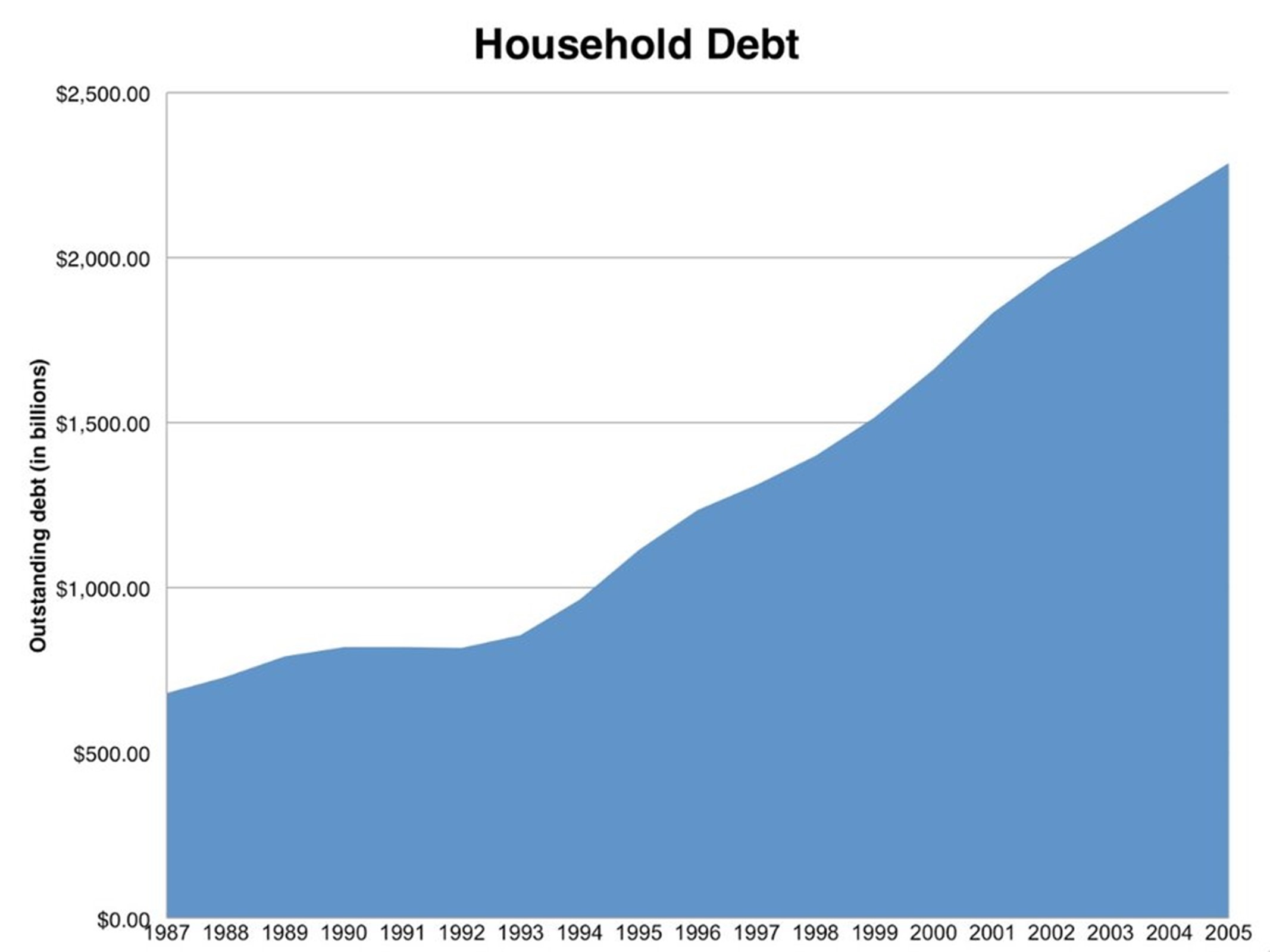
And even more ominously, household debt began to surge.
The Clinton Curse. The US Economy on a Slippery Slope.
Business Insider, Bloomberg
So already you can see how the crisis started to germinate under Clinton.
As his trade and budget policies became a drag on the economy, households spent and went into debt like never before.
Economist Stephanie Kelton expounded further in an email to Business Insider:
“Now, you might ask, “What’s the matter with a negative private sector balance?”. We had that during the Clinton boom, and we had low inflation, decent growth and very low unemployment. The Goldilocks economy, as it was known. The great moderation. Again, few economists saw what was happening with any degree of clarity. My colleagues at the Levy Institute were not fooled. Wynne Godley wrote brilliant stuff during this period. While the CBO was predicting surpluses “as far as the eye can see” (15+ years in their forecasts), Wynne said it would never happen. He knew it couldn’t because the government could only run surpluses for 15+ years if the domestic private sector ran deficits for 15+ years. The CBO had it all wrong, and they had it wrong because they did not understand the implications of their forecast for the rest of the economy. The private sector cannot survive in negative territory. It cannot go on, year after year, spending more than its income. It is not like the US government. It cannot support rising indebtedness in perpetuity. It is not a currency issuer. Eventually, something will give. And when it does, the private sector will retrench, the economy will contract, and the government’s budget will move back into deficit.”
But this is only part of the story. What about what Charlie Gasparino wrote about above?
The Fannie and Freddie Boom
When the government is running a surplus, it no longer has to issue much debt. But risk-free government bonds are a crucial component of portfolios for all kinds of financial institutions, and for mom & pop investors who like the safety of regularly Treasury payouts. The yield on the 10-year bond was over 5% back in those days… nothing to sneeze at for people planning for a retirement.
This created a bit of a crisis.
Bond trader Kevin Ferry, a veteran of the scene, told Business Insider about the panic that was unfolding over the government’s lack of debt.
“OMG, they were all saying… there wasn’t going to be any paper!”
How did the markets react?
“Lo and behold… [Fannie and Freddie] issuance “SURGED” in the late 90s,” said Ferry.
Everything changed. While the government dramatically slowed down the issuance of Treasuries, Fannie and Freddie picked up the baton and started selling debt like never before.
“Prior to those years, there were not regular [Fannie and Freddie] auctions.”
“The system wanted it.”
“The fear was that there wasn’t going to be any…. There were no bill auctions.”
“The brokers were calling up ma & pa and said there are no more T-Bill auctions!”
And the data bears this out.
Total agency issuance of mortgage-backed securities spiked in 1998 and 1999, and from then on they never looked back.
The Clinton Curse. The US Economy on a Slippery Slope.
Business Insider, Bloomberg
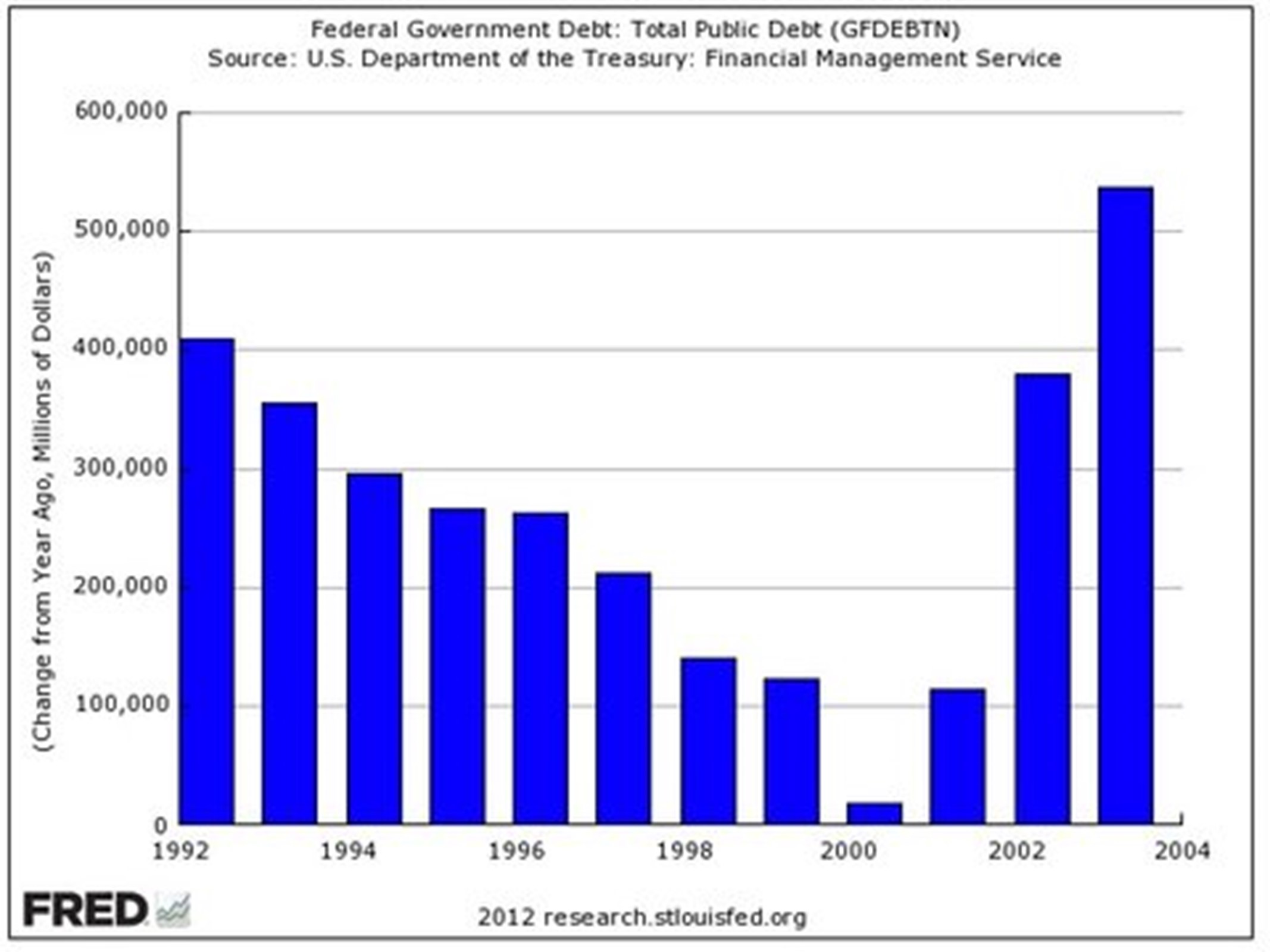
And just to drive home the point again, about how the 1998-1999 spike in issuance was the mirror image of the annual change in the size of the government debt.
The Clinton Curse. The US Economy on a Slippery Slope.
FRED
Note that both government debt and agency issuance spiked in the early 2000s, but that was during a recession when the private sector dramatically scaled back its activity form the late 90s.
How Clinton Destroyed The Economy
The bottom line is that the signature achievement of the Clinton years (the surplus) turns out to have been a deep negative. For this drag on GDP was being counterbalanced by low household savings, high household debt, and the real revving up of the Fannie and Freddie debt boom that had a major hand in fueling the boom that ultimately led to the downfall of the economy.
And that brings up a broader question that people who advocate balanced budgets must answer.
What’s the point of it?
Despite the budget surplus, interest rates were higher. And the surplus provided no protection of the coming slump. And if anything, it just weakened the most brittle part of the economy: households.
Furthermore, there is a pattern of this.
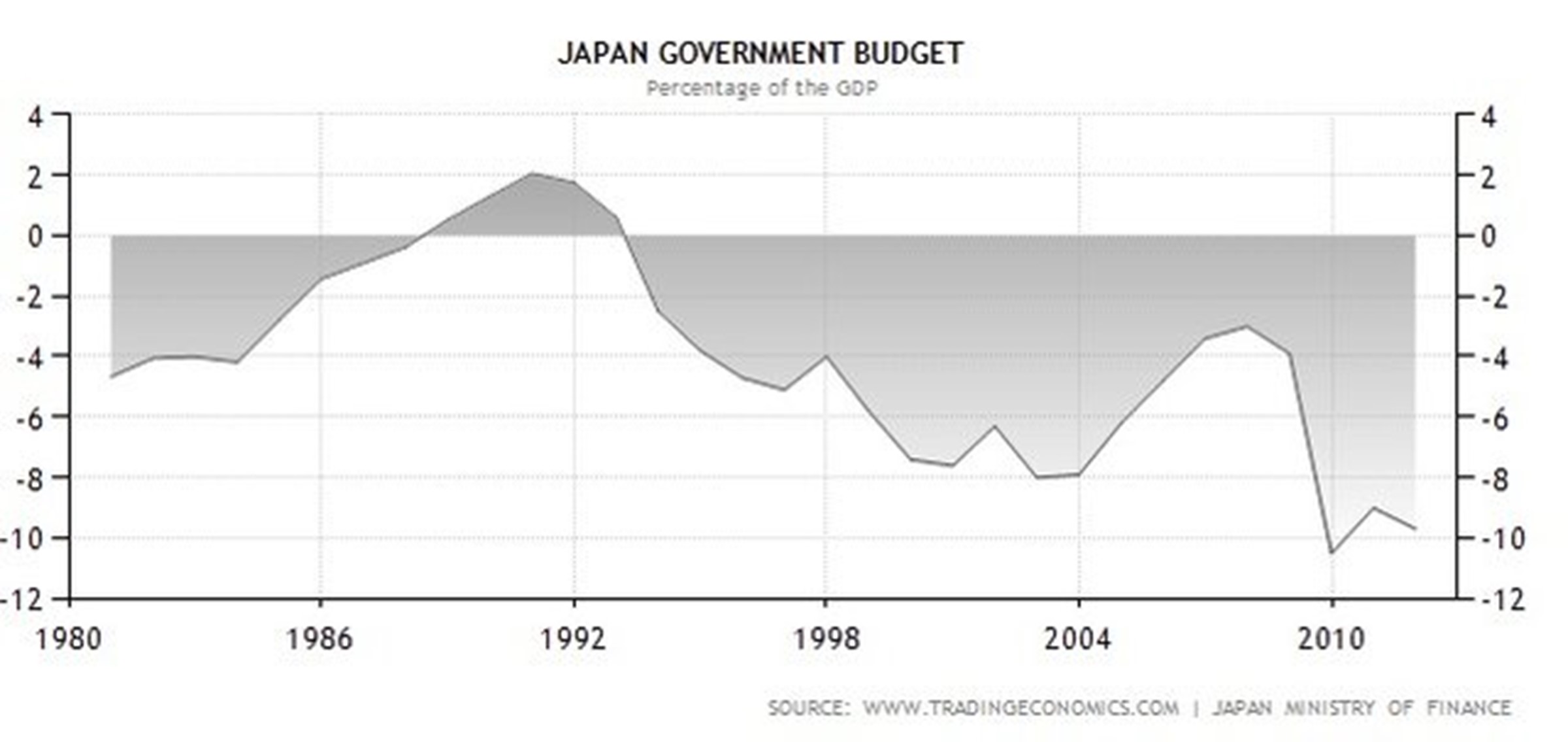
Japan ran a budget surplus in the year right before its economy went into terminal decline, as this chart from Trading Economics shows
The Clinton Curse. The US Economy on a Slippery Slope.
So while Clinton will be remembered nostalgically tonight, for both the performance of the economy and his government finances, they shouldn’t be remembered fondly.
The Clinton Curse. The US Economy on a Slippery Slope.
ANTISLAVERY CAMPAIGN OF 2018 – THE CLINTON CURSE – A SLAVE TO SIN
Antislavery Campaign of 2018. The Clinton Curse. A Slave to Sin.
Antislavery Campaign of 2018 is not about giving citizenship rights to non-citizens. It is about upholding the Supreme Law of the Land to abolish bondage, servitude, and slavery. The Reconstruction of America is not yet over. Slavery re-appeared in this Land in a new form and remains hidden or unnoticed. I ask my readers to stop pretending. At least, admit that over 600, 000 Americans died in the most defining Struggle ever fought by Americans since Independence.
REPEAL PRWORA PROJECT – CAMPAIGN FOR SAVING ONE NATION UNDER GOD
Antislavery Campaign of 2018. The Clinton Curse. A Slave to Sin.
WHERE IS PROTECTION FOR MAN DURING GOLDEN YEARS OF HIS LIFE? HOW TO SURVIVE OPPRESSION?
Antislavery Campaign 2018. The Clinton Curse. A Slave to Sin.
THE GREAT AWAKENING MOVEMENT – SPIRITUAL WARFARE AGAINST OPPRESSION BY EVIL
Antislavery Campaign of 2018. The Clinton Curse. A Slave to Sin.
A NEW BEGINNING IN AUGUST 1996 – OPEN YOUR EYES – OPPRESSION OF ALL THOSE WHO WORK UNDER AMERICAN SUN:
Antislavery Campaign of 2018. The Clinton Curse. A Slave to Sin.
PRESIDENT CLINTON’S NEW BEGINNING IN 1996 – ECONOMIC OPPRESSION OF ALIEN WORKERS
On August 22, 1996, US President Bill Clinton (Democrat) signed into Law that reintroduced Slavery, Involuntary Servitude, Serfdom and Forced Labor in the pretext of making ‘A New Beginning’. Welfare Reform Act or Personal Responsibility and Work Opportunity Reconciliation Act (PRWORA) is unjust and unfair for it violates Constitutional Law that defends natural rights of all people living in United States. All US taxpayers must be treated as equals for receiving retirement income benefits for which they paid taxes. President Clinton’s action constitutes a transgression of President Abraham Lincoln’s Emancipation Proclamation that saved US Non-Citizens or Aliens from the indignity of Slavery.
GIVING VOICE TO HIDDEN PROBLEM – TRAVESTY OF EMANCIPATION PROCLAMATION
NATURAL LAW vs MAN MADE LAW – SLAVERY IS CONTEMPT OF OVER 600,000 AMERICANS WHO DIED BECAUSE OF SLAVERY
US CONGRESS SLAVE DRIVER
I ask my readers to review 43-word 13th Amendment and tell me if those words still govern, rule, and operate the lives of all people, wage earners who perform labour paying taxes.
My readers should not be surprised if I describe the US Congress as “Slave Driver.” The reason for my claim is based on PRWORA enacted by the US Congress in 1996 that amended The US Social Security Act of 1935. This legal provision enacted by 104th US Congress is incorporated as Section 202(y) of the Social Security Act. It mandates that no Retirement Income benefits shall be payable to registered alien(non-citizen) taxpayers in the United States without showing proof of lawful residency as determined by the Attorney General. In my view, unexpired Employment Authorization Document (EAD) must not be demanded if a worker has attained full retirement age as determined by law.
Social Security Act, Section 202(y) violates the principle enshrined in those 43 words called the 13th Amendment. This 1996 amendment to the Social Security Act is fundamentally flawed for it is unconstitutional. It takes away the property rights (earnings, wages, and retirement income) of individuals who paid Federal, State, Local, Social Security and Medicare Taxes working in this country to attain full retirement age.
The Emancipation Proclamation issued by President Abraham Lincoln (Republican) in September 1862 came into effect on January 01, 1863 freeing slaves in all territory still at War with the Union. These slaves were not citizens of the Land and had no political rights of their own. In Law, Servitude or Slavery refers to the burden imposed upon the property of a person by a specified right another has in its use. Servitude involves labour in which the person who performs labour has no right to his earnings from labour. The Emancipation Proclamation specifically protects, defends, preserves and safeguards rights of aliens or non-citizens residing in the United States.
The amended Social Security Act unconstitutionally gives power to Social Security Administration to withhold the property (wages, earnings, monthly retirement income benefits) of alien workers who are not convicted by US Court of Law. In my analysis, The Social Security Act of 1935 amended in 1996 fails to uphold the US Constitution as the Supreme Law of this Land.
I ask my readers to make the distinction between Social Security Tax and Monthly Retirement Benefit. The first represents tax paid to the government and the second represents earning or wage entitled to a retired person to provide income and security during old age.
WASHINGTON – Earlier today, at a ceremony in Emancipation Hall of the United States Capitol Visitor Center, President Obama and leaders of Congress commemorated the 150th anniversary of the 13th amendment to the Constitution. Following are House Speaker Paul Ryan’s (R-WI) remarks at the ceremony, as prepared for delivery: The Thirteenth Amendment is just 43 words long. It is so short that, when you read it, you can almost miss the whole significance. You have to stop and remind yourself that 600,000 people died in the Civil War—600,000 died over 43 words. Or to be more precise, they died in a war that decided whether those 43 words would ever be written.
The Repeal movement exposes President Clinton’s contemptuous violation of Constitutional Principles of equal protection, equal justice and equal treatment under Law.
US Social Security Administration must either obtain a criminal conviction or designate septuagenarian Senior Alien as “SLAVE” to withhold the payment of his monthly retirement income.
Antislavery Campaign of 2018. The Clinton Curse. A Slave to Sin.
President Clinton’s Slavery Law of 1996 tramples upon fundamental freedoms and human dignity entitled to all human beings without any concern for their country of origin or citizenship status. The US Congress can levy taxes but cannot deprive any person of Life, Liberty and Property without due process of Law.
Antislavery Campaign of 2018. The Clinton Curse. A Slave to Sin.
ANTISLAVERY CAMPAIGN OF 2018 – THE ROLE OF GOD IN THE US GOVERNMENT
Antislavery Campaign of 2018. Special Frontier Force reviews the Role of God in the US Government.
Special Frontier Force, the military organization based in India is the byproduct of American War on Communism. Living Tibetan Spirits because of their lifetime affiliation to Special Frontier Force have the right to review the role of God in the US Government.
Antislavery Campaign of 2018. Special Frontier Force reviews the Role of God in the US Government.
Most US historians agree that the US founding fathers embraced the principles of Natural Law because of its Divine Sanction.
Antislavery Campaign of 2018. Special Frontier Force reviews the Role of God in the US Government.
During the American Civil War 1861 to 1865, Union advocates invoked God to reject Slavery as immoral.
Antislavery Campaign of 2018. Special Frontier Force reviews the Role of God in the US Government.
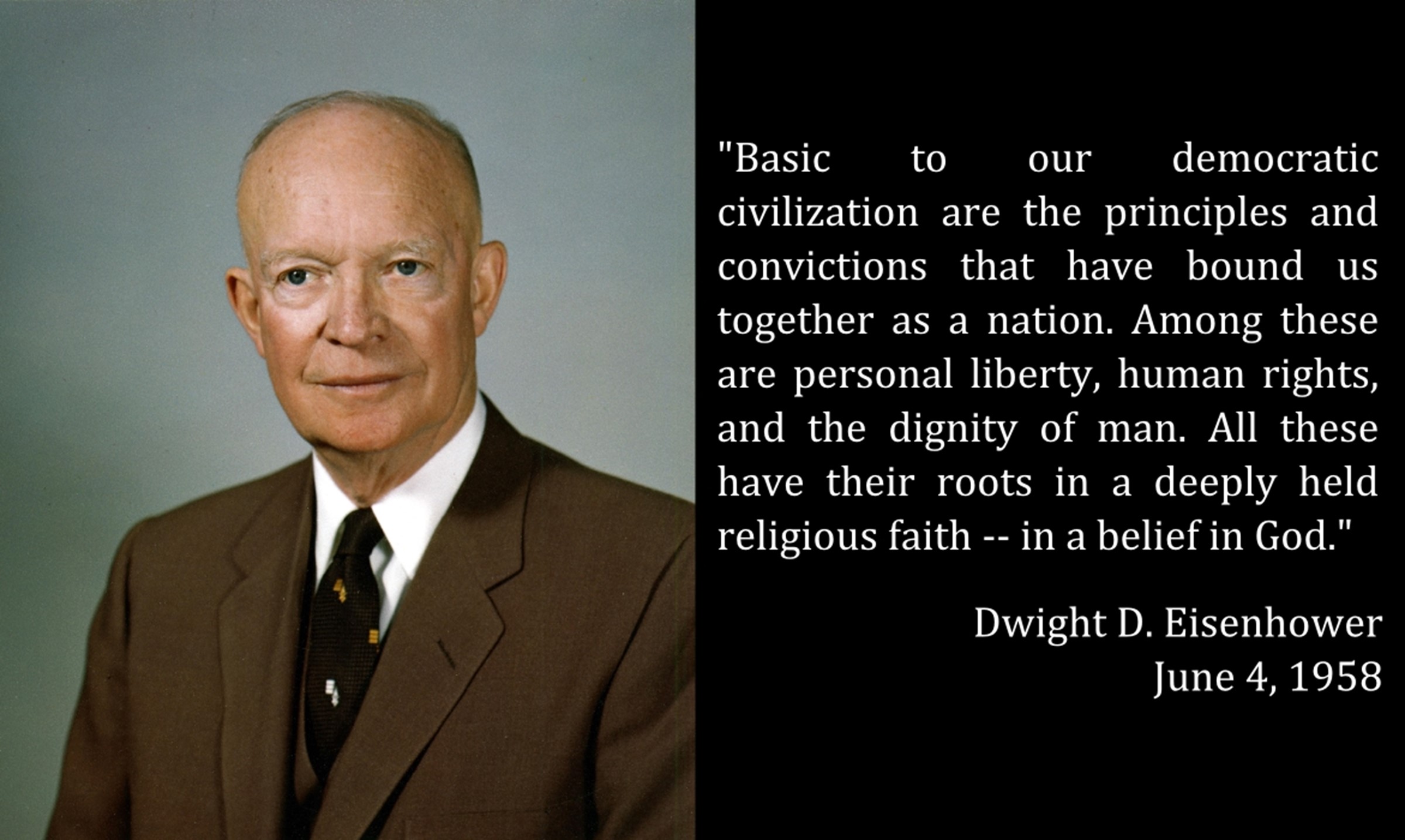
Americans opposed Communism for the political doctrine of Dialectical Materialism is not consistent with trust, belief, or faith in God. American War on Communism includes the driving force generated by Trust in God. Special Frontier Force represents Tibetan Resistance Movement initiated by the US Presidents Harry Truman and Dwight Eisenhower.
Antislavery Campaign of 2018. Special Frontier Force reviews the Role of God in the US Government.
Americans cannot refute the role of God in the US Government. The Official Motto, “IN GOD WE TRUST” directly inspires the US Policy to engage, confront, and contain Communism.
Antislavery Campaign of 2018. Special Frontier Force reviews the Role of God in the US Government.
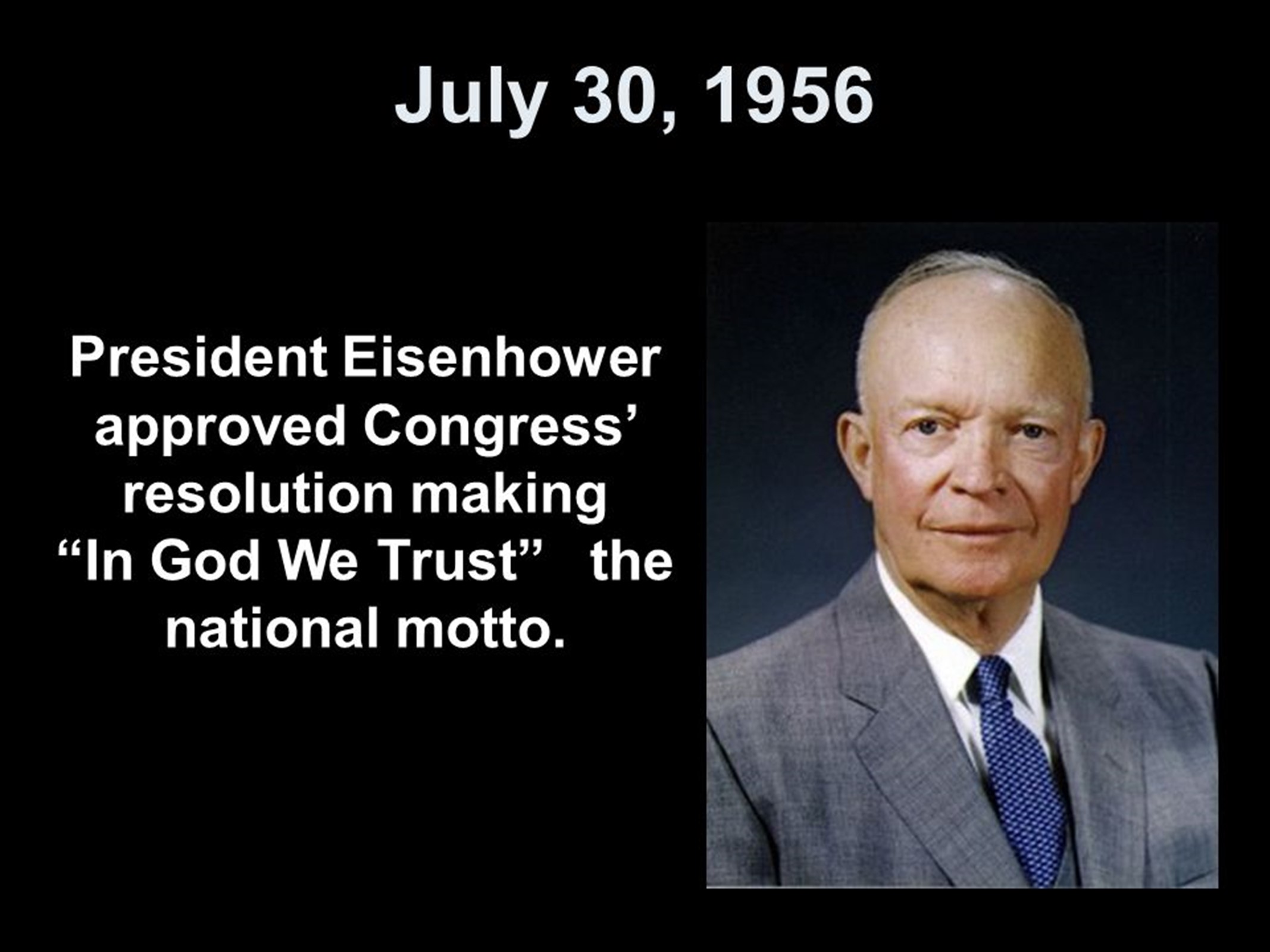
On this day in 1956, two years after pushing to have the phrase “under God” inserted into the pledge of allegiance, President Dwight D. Eisenhower signs a law officially declaring “In God We Trust” to be the nation’s official motto. The law, P.L. 84-140, also mandated that the phrase be printed on all American paper currency. The phrase had been placed on U.S. coins since the Civil War when, according to the historical association of the United States Treasury, religious sentiment reached a peak. Eisenhower’s treasury secretary, George Humphrey, had suggested adding the phrase to paper currency as well.
Although some historical accounts claim Eisenhower was raised a Jehovah’s Witness, most presidential scholars now believe his family was Mennonite. Either way, Eisenhower abandoned his family’s religion before entering the Army and took the unusual step of being baptized relatively late in his adult life as a Presbyterian. The baptism took place in 1953, barely a year into his first term as president.
Although Eisenhower embraced religion, biographers insist he never intended to force his beliefs on anyone. In fact, the chapel-like structure near where he and his wife Mamie are buried on the grounds of his presidential library is called the “Place of Meditation” and is intentionally inter-denominational. At a Flag Day speech in 1954, he elaborated on his feelings about the place of religion in public life when he discussed why he had wanted to include “under God” in the pledge of allegiance: “In this way we are reaffirming the transcendence of religious faith in America’s heritage and future; in this way we shall constantly strengthen those spiritual weapons which forever will be our country’s most powerful resource in peace and war.”
The first paper money with the phrase “In God We Trust” was not printed until 1957. Since then, religious and secular groups have argued over the appropriateness and constitutionality of a motto that mentions “God,” considering the founding fathers’ dedication to maintaining the separation of church and state.
Also on this day
1965
Johnson signs Medicare into law
On this day in 1965, President Lyndon B. Johnson signs Medicare, a health insurance program for elderly Americans, into law. At the bill-signing ceremony, which took place at the Truman Library in Independence, Missouri, former President Harry Truman was enrolled as Medicare’s first beneficiary.
“IN GOD WE TRUST” REAFFIRMED AS NATIONAL MOTTO… AGAIN. GOD IN AMERICA
Antislavery Campaign of 2018. Special Frontier Force reviews the role of God in the US Government.
On Wednesday, November 09, 2011 the House of Representatives voted 396 to 9 to reaffirm the U.S. national motto: “In God We Trust.”
“Some public officials have stated incorrectly that there are different national mottoes. We heard the president make that mistake,” explained Rep. Randy Forbes (R-Va.), who sponsored the bill. Forbes was referring to a speech President Obama delivered in Indonesia last year in which said, “In the United States, our motto is E Pluribus Unum — out of many, one.” (Forbes and a number of other members of the Congressional Prayer Caucus, including current presidential candidate Rep. Michele Bachmann (R-Minn.) sent a letter to the president, taking him to task for the error.)
As The Washington Post noted, Congress has reaffirmed the motto several times in recent years:
The motto has withstood legal challenges from groups that said it violated the separation of church and state. Courts have held that the motto is “ceremonial Deism,” not an official endorsement of religion.
Still, just to be sure, Congress voted to reaffirm the motto in 2002. In essence, it passed a new law that said the old law should not be changed one bit. “Make no change in Section 302, Title 36, United States Code,” it ordered then, citing the passage that created the motto.
Then, in 2006, the Senate voted another time, to reaffirm “the concept embodied in the motto.”
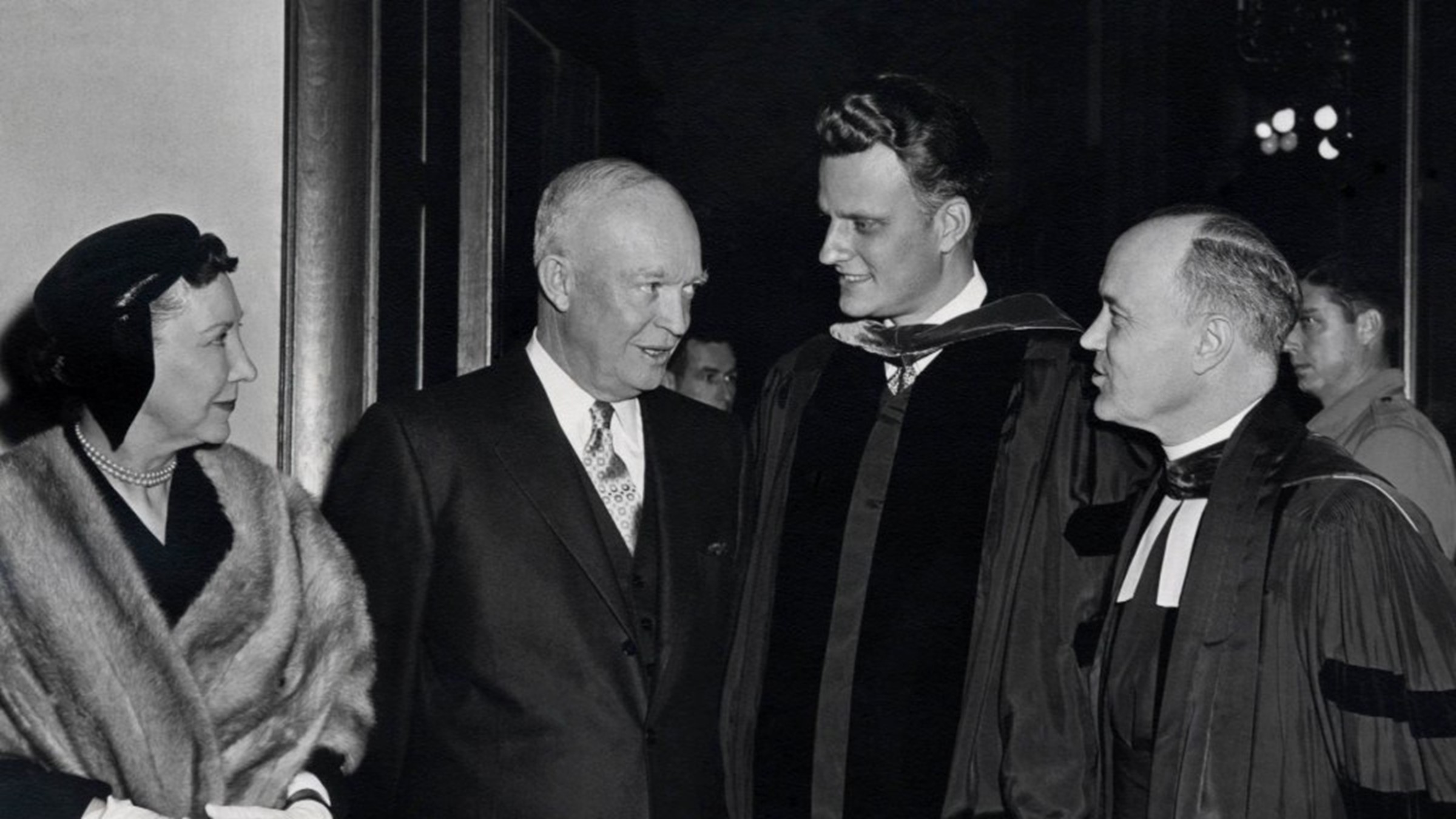
Last fall in God in America, our joint production with AMERICAN EXPERIENCE, we examined how “In God We Trust” came to be our national motto in 1956. At the heart of the story is an alliance between Rev. Billy Graham and Dwight Eisenhower, who together melded Christianity and patriotism into a weapon to be used against “godless Communism” during the Cold War.
The motto, explains historian Frank Lambert, “reclaims this notion that we’re a chosen people and that we were conceived under God and that we flourish under God, and we turn our backs on God at our own peril.”
Antislavery Campaign of 2018. Special Frontier Force reviews the Role of God in the US Government.
SENIOR ALIEN IN US GULAG VS SENIOR IN OCCUPIED TIBET
Senior Alien in US Gulag vs Senior in Occupied Tibet
Living Tibetan Spirits admit with due honesty that Senior in Occupied Tibet is living a better life compared to Septuagenarian Senior Alien who lives his miserable life in US Gulag without hope for receiving monthly retirement benefits during concluding years of his life’s journey. When you behold the man, his condition is self-evident.
Senior Alien in US Gulag vs Senior in Occupied Tibet.
Senior Alien in US Gulag vs Senior in Occupied Tibet
A two-story house in Dianjiao Village, Zhaxigang Town of Ga’er County, Ali Prefecture in southwest China’s Tibet Autonomous Region. (Xinhuanet/Xue Zhen)
BEIJING, May 18 (Xinhuanet) — A two-story house equipped with all kinds of household appliances is where Cama Ciren, a 72-year-old Tibetan and his wife live.
This is Dianjiao village, where they have lived for 34 years, in Zhaxigang Town of Ga’er County, Ali Prefecture in southwest China’s Tibet Autonomous Region.
“The village was actually isolated from the outside world in the 1980s and 1990s. There were only two or three households,” he recalled.
“Without a tent, we built a rock wall to shelter us from the wind. All of our clothes were scrabbled by hands,” he added.
Things have changed over the years. By 2012, Dianjiao was already a well-off village where each family lived in new house and a newly built road connected the village with the outside world.
Senior Alien in US Gulag vs Senior in Occupied Tibet
Cama Ciren (1st L), his wife (2nd R) and his younger sister are in their living room. (Xinhuanet/Xue Zhen)
At their age, Cama Ciren and his wife are not supposed to labor for a living. But they lead a comfortable life owing to the government subsidy policy.
“The subsidies we receive each year exceed 20,000 yuan,” his wife said, adding that they also enjoy full medical reimbursement, which they could not even imagine before.
Speaking of children’s education, Cama said that there are three college graduates in the village, his daughter being one of them.
“She landed a job immediately after graduation,” he said.
Today, none of the children at school-age in Dianjiao village drops out of school. Their food, accommodation, and tuition fees are all covered by the government.
“A happier life awaits us in the future,” he said.
Senior Alien in US Gulag vs Senior in Occupied Tibet