Whole Dude – Whole Literature

Rajahmundry Formulates My Connection to India and Indian Literature

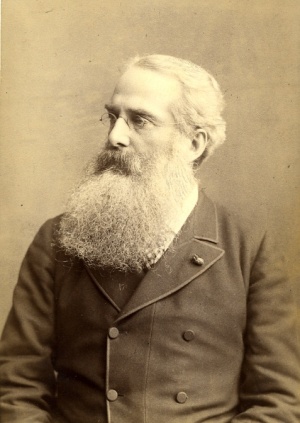
Bharat Darshan – City of Rajahmundry shapes My connection to India and Indian literature. Shri. Sarat Chandra Chatterjee or Chattopadhyay, popularly known as Sarat Babu.
Shri. Sarat Chandra Chatterjee or Chattopadhyay, popularly known as Sarat Babu.

SARAT CHANDRA CHATTERJEE (CHATTOPADHYAY), SEPT 15, 1876 – JAN 16, 1938

I belong to Rajahmundry where Kandukuri Veeresalingam had written the first novel ever written in the Telugu language. However, it was ‘ SARAT BABU’ who had first provoked my interest in reading Telugu literature. Sarat Babu, the famous novelist had written in Bengali language but fortunately, his books are translated into Telugu language and while I grew up in Rajahmundry, his novels were extremely popular he quickly aroused my curiosity.

Rajahmundry – My connection to India and Indian literature.

In 1953, the Telugu film ‘DEVADASU’ with Akkineni Nageswara Rao (A N R) in the lead role was released and the songs from that film though not written by Sarat Babu also became very popular. It was not the popularity of this film which had drawn me towards the novels written by Sarat Babu.

Rajahmundry – My connection to India and Indian literature

I actually started reading his translated stories a few years later after joining Danavaipeta Municipal Corporation High School. I was attracted by his powerful narrative style and the portrayal of the characters in his stories. His novels were easily available in the City Public Library. I know Telugu people who learned the Bengali language just to get the pleasure of reading Sarat Babu’s original works. I also know some of my friends who acquired their names from Sarat Babu. I should acknowledge the fact that his novels gave me the impetus to develop the habit of reading books. While Telugu people could embrace and adore a Bengali novelist, I have not witnessed any love for Tamil writers. While I attended Danavaipeta Municipal High School in Rajahmundry, I learned about ‘TIRUKKURAL’ and was not introduced to any other Tamil literature.

The Bengal, Andhra, Tamil Connection:

Rajahmundry – My connection to India and Indian literature.

Since Mylapore, Madras is my birthplace, I grew up with a sense of fondness for that City and during the 1950s I visited Madras several times as my maternal grandparents still lived there. The Howrah-Madras Mail connected Rajahmundry and Madras. At Rajahmundry I got connected to the nation and much of it was inspired by the writers and thinkers of Bengal. At the beginning of the 20th century, Bengal shaped our sentiments and exerted a great influence on our minds. I am not surprised that ‘Vande Mataram’ is our National Song and ‘Jana Gana Mana’ is our National Anthem and the honor goes to Bengal. Unfortunately, Madras apart from being the State Capital could not excite Telugu people’s’ hearts in the way Bengal did. I can not recall the name of even one public figure from the Tamil speaking areas of Madras State who may have visited Rajahmundry or other Telugu speaking areas of Madras State. Actually, the relationship between Telugu and Tamils started deteriorating after India’s independence in 1947 and it led to the linguistic partition of India. I am proud of my Telugu heritage but I am not truly happy with the partition of the country on a linguistic basis.

Rajahmundry – My connection to India and Indian literature

Dr. R. Rudra Narasimham, B.Sc., M.B.B.S.,

C/O Shri. R. Suryanarayana Murthy, M.A., B.Ed.,

13-92 First Cross Road, Prakasam Nagar, Rajahmundry,

East Godavari District, Andhra Pradesh, India.

S.S.L.C.  MARCH 1961, Danavaipeta Municipal High School, Rajahmundry. 

Rajahmundry – My connection to India and Indian literature

Whole Dude – Whole Gateway

Rajahmundry – The Gateway to Traditions and History

Bharat Darshan – Rajahmundry – The Gateway to Traditions and History. Kandukuri Veeresalingam Pantulu of Rajahmundry

Kandukuri Veeresalingam Pantulu of Rajahmundry 

Bharat Darshan – Rajahmundry – The Gateway to Traditions and History

I am a native of Rajahmundry of East Godavari District, Andhra Pradesh, India by way of my family connections. I lived only a small part of my life in my hometown. Within those few years, Rajahmundry very graciously connected me to the nation that we know as India. On one hand, I was introduced to the traditions of River Worship and Idol Worship, I got acquainted with the ideas of Ahimsa (non-injury), and at the same time I was also introduced to India’s history of foreign occupation, the pain imposed by the Muslim invaders, the struggle for Independence from the British Rule and equally important is the social awakening of the people. During the 19th century, India saw the rise of nationalism and simultaneously there was a wish to reform the society. The natives of Rajahmundry received inspiration from a variety of sources.

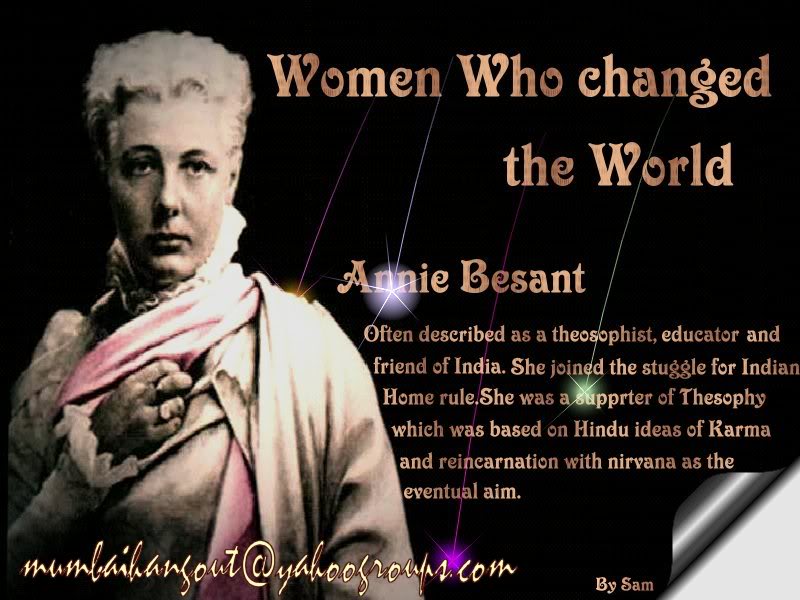
Bharat Darshan – Rajahmundry – The Gateway to Traditions and History. ANNIE BESANT – ANGEL OF INDIA.

Ms. Annie Besant who became the President of the Theosophical Society in 1907 visited Rajahmundry twice and established a place of worship known as ‘Divya Gjyan Samaj’ in a residential sub-division of Rajahmundry which is still known as ‘ALCOT GARDENS’ (named after Theosophist Henry Steel Olcott).

Bharat Darshan – Rajahmundry – The Gateway to Traditions and History

Bipin Chandra Pal (1858-1932), the leader of ‘Vande Mataram’ nationalist movement visited Rajahmundry in April 1907.

Bharat Darshan – Rajahmundry – The Gateway to Traditions and History

Alluri Sita Ramaraju (1898-1924) was inspired by the patriotic zeal of the revolutionaries in Bengal and waged a brief war against the British winning the hearts of the natives of Rajahmundry.  

Kandukuri Veeresalingam Pantulu Garu:  

Bharat Darshan – Rajahmundry – The Gateway to Traditions and History

He was born into a poor Brahmin family at Rajahmundry in 1848. About one hundred years later, when I arrived in Innespeta subdivision of Rajahmundry, the first time I had known this great man was during a visit to the municipal park on the Main Road, just a short walking distance from my grandparents’ house. There is a very imposing statue and people spoke about him with pride and admiration. My eldest brother, Hari was a student at the Veeresalingam Theistic High School in Innespeta. During the academic year 1952-53, I studied in 3rd grade at ‘Shade Girls High School’ located near ‘Kambala Cheruvu’ (Lake Kambala) while my family resided in Danavaipeta subdivision of Rajahmundry. Myself and my elder brother Pratap used to walk to the school and the easiest way to reach the school was a private road which traverses the Veeresalingam Gardens. The subdivisions of Danavai peta and the Danavai Pond and Prakasam Nagar are located on the southern side of the Gardens and Gandhi Nagar is located along the northern perimeter of the Gardens. The school is at a short distance from the north-west entrance to the Gardens. Apart from the tombs of Veeresalingam and his wife Rajya Lakshmi, the Gardens had a venue to conduct marriage functions and there was a Home for Widows. On our way to the school, we used to enter the Widow’s Home and a classmate of ours by name Sai Baba would join us in the walk to the school. On our return trip, the three of us used to reach the Home and after leaving Sai Baba, myself and my brother would resume our walk to our residence in Danavaipeta. There were several occasions when we would wait at the Home while Sai Baba’s mother would be breastfeeding him. During that school year, it was my daily experience and I knew that my friend and his mother derived their support from this great benefactor known as Veeresalingam.  

As my family lived on the outer fringes of Veeresalingam Gardens during the most part of my later school years at Danavaipeta Municipal High School, walking across the Gardens and playing cricket in the evening in the open areas of the Garden became a part of my daily routine. The Gardens had several flowering plants and fruit-bearing trees and to celebrate the festival of Ganesh we used to gather from the Gardens several flowers, leaves, and fruits which are required for the worship. At the same time, I also knew about ‘Hithakarani Samajamu’. Veeresalingam donated all his lifetime earnings and had established this trust in 1907. Addepalli Vivekananda Devi, a social worker, and educationist lived in Danavaipeta and I had seen her several times and I was aware that she was continuing the relentless effort started by Veeresalingam to empower women and for the uplifting of women.

Bharat Darshan – Rajahmundry – The Gateway to Traditions and History

In 1968, Ms. Addepalli Vivekananda Devi successfully established Srimati. Kandukuri Rajya Lakshmi College for Women near the Lake known as ‘Danavai Gunta’. My sister and a sister-in-law studied in this College.  

Veeresalingam was influenced by the ideals of ‘BRAHMO SAMAJ‘ founded by the great social reformers of Bengal, Raja Ram Mohan Roy, Keshub Chunder Sen, and Iswar Chandra Vidya Sagar who did much work for women’s emancipation. Veeresalingam was the pioneer of social reform in Andhra areas of the Madras Presidency apart from his remarkable contributions to Telugu literature and for the cause of education. 

Bharat Darshan – Rajahmundry – The Gateway to Traditions and History

During the course of life, moments slip away and fortunately, they are laid into account. If there are no memories, there is no life worth speaking about. 

Dr. R. Rudra Narasimham, B.Sc., M.B.B.S., 

Danavaipeta Municipal High School, Rajahmundry,

S.S.L.C. Class, March 1961

Bharat Darshan – Rajahmundry – The Gateway to Traditions and History.

Whole Dude – Whole Brahmin

The West Meets the East – Meet the White American Brahmin

Bharat Darshan – The West Meets the East-Meet the White American Brahmin.

Colonel Henry Steel Olcott (Born. August 2, 1832,Orange, N.J. U.S.A., Died. February 17, 1907, Adyar, Madras (Chennai), India.

Bharat Darshan – The West Meets the East-Meet the White American Brahmin.

“OH, East is East, and West is West,

And never the twain shall meet.

Till Earth and Sky stand presently at

God’s Great Judgment Seat.”

(Rudyard Kipling, English poet, novelist, Nobel Prize winner)

The West Meets the East – The East – West Confluence:

Bharat Darshan – The West Meets the East. Meet the White American Brahmin. Helena Petrovna Blavatsky and Colonel Henry Steel Olcott founded the Theosophical Society and established its headquarters at Adyar, Madras, Chennai .

Colonel Henry Steel Olcott, an American lawyer and philosopher founded the Theosophical Society in New York City in 1875 along with Russian-born religious mystic Helena Petrovna Blavatsky, William Judge and others. He became the first president of the Theosophical Society. In 1878 he and Blavatsky visited India. The two settled there in 1879 and in 1882 established the permanent headquarters of the Theosophical Society at Adyar, Madras. Theosophy incorporates aspects of Buddhism, Hinduism and Christian esotericism. His acceptance by and influence on the Buddhists was far reaching. Identified with Eastern philosophical thought, he also helped revive Hindu philosophy. A Pandit conferred on him the sacred thread of the Brahmin caste.

Olcott dedicated his energies to fraternal understanding and the search for truth. He referred to theosophists as “original searchers after spiritual knowledge”. In his farewell message he expressed the wish ” to impress on all men on earth that ‘there is no religion higher than Truth’ and that in the Brotherhood of Religions lies the peace and progress of humanity.”

Upon his death at Adyar, Madras, India in 1907, Olcott was succeeded as president by Ms. Annie Besant, a social reformer and Indian independence leader. She visited my home town Rajahmundry twice and established ‘Divya Gjyan Samaj'(Divine Wisdom Assembly) building at Alcot Gardens. The teachings of the Theosophical Society emphasized human service, a spiritual evolutionism and the role of suprahuman masters of Wisdom (“ADEPTS”).

The natives of my home town Rajahmundry still honour the memory of Colonel Olcott. The residential community of ‘Alcot Gardens’ derives its name from “Olcott”. (Kindly review the comment posted .)

Dr. R. Rudra Narasimham, B.Sc., M.B.B.S.,

Danavaipeta Municipal High School, Rajahmundry, East Godavari District, Andhra Pradesh, India,

S.S.L.C.,  Class  of  March, 1961.

THE WEST MEETS THE EAST. MEET THE WHITE AMERICAN BRAHMIN. ANNIE BESANT – ANGEL OF INDIA .