Whole Dude – Whole Forgiveness

Whole Dude – Whole Forgiveness: The concept of Forgiveness defines the Indian Identity.

Excerpt: The post discusses the diverse belief structures relating to judgement and forgiveness within the Judaeo-Christian and Islamic religions as well as Indian philosophies. While Western faiths promote the concept of a final judgement day, where individuals stand accountable before God, eastern ideology, particularly in India, is shaped by the theory of Karma and the belief in experiencing the consequences of one’s actions over time, without divine intervention. Concepts of forgiveness also contrast, with the West considering it akin to debt release, often through divine pardon, while Indian philosophy embraces ‘KSHAMA’, a guidance for patience, tolerance, and personal responsibility, without seeking divine forgiveness for deeds.

Judaeo-Christian and Islamic Belief in Day of Judgement
Whole Dude – Whole Forgiveness: The concept of Forgiveness defines the Indian Identity. Judaeo-Christian and Islamic Belief in Day of Judgement
Rudyard Kipling from John Palmer
Whole Dude – Whole Forgiveness: The concept of Forgiveness defines the Indian Identity. Rudyard Kipling separates East from West.

 Oh !, East is East, and West is West,     

and never the twain shall meet      

Till Earth and Sky stand presently at     

God’s great Judgement Seat:     

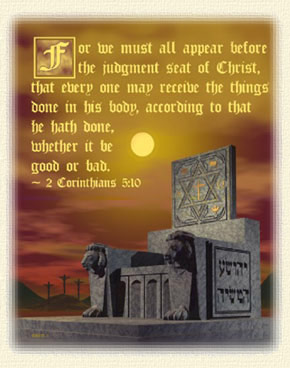
Illustration of Doomsday or Day of Judgement- The Book of 2 Corinthians,Chapter 5, verse 10
Whole Dude – Whole Forgiveness: The concept of Forgiveness defines the Indian Identity. Illustration of Doomsday or Day of Judgment – The Book of 2 Corinthians,Chapter 5, verse 10

The ideas of Rudyard Kipling, the First English writer to win the Nobel Prize for Literature, may have been shaped by his Judaeo-Christian beliefs. The idea of standing before God’s great Judgement Seat belongs to the West. This idea is repeatedly expressed in Holy Bible.     

Whole Dude – Whole Forgiveness: The concept of Forgiveness defines the Indian Identity. Romans 14:10-12 (NKJV) For we shall all stand before the judgment seat of Christ. 11 For it is written: As I live, says the Lord, Every knee shall bow to Me, And every tongue shall confess to God. 12 So then each of us shall give account of himself to God.

 Apostle Paul in his Letters expresses the idea of coming before Christ  for Judgment. In the Book of Romans, Chapter 14, verses 11 and 12 read: It is written : ” ‘As surely as I live,’ says the Lord, every knee will bow before me; every tongue will confess to God.’ ” So then, each of us will give an account of himself to God.     

"For we must all appear before the Judgement Seat of Christ"-The Second Epistle of Apostle Paul to the Corinthians
Whole Dude – Whole Forgiveness: The concept of Forgiveness defines the Indian Identity. “For we must all appear before the Judgement Seat of Christ”-The Second Epistle of Apostle Paul to the Corinthians

Apostle Paul reinforces the belief in the ‘Day of Judgment’ in his Second Epistle to the Corinthians. 2 Corinthians, Chapter 5, verse 10 reads as follows: “For we must all appear before the Judgment Seat of Christ, that each one may receive what is due him for the things done while in the body, whether good or bad.”     

The idea of standing before God for Judgement is not specifically expressed in the East. In the Land of Bharat, the Belief in the Doctrine of Karma shapes the attitudes. In India, the idea of Salvation is not expressed in the context of going to Heaven or Hell as the consequence of a Reward or Punishment on the Day of Judgement. The Law of Karma asserts that  “The Fruit of one’s own making is indeed experienced in one’s life.” As per Indian belief, this inevitability of consequences for one’s own actions is not operated by the mechanism of coming before a God on a Day of Judgment. In India, the man is free to choose between good and evil and experience the fruit of his own actions during the present stage of existence or at a later time in any successive stages of existence. These ideas shape our attitude towards others as well as our relationship with God. The Day of Judgement has no particular relevance to my belief in God.     

The idea of Forgiveness: 

The Lord's Prayer from the Book of Matthew,Chapter 6, Verses 9-13
Whole Dude – Whole Forgiveness: The concept of Forgiveness defines the Indian Identity. The Lord’s Prayer from the Book of Matthew,Chapter 6, Verses 9-13

Jesus taught His disciples the manner in which they must pray to God. From the Book of Matthew, Chapter 6, Verses 9 to 13 are recited and popularly referred to as ‘The Lord’s Prayer’. The idea of forgiveness is expressed in the context of a debt. To cancel or forgive a debt means an agreement to give up all future claims for repayment and hence there will be no future penalty and no punishment for an act of omission or commission. This same idea of forgiveness is also expressed in the context of sin.     

The Lord's Prayer from the Book of Luke, Chapter 11, Verses 2-4
Whole Dude – Whole Forgiveness: The concept of Forgiveness defines the Indian Identity. The Lord’s Prayer from the Book of Luke, Chapter 11, Verses 2-4

The Lord’s Prayer in the Book of Luke appears in Chapter 11, verses 2 to 4. Verse number 4 asks : “Forgive us our sins, for we also forgive everyone who is indebted to us (or, Forgive us our sins, for we also forgive everyone who sins against us).” This idea of forgiveness is not simply about our sense of our anger or resentment and a desire for retaliation and to extract penalty for an offense. This idea of forgiveness is more akin to a pardon that could only be granted by a Judge.

Whole Dude – Whole Forgiveness: The concept of Forgiveness defines the Indian Identity.

In the Judaeo-Christian and Islamic Belief, God officiates as a Judge and could grant a pardon and then there is no further punishment or consequence for an offense. In the Land of Bharat, God refrains from the role of  being a Judge. God is viewed as a Defender, Protector, and Restorer of Dharma or Right Conduct. God would intervene if the Scales of Balance get tipped towards ‘Adharma’ or immoral conduct. Individuals do not come before God for His Judgment and they would experience the consequences for their own acts according to the Law of Karma. God refuses the role of a Judge and He is not in the business of forgiving sins or debts. Indians firmly believe in the practice of repaying their debts and unpaid debts are passed on to the next of kin or to the member of the next generation. Indians may seek assistance or help to repay their loans or render service in lieu of such repayment. They do not pray for forgiveness of their debts. For their acts of offense, misdeeds, and sinful activities, Indians only ask for patience and tolerance which is described as ‘KSHAMA’ in Sanskrit language. For any offending behavior or crime, an Indian may plead for a sense of restraint and forbearance. This tolerance of an offense, this restraint in retaliation or counteracting a misdeed is expressed in the context of a belief in ‘Prarabdha Karma’, the Karma that afflicts the body as a consequence of past actions. There is no escape from this experience of ‘Prarabdha Karma’ and God does not interfere with the operation of the Law of Karma. However, God may grant protection (Raksha) or offer refuge (Saranu) , or provide a sanctuary (Aasraya) to a person who is seeking to defend his existence from acts of retaliation by his enemies. The ideas of ‘Saranu’, ‘Raksha’, ‘Aasraya’, or ‘Aasaya’ could provide defence, protection, support, and help without actually forgiving the individual from eventual consequences for his actions. The concept of forgiveness of debts and sins is not reflected in the ideas and concepts that originated in India. An individual under no circumstance should make any attempt to avoid personal responsibility and a Superior person would not personally retaliate and would not punish an offender in a fit of anger. The Indian tradition demands us to show patience while dealing with the mistakes and misdeeds of others and urges us to take action to correct a wrong instead of extracting a penalty for the offense.     

A Prayer for Patience, Tolerance, Mercy, Compassion, and Grace known as Kshama:     

Lord Shiva( the Auspicious one), is known as 'Maha Deva'(Great God), Sambhu or Shambho(the Benignant one),an Ocean of Compassion and a Destroyer of Sensuality, a Great Ascetic, the Restorer of Peace.
Whole Dude – Whole Forgiveness: The concept of Forgiveness defines the Indian Identity. Lord Shiva (the Auspicious one), is known as ‘Maha Deva'(Great God), Sambhu or Shambho (the Benignant one),an Ocean of Compassion and a Destroyer of Sensuality, a Great Ascetic, the Restorer of Peace.

करचरण कृतं वाक्कायजं कर्मजं वा ।
श्रवणनयनजं वा मानसं वापराधं ।
विहितमविहितं वा सर्वमेतत्क्षमस्व ।
जय जय करुणाब्धे श्रीमहादेव शम्भो ॥

Kara-Caranna Krtam Vaak-Kaaya-Jam Karma-Jam Vaa |
Shravanna-Nayana-Jam Vaa Maanasam Va-Aparaadham |
Vihitam-Avihitam Vaa Sarvam-Etat-Kssamasva |
Jaya Jaya Karunna-Abdhe Shrii-Mahaadeva Shambho ||

Meaning:
1: Whatever Sins have been Committed by Actions Performed by my Hands and Feet, Produced by my Speech and Body, Or my Works,
2: Produced by my Ears and Eyes, Or Sins Committed by my Mind (i.e. Thoughts),
3: While Performing Actions which are Prescribed (i.e. duties prescribed by tradition or allotted duties in one’s station of life), As Well as All other Actions which are Not explicitly Prescribed (i.e. actions done by self-judgement, by mere habit, without much thinking, unknowingly etc); Please tolerate them all,
4: Victory, Victory to You, O Sri Mahadeva Shambho, I Surrender to You, You are an Ocean of Compassion.

Shiva= The Auspicious One, Karunaabhdey = An Ocean of Mercy, Compassion and Grace, Shambho= The Benignant One, Kshamasva= show patience and tolerance, Sarva mey tat= all( actions/activities ) without any exceptions, Vihitha=enjoined or explicable, Avihitham= Not enjoined or inexplicable, Aparaadham= acts of offense or crimes and misdeeds, Krutham=generated or attributed, kara= hands, charana=feet, Vaak=Speech, Karmajam=predestined as a consequence of a past act, sravana=generated by an act of hearing, nayanajam=generated by an act involving the use of eyes, Maanasam = generated in mind or mental visualization of physical acts.     

This prayer specifically refrains from seeking an unconditional pardon and does not aim at obtaining forgiveness. The prayer seeks Lord’s Compassion,Mercy and Grace; and is seeking for His patience and tolerance as the individual has no real escape from the consequences of all of his acts without any exception. The individual is seeking Lord’s  patience and tolerance as he faces the inevitable consequences for his misdeeds and crimes; and Lord’s Mercy, Compassion, and Grace are needed to mitigate and to help the individual to bear the consequences for such acts and to gain redemption.

Whole Dude – Whole Forgiveness: The concept of Forgiveness defines the Indian Identity.

Let it be a sin or a debt, I am encouraged to do my best to redeem myself using the process called Paschatap which is similar to the concept of Repentance but does not result in the remission of sins. The Indian Identity is defined by the belief that there is no escape from experiencing the fruits of one’s own actions of all kinds including the actions of good merit.  

Whole Dude – Whole Forgiveness: The concept of Forgiveness defines the Indian Identity

Whole Dude – Whole Repentance

Whole Dude – Whole Repentance

Excerpt: In various cultures, the theme of repentance is deeply prevalent. To Jews it means following God’s will and achieving atonement, in Christianity it’s linked to the purification of sins through Jesus Christ, and in Islam, the concept involves rejecting other beliefs and adhering strictly to the teachings of the Quran. However, in India, repentance is viewed as a mental catharsis and a personal choice, with no connection to conversion or the remission of sins. It’s an act of self-purification leading to changed thoughts, desires, habits, and actions. Indians believe in submitting all actions to God, without hoping for any reward. Repentance is a concept that significantly defines the Indian Identity.

Whole Dude – Whole Repentance

The idea of repentance is well expressed in different Cultures but the interpretation of its consequences is not the same. The Jews associate the idea of repentance with Divine Atonement and Absolution of sins. Repentance, and forgiveness of sins in the name of Jesus is the theme of the Books of The New Testament. Christian faith calls upon man to repent and be converted through the act of Baptism. In Islam, true repentance means that man must reject all other forms of belief and avoid the worship of false gods. By repenting, a Muslim agrees to truly believe in one and only God(ALLAH) and live in strict obedience to His Five Commandments and other ordinances as revealed in the Holy Scripture of Quran. Islam also demands that the true believer must ask the non-believer to repent. Islam encourages the idea of harshly punishing all individuals who fail to truly repent. In India, the Land described as ‘Karma Bhumi’, repentance is viewed upon as a personal choice. Repentance could only be used to change one’s own conduct. Most importantly, in the Land of Bharat, the idea of repentance is not associated with the idea of converting the religious beliefs of a man. The idea of ‘repent or perish’ does not define Indian Identity. 

Judaism and the Doctrine of Atonement: 

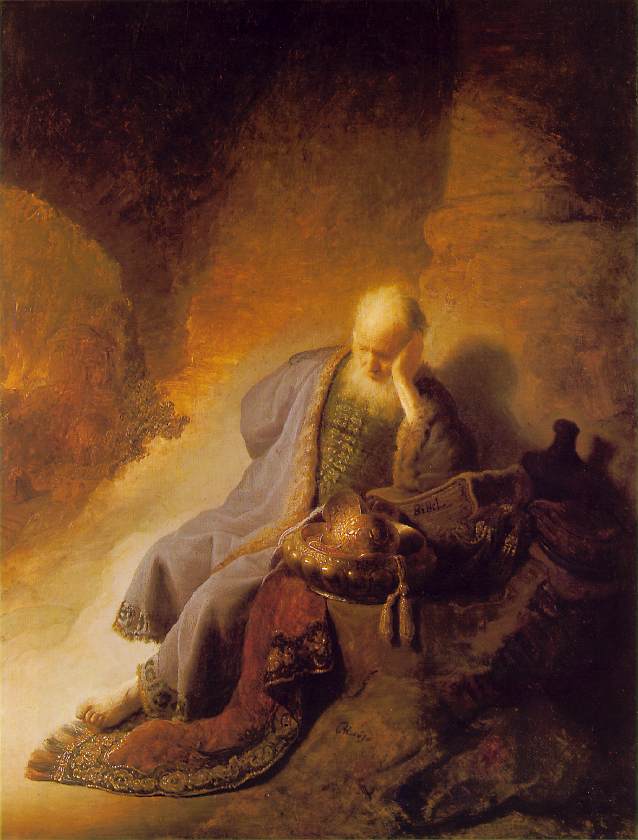
Repentance is a common theme of Old Testament Prophets. Prophet Jeremiah had more to say about repentance than any other Prophet. He called upon Jews to repent and condemned them for their false worship and social injustice.
Whole Dude – Whole Repentance: Repentance is a common theme of Old Testament Prophets. Prophet Jeremiah had more to say about repentance than any other Prophet. He called upon Jews to repent and condemned them for their false worship and social injustice.

To Jews, repentance means living in obedience to Yahweh’s Will for the individual and the nation of Israel. For a Jew, atonement is expiation for his own sin in order to attain God’s forgiveness. He may achieve this in various ways, including repentance, payment for a wrong action, good works, suffering, and prayer. Repentance and changed conduct are stressed as the most important aspects of Atonement. 

God set up Laws for the Israelites mostly regarding holiness and worship. The Old Testament Book of Leviticus, Chapter 16, verse 34 :"This is to be a lasting ordinance for you; Atonement is to be made once a year for all the sins of the Israelites."
Whole Dude – Whole Repentance: God set up Laws for the Israelites mostly regarding holiness and worship. The Old Testament Book of Leviticus, Chapter 16, verse 34:”This is to be a lasting ordinance for you; Atonement is to be made once a year for all the sins of the Israelites.”

The Day of Atonement or YOM KIPPUR is the most important and solemn of the Jewish holidays. It is the tenth and final day of the Ten Days of Repentance which begins with Rosh Hashanah. 

God has issued a lasting ordinance and has called upon the Jews to obtain Atonement once a year.After the destruction of the Second Temple at the Temple Mount in Jerusalem, Jews discontinued the practice of ritualistic animal sacrifice to make the sin and burnt offerings to seek Atonement.
Whole Dude – Whole Repentance: God has issued a lasting ordinance and has called upon the Jews to obtain Atonement once a year.After the destruction of the Second Temple at the Temple Mount in Jerusalem, Jews discontinued the practice of ritualistic animal sacrifice to make the sin and burnt offerings to seek Atonement.

The observance of Yom Kippur includes 25 hour period of fasting and intensive prayer. At the end of Yom Kippur, the man considers himself absolved from his sin and is reconciled to God. 

Repentance is not a personal choice for the Jews.
Whole Dude – Whole Repentance: Repentance is not a personal choice for the Jews.

The Message of Jesus – The Kingdom of God is Near and Therefore Repent: 

Whole Dude – Whole Repentance
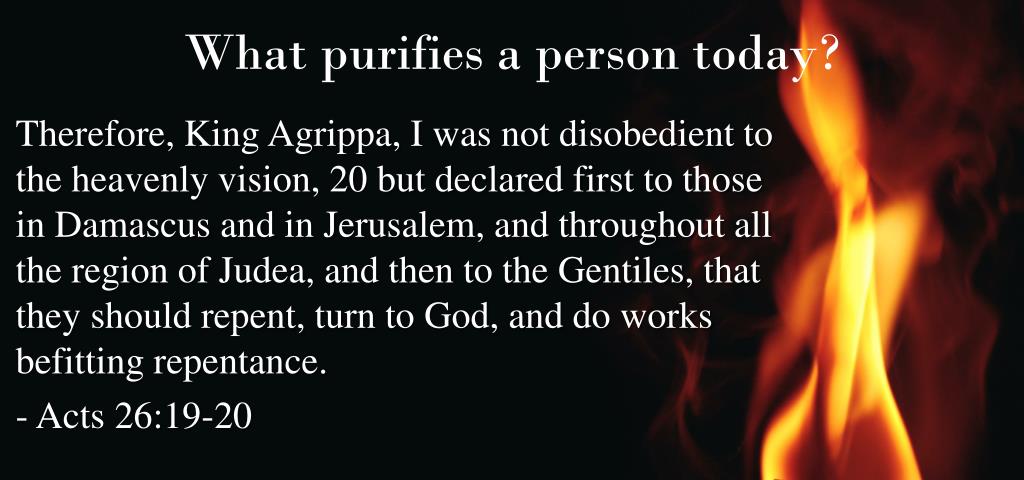
"REPENT, FOR THE KINGDOM OF HEAVEN IS AT HAND!" - Gospel of Matthew, Chapter 3, verse 2.
Whole Dude – Whole Repentance: “REPENT, FOR THE KINGDOM OF HEAVEN IS AT HAND!” – Gospel of Matthew, Chapter 3, verse 2.
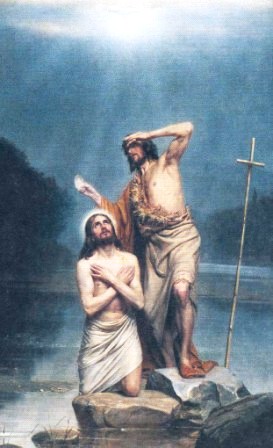
The Baptism of the sinless Man. From that time on Jesus began to preach, "REPENT, FOR THE KINGDOM OF HEAVEN IS NEAR." - Gospel of Matthew,Chapter 4, verse 17.
Whole Dude – Whole Repentance: The Baptism of the sinless Man. From that time on Jesus began to preach, “REPENT, FOR THE KINGDOM OF HEAVEN IS NEAR.” – Gospel of Matthew,Chapter 4, verse 17.

Jesus announced the approaching Kingdom of God and therefore called people to repentance. Jesus’ call to repentance is grounded in this message of the approaching Kingdom of God. In Jesus’ preaching, repentance does not mean a prerequisite or precondition or even a penitent contemplation of oneself but, rather a consequence of the proximity of the Kingdom of God. 

The Acts of the Apostles, Chapter 2, verse 38 :Then Peter said to them,"Repent, and let every one of you be baptized in the name of Jesus Christ for the remission of sins; and you shall receive the gift of the Holy Spirit."
Whole Dude – Whole Repentance: The Acts of the Apostles, Chapter 2, verse 38:Then Peter said to them,”Repent, and let every one of you be baptized in the name of Jesus Christ for the remission of sins; and you shall receive the gift of the Holy Spirit.”

Christians believe that the redeeming of mankind and the reconciliation of God with man is brought about by Jesus’ suffering and Crucifixion. As per Christian belief, Jesus came to Earth and became the sacrifice for all mankind. It was the sins of all mankind that has put Jesus on the Cross. Christians seek forgiveness through Jesus Christ the Savior. 

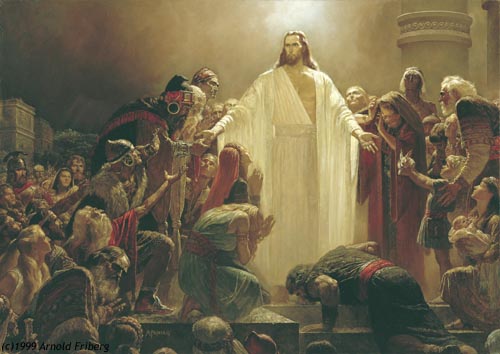
Risen Lord - Jesus the Redeemer. The Acts of the Apostles, Chapter 3, verse 19 :"Repent therefore and be converted, that your sins may be blotted out, so that times of refreshing may come from the presence of the Lord."
Whole Dude – Whole Repentance: Risen Lord – Jesus the Redeemer. The Acts of the Apostles, Chapter 3, verse 19:”Repent therefore and be converted, that your sins may be blotted out, so that times of refreshing may come from the presence of the Lord.”
LENT SEASON : The period of forty week days from Ash Wednesday to Easter is observed variously in Christian Churches by fasting and penitence. Christians do not celebrate a 'Day of Atonement'. Christians seek forgiveness of sins through GRACE of their Risen Lord.
Whole Dude – Whole Repentance: Lent Season: The period of forty week days from Ash Wednesday to Easter is observed variously in Christian Churches by fasting and penitence. Christians do not celebrate a ‘Day of Atonement’. Christians seek forgiveness of sins through GRACE of their Risen Lord.

Christian traditions accept the announcement of God’s willingness to forgive all those who truly repent of their sins. Christians are sharply divided about the Doctrine of Conciliation and the power to “bind and loose.”

Whole Dude – Whole Repentance

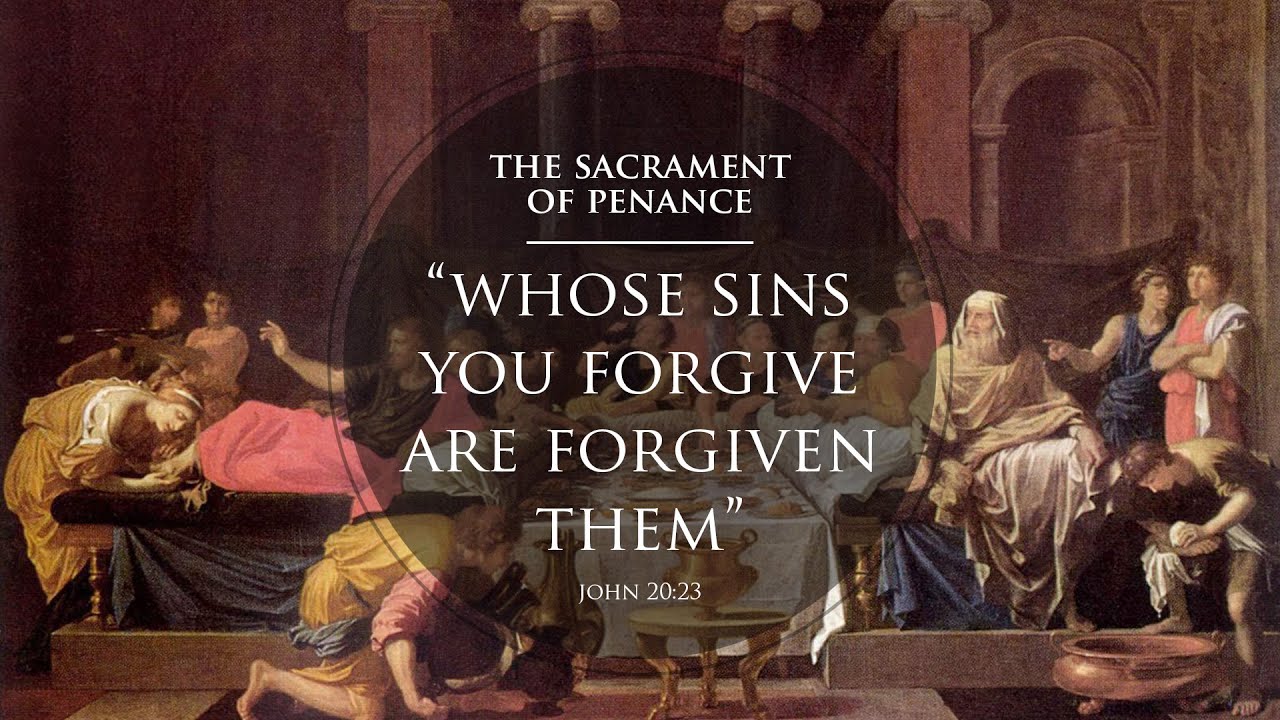
Jesus after the Resurrection told the disciples:”If you forgive anyone his sins, they are forgiven; if you do not forgive them, they are not forgiven.” (Gospel of John, Chapter 20, verse 23) This statement is interpreted in different ways. Catholics believe in Sacramental Absolution of sins and they extend the power to “bind  and loose” that was conferred by Jesus on the Apostles  to all of their priests. Martin Luther, the leader of Protestant Reformation in Germany had asserted that daily repentance is the repeated actualization of Baptism. The Protestants have ruled out The Sacrament of Penance, the Fourth Sacrament of Roman Catholicism. 

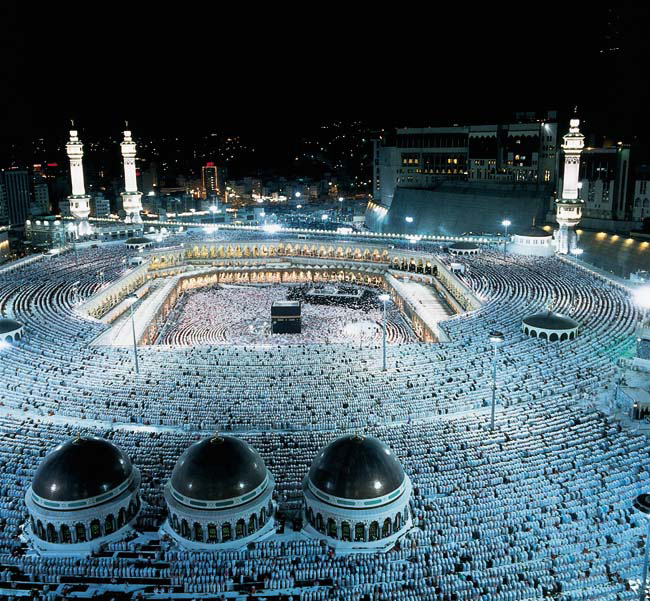
Islam – “Allah is He Who Accepts Repentance”: 

"Know they not that Allah is He who accepts repentance from His bondsmen and taken the alms, and that Allah is He who is the Relenting and Merciful." SURAH IX, At-TAUBAH,verse 104, Holy Quran.
Whole Dude – Whole Repentance: “Know they not that Allah is He who accepts repentance from His bondsmen and taken the alms, and that Allah is He who is the Relenting and Merciful.” SURAH IX, At-TAUBAH,verse 104, Holy Quran.

The Revelations stated in the Holy Book of Quran state that it is always possible for a sinner to repent (Taubah or Tawbah) and redeem himself by a genuine conversion to the truth. Genuine repentance has the effect of removing all sins and restoring a person to the state of sinlessness with which he started his life. 

(Triumphant) are those who turn repentant( to ALLAH ), those who serve( Him ), those who praise ( Him ), those who fast, those who bow down, those who fall prostrate ( in worship ), those who enjoin the right and who forbid the wrong and those who keep the limits ( ordained ) of ALLAH - And give glad tiding to believers! - Holy Quran, At-Taubah, Surah IX, verse 112.
Whole Dude – Whole Repentance: (Triumphant) are those who turn repentant (to ALLAH), those who serve (Him), those who praise (Him), those who fast, those who bow down, those who fall prostrate (in worship), those who enjoin the right and who forbid the wrong and those who keep the limits (ordained) of ALLAH – And give glad tiding to believers! – Holy Quran, At-Taubah, Surah IX, verse 112.

In Surah IX, At-Taubah (Repentance), Holy Quran issues stern Commandments against idolaters, disbelievers, transgressors, the Jews and the Christians for they have taken as lords beside ALLAH their rabbis, and their monks, the Messiah, and that son of Mary. 

Quran was sent down as a guidance for the people.( Surah II, verse 185 )
Whole Dude – Whole Repentance: Quran was sent down as a guidance for the people. (Surah II, verse 185)

The ninth month of the Muslim Year during which the Quran was sent down as a guidance for the people is observed as a period of daily fasting from sunrise to sunset. Ramadan is seen as an obedient response to a Command from God and to a lesser extent it may represent a period of Atonement. 

The Land of Bharat: Submission of all actions to God: 

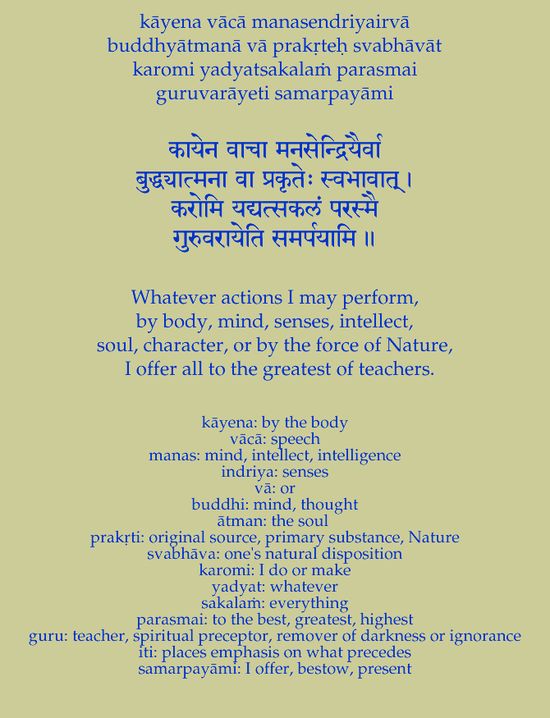
Whole Dude – Whole Repentance: Kayena vacha manasenindriyairva, Buddhyatmana naa prakrteh svabhavat, Karomi yadyatsakalam parasmai, Narayanayeti Samarpayami.

While the Jews, the Christians, and the Muslims are constantly reminded to repent and to seek forgiveness of God for all of their sinful actions, in the Land of Bharat, the people are counseled to submit to God all of their actions; either good or bad.

Whole Dude – Whole Repentance: Submit all actions to Lord God Creator without desiring the fruits of actions.

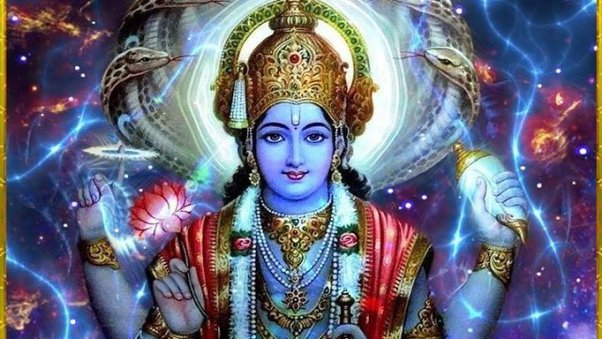
Whatever actions that a man accomplishes with his body, with his speech, with his mind, with his organs of motor function, or because of his attitude or temperament; all of those acts without any exception should be dedicated or submitted to the Supreme Lord known as Narayana. Without making any distinction between good or bad actions; man should refrain and should not  desire the fruits of his actions. 

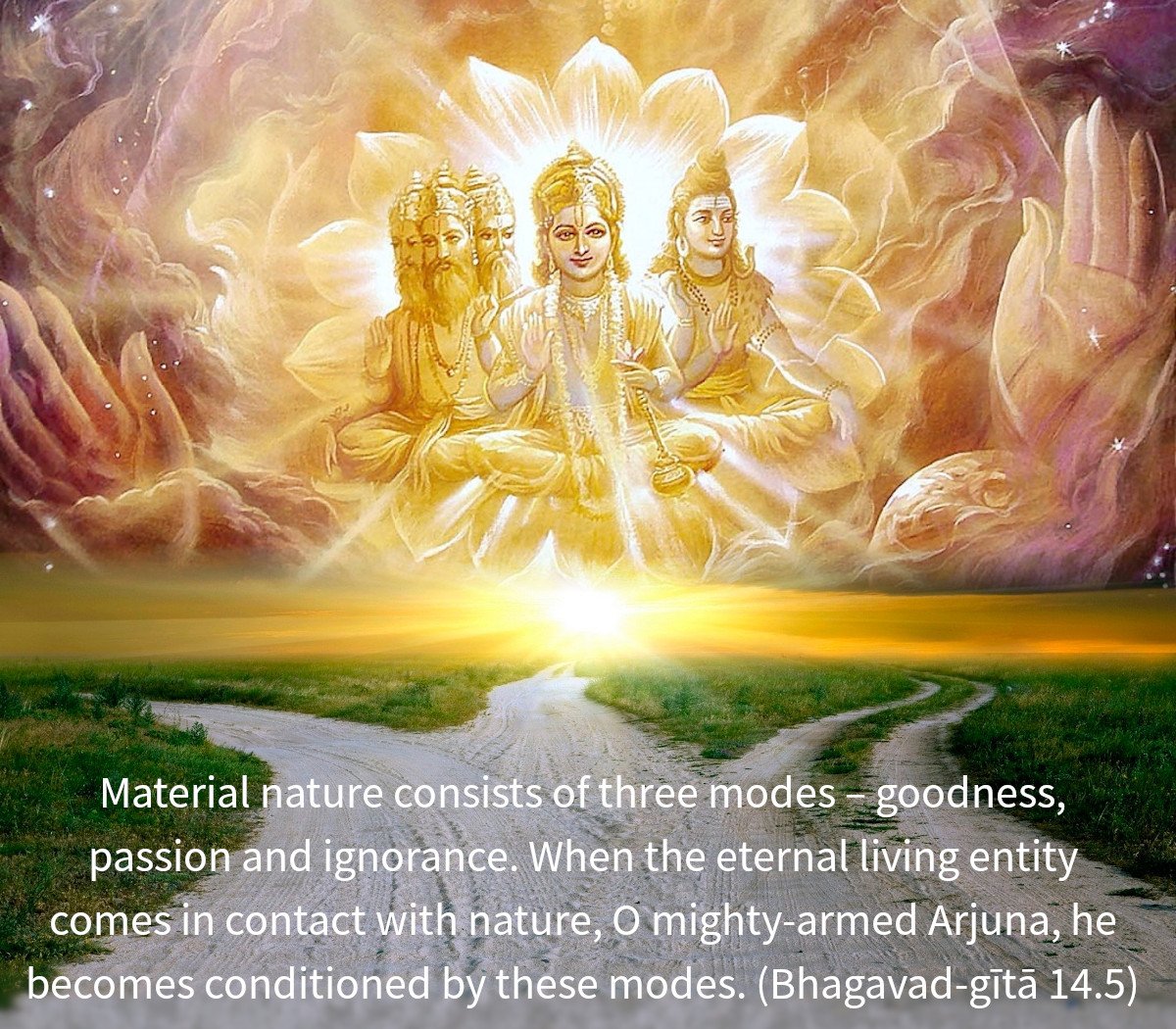
The Three Modes of Material Nature – ‘Guna Traya Vibhaga Yoga’: 

Whole Dude – Whole Repentance: Sattvam, rajas, tama iti gunah prakriti- sambhavah, Nibadhnanti Maha-Baho, dehe dehinam avyayam.

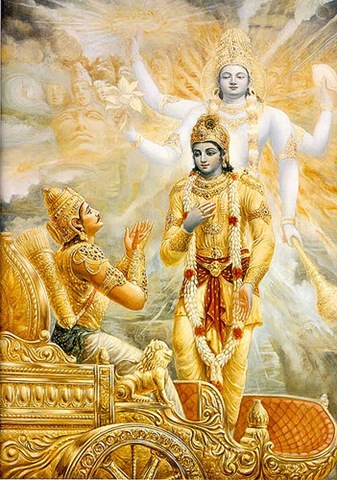
The Lord’s Song known as the Bhagavad Gita, Chapter XIV, verse 5 states that the material Nature consists of the three modes – goodness (Sattva), passion (Rajas), and ignorance (Tamas). And when the living entity comes in contact with Nature (Prakrti), he becomes conditioned by these modes which enslave the immutable consciousness of the self within the body. Man acts under the influence of any of the three different modes of material Nature. 

Gunam etan atitya trin dehi deha - samudbhavan, Janma - mrtyu jara-dukhair Vimukto ' mrtam asnute.
Whole Dude – Whole Repentance: Gunam etan atitya trin dehi deha – samudbhavan, Janma – mrtyu jara-dukhair Vimukto ‘ mrtam asnute.

The Lord’s Song further states that when man is able to rise above (transcend) these three qualities known as Sattva, Rajas, and Tamas, the embodied soul can become free from birth, death,old age, and their distresses, and can enjoy “Amrit” (the Divine Nectar that bestows Immortality) even in this life. The Supreme Lord is transcendental to the three modes of Nature. When man acquires the true knowledge of the Supreme Lord, he is emancipated (Vimukti) from the conditioning effects of Sattva, Rajas, and Tamas. 

Indian View – Repentance does not remit sins: 

Whole Dude – Whole Repentance

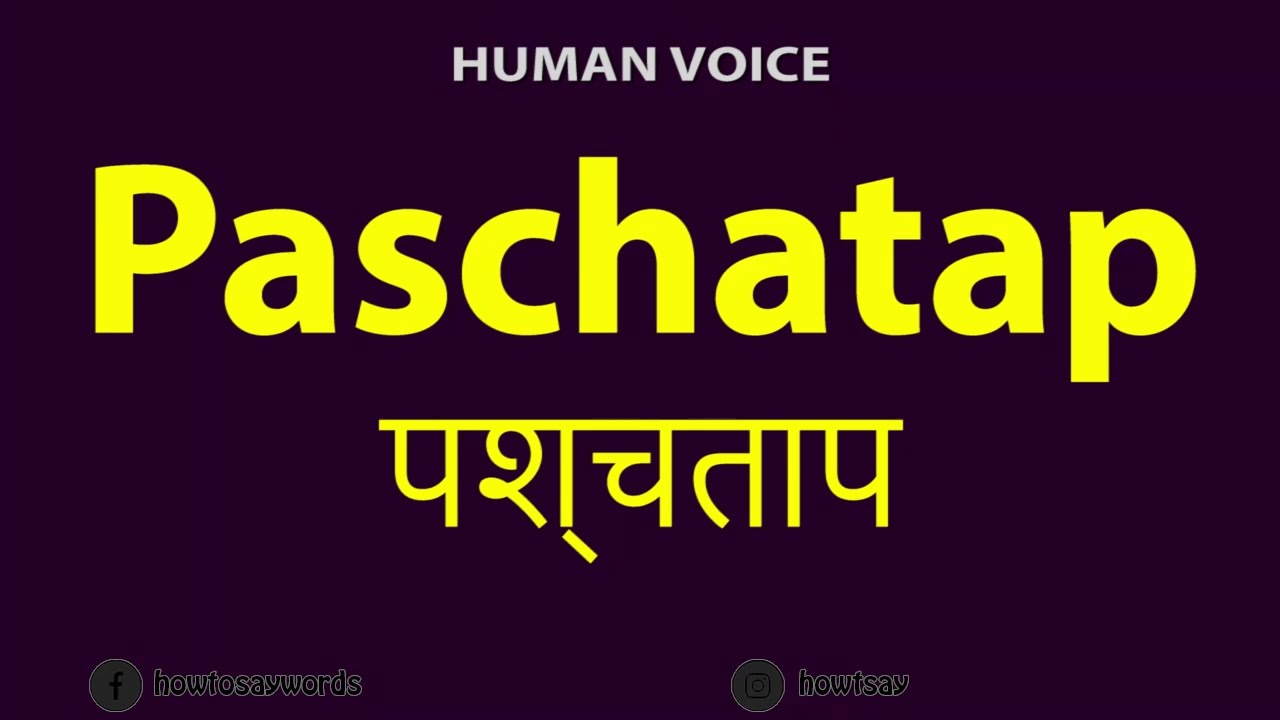
In the Sanskrit language, the word repentance is described as “Paschatap.” It is the feeling of sorrow or grief experienced by an offender for his own actions that inflicted pain or caused an injury or insult. The Indian thinkers have described repentance as mental catharsis. Repentance is an act of purification of the mind. A man cannot unburden his conscience by concealing his actions, or by suppressing  the memory of his actions. The emotional stress and the burden imposed by a sense of guilt could be alleviated by bringing the memory of our actions to consciousness and by giving expression to sorrow or grief caused by these actions. The offender does not merely regret his actions. He mentally experiences the pain caused by his actions and gives expression to the emotion of sorrow or grief. In the Indian tradition, grief is manifested by actually shedding tears of sorrow with which the offender cleanses the feet of his victim. This process of mental catharsis brings about changed conduct. The man is enabled to change his mode of conditioned activities. The activities performed in the mode of ignorance (Tamas), and passion (Rajas) lead to distress. Man acquires real knowledge while acting under the influence of the mode of goodness or Sattva. Repentance helps the man to move upward into the mode of Sattva (goodness ) from that of Tamas (ignorance), and Rajas (passion). Through repentance man changes his thoughts, his desires, his habits and his actions. 

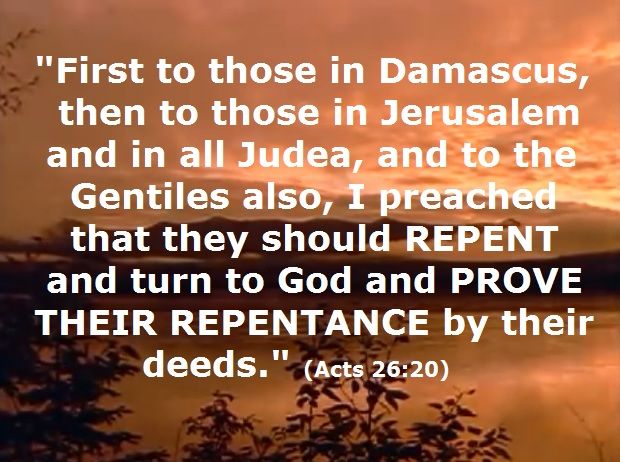
Whole Dude – Whole Repentance: Prove Repentance through actions