Whole Relationship – Mental Health is about Social Relationships

Mental Health – The rules for developing harmonious, positive interpersonal relationships

May is Mental Health Month, a time to shine a light on the importance of mental health to personal wellbeing and overcome reluctance to seeking help. Mental health is key to positive relationships and feelings of satisfaction and fulfillment in life. Mental health is also closely linked with physical health. Just as with physical health, mental health problems can be successfully treated. Mental Health America, the sponsor of Mental Health Month in the U.S., offers information and tools on its website: https://www.mhanational.org/mental-health-month

Mental Health – The rules for developing harmonious, positive interpersonal relationships

Mental health is defined as the capacity in an individual to form harmonious relations with others and to participate in or contribute constructively to changes in the social environment.

Mental Health – The rules for developing harmonious, positive interpersonal relationships: Human existence raises some fundamental questions about individual’s identity, the purpose in life and the nature of human relationships. Does the image I see in the mirror describe my true identity? Unless I define my identity, how it would be possible to describe my relationship with others. The fundamental rule for formulating harmonious, positive interpersonal relationships relate to understanding my own identity and recognizing my relationship with my own self. If I know, who I am, I could live in a relationship with myself.

Human existence raises some fundamental questions about individual’s identity, the purpose in life and the nature of human relationships. Does the image I see in the mirror describe my true identity ? Unless I define my identity, how it would be possible to describe my relationship with others? The fundamental rule for formulating harmonious, positive interpersonal relationships relate to understanding my own identity and recognizing my relationship with my own self. If I know, who I am, I could live in a relationship with myself.

The complex issues of identity and individuality in the multicellular human organism

The complex issues of identity and individuality in the multicellular human organism. THE NEWBORN BABY ALWAYS ARRIVES INTO THE WORLD WITH AN ORIGINAL, UNIQUE, DISTINCT, AND ONE OF ITS OWN KIND OF GENOME THAT HAS NEVER EXISTED IN THE PAST AND WILL NEVER EXIST AGAIN IN THE FUTURE

If man is viewed as a multicellular human organism, we may have to ask ourselves the following question. Who or what is the subject who lives because of the functions of the trillions of cells?

Man is unique, original, one kind of person who has not existed before and would not also exist in future even when he shares the same identical genome. Two identical twins could be correctly identified as two different individuals. I propose the Law of Individuality and Creation to claim that man exists as Individual and has no choice in this conditioned nature of subjective physical existence in the world. Man can only exist as Individual with Individuality.

Human Anatomy Formulates Human Identity

Mental Health – The rules for developing harmonious, positive interpersonal relationships

I learned the truths about the living human body and about Life while dissecting the dead human bodies in a systematic manner. 

Mental Health – The rules for developing harmonious, positive interpersonal relationships

So what is the Identity of this Human person or Human subject? How does the living Human organism maintain its Identity and Individuality? Apart from the Cultural Traditions of India, several Schools of religious thought claim that the Human Individual and its Identity is represented by Human Soul. Where does this soul exist in the human body? What is the location if the soul is present in the living person? Does man have a soul? How does the human organism acquires Knowledge about its own structures and the functions they perform?

How does the multicellular human organism recognizes its own Identity and Individuality?

Mental Health – The rules for developing harmonious, positive interpersonal relationships

A brief glance at the face is enough for most people to identify one another. However, man does not exist with the same identity during the course of his life. The word identity describes the condition or fact of being a specific person. Identification is the process by which a person can be identified in an accurate and consistent manner

Human Anatomy Formulates Human Identity. A brief glance at the face is enough for most people to identify one another. Face recognition is a basic feature of human identity and recognition.

The morphological or the external appearance of a person is subject to constant changes and it differs in a significant manner during the various stages of life such as infancy, boyhood, adulthood, and old age. The term individuality describes the sum of the characteristics or qualities that set one person apart from others. The condition of being individual, or different from others establishes the indivisibility of man.

Human Anatomy Formulates Human Identity. If Identity described by the Phenotype that establishes one face of the Coin, the Individuality describes the second face of the same coin and is established by the Genotype. While being the same, the Genotype presents the Individual with varying features of identification.

Identity, Individuality, and Consciousness:

Human Anatomy Formulates Human Identity. Identity and Individuality. How does the multicellular human organism recognizes its own Identity?

Man describes his identity in terms of his personal name, age, gender, race, ethnicity, place of origin, language, religion, political, occupational, or social affiliation. In reality, the man is an association of trillions of individual cells.

Human Anatomy Formulates Human Identity. Identity and Individuality. Cognitive Biology must address the issue of cognition of human Identity. In the multicellular human organism, who recognizes the Identity of the Human Individual?

The human organism is a conscious being and the function called consciousness achieves functional unity of all these individual cells and works for the benefit of the individual who always maintains his individuality. This is possible because individual cells have the ability to recognize the presence of other living cells in their environment and display functional subordination to serve the purpose of the whole organism.

Human Anatomy Formulates Human Identity. Identity, Individuality, and Consciousness – Existence precedes Essence

Understanding Individuality:

Dr. Michael Elowitz and Dr. Long Cai are developing a platform through which cells can self-record their lineage and molecular event histories directly into their own DNA as they create new tissues, particularly in the brain. This research will help to address how individual cells in a developing embryo diversify into many distinct cell types, each playing its unique role in the organism.

Dr. Michael Elowitz, Physicist at California Institute of Technology has conducted experiments on colonies of genetically identical (clones) E. coli bacteria under identical conditions and discovered that they behave in different ways.

The complex issues of identity and individuality in the multicellular human organism. The Law of Individuality. Genetically identical bacteria is actually a mob of Individuals.

A colony of genetically identical E. coli bacteria is actually a mob of individuals. Even among simple forms of life, like the common bacterium E. coli, genetics only partly determines what any one organism is like. E. coli expresses its individuality in many ways. All the bacilli above are genetically identical, but the shades show differences in the production of proteins that digest lactose.

The key to understanding E. coli’s fingerprints is to recognize that the bacteria are not simple machines. Unlike wires and transistors, E. coli’s molecules are floppy, twitchy and unpredictable. In an electronic device, like a computer or a radio, electrons stream in a steady flow through the machine’s circuits, but the molecules in E. coli jostle and wander. When E. coli begins using a gene to make a protein, it does not produce a smoothly increasing supply. It spurts out the proteins in fits and starts. One clone may produce half a dozen copies of a protein in an hour, while a clone right next to it produces none.

The bacteria, Dr. Elowitz found, did not produce a uniform glow. They flickered, sometimes brightly, sometimes dimly. And when Dr. Elowitz took a snapshot of the colony, it was not a uniform sea of light. Some microbes were dark at that moment while others shone at full strength.

At the very least, E. coli’s individuality should be a warning to those who would put human nature down to any sort of simple genetic determinism. Living things are more than just programs run by genetic software. Even in minuscule microbes, the same genes and the same genetic network can lead to different fates.

The bacteria have fingerprints of their own and even when they share the same genome, they could still be identified as individuals.

The Law of Individuality:

The complex issues of identity and individuality in the multicellular human organism.

I propose the Law of Individuality which governs all the living entities. Either with the same and identical genome or with different genomes, all living organisms have no choice other than that of living as ‘Individuals’.

Individuality and the Genome. The phenomenon of Diversity must be studied beyond the realm of genes, genetic codes, and genomes. Cytoplasm and its organs must be studied to understand the physiological basis of Diversity

The genes and the genetic codes function in accordance with the Law of Individuality. While the genetic structural organization is the same, there is functional variability due to factors over which the organism has no control. I describe Individuality as a Trade Mark. It is the characteristic of a biological entity. Genes and the genetic codes are the tools that an organism uses to express its Individuality. Each organism assembles its own kind of protein molecules to define its identity and to defend its existence in the natural world

Individuality and the Genome. The Law of Individuality formulates the phenomenon of Human Individuality.

The concept of Biological Individual and Individuality has to be always defined in the context of the Individual’s relationship with its own Body, Social Group, Society, Time, and the Environment in which the Individual finds the reality of its own Existence. In the natural world, all living entities exist as individuals and express their individuality.

The complex issue of identity and individuality in the multicellular human organism. The Law of Individuality leaves the Individual with no choice other than that of expressing variability while being a member of a Social Group which may have a fixed Identity.

Man is constituted as a Biotic Community of socially interacting cells and microbes

Mental Health – The rules for developing harmonious, positive interpersonal relationships. Man is constituted as a Biotic Community of Socially interacting Cells and Microbes.
The complex issue of identity and individuality in the multicellular human organism

Biology must use the concept of Soul/Spirit to identify each man as a Specific Individual with Individuality. Human Identity and Individuality always involves the biological community, the time, the place, and the environment which are constantly interacting to provide the basis for the human existence.

My relationship with myself. Who am I?

What is my relationship with myself ?
I have forgotten all other relationships.
How many mirrors that I have looked into, yet
I have forgotten my face. 

The above lines are an attempt by me to translate into English the ‘ghazal’ titled “Mujh Se Mera Kya Rishta Hai” by Mumtaz Rashid. The ‘ghazal’ is included in the music audio cassette (11/98), “Rubayee” (Volume 1). The singer is India’s famous ghazal singer Pankaj Udhas. The cassette was released by Music India, Polygram India Ltd. The cassette includes “Rubayees” of Hakim Omar Khayyam translated into Indian language Urdu by Janab Zameer Kazmi and Janab Irteza Nishat

Mujh Se Mera Kya Rishta Hai Lyric

Beemar Ko Bekaar Na Kardo Ya Rab
Iss Jeene Ko Dushwar Na Kardun Ya Rab
Iss Khaab Se Har Shaam Ko Pee Leta Hoon
Main Khud Se Bhi Inkaar Na Kar Dun Ya Rab

Peene De Mujhe Bhar De Mera Paimaana
Duniya To Hain Ek Uljha Huaa Afsaana
Jab Tak Mujhe Maalum Na Ye Ho Jaaye
Main Aaya Kahan Se Hun Kahan Hain Jaana
Mujh Se Mera Kya Rishta Hai
Har Ek Rishta Bhool Gaya
Itne Aaine Dekhe Hain Ki
Apna Chehra Bhool Gaya
Mujh Se Mera Kya Rishta Hai

Ab To Yeh Bhi Yaad Nahi Hai
Farq Tha Kitna Dono Main
Ab To Yeh Bhi Yaad Nahi Hai
Farq Tha Kitna Dono Main
Us Ki Baatein Yaad Raheen Aur
Us Ka Lehja Bhool Gaya
Itne Aaine Dekhe Hain Ki
Apna Chehra Bhool Gaya
Mujh Se Mera Kya Rishta Hai

Pyasi Dharti Ke Hothon Per
Mera Naam Nahi To Kya
Pyasi Dharti Ke Hothon Per
Mera Naam Nahi To Kya
Main Woh Baadal Ka Tukda Hoon
Jis Ko Dariya Bhool Gaya
Itne Aaine Dekhe Hain Ki
Apna Chehra Bhool Gaya
Mujh Se Mera Kya Rishta Hai

Duniya Wale Kuch Bhi Kahein
Rashid Apni Majboori Hain
Duniya Wale Kuch Bhi Kahein
Rashid Apni Majboori Hain
Uski Gali Jab Yaad Aayi Hain
Ghar Ka Rasta Bhool Gaya
Itne Aaine Dekhe Hain Ki
Apna Chehra Bhool Gaya
Mujh Se Mera Kya Rishta Hai
Har Ek Rishta Bhool Gaya
Mujh Se Mera Kya Rishta Hai
Har Ek Rishta Bhool Gaya.

Who am I? From where I have arrived? Where am I going?  

Mental Health – The rules for developing harmonious, positive interpersonal relationships

Human existence raises some fundamental questions about individual’s identity, the purpose in life and the nature of human relationships. Does the image I see in the mirror describe my true identity ? Unless I define my identity, how it would be possible to describe my relationship with others. The fundamental rule for formulating harmonious, positive interpersonal relationships relate to understanding my own identity and recognizing my relationship with my own self. If I know, who I am, I could live in a relationship with myself.

Mental Health – The rules for developing harmonious, positive interpersonal relationships

Whole Dude – Whole Relationship

Bharat Darshan – What is My Relationship with Myself? A tribute to Pankaj Udhas.

Human existence raises some fundamental questions about individual’s identity, the purpose in life and the nature of human relationships. I love Hakeem Omar Khayyam for he had asked himself these questions. Does the image I see in the mirror describe my true identity ? Unless I define my identity, how it would be possible to describe my relationship with others. If I do not know as to who I am, why should I contemplate on issues such as my purpose in life and my destination? Self-Knowledge is the key to answer questions about existence.   

Pankaj Udhas (1951-2024) | The elegiac voice of romance, in letter and spirit

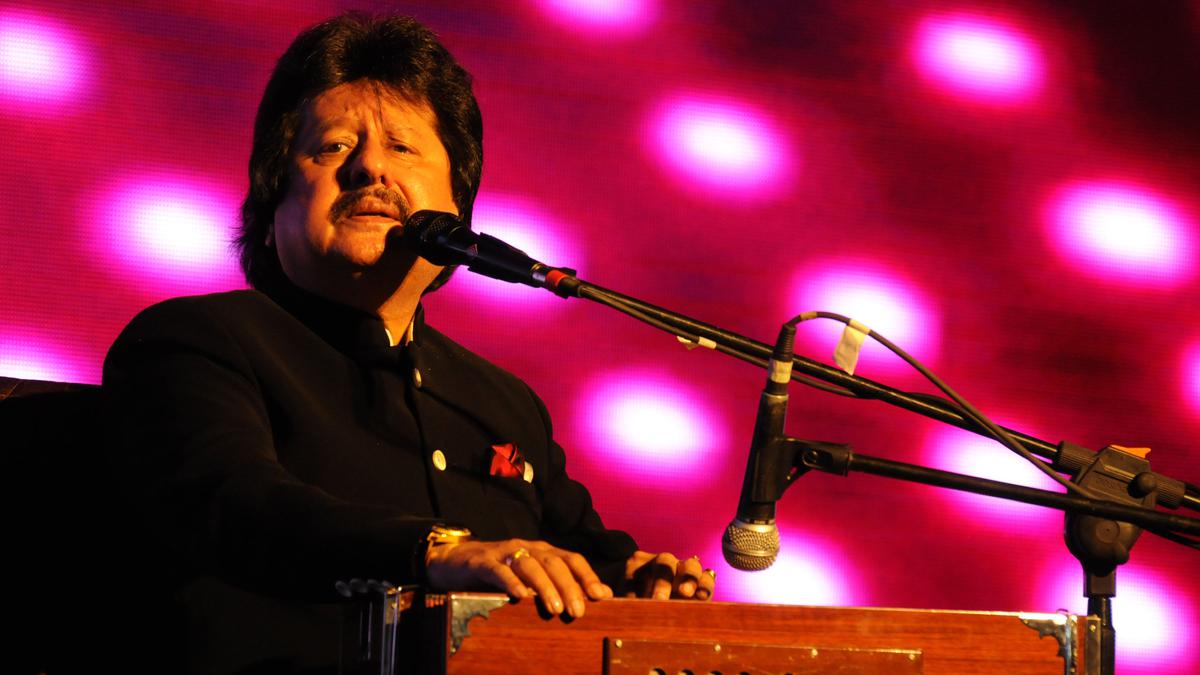
Whole Dude – Whole Relationship: Mujh se Mera Kya Rishta Hai? What is My Relationship with Myself? Padma Shri Pankaj Udhas, performing at the concert of Shaam- E- Ghazal in the connection with Osmania University Centenary celebrations, in Hyderabad. I share this photo for I obtained my B.Sc., Degree from Osmania University, Hyderabad in March, 1965.| Photo Credit: G. Ramakrishna

Renowned ghazal singer and Padma Shri awardee Pankaj Udhas, best known for “Chitthi Ayee Hai” and “Aur Ahista Kijiye Baatein”, died on Monday following prolonged illness, his daughter Nayab said. He was 72. His daughter Nayaab Udhas took to Instagram to announce the news and wrote, “With a very heavy heart, we are saddened to inform of the sad demise of Padma Shri Pankaj Udhas on 26th February 2024 due to prolonged illness.”

Udhas died around 11 a.m. at the Breach Candy hospital, a family source said.

The last rites will be held on Tuesday, February 27.

Whole Dude – Whole Relationship: Mujh se Mera Kya Rishta Hai? What is My Relationship with Myself? Padma Shri Pankaj Udhas,

The soulful voice that soothed broken hearts, Pankaj Udhas passed away after a prolonged illness in Mumbai on February 26 at 72. At the cusp of 1980, when the ‘angry young man’ had sucked melody out of our lives, Udhas, following the footsteps of Mehdi Hasan and Jagjit Singh, popularising ghazals among the youth. Breaking away from the classical format, he liberated the romantic form from Persianised Urdu to convey their pain in a simple verse like Deewaron Se Milkar Rona Achcha Lagta Hai and tweaked the plaintive orchestration to create a new, youthful riff that could declare Mohe Aai Na Jag Se Laaj Main Itna Zor Se Nachi Aaj Ki Ghungroo Toot Gaye.

Mujh se Mera Kya Rishta Hai? What is My Relationship with Myself?

What is my relationship with myself? Rubaiyat of Persian poet Hakeem Omar Khayyam.

What is my relationship with myself ?
I have forgotten all other relationships.
How many mirrors that I have looked into, yet
I have forgotten my face. 

Whole Dude – Whole Relationship: Mujh se Mera Kya Rishta Hai? The problem of human identity. What is my relationship with myself?

Mujh Se Mera Kya Rishta Hai Lyrics

Whole Dude – Whole Relationship: Mujh se Mera Kya Rishta Hai? The problem of human identity. What is my relationship with myself? A tribute to Pankaj Udhas
  1. imaan ko bekaar naa kar doon, ya rab
    is jeene ko dushwaar naa kar doon, ya rab
    is khoff se har shaam ko pee letaa hoon
    main khud se bhee inkaar naa kar doon, ya rab

    peene de muje, bhar de mera paimaana
    duniyaa to hai ek goonja hua afasaana
    jab tak muje maalum naa ye ho jae
    main aayaa kahaan se hoon , kahaan hai jaanaa

    mujh se mera kya rishta hai?
    mujh se mera kya rishta hai?
    har ek rishta bhool gaya
    itane aaine dekhe hain
    apana cheharaa bhool gaya
    mujh se mera kya rishta hai?

    ab to ye bhee yaad nahin hai
    farq tha kithna donon mein
    ab to ye bhee yaad nahin hai
    farq tha kithna donon mein

    us kee baathen yaad rahee
    us kee baathen yaad rahee
    aur us ka lahaza bhool gaya
    itane aaine dekhe hain
    apana cheharaa bhool gaya
    mujh se mera kya rishta hai?

    pyaasi dharti ke honton par
    mera naam nahin to kya?
    pyaasi dharti ke honton par
    mera naam nahin to kya?

    main vo baadal ka tukdaa hoon
    main vo baadal ka tukdaa hoon
    jis ko dariyaa bhool gaya
    itane aaine dekhe hain
    apana cheharaa bhool gaya
    mujh se mera kya rishta hai?

    duniyaa waale kuch bhee kahen
    raashid apanee majaburi hai
    duniyaa waale kuch bhee kahen
    raashid apanee majaburi hai

    us kee gali jab yaad aayee hai
    us kee gali jab yaad aayee hai
    ghar ka rastaa bhool gaya
    itane aaine dekhe hain
    apana cheharaa bhool gaya

    mujh se mera kya rishta hai?
    har ek rishta bhool gaya
    mujh se mera kya rishta hai?
    har ek rishta bhool gaya
    mujh se mera kya rishta hai?

2.

Beemar Ko Bekaar Na Kardo Ya Rab
Iss Jeene Ko Dushwar Na Kardun Ya Rab
Iss Khaab Se Har Shaam Ko Pee Leta Hoon
Main Khud Se Bhi Inkaar Na Kar Dun Ya Rab

Peene De Mujhe Bhar De Mera Paimaana
Duniya To Hain Ek Uljha Huaa Afsaana
Jab Tak Mujhe Maalum Na Ye Ho Jaaye
Main Aaya Kahan Se Hun Kahan Hain Jaana
Mujh Se Mera Kya Rishta Hai
Har Ek Rishta Bhool Gaya
Itne Aaine Dekhe Hain Ki
Apna Chehra Bhool Gaya
Mujh Se Mera Kya Rishta Hai

Ab To Yeh Bhi Yaad Nahi Hai
Farq Tha Kitna Dono Main
Ab To Yeh Bhi Yaad Nahi Hai
Farq Tha Kitna Dono Main
Us Ki Baatein Yaad Raheen Aur
Us Ka Lehja Bhool Gaya
Itne Aaine Dekhe Hain Ki
Apna Chehra Bhool Gaya
Mujh Se Mera Kya Rishta Hai

Pyasi Dharti Ke Hothon Per
Mera Naam Nahi To Kya
Pyasi Dharti Ke Hothon Per
Mera Naam Nahi To Kya
Main Woh Baadal Ka Tukda Hoon
Jis Ko Dariya Bhool Gaya
Itne Aaine Dekhe Hain Ki
Apna Chehra Bhool Gaya
Mujh Se Mera Kya Rishta Hai

Duniya Wale Kuch Bhi Kahein
Rashid Apni Majboori Hain
Duniya Wale Kuch Bhi Kahein
Rashid Apni Majboori Hain
Uski Gali Jab Yaad Aayi Hain
Ghar Ka Rasta Bhool Gaya
Itne Aaine Dekhe Hain Ki
Apna Chehra Bhool Gaya
Mujh Se Mera Kya Rishta Hai
Har Ek Rishta Bhool Gaya
Mujh Se Mera Kya Rishta Hai
Har Ek Rishta Bhool Gaya.

What is my relationship with myself ?
I have forgotten all other relationships.
How many mirrors that I have looked into, yet
I have forgotten my face. 

Whole Dude – Whole Relationship: What is my relationship with myself? Mujh se Mera Kya Rishta hai? A tribute to Pankaj Udhas

The above lines are an attempt by me to translate into English the ‘ghazal’ titled “Mujh se Mera Kya Rishta Hai” by Mumtaz Rashid. The ‘ghazal’ is included in the music audio cassette(11/98), “Rubayee” (Volume 1). The singer is India’s famous ghazal singer Pankaj Udhas. The cassette was released by Music India, Polygram India Ltd. The cassette includes “Rubayees” of Hakim Omar Khayyam translated into Indian language Urdu by Janab Zameer Kazmi and Janab Irteza Nishat. I would particularly invite all Farsi speakers to listen to these songs and appreciate the connection between Persian language and Urdu. This melodious Indian language Urdu represents a bridge that connects the people of Iran with the people of India.

Who am I? From Where I have Arrived? Where am I Going?  

Human existence raises some fundamental questions about individual’s identity, the purpose in life and the nature of human relationships. I love Hakeem Omar Khayyam for he had asked himself these questions. Does the image I see in the mirror describe my true identity ? Unless I define my identity, how it would be possible to describe my relationship with others. If I do not know as to who I am, why should I contemplate on issues such as my purpose in life and my destination? Self-Knowledge is the key to answer questions about existence.   

The problem of human identity. What is my relationship with myself?
Whole Dude – Whole Relationship: Mujh se Mera Kya Rishta Hai? What is My Relationship with Myself? A tribute to Pankaj Udhas.

The Challenge of Self-Discovery

The Rudi-Grant Connection investigates my relationship with myself. Who am I?

In 1965, while I was a student of Human Anatomy at Kurnool Medical College, I had the opportunity to know about Dr. J. C. B. Grant (1886-1973), the author of Grant’s Atlas of Anatomy. The 5th Edition of his Atlas was published in 1962 and was available in India in our Medical College Library.

Born in Loanhead (south of Edinburgh) in 1886, Grant studied medicine at the University of Edinburgh Medical School and graduated with an M.B., Ch.B. degree in 1908. While at Edinburgh, he worked under the renowned anatomist Daniel John Cunningham. Grant became a decorated serviceman of the Royal Army Medical Corps during the First World War before moving to Canada. He established himself as an ‘anatomist extraordinary’ at the University of Toronto, publishing three textbooks that form the basis of Grant’s Anatomy. The textbooks are still used in anatomy classes today, and made unforgettable memories for those who found themselves in his classes nearly a century ago. One of Grant’s many accomplishments was establishing a division of histology within the department.

The Rudi-Grant Connection investigates my relationship with myself. Who am I?

As a medical student, I used Grant’s Atlas of Anatomy, the seminal work of Scottish-born Dr. John Charles Boileau Grant, who would become the chair of Anatomy at the University of Toronto in 1930 and retired in 1965.

Students continue to use Grant’s textbooks today, and for the more artistic anatomist there’s even a Grant’s Anatomy Coloring Book, published in 2018.

The Rudi-Grant Connection investigates my relationship with myself. Who am I?

At the University of Toronto, Dr.McMurrich, Chair of Anatomy was succeeded as chairman in 1930 by Dr. John Charles Boileau Grant. Dr. Grant wrote three text books, of which “An Atlas of Anatomy” (published in 1943) rapidly gained international prominence and is still, one of the most widely used anatomical atlases in the world. It is now known as “Grant’s Atlas of Anatomy” and is in its tenth edition. The atlas was based on a series of elegant dissections done either by Grant or by others under his supervision. Many of these dissections are currently housed in Grant’s Museum at the University of Toronto. 

The Rudi-Grant Connection is about knowing the man, the building blocks and the structural units and organization of the human body. To defend the human existence, the Rudi-Grant Connection lays the emphasis on knowing the person who is at risk apart from knowing the agent posing the risk.

The Identity of Multicellular Human Organism:

The Rudi-Grant Connection investigates my relationship with myself. Who am I? Dr John Daniel Cunningham (b. April 15, 1850, d. July 23, 1909), Scottish physician and professor of Anatomy. Cunningham’s Manual of Practical Anatomy has provided me the learning tools to know and understand Man’s External and Internal Reality and its Identity as described by Cells, Tissues, Organs,and Organ Systems.

Daniel John Cunningham was born on 15 April 1850 in Scotland. After his initial schooling at his home town, Crieff, he took up the study of medicine at the University of Edinburgh and passed with honours. He is best known for the excellent series of dissection manuals, namely Cunningham’s Dissection Manuals. Cunningham’s Manual of Practical Anatomy has provided me the learning tools to know and understand Man’s External and Internal Reality and its Identity as described by Cells, Tissues, Organs,and Organ Systems.

The Rudi-Grant Connection investigates my relationship with myself. Who am I? Dr John Daniel Cunningham (b. April 15, 1850, d. July 23, 1909), Scottish physician and professor of Anatomy. Cunningham’s Manual of Practical Anatomy has provided me the learning tools to know and understand Man’s External and Internal Reality and its Identity as described by Cells, Tissues, Organs,and Organ Systems.

I learned about the human body while dissecting the body in a systematic manner. The Manual of Practical Anatomy which guides us through this entire process was published in England. The author Dr. Daniel John Cunningham prepared the Manual while dissecting cadavers of British or Irish citizens. He had never encountered cadavers of Indian citizens. At Kurnool Medical College, Kurnool, Andhra Pradesh, India, where I was a student, the Department of Anatomy obtains dead bodies from  Government General Hospital Kurnool and most of the deceased are the poor, illiterate, and uneducated people of that region. None of the deceased had the chance to know this man called Cunningham and Cunningham had no knowledge about the existence of these people who arrive on our dissection tables. But, as the dissection of the human body proceeds, inch, by inch, we recognize the anatomical parts as described by Cunningham. The manual also lists some anatomical variations and we very often exchange information between various dissection tables and recognize the variations mentioned. The dissections also involve slicing the organs and studying them, both macroscopically, and microscopically. We did not miss any part of the human body. So what is the Identity of this Human person or Human subject? How does the living Human organism maintain its Identity and Individuality? Apart from the Cultural Traditions of India, several Schools of Religious Thought claim that the Human Individual and its Identity is represented by Human Soul. Where does this soul exist in the human body? What is the location if the soul is present in the living person? Does man have a soul? How does the human organism acquires Knowledge about its own structures and the functions they perform?

Sir, Who are you?  

Guru Adi Shankaracharya has described his own identity.”Mano budhyaHankara, Chittani naaHam; Na karnam, na jihvaa, na cha gharana neytrey; Na cha vyoma bhumeerna tejo, na vaayuH; Chidananda roopaH, Shivo aHam, Shivo aHam.” His identity does not pertain to the four functions of the brain, the five organs of special sense, and also the Five Elements of Mother Nature. Sir, who are you? I am Shiva and Shiva alone whose identity is described as Sat+Chit+Ananda.