Mental Health – Keeping memories alive to protect mind from age-related cognitive decline
Mental health includes our emotional, psychological, and social well-being. It affects how we think, feel, and act, and helps determine how we handle stress, relate to others, and make choices.
Mental health is important at every stage of life, from childhood and adolescence through adulthood and old age. Over the course of your life, if you experience mental health problems, your thinking, mood, and behavior could be affected.
Mental Health – Keeping memories alive to protect mind from age-related cognitive decline
Protecting against cognitive decline
Mental Health – Keeping memories alive to protect mind from age-related cognitive decline
Memory loss is unusual forgetfulness. You may not be able to remember new events, recall one or more memories of the past, or both.
Alternative Names
Forgetfulness; Amnesia; Impaired memory; Loss of memory; Amnestic syndrome; Dementia – memory loss; Mild cognitive impairment – memory loss
Causes
Normal aging can cause some forgetfulness. It is normal to have some trouble learning new material or needing more time to remember it. But normal aging does not lead to dramatic memory loss. Such memory loss is due to other diseases.
While there’s currently no treatment that can prevent or cure dementia, researchers have identified some factors that may help protect you from cognitive decline. 1. Exercise – Exercise offers an impressive array of health benefits. It helps prevent heart disease and type 2 diabetes; lowers the risk for high blood pressure, colon cancer, and breast cancer; and helps relieve insomnia, anxiety, and depression. In addition, it may help ward off cognitive decline and dementia. Plus, some studies have shown that engaging in a program of regular exercise improved cognitive function in people who already had memory problems, 2. A Mediterranean-style diet – A Mediterranean diet emphasizes fruits, vegetables, whole grains, beans, nuts and seeds, and olive oil, and includes moderate amounts of fish, poultry, and dairy products, while limiting red meat. This eating pattern has long been recognized as promoting better cardiovascular health ,lowering the risk of certain cancers, and may protect against cognitive decline, 3. Alcohol – experts do not recommend drinking alcohol to prevent cognitive decline. If you enjoy an occasional alcoholic beverage, you should limit your consumption to no more one drink per day, 4. Sleep – Getting consistent, good-quality sleep is known to improve overall health and may prevent cognitive decline. Our bodies rely on a certain amount of regular sleep for a variety of essential functions, many of them in the brain. Studies have shown that people who regularly sleep less than the recommended seven to eight hours a night score lower on tests of mental function. This may be because learning and memories are consolidated during sleep, 5. Mental stimulation – as you age, education level is less important in maintaining a healthy brain than the habit of staying mentally active, by using activities that required active mental engagement—reading, writing, doing crossword puzzles, playing board or card games, engaging in group discussions, and playing music, and 6. Social contacts – Social interaction can have profound effects on your health and longevity. In fact, there’s evidence that strong social connections may be as important as physical activity and a healthy diet. Strong social interactions can help protect your memory and cognitive function in several ways as you age
The Whole Dude Connection is about the Moments that Slip Away and are Laid to your Account
The Whole Dude Connection is about the Moments that Slip Away and are Laid to your Account (Labuntur Et Imputantur)The Whole Dude Connection is about the Moments that Slip Away and are Laid to your Account.
In 1965, while I was a student of Human Anatomy at Kurnool Medical College, I had the opportunity to know about Dr. J. C. B. Grant (1886-1973), the author of Grant’s Atlas of Anatomy. The 5th Edition of his Atlas was published in 1962 and was available in India in our Medical College Library.
Born in Loanhead (south of Edinburgh) in 1886, Grant studied medicine at the University of Edinburgh Medical School and graduated with an M.B., Ch.B. degree in 1908. While at Edinburgh, he worked under the renowned anatomist Daniel John Cunningham.
badge, headdress, British, Royal Army Medical Corps (INS 8067) Brass cap badge of the rod of Aesculapius with a serpent entwined round it, head uppermost and looking left, all within a laurel wreath. Above, an Imperial (King’s) crown and below, a scroll bearing ROYAL ARMY MEDICAL CORPS. Slider to reverse. Copyright: � IWM. Original Source: http://www.iwm.org.uk/collections/item/object/30078877The Cap Badges and the Insignia of the British Royal Medical Corps and the Indian Army Medical Corps reveal the Rudi-Grant Connection. The Indian Army Medical Corps was created from the British Royal Army Medical Corps.
Grant became a decorated serviceman of the Royal Army Medical Corps during the First World War before moving to Canada. He established himself as an ‘anatomist extraordinary’ at the University of Toronto, publishing three textbooks that form the basis of Grant’s Anatomy. The textbooks are still used in anatomy classes today, and made unforgettable memories for those who found themselves in his classes nearly a century ago. One of Grant’s many accomplishments was establishing a division of histology within the department.
The Whole Dude Connection is about the Moments that Slip Away and are Laid to your Account
As a student of Human Anatomy during 1965-67, I spent time almost every day, a couple of hours in the evening preparing the drawings for my own Atlas of Anatomy, as the course of study demands the students to learn Anatomy preparing their own pictorial guide.
Students continue to use Grant’s textbooks today, and for the more artistic anatomist there’s even a Grant’s Anatomy Coloring Book, published in 2018.
The Whole Dude Connection is about knowing the man, the building blocks and the structural units and organization of the human body. To defend the human existence, the Rudi-Grant Connection lays the emphasis on knowing the person who is at risk apart from knowing the agent posing the risk.
The Identity of Multicellular Human Organism:
The Whole Dude Connection is about the Moments that Slip Away and are Laid to your Account. Cunningham’s Manuals of Practical Anatomy provide me the learning tools to know and understand Man’s External and Internal Reality and its Identity as described by Cells, Tissues, Organs,and Organ Systems.
Daniel John Cunningham was born on 15 April 1850 in Scotland. After his initial schooling at his home town, Crieff, he took up the study of medicine at the University of Edinburgh and passed with honours. He is best known for the excellent series of dissection manuals, namely Cunningham’s Dissection Manuals. Cunningham’s Manual of Practical Anatomy has provided me the learning tools to know and understand Man’s External and Internal Reality and its Identity as described by Cells, Tissues, Organs,and Organ Systems.
The Whole Dude Connection is about the Moments that Slip Away and are Laid to your Account. Cunningham’s Manuals of Practical Anatomy provide me the learning tools to know and understand Man’s External and Internal Reality and its Identity as described by Cells, Tissues, Organs,and Organ Systems.The Whole Dude Connection is about the Moments that Slip Away and are Laid to your Account. Cunningham’s Manuals of Practical Anatomy provide me the learning tools to know and understand Man’s External and Internal Reality and its Identity as described by Cells, Tissues, Organs,and Organ Systems.
The Moments Slip Away and are laid to your Account
The Moments Slip Away And Are Laid to Your Account. Recalling the Moments at Government Victoria College, Palghat.
Government Victoria College, Palakkad is the oldest institution of higher learning in the Malabar region of Kerala. In January 1888 it was raised to the rank of a second grade college and was affiliated to the University of Madras. The institution was taken over by the Government of Madras Presidency in 1919.The teaching of Geography as an optional subject for ‘Intermediate’ students commenced in 1945. Before the creation of linguistic provinces in 1956, Palghat was part of Madras State after India’s independence in 1947.
Moments Slip Away And Are Laid to Your Account. Recalling the Moments at Government Victoria College, Palghat.
The Motto of the College is the Latin slogan Labuntur et imputantur. Indeed it is true that life’s moments slip away and fortunately they are laid to your account.
Moments Slip Away And Are Laid to Your Account. Recalling the Moments at Government Victoria College, Palghat.
Because of Victoria College, I am able to recall some of those moments that slipped away from my life about 73 years ago. I am speaking of the times when Palghat was a part of Madras State and when Victoria College was affiliated to the Madras University. In 1952, I was a four-year old kid and my father was employed in the Madras State Educational Service. He had obtained his M.A degree in Indian History from Madras University and worked in the Madras Presidency College, Madras which is now known as Chennai city. My father had also a Diploma in Geography and he was transferred to Government Victoria College, Palghat to teach Geography. In his long career in the Educational Service, my father taught mostly Indian History, and at Victoria College, he taught Geography and was assigned to the Department of Geography.
Moments Slip Away And Are Laid to Your Account. Recalling the Moments at Government Victoria College, Palghat.
We lived in a rented house in Palghat. The house is on a dead-end street and it is the last house on the street and it abuts the college compound wall.The house faces the college cricket stadium/sports grounds.There is a canteen of the college right in front of the house.The stadium has a nice pavilion for the spectators to sit and watch the games. Our landlord had two sons who were then students at the college. Apart from my parents, I lived with my two elder brothers. For the first time in my life, I was introduced to the game of Cricket in this house while we lived in Palghat. In the front courtyard of the house, we had a large tree which served as the stumps for our game. Very often, myself and my brothers would watch the Cricket matches and I have seen for the first time the official scorekeeping sheets they fill up during the game. Cricket has been popular with Indians for a long time. It was not Mylapore, Madras and it was not my native place Rajahmundry where I took my first lesson to play this game. I remember Palghat as the place where my love for the game of Cricket began.
Moments Slip Away And Are Laid to Your Account. Recalling the Moments at Government Victoria College, Palghat.
When I opened my Palghat Account, my landlord’s two sons still look young and fresh like any other college students and I still have the visual image of myself and my brothers, all kids, playing cricket in front of the house. This is life. It is full of moments that quietly slip away and if you are lucky, the account that you have created is still there and you have the chance to recapture the moment and you can actually relive in that moment and the freshness of it is carefully preserved and it tastes as good as it was on the first occasion. Thanks to Victoria College, Palghat and I still have an account with credit balance.
Moments Slip Away And Are Laid to Your Account. Recalling the Moments at Government Victoria College, Palghat.
Essence and Existence:
Moments Slip Away And Are Laid to Your Account. Recalling the Moments at Government Victoria College, Palghat.
What is man’s nature and how to describe man’s essence? The essence is supported by existence. The existence is in the moments that slip away on which man has no control. Man exists as he helplessly watches the moment called future is churned into past, and present is only an instant in this future-past continuum. Fortunately, man can recall and revisit the moments that have slipped away and bring past into the present moment. In the final analysis, Life is all about recalling the memories of the past moments laid into our own memory bank accounts.
Mental Health – Keeping memories alive to protect mind from age-related cognitive decline. Reticular Formation of Brain Stem has connections with almost all other parts of the Central Nervous System and it helps to coordinate and integrate actions of different parts of the CNS. It is important for Behavioral Arousal, and the Capacity for Consciousness.
Whole Foods-Whole Inspiration-Whole LanguageWhole Foods, Whole People and Whole Planet inspire Whole Dude to invent Whole Phrases: Whole Linguistics – Whole Language. The concept of Whole Cookie and Whole Love. Whole Dude uses the phrase Whole Linguistics to describe three entities; 1. Language User, 2. Language Interpreter and 3. Language Creator. Image Credit: Agenda Publications, Ann Arbor District Library, Issue Dates, December 1997 and February 1998.Mental Health and the Pursuit of Happinessthrough Spiritual Relationships
Mental stability and happiness are highly linked. It’s almost impossible to have one without the other, and it can be difficult to achieve both when you’re facing some form of adversity in life.
Mental Health and the Pursuit of Happiness through Spiritual Relationships
Emotional and mental health is important because it’s a vital part of your life and impacts your thoughts, behaviors and emotions.
Mental Health and the Pursuit of Happiness through Spiritual Relationships
Being healthy emotionally can promote productivity and effectiveness in activities like work, school or caregiving.
Mental Health and the Pursuit of Happiness through Spiritual Relationships
Spirituality Science – Clinical Medicine can verify the mental experience called Anand, Pure Joy, and Pure Bliss
Spirituality Science – Clinical Medicine Can Verify the Mental Experience called Anand, Pure Joy and Pure Bliss. Mental Health and the Pursuit of Happiness
As student of Medical Science involved in investigating man, I use the medical principles of Dynamic Equilibrium shared by Dr. Claude Bernard, Father of Physiology, and Dr. Walter B. Cannon who coined the phrase ‘Homeostasis’ to verify man’s Living Condition at any given time.
Spirituality Science – Clinical Medicine can verify the mental experience called Anand, Pure Joy, and Pure Bliss Spirituality Science – Clinical Medicine can verify the mental experience called Anand, Pure Joy, and Pure Bliss Spirituality Science – Clinical Medicine can verify the mental experience called Anand, Pure Joy, and Pure Bliss Spirituality Science – Clinical Medicine can verify the mental experience called Anand, Pure Joy, and Pure Bliss SPIRITUALITY SCIENCE – WHOLE DYNAMICS – WHOLE EQUILIBRIUM: IN MAN, HEALTH IS RELATIVE EQUILIBRIUM OF BODY FORM AND FUNCTION WHICH RESULTS FROM ITS SUCCESSFUL DYNAMIC ADJUSTMENT TO FORCES TENDING TO DISTURB IT.
The Indian Tradition developed philosophical concept of “ANAND” often described as Pure Joy, or Pure Bliss. I can verify the same using the medical concept of Equilibrium. Students of Physics easily understand the Concept of Equilibrium and Balance.
Spirituality Science – Clinical Medicine can verify the mental experience called Anand, Pure Joy, and Pure Bliss Spirituality Science – Clinical Medicine can verify the mental experience called Anand, Pure Joy, and Pure Bliss Spirituality Science – Clinical Medicine can verify the mental experience called Anand, Pure Joy, and Pure Bliss
For example, if clinical examination of man reveals rapid pulse rate, respiration rate, high blood pressure, excessive perspiration, tremors and other signs and symptoms of physical, or mental imbalance, I will be able to easily rule out the Condition or State called “Anand.” In Clinical Medicine, Final Diagnosis is always arrived after conclusively eliminating other possible conditions.
Spirituality Science – Clinical Medicine Can Verify the Mental Experience called Anand, Pure Joy, and Pure Bliss.
Rudra Narasimham Rebbapragada Ann Arbor, MI 48104-4162 USA BHAVANAJAGAT
FROM: DEVINDER SINGH GULATI
Spirituality Science – Clinical Medicine Can Verify the Mental Experience called Truth, Consciousness, and Bliss.
ANAND (Sanskrit. Anand, from nand meaning “to rejoice” or “to delight”) denotes mystical experience, spiritual bliss or a state of consciousness such as that of a Jivan Mukta, i.e. one released while still in body. Anand in the Upanishadic texts is taken to be one of the three inherent attributes of Atman or Brahman, the other two being Sat and Chit. In the Taittiriya Upanishad (II. 15), it acquired this meaning of Pure Bliss.
The Self at the lowest or first stage of its evolution is defined as the Annamaya Kosa (the matter) which evolves successively into Pranamaya Kosa (life), Jnanamaya Kosa, man (mind or perceptual consciousness), Vijnanamaya Kosa (Self consciousness, The Knowing Self) and Anandamaya Kosa, Nondual Bliss. In SIKH theology too, Anand is one of the attributes of the Supreme Self; so it can be the state of the Individual Soul as well. GURU Amar Das`s composition Anandu, in the measure Ramkali, gives an exposition of the experience of Anand, of the Union with the Immaculate Hari attained through absorption in “Nam”, i.e. repetition of Divine Name.
That, indeed, which is Jīva (individual soul) is the all-blissful Divine in disguise, descended to enjoy the self-luminous World Brahman. This which is the experience of suffering is an experience made of bliss. The All-Blissful enjoys its bliss only. Who indeed could dare enjoy that which is devoid of bliss? He only could dare it who is all-blissful. As for him who is devoid of bliss, he while enjoying the blissless, would still not enjoy it, would rather perish without bliss. Who can become weak? He only can who is all-powerful. The weak one indeed invaded by weakness would not endure, but would perish without force. Who could enter Ignorance? Only He who is omniscient could enter it. As for the ignorant, he could not endure in that darkness, non-being would remain non-being only. It would perish without knowledge. Ignorance is the play of knowledge, concealing itself in itself. Weakness is the play of power, blisslessness the play of bliss, the concealment of itself in itself. Blissfully laughs the Jīva, blissfully cries, sheds tears, blissfully throbs as if shining in dark Ānanda, agitated by tortures, blissfully throbs agitated by violent pleasures. For the full enjoyment of the dark ignorant portion of that Ānanda he (Jīva) conceals It, becoming obscure and ignorant.
Sri Aurobindo echos the Gurbani:
There is Brahman alone, the One without a second. Being and non-being are its forms and It is also beyond Being and Non-Being. There is nothing else except That. All that is contained in the three times and all that is beyond the three times is indeed that One Brahman alone. Whatever is in the universe, small or large, noble or mean, is Brahman alone, Brahman alone. The world is also Brahman. It is true, not false.
That alone is the Transcendent Being, beyond all the three times, beyond all the worlds, penetrating all the worlds, beyond Being, beyond Non-Being, All-Being, All-Consciousness, All-Bliss, without beginning and end, the eternal Divine.
He is without quality and supports all qualities. He has qualities, infinite qualities, and enjoys the state of being without quality. He Himself transcends the state of being without qualities and the state of being with qualities. He is neither without quality nor with quality because He is One and Single.
Spirituality Science – Clinical Medicine can verify the mental experience called Anand, Pure Joy, and Pure Bliss
Spirituality Science – Clinical Medicine can verify the mental experience called Anand, Pure Joy, and Pure BlissMIND – FACE CONNECTION. FACIAL APPEARANCE OR COUNTENANCE PROVIDES CLUES TO IDENTIFY MENTAL STATE OR CONDITION.
From very ancient times, medical practitioners all over the world, recognized the connection between Mind and Face. The conditions that affect human body and mind can be diagnosed by careful examination of clues offered by Facial Appearance or Countenance.
For example, Indian tradition describes or uses the term “ANTAHKARANA” that includes four, different attributes of Mind. These are, 1. Manas or Manah associated with Thinking, Thoughts, or Power of Imagination, 2. Buddhi associated with Knowledge and Intellect, 3. Chitta associated with Mood such as Kindness, Love, Compassion, Anger, Fear, etc., and 4. Ahamkara associated with Self-Pride or attributes like Arrogance. Each of these Mental Conditions, States or Mental Faculties are often associated with expression of their contents on Face.
While practicing Clinical Medicine in Armed Forces, I gained practical experience of The Art of Diagnosing Positive, Good Health. Armed Forces demand that men and women should be physically and mentally fit at all times. In military practice, the doctor spends more time in conducting medical examination of people to assess their physical and medical fitness as compared to the time spend on examining people to diagnose Ill health, Sickness, or Disease. Observation of Facial Appearance provides important clues about Man’s mental and physical health. On several occasions, I have diagnosed or suspected serious medical conditions when patient simply arrives in the Clinic or Hospital for medical evaluation. People can be very good actors but it is not easy to express things on Face as the facial expression is not always directed by conscious mental activity like thinking or thoughts. For example, a good actor can project sense of Fear and generate facial expression of Fear but in reality it is not the same as Fear expressed on the face of a victim of Heart Attack or Myocardial Infarction.
Spirituality Science – Clinical Medicine can verify the mental experience called Anand, Pure Joy, and Pure Bliss
I agree that it will not be easy to diagnose Mental State, Physical State or Condition by simply examining one photo image. During Medical Examination, I keep the patient distracted and would not let him or her know that I am simultaneously evaluating Facial Expression while performing tests to recognize symptoms and signs caused by various health conditions. I want to assure you that your ‘inner experience’ of truth or reality can be verified by using The Art of Facial Diagnosis.
The Indian tradition describes the mental condition called ‘ANAND’ or Joy, or Bliss as the sign and symptom of Self-Realization. Self-Realized Soul can be medically diagnosed by careful examination of Facial Countenance.
Spirituality Science – Clinical Medicine can verify the mental experience called Anand, Pure Joy, and Pure Bliss
Rudra Narasimham Rebbapragada
Ann Arbor, MI 48104-4162 USA BHAVANAJAGAT
Mental Health and the Pursuit of Happiness through Spiritual Relationships
Whole Foods-Whole Inspiration-Whole LanguageWhole Foods, Whole People and Whole Planet inspire Whole Dude to invent Whole Phrases: Whole Linguistics – Whole Language. The concept of Whole Cookie and Whole Love. Whole Dude uses the phrase Whole Linguistics to describe three entities; 1. Language User, 2. Language Interpreter and 3. Language Creator. Image Credit: Agenda Publications, Ann Arbor District Library, Issue Dates, December 1997 and February 1998.Mental Health and the problem of Loneliness
May is Mental Health Month, a time to shine a light on the importance of mental health to personal wellbeing and overcome reluctance to seeking help. Mental health is key to positive relationships and feelings of satisfaction and fulfillment in life.
Mental health is defined as the capacity in an individual to form harmonious relations with others and to participate in or contribute constructively to changes in the social environment
Mental Health and the problem of Loneliness
Feeling lonely can have a negative impact on mental health, especially if these feelings have lasted a long time. Some research suggests that loneliness is associated with an increased risk of certain mental health problems, including depression, anxiety, low self-esteem, sleep problems and increased stress.
Mental Health and the problem of Loneliness
Research has linked social isolation and loneliness to higher risks for a variety of physical and mental conditions: high blood pressure, heart disease, obesity, a weakened immune system, anxiety, depression, cognitive decline, Alzheimer’s disease, and even death.
Mental Health and the problem of Loneliness
Loneliness is a subjective, unwelcome feeling of lack or loss of companionship, which happens when there is a mismatch between the quantity and quality of the social relationships that we have, and those that we want (Perlman and Peplau, 1981)
There are different types of loneliness: emotional, and social and existential loneliness.
Emotional loneliness is the absence of a significant other with whom a close attachment or meaningful relationship existed (a partner or close friend).
Social loneliness is the lack of a wider social network of friends, neighbors or colleagues.
Existential loneliness is described as a universal aspect of the human condition which expresses the separateness of the person from others.
Loneliness can be a transient feeling that comes and goes. It can also be situational; for example only occurring at certain times like Sundays, bank holidays or Christmas. Or loneliness can be chronic; this means someone feels lonely all or most of the time.
Loneliness can also be characterised by its intensity, or how strongly it is felt, which can change from moment to moment and over different durations of time.
Man’s Physical Existence:
Mental Health and the problem of Loneliness. The subjective reality of man’s physical existence is conditioned by his physical, mental, social, moral, rational, and spiritual well-being.
If man is viewed as a multicellular human organism, we may have to ask ourselves the following question. Who or what is the subject who lives because of the functions of the trillions of cells? Man has to explore the biological basis for his existence in nature. The subjective reality of man’s physical existence is conditioned by his physical, mental, social, moral, rational, and spiritual well-being.Mental health is an important component of the total positive health when health is defined as not the mere absence of disease, but as a state of man’s physical, mental, social, moral, rational, and spiritual well-being.
Mental Health and the problem of Loneliness. The Physiological Basis for Human Existence.
The man is conditioned to exist under the influence of a grand illusion such as the Sunrise and Sunset which regulates the biological rhythms. The man must find a rational basis for his physical existence as the realities of existing on the surface of a fast, spinning planet impose limitations on man’s cognitive abilities. In the final analysis, the man must face the challenges of living his mortal life finding solutions in a logical and rational manner. Physical conditions and ailments affect mental well-being. Mental health and well-being could have important consequences affecting the physical, and social well-being of the man and may even threaten his ability to maintain the biological integrity to survive as a human organism.
The Unity of Man and God
THE UNITY OF MAN AND GOD. THE PRIMARY CONCERN IS NOT ABOUT MAN’S ESSENCE OR IDENTITY. EXISTENCE ALWAYS PRECEDES ESSENCE. ASMI SIGNIFIES UNITY OR “EIKYATA” BETWEEN MAN AND GOD WITHOUT WHICH EXISTENCE IS IMPOSSIBLE.On bhavanajagat.com
To account for man’s existence in physical world, the Sanskrit language created a new word known as “Asmi.” It means always present, or ever-existing. Man is a Mortal, Physical Being who leads a transient, or ephemeral existence. However, to establish the Subjective and Objective Reality of man in natural world, man needs to yoke, join, come together, unite, pair, bond, connect, relate, and seek partnership with an external Reality that is always present, or ever-existing. The Sanskrit word “Asmi” thus signifies Unity of man and God which transforms the Subject “I” into an Object that identifies itself as “I am.”
The Instrument of Unity – Gayatri
THE UNITY OF MAN AND GOD. THE INSTRUMENT OF UNITY IS “GAYATRI.”
Biological Diversity is a creative process as living organisms have no choice other than that of existing as Individuals with Individuality. Ever since Life arrived on planet Earth, living matter, living substance, or living material has remained the same while diverse forms of life lived and became extinct during different periods of geological time. When we speak about biological diversity, we have to constantly remind ourselves that there are certain values which never change under the influence of time. Things in Nature change if and only if the change is operated by an underlying unchanging principle.
Language is the peculiar possession of anatomically modern humans. Prehistoric man could paint, draw, and carve images but did not use human language. Linguistic diversity has to be known by recognizing unchanging human anatomical and physiological mechanisms involved in generating sound, and perception of sound which includes analysis of sound information. Human Speech and Human Writing are two-faces of same language ability and in Clinical Medicine they constitute problems of Speech Disorders.
Life is about using Knowledge to perform a myriad of living functions. In other words, Life is Knowledge in Action. All living functions without any exception need an external source of energy. Life on planet Earth is possible as living forms have capacity to use energy from an extraterrestrial source. Earth and living forms belong to Natural Realm, and the source of energy belongs to Supernatural or heavenly Realm. We see Sun in the sky, but it belongs to Supernatural or Heavenly Realm. Fortunately, there is a barrier between these two realms to make life possible. For Sun is the Source of Supernatural Power/Energy/Force, Sun is the source of Knowledge that living forms use to perform diverse living functions including the use of Speech. Diversity that we experience on Earth is possible for Sun’s Energy is that unchanging Principle that operates all natural phenomena.
The Relevance of Sanskrit in Present Times:
THE UNITY OF MAN AND GOD. THE INSTRUMENT OF UNITY IS “GAYATRI.”
The relevance of Sanskrit in present times becomes apparent when we try to account for man’s existence; how does the ‘Subject’ called “I” becomes the Object called “I am” that can be verified by Science. The thing called “I” will not be known until and unless it is transformed into a living being that claims, “I am.” Science is not able to fully account for the phenomenon called human existence. We all know that man exists in present day phenomenal world but we are not able to explain it as to how such existence is possible.
THE UNITY OF MAN AND GOD. SANSKRIT WORD “ASMI” MEANS ALWAYS PRESENT, OR EVER-EXISTING AND ANY KIND OF EXISTENCE DEMANDS YOKING, OR PAIRING OF MAN AND GOD. On bhavanajagat.com
The Sanskrit word or ‘Sabda’ called “Asmi” accounts for transformation of “I” into a recognizable entity called “I am.” Asmi describes Unity or ‘Eikyata’, the coming together, yoking, or joining of “I” with an external, unchanging Reality, the fundamental basis for all Existence. Things in Nature change under the influence of Time, but every natural change is operated by an Unchanging Principle. There is no natural phenomenon of this world which may not require operation of an underlying unchanging principle.
To answer problems of this age, man has to know himself and know the World in which he exists. Knowing “Asmi” is the beginning of that learning process.
Man never exists all alone
Mental Health and the problem of Loneliness
In my final analysis, Man can never have the Subjective experience of the reality of his own physical existence without the Fundamental Unity between Man and God. The problem of human loneliness simply disappears when Man accounts the reason for his own existence in the physical world.
The definition of Man precedes the definition of Health
June is Professional Wellness Month – The Theory of Man precedes the Theory of Health
Professional Wellness Month is celebrated each year in June and it throws light on the workplace’s role in creating a holistic environment for employees. It also focuses on how organizations that place emphasis on professional wellness are largely successful, attract top talent, and drive employee retention.
June is Professional Wellness Month – The Theory of Man precedes the Theory of Health
I ask my readers to reject the assumptions and the criteria described by the Fair Labor Standards Act as they contribute to Unequal Employment Opportunities at the American Workplace. As such the Fair Labor Standards Act is not consistent with the Natural Law principle of Equality that formulates the Supreme Law of this Land. We need just one plan to promote the wellness of all workers without making any distinctions such as the hourly wage earners and the salaried class imposed by the US Labor Law FLSA.
June is Professional Wellness Month – The Theory of Man precedes the Theory of Health
Theory of Man precedes Theory of Health
In my analysis, there can be no ‘Theory of Health’ without sharing a ‘Theory of Man’. The question, “What is health?” cannot be asked without raising the question, “What is man?”
June is Professional Wellness Month – The Theory of Man precedes the Theory of Health
In my view, ‘ the existence of a man always precedes the essence of the man’. For that reason, the biological basis of the man’s existence must be identified to define the living entity called man. The natural event called ‘death’ precedes the natural event called ‘birth’ which heralds the arrival of newborn Life. The newborn always arrives after several programmed cellular death events.
June is Professional Wellness Month – The Theory of Man precedes the Theory of Health
The man’s existence in any condition, good health or ill-health, at any age, at any given time and place, depends upon Mercy, Grace, and Compassion (Sanskrit. KRUPA or KRIPA) of LORD God Creator. The man does not exist in the natural world because of his physical and mental work. The man needs input of matter and energy, from an external source, from the moment of conception to the conclusion of his entire life journey. The man’s existence is always conditioned as he cannot regulate either internal, or external factors that determine the fact of his existence.
The Medical Science fails to define the term ‘health’ for it fails to define the term ‘man’. To attach meaning to health, I must attach meaning to the word called ‘man’.
June is Professional Wellness Month – The Theory of Man precedes the Theory of Health
The man represents a biological or biotic community of trillions of individuals; independent, living cells with individuality. The Man is also a natural host to trillions of microbes. Human life must be defined in terms of biotic interactions; both intraspecific, and interspecific biotic interactions.
I ask Medical Science to apply the principles of Clinical Medicine not only to diagnose ill health but also to diagnose good and perfect or ‘Whole Health’ for the man is created by entity called God who is always Perfect and Whole.
Theory of Man–The Spectrum of Seven Colors
June is Professional Wellness Month – The Theory of Man precedes the Theory of Health
My ‘Theory of Man’ defines the Man as the ‘Spectrum of Seven Colors’. Isaac Newton could easily verify his ‘Theory of Light’ by conducting his critical experiment in which he used two prisms to breakdown and to reconstitute white light rays. In case of Man, such experimental verification is not possible as Science does not have the capability to breakdown the man and reconstitute him. However, Science provides verified information about the building blocks of life and about basic living functions such as ‘Metabolism’ which essentially involve making, breaking, and repairing ‘Molecules of Life’.
June is Professional Wellness Month – The Theory of Man precedes the Theory of Health
Man – The Spectrum of Seven Colors
June is Professional Wellness Month – The Theory of Man precedes the Theory of Health
For purposes of defining Man the concept of Light Spectrum is useful. Light Spectrum appears continuous with no distinct boundaries.
June is Professional Wellness Month – The Theory of Man precedes the Theory of Health
The ‘Singularity’ called Man can be easily witnessed at conception at the stage of Single, fertilized Egg Cell.
Theory of Man precedes the Theory of Health. Spirituality Science. Spiritual Functions of Human Ovum or Egg Cell. Is it conscious?
The study of Man during all stages of his physical existence provides information about Man’s Seven Dimensions or Seven Colors. These are, 1. The Physical, Mortal Being, 2. The Mental Being, 3. The Social Being, 4. The Moral Being, 5. The Spiritual Being, 6. The Created Being, and 7. The Rational Being. Science called Cell & Molecular Biology can account for biomolecules of life and yet do not explain or account for the constitution of Man as a Rational Being.
June is Professional Wellness Month – The Theory of Man precedes the Theory of Health
Sixth-Day Adventist integrated plan for physical, mental, social, moral, and spiritual wellbeing of all classes of workers
This painting the Vitruvian Man( c. 1492 ) by Leonardo da Vinci displays a spirit of scientific inquiry. What is Man? The understanding of human nature will help to promote man’s well-being.Sixth-Day Adventist integrated plan for physical, mental, social, moral, and spiritual wellbeing of all classes of workers
Our efforts to support the well-being of Man get affected by our understanding the ‘real’ or ‘true’ nature of Man. I recognize Man’s Existence with Seven Forms or Dimensions. These are, 1. the Physical Being described by Human Anatomy, Human Physiology and other Medical Sciences, the human being in health and sickness, 2. the Mental Being, the intellect, thoughts and emotional states of Man described by Psychology and Psychiatry, 3. the Social Being described by Social Sciences, 4. the Moral Being described by Moral Science and Ethics, the power of discernment used by Man to make distinction between good and evil, and right and wrong, 5. the Spiritual Being described by Vital Power, Animating /Sensible Properties, and Conscious/Cognitive abilities of Man’s Corporeal Substance that develops and builds the cells, tissues, and organs of Human Body, 6. the Created Being which is reflected in the existence of man as an Individual with Individuality without any choice, and 7. the Rational Being which directs man to reconcile his behavior with his true or real nature that makes the man to review the actions performed in the external environment.
June is Professional Wellness Month – The Theory of Man precedes the Theory of Health. SPIRITUALITY SCIENCE – WHOLISTIC MEDICINE: THE DEFINITION OF WHOLE PERSON. 1. CONSCIOUS BEING, 2. PHYSICAL BEING, 3. MENTAL BEING, 4. SOCIAL BEING, 5. MORAL BEING, 6. SPIRITUAL BEING, and 7. CREATED BEING. This entire Human Organism is derived from a Single, Fertilized Egg Cell.
The Six Dimensions of Man contribute to six kinds of Behavior of Man; the physical, mental, social, moral, spiritual and creative facets of Behavior. For example, muscle cell displays the behavior of contraction in response to a stimulus; it is able to contract because of its contractile nature which gives it the power of contracting.
I account for Spiritual Dimension of Human Nature as that of generating a Singular, Harmonious Effect in the working of trillions of cells giving Man power or ability to perform his living functions such as Respiration and display his characteristic Behaviors like Feeding, and Reproduction.
I define the term Health as a systematic study of the Physical, Mental, Moral, Social, and Spiritual aspects of Man’s Well-Being while the man exists as a Created Being.
June is Professional Wellness Month – The Theory of Man precedes the Theory of Health. Sixth-Day Adventist integrated plan for physical, mental, social, moral, and spiritual wellbeing of all classes of workers
Mental Health – The Importance of Logical and Rational Thinking
Mental Health – The Importance of Logical and Rational Thinking
May is Mental Health Month, a time to shine a light on the importance of mental health to personal wellbeing and overcome reluctance to seeking help. Mental health is key to positive relationships and feelings of satisfaction and fulfillment in life. Mental health is also closely linked with physical health. Just as with physical health, mental health problems can be successfully treated.
Mental Health and the prevention of Suicide.
Mental Health America, the sponsor of Mental Health Month in the U.S., offers information and tools on its website: https://www.mhanational.org/mental-health-month. You’ll find helpful information on maintaining mental health and dealing with mental health issues on this website, too, including the following:
1 in 5 people will suffer from some form of mental illness in any given year. Break the Silence, Break the Stigma.
Mental Health and the prevention of Suicide
Man’s Physical Existence:
The subjective reality of man’s physical existence is conditioned by his physical, mental, social, moral, rational, and spiritual well-being.
If man is viewed as a multicellular human organism, we may have to ask ourselves the following question. Who or what is the subject who lives because of the functions of the trillions of cells? Man has to explore the biological basis for his existence in nature. The subjective reality of man’s physical existence is conditioned by his physical, mental, social, moral, rational, and spiritual well-being.
Mental Health – The Mind-Body Connection:
Mental Health and the prevention of Suicide
Mental health is an important component of the total positive health when health is defined as not the mere absence of disease, but as a state of man’s physical, mental, social, moral, rational, and spiritual well-being.
Mental Health and the prevention of Suicide
The man is conditioned to exist under the influence of a grand illusion such as the Sunrise and Sunset which regulates the biological rhythms. The man must find a rational basis for his physical existence as the realities of existing on the surface of a fast, spinning planet impose limitations on man’s cognitive abilities. In the final analysis, the man must face the challenges of living his mortal life finding solutions in a logical and rational manner. Physical conditions and ailments affect mental well-being. Mental health and well-being could have important consequences affecting the physical, and social well-being of the man and may even threaten his ability to maintain the biological integrity to survive as a human organism.
Mental Health and the prevention of Suicide
Mental health is defined as the capacity in an individual to form harmonious relations with others and to participate in or contribute constructively to changes in the social environment. A living organism has a tendency to maintain normal internal stability by coordinated responses that automatically compensate for environmental changes. Claude Bernard explained the concept of ‘milieu interieur’ as that of “all the vital mechanisms, varied as they are, have only one object; that of preserving constant the conditions of life.” This concept of homeostasis, the maintenance of stability and equilibrium is applicable to man’s existence within a social group. A living thing maintains its individuality while being a member of a social group. Mental equilibrium, and mental tranquility is needed to maintain internal stability and for developing harmonious relationships with others present in the social environment. The different constituent parts of one’s personality should work in harmony so that an individual faces life situations rationally, successfully, and happily. The aim of the positive mental health care is to strengthen and develop well-integrated personality by influencing the behavioral pattern of the individual so that psychological situations are controlled by the individual in a logical, and rational manner. The individual while facing challenging life situations must arrive at solutions without disrupting the physical, mental, or social well-being. Mental health comprises the well-being of the intellectual and the emotional components of the mind. The intellectual breakdown of the individual deprives him of logical and rational thinking. The decisions taken will be faulty if the individual is not capable of logical and rational thinking. Such faulty decisions tend to affect the individual’s well-being. Intellectual breakdown is always accompanied by emotional breakdown. Emotional imbalance affects individual’s reactions. The individual may show inability to cope with life situations. The inability to withstand the strain and stress of the life situations could affect the physical well-being of the individual. The aim of this presentation is to understand the nature of man’s essence and existence in the physical world and to use that information to prevent the problem of suicide.
Stress and Stress Resistance:
Mental Health and the prevention of Suicide. A person with a well-integrated personality acquires high resistance against stress and will be able to react healthily while confronting unwholesome life situations.
Resistance against mental and emotional breakdown is built up by the autonomic process of integration of personality. It is the normal process of the growth of personality within the group environs. An individual with a well-integrated personality acquires high resistance against difficult situations. The individual will be able to react healthily while confronting unwholesome life situations. A healthy mind and ability to be moulded in an integrated personality depends upon several factors including the physical, social, and psychological environment in which the individual is growing. It also depends upon the culture patterns and attitudes handed down from one generation to the next. From a very young age, integration of the personality proceeds along with intellectual development and emotional moulding. Children must be given a better chance to develop integrated personalities with resistance against stress. Stress stimuli generate a chain of psycho-physical reactions strong enough to cause manifest effects. Personalities can be divided into 5 types according to their ability to resist strain and stress to master a given difficult life situation without a physical or mental breakdown. The same psychogenic stimulus may not cause similar reaction in all individuals. Each person reacts in a different manner according to the level of preformed stress resistance.
Group I: Highly stress resistant. These persons have a high level of preformed resistance. They also have the ability to develop resistance within a short time when exposed to stress stimuli. This group comprises of people with well-integrated personalities with dominant will power and power of endurance. They carry out the task even while under great stress without experiencing any negative consequences. They successfully master the stressful and difficult situation. These individuals live in good positive health and may not have a preexisting disease condition or a predisposition to such disease conditions that may undermine the physical and mental aspects of their health and well-being.
Group II: These persons have an average amount of preformed stress resistance. They overcome the stressful situation partially. In the attempt to master the stressful situation and to achieve success the person may suffer from precipitation of internal conditions such as hypertension, coronary artery disease and so on when other predisposing factors are also existing. However, the individual completes the task while facing the stressful stimulus. These persons perform better if they maintain good positive health.
Group III: These are persons with very low preformed stress resistance. They still have the ability to develop resistance on exposure to a prolonged stressful situation. While performing the task under a stressful situation, they may display psycho-somatic symptoms of the overt stress syndrome.
Group IV: These are persons with no preformed stress resistance. They have a very low ability to create resistance upon exposure to a stressful stimulus. These individuals are more likely to abandon the task which may have exposed them to a stressful experience. They would try to escape from stress rather than attempting to create resistance to stress stimuli. If they cannot escape, the lack of stress resistance is manifested in a variety of bizarre symptoms.
Group V: These are persons who are non-resistant to stress. They have no preformed stress resistance. They are not capable of favorably reacting to stress producing situation. Their biological existence could be threatened if they are exposed to a stressful situation. They may manifest an overt psychiatric illness apart from the inability to perform a task that could generate the stress reaction. Such individuals must be recognized in their childhood and they must be provided proper environment and psychological counseling.
The part played by stress varies in different individuals according to their basic personalities. The factors that impact the role of stress include environmental influences, community with its varied backgrounds of culture patterns and life habits. Pre-existent resistance against stress reduces the requirement of immediate psycho-physical response. If the problem of suicide is viewed as a stress reaction, prevention of suicide would require promoting the idea of stress resistance.
The Problem of Suicide:
A man’s right to life is a well-recognized principle. Very often, the law would defend a man’s right to life and would condone the act of killing if it is purely intended for purposes of self-defense. Does a man have the right to kill himself or renounce his life? Suicide is condemned by various societies. Major religions like Judaism, Christianity, and Islam oppose the practice of suicide. Attempts to commit suicide are punishable by law in several countries. In the East, some cultural traditions have glorified acts of self-immolation or of renouncing life to resist enemy or to defend personal dignity, honor, or as an extreme measure of self-preservation.
Mental Health and the prevention of Suicide:To defend her true nature, to preserve her essence, to resist the violation of her personal dignity and honor, Rani Padmini of Chittorgarh, India had courageously responded to a difficult and challenging life situation by an act of self-immolation. Her physical being was destroyed by the fire which she had willingly embraced and yet her spirit has survived. She has declared Victory over Death and she lives as an immortal person in the hearts of Indians and gives them a sense of Pride and Identity. Indian Culture and Tradition glorify the act of giving life to resist the Enemy.
In the West, attitudes have been slowly changing. The law may permit euthanasia or physician-assisted suicide under very special circumstances that affect the quality of life of an individual.
The Problem of Suicide in the Armed Forces:
Mental Health and the prevention of Suicide. While serving as Medical Officer of the Indian Army Medical Corps, I provided Comprehensive Health Care to the troops and their families. The concept of Fitness to Fight includes both Physical Fitness and Mental Fitness. The goal is to keep the troops Fighting Fit at all times and under all conditions that may impose physical, psychological, social, or biological Stress. Indian Tradition has always paid attention to the well-being of all the aspects of health and it includes the Moral well-being, and the Spiritual well-being of the human being. During the years I had served, the incidence of Suicidal Death in the Indian Armed Forces was minimal.
To the members of the Armed Forces, the problem of suicide is of special significance. The Armed Forces as a military establishment has a very challenging and difficult duty to perform. It has to conserve man-power, keep up the morale of its troops, and retain its fighting abilities and capacities at all times, both during peace and during war. In ethical, and moral terms, Armed Forces believes in the act of killing and accepts the inevitability of causing deaths during the conduct of military operations. Armed Forces also actively prepares its members to overcome the fear of death and willingly exposes its members to the risks of getting killed both for the purposes of training and during actual combat situations. A soldier is not expected to kill himself to escape from the stress of his military duty and at the same time he must retain a very high level of motivation to kill the enemy and be willing to get killed in the performance of his task. Armed Forces selects its members with due care and chooses people with preformed stress resistance and further uses training as a tool to build up the stress resistance level of its members. The qualities of valor, duty, and honor define the essence and the spirit of service and Armed Forces members must exist to display their essence. I had participated in the military operations that were conducted in the Chittagong Hill Tracts during the Indo-Pak War of 1971 and I had encouraged men to overcome stress and had promoted the attitude of stress resistance. Kindly refer to my blog post titled ‘The Victory over Death – The Psychology of Warfare.
Suicide has become much more common and it ranks as the second or third most common cause of death during adolescence. Suicide is also most pronounced in the older age. The rate of suicide is greatest between the ages of 35 and 75 years with a peak at about the age of 55 years. According to the National Institute of Mental Health, in the year 2007, suicide was the third leading cause of death for young people ages 15 to 24. Among ages 65 and older, of every 100,000 people, 14.3 died by suicide in the year 2007. This figure is higher than the national average of 11.3 suicides per 100,000 people in the general population.
The Warning Signs of Suicide:
Suicide constitutes the greatest risk in manic-depressive psychosis . During depression, or mania, the psychotic individual shows no insight into the abnormal nature of his mood. Depression is a major symptom of neurosis. Attacks of depression are characterized by signs that the person has deep feelings of melancholia (sadness). The sufferer typically looks unhappy, he feels hopeless and worthless, considers his life a torment. The depressed individual may experience a desire to punish himself by self-destruction and may directly or indirectly express such feelings or thoughts.
The American Society for Suicide Prevention posted these warning signs of suicide, and signs of depression :- Unrelenting low mood, pessimism, hopelessness, desperation, anxiety, psychic pain, inner tension, withdrawal, sleep problems, increased alcohol or other drug use, recent impulsiveness & taking unnecessary risks, threatening suicide or expression of a strong desire or wish to die, making a plan, giving away prized possessions, sudden or impulsive purchase of a firearm, obtaining other means of killing oneself such as poisons or medications, unexpected rage or anger. Changes in attitude, personal behavior could be always discovered and the individual who is at the risk of taking his life could be helped by simple observation.
The Causes of Suicide:
Current research nad thinking on suicide tend to view biological, psychological, social-structural, and social-situational factors as interacting with each other. Sociological theories of suicide usually emphasize the importance of either the social structure or the social situations, and the cultural pressures that individuals face. Psychological theories emphasize personality and cognitive factors.
The Sociological Theory of Suicide:
Mental Health and the prevention of Suicide. Emile Durkheim (April 1858 to November 1917) is considered to be founder of the French School of Sociology.
Emile Durkheim in his paper ‘Le Suicide’ published in 1897, had tried to explain the apparent and purely individual decision to renounce life as a product of social forces or ‘social functionalism’. He had introduced the term ‘anomie’ or anomy. Suicide results from the breakdown of social standards that people need to regulate their behavior. A failed society produces in its members a sense of futility, lack of purpose, emotional emptiness, and despair. Anomie is a condition of relative normlessness of a society or social group. It may also mean a state of mind of a person who has no standards or sense of continuity or obligation to maintain his social bonds.
The Personality Theory of Suicide:
The desire to escape depression is the most frequently cited motivation to explain suicide. A personality factor could be involved in persons who believe that suicide constitutes a solution to the problems that they may be facing. The suicide victim’s ideas, beliefs, and ways of thinking have a causal relationship with an underlying personality. The way people view their problems can produce a greater or lesser tendency to depression and suicide.
The Quest for Authentic Existence:
Mental Health and the prevention of Suicide: Philosopher, Nobel Laureate Jean Paul Sartre recommended the quest for authentic existence. He claimed that Suicide is absurd; it is absurd to get rid of what man is (etre-en-soi) as the true subjectivity of man (etre-pour-soi) disappears at the same time.
The Existentialists suggest that a person must find a situation in which he finds his true significance. In his Existentialist book, ‘Being and Nothingness’, philosopher and Nobel laureate Jean Paul Sartre divides the being (the existing reality) into two categories. One category is called being-in-itself (etre-en-soi) and it may describe the essence of the man, the sum of the intrinsic properties without which a thing would cease to be what it is. The second category is being-for-itself (etre-pour-soi) which comprises the being that has thoughts, feelings, and consciousness. The being-for-itself exists only when it is supported by the being-in-itself. Existentialists view man in terms of his existing thoughts and actions rather than in terms of his essence. According to Sartre, man’s own existence is always attempting to overcome a radical estrangement between man as the object of scientific study or man himself (etre-en-soi) and the subjectivity man knows in his thoughts and consciousness (etre-pour-soi). A man’s life in the world and his social transactions often conceal his true subjectivity. A sense of authentic existence is given to each person when he realizes his true subjectivity as a being that is conscious. Sartre claimed that suicide is a final act of absurdity. Suicide is absurd; for in getting rid of what man is (etre-en-soi), the true subjectivity of man (etre-pour-soi) also disappears at the same time.
The Prevention of Suicide:
There is no single approach that could be expected to succeed in substantially reducing the incidence of suicide. However, it will not be incorrect to claim that suicide is 100 percent preventable. The act of killing oneself or the action called suicide is totally preventable even when suicidal thoughts may not be preventable. If an individual’s mind is engaged in suicidal thoughts, it may not be possible to prevent those thoughts as the thoughts have already originated. I may succeed in preventing the individual from acting upon his suicidal thoughts. As long as man knows his thoughts, and would not let his thoughts overwhelm him, man can lead a normal life even when the mind explores ideas or thoughts about suicide.
Stay Informed and Stay Connected:
Mental Health and the prevention of Suicide: Suicide is totally preventable if man seeks information about his essence and the connection that maintains his existence.
To help prevent suicide, I want to keep the man informed by sharing the following information, and the man must reflect upon the nature of the ‘connection’ that sustains man’s existence in the physical world.
Existence precedes Essence:
Existence is the state of being in the world of actuality. Essence is the most significant part of a thing’s nature, the sum of the intrinsic properties without which a thing would cease to be what it is. What is the fundamental nature or quality that is important or essential to define the true substance of the man? To understand human essence, a human being must be defined as a physical, mental, social, moral, and spiritual being. The subjective reality of man’s existence precedes and defines man’s essence. Existence is the first priority and must be preserved if man wants to define his nature or essence. To defend human existence, the physical, the mental, the social, the moral, and the spiritual well-being of man must be defended. As I have mentioned before, Indian tradition honors the man who may define his moral, or spiritual essence by putting an end to his physical existence. That is the only exception to the rule. The rule is; human existence does not depend upon the contents of man’s thoughts, feelings, desires, emotions, self-pride or ego. Man must always strive to rationally understand and evaluate his thoughts, feelings, desires, moods, emotions, and self-pride and should not act upon them to compromise his existence which is truly independent of such factors that impact human life. If I think that I must live for two hundred years, the thoughts about a long life span would not change the basis for my biological existence. Similarly, if I think that I must kill myself, the suicidal thought does not alter the basis for my biological existence. Suicidal thoughts do not describe human essence. A stress resistant individual would have the ability to investigate and reflect upon his suicidal thoughts and trace the reason for such thoughts. Stress is a problem that is associated with identity and individuality. The human person is a multicellular organism and man must know as to how the human organism establishes its identity and its individuality. While man seeks to define his essence in terms of his identity, the organism seeks to identify the individuality of the person whose existence the cells of his body tend to support.
Identity and Individuality – Two sides of the Same Coin:
Mental Health and the prevention of Suicide. If Essence describes one face of the coin, Existence describes the second face of the same coin.Mental Health and the prevention of suicide. If Identity is described by one side of the coin, Individuality is described by the second side of the same coin.
Mental health is related to the understanding of identity and individuality. We need to understand as to how identity and individuality is established in the multicellular human organism. My mind may define my identity in one manner and my human organism may establish my identity in a different manner. My mind may seek my identity from my thoughts, intellectual information & knowledge, emotions, and false ego. These four aspects of mental activities or functions are named in the Indian tradition as Manas, Buddhi, Chitta, and Ahamkara. These four mental activities are together named as Mano Chatushtayam or AntaHkaranam. Indian tradition asks people to recognize that the true identity of the individual does not pertain to these four aspects of human brain activities. The attempts by man to establish his identity on the basis of his morphological appearance, anthropometric data, biometrical information, race, ethnicity, gender, religion, language, or nation/ place of origin have no biological relevance in terms of supporting the existence of that human individual. Man exists as long as he has the ability to defend his individuality and maintains the integrity of the various physiological/metabolic activities that support the vital functions that impart the quality or condition called Life and keeps the organism living. In the human organism, this functional unity is maintained by an anatomical structure called Brain Stem. Man lives as an individual while the functions of the Brain Stem are intact and man dies if functional activity is not found in the Brain Stem. Man can seek any kind of identity if he could maintain the individuality that the Brain Stem supports. Man is free to change his morphological appearance, can change his sexual identity, can change occupation, speak a different language, change his place of residence, practice a different religion or no religion, and can change the nature of his personal relationships with others while he maintains his individuality as a living organism. A man must be always conscious of his individuality which exists as a distinct entity from his mind and its mental activities. A man could be aware of the presence of suicidal thoughts engaged by his mind and yet maintain his separation from those thoughts. A man who seeks to exist as an individual will have no problem in resisting his thoughts, feelings, emotions, and mood changes. Such mental activities would not overwhelm or overpower the person. The problem of stress would not go away. However, man can become stress resistant. Such stress resistance from psychogenic stimuli is the key for prevention of suicide. The man who is facing challenging life situations represents just one side of the coin, and on the second side is represented the man who is maintains his individuality as a human organism. This separation of identity from individuality gives us the scope to make people stress resistant and to avoid the psychological compulsions of suicidal thoughts. When this separation is established, a man would not act in ways that could harm him in body or mind. To promote mental health, to prevent the consequences of mental disease, we need to give the tools to people to understand and define individuality and identity as two separate aspects of the same coin.
The ‘Self’ and the ‘Knowing-Self’:
Mental Health and the prevention of Suicide.Man could be divided into two categories; the ‘SELF’ represents man as the physical, mental, and social being; the ‘Knowing-Self’ represents man as the Moral and Spiritual being. The ‘Knowing-Self’ could be described as the function of the Reticular Formation of the Brain Stem.
I divide the living human being into two categories. The first category called ‘Self’ may be compared to Sartre’s Being-in-itself or etre-en-soi. The category ‘Self’ represents man’s state of existence as the physical, mental, and social being. Both Rene Descartes and Jean Paul Sartre divide man into two categories; 1. a physical or inert substance that has no thoughts, feelings, or consciousness, and 2. the mind that has thoughts, feelings, and is a conscious entity. Sartre had further named the second as the Being-for-itself or etre-pour-soi which is capable of making decisions and giving man the freedom to act according to his freewill. I do not subscribe to the views held by Descartes or Sartre and I would not seek separation of mind and body into two distinct categories. Man is a multicellular organism; the body cannot exist without a mind/brain and the mind/brain cannot exist without a body which has vital organs like lungs, heart, liver, and kidneys. The body and the mind/brain have to function together. I have also stated my view about consciousness. Please visit the page titled, “I am Consciousness, Therefore I am”
Consciousness is not an exclusive psychological function. Consciousness is a biological function that is shared by all living cells which display the attributes such as recognition, sensitiveness, coordination, cooperation, functional awareness, and awareness of external and internal environment and condition. The category that I call ‘Self’ represents the physical self with various organs and tissues and the mental self which represents mental activities associated with thinking, intellect/knowledge, emotions, feelings, moods, and ego or self-pride. The ‘Self’ may describe the essence or nature, or identity of the man in terms of the man’s own mental awareness and other people in his environment. The second category that I describe could be called the ‘Knowing-Self’. The ‘Knowing-Self’ is aware or conscious of its state and fact of biological existence. It may not always be aware of its external environment. A man who is in a state of sound sleep, a man who is under the influence of drugs, chemicals, or pharmacological agents like anesthetics, or a person with a head injury loses some components of the function called consciousness. However, a man at all times of his living condition is conscious of his internal condition/environment, maintains the state of equilibrium or homeostasis, and supports the vital functions that define his individuality as an organism. The category called the ‘Knowing-Self’ is related to the individuality and in the multicellular human organism this function is served by the Reticular Formation of the Brain Stem which gives the person the ‘Capacity for Consciousness’. Man needs the ‘Capacity for Consciousness’ to compose the ‘Contents of Consciousness’. In the absence of the ‘Capacity for Consciousness’, man has no ‘Contents of Consciousness’ and could be declared dead if the function called ‘Capacity for Consciousness’ could not be sustained. The ‘Capacity for Consciousness’ is essential for man’s biological existence. The ‘Capacity for Consciousness’ is required for man to exist as a moral and spiritual being. Man exists with an intrinsic ability to discern right from wrong, and exists because of his spiritual nature which gives him the ability to acquire energy for his various metabolic, living functions. The category called ‘Self’ may experience all the difficult, and challenging situations posed by life, and the category called the ‘Knowing-Self’ is not subject to these sensory or mental experiences that impact the ‘Self’.
The God Connection – Stay Connected:
Mental Health – The Importance of Logical and Rational Thinking
Man must recognize that his biological existence depends upon energy acquisition. Man leads energy-dependent existence and must acquire energy from external sources right from the beginning of his life journey, from the moment of conception. Man does not acquire this energy because of his intellectual effort, or acquired knowledge. The ‘egg cell’ that is fertilized is conscious of its energy dependence and it implants itself into the tissues of the mother who may not be mentally aware of this process called implantation by which the human embryo starts deriving its energy from its mother. This embryo grows and develops into a complex, multicellular organism and continues to derive energy from external sources. This ‘Connection’ between the energy-seeker, and the energy-provider could be called ‘God Connection’. Man has no ability to establish this kind of energy acquisition for his survival. If Sun is viewed as the source of extraterrestrial or Cosmic Power, the Solar Energy is trapped by chloroplasts found in the cells of all green plants. This energy is further made available to man by the presence of intracellular organelles called mitochondria which are described as the powerhouses of the cells. Man has no direct control on the nature of this ‘Connection’ and its operation. Man simply exists as there is a Provider for his energy requirements. In good health, or ill-health, under all circumstances and conditions, and during all the stages of his mortal existence, man needs this grace, mercy, and compassion to keep himself alive. This is a supernatural mechanism, or a ‘God Connection’ that supports man while he leads his energy dependent existence. Man who experiences this compassion, mercy, and grace that is sustaining his life would derive a sense of joy and experiences the condition called true happiness. A man who has discovered true happiness cannot experience a mood called depression. It is really hard to kill oneself while the man is connected to a source of Happiness. Man must experience this sense of Joy and Happiness and realize its uplifting power to alter any depressed feeling or mood. If pain is an inevitable aspect of human life, compassion is also an inescapable aspect of human existence. If pain is true, compassion is also equally true. I invite people to find Compassion, Mercy, and the Grace of the Divine Providence in their lives. It would be irrational or absurd to break the God Connection by the act called Suicide.
Dr. R. Rudra Narasimham, B.Sc., M.B.B.S.,
Kurnool Medical College, Kurnool, Andhra Pradesh, India,
M.B.B.S., Class of April, 1970.
Mental Health and the prevention of Suicide: BODY-MIND-SOUL ARE CONNECTED TO EACH OTHER, WITH SOUL HAVING A CENTRAL CONTROLLING POWER OVER SOME ASPECTS OF FUNCTIONS OF OTHER PARTS OR UNITS TO PROMOTE UNITY AND HARMONY.
Whole Dude – Whole Health: October 10, 2023, World Mental Health Day. An integrated approach to Physical, Mental, Social, Moral, and Spiritual Wellbeing
Excerpt: I recognize Man’s Existence with Seven Forms or Dimensions. These are, 1. the Physical Being described by Human Anatomy, Human Physiology and other Medical Sciences, the human being in health and sickness, 2. the Mental Being, the intellect, thoughts and emotional states of Man described by Psychology and Psychiatry, 3. the Social Being described by Social Sciences, 4. the Moral Being described by Moral Science and Ethics, the power of discernment used by Man to make distinction between good and evil, and right and wrong, 5. the Spiritual Being described by Vital Power, Animating /Sensible Properties, and Conscious/Cognitive abilities of Man’s Corporeal Substance that develops and builds the cells, tissues, and organs of Human Body, 6. the Created Being which is reflected in the existence of man as an Individual with Individuality without any choice, and 7. the Rational Being which directs man to reconcile his behavior with his true or real nature that makes the man to review the actions performed in the external environment.
Whole Dude – Whole Health: October 10, 2023, World Mental Health Day – An integrated approach to Physical, Mental, Social, Moral, and Spiritual Wellbeing
What is Mental Health?
Mental health includes our emotional, psychological, and social well-being. It affects how we think, feel, and act, and helps determine how we handle stress, relate to others, and make choices.
Mental health is important at every stage of life, from childhood and adolescence through adulthood. Over the course of your life, if you experience mental health problems, your thinking, mood, and behavior could be affected.
Behavioral Health vs. Mental Health – What’s the Difference?
Whole Dude – Whole Health: October 10, 2023, World Mental Health Day. Mental Health – An integrated approach to Physical, Mental,Social, Moral and Spiritual Wellbeing
The terms “behavioral health” and “mental health” are often used interchangeably, but they don’t always mean the same thing. Mental health pertains entirely to a person’s psychological state, while behavioral health entails not just a person’s state of mind but their physical condition.
Behavioral health is defined as the connection between behavior’s impact and the health and well-being of the body, mind, and spirit.
Behavioral health includes the relationship between our daily habits (good and bad) and their effect on physical health and includes mental health disorders.
Ideally, good habits (healthy diet, exercise, and sleep routines) result in the best balance between good mental and physical health.
Conversely, poor habits typically result in degrees of poor mental and physical wellness.
Behavioral health vs. mental health: Identifying typical conditions
It’s difficult to talk about behavioral or mental health without exploring some of the corresponding conditions. Let’s start with mental health. Below are some of the most common and recognizable mental illnesses identified by the Alvarado Parkway Institute.
Common mental health illnesses:
Depression is characterized as a mood disorder and leaves people feeling persistently empty and heavy. There are different forms of depression — including postpartum and seasonal affective — but they all disrupt a person’s day-to-day life.
Generalized anxiety disorder is a step above occasional anxiety. For some people, that sense of unease can persist and interfere with everyday life by causing repetitive worries as well as sleep and concentration issues. In some cases, it can escalate into a panic disorder.
Bipolar disorder is characterized by episodes of depression and mania — extreme hyperactivity. Like most mental health conditions, there are varying degrees of bipolar disorder, and not everyone experiences it in the same way.
Schizophrenia is an uncommon condition, but it is most notable for causing people to lose touch with reality and experience symptoms like hallucinations, delusions and unhealthy, repetitive thoughts.
Negative behaviors don’t always accompany these mental health conditions. Most everyone with depression, for example, experiences sleep issues. But not everyone develops a behavioral disorder. When a distinct, regular behavior that goes beyond the scope of a typical mental illness begins to negatively affect someone, it becomes a disorder that typically requires more specific treatment. Here’s a look at some common behavioral disorders.
Common behavioral disorders:
Substance abuse often starts when people misuse substances to self-medicate or cope with an existing issue. While it may seem to work for a time, this behavior eventually worsens the problem and becomes one itself. According to the National Survey on Drug Use and Health (NSDUH), 19.7 million American adults experienced a substance abuse disorder in 2017.
Gambling addiction is similar to substance abuse. Researchers believe it can stimulate the brain’s reward systems to overproduce dopamine, creating a need to pursue risky behaviors. Gambling addiction can even result in withdrawal when the chemical high isn’t achieved.
Self-injury is most often associated with depression and disassociation, but some psychology experts think the tendency to harm oneself is more specifically tied to a negative self-image. Identifying this behavior as separate from depression can significantly impact the treatment path and potential for recovery.
Eating disorders include anorexia nervosa, bulimia nervosa and binge-eating. Not only can these behaviors lead to significant medical complications but they present a specific set of mental illness issues associated with self-image obsession and lack of perceived control.
Whole Dude – Whole Health: October 10, 2023, World Mental Health Day. An integrated approach to Physical, Mental, Social, Moral, and Spiritual Wellbeing.
The Rudi-Grant Connection at Whole Foods. Spiritualism vs Behaviorism
Whole Dude – Whole Health: The Rudi-Grant Connection at Whole Foods. Spiritualism vs Behaviorism.
Yes indeed, Life is Complicated. The complexity of Life fundamentally involves the Human Behavior and its false interpretation as Human Nature.
Whole Dude – Whole Health: The Rudi-Grant Connection at Whole Foods. Spiritualism vs Behaviorism. What is Man? The Vitruvian Man c. 1492. The painting by Leonardo da Vinci displays Spirit of Scientific Inquiry. I make distinction between Human Nature and Human Behavior.
What is Man? The motivation for asking this question comes from a statement expressed in the Sanskrit language:
Whole Dude – Whole Health: The Rudi-Grant Connection at Whole Foods. Spiritualism vs Behaviorism. WHAT IS MAN? THE MOTIVATION FOR ASKING THE QUESTION COMES FROM SHANTI MANTRA PROMOTING FINDING OF PEACE, HARMONY, AND TRANQUILITY IN MAN’S LIVING EXPERIENCE.
“Sarvesham Svastir Bhavatu”, Shanti Mantra in Sanskrit seeks the well-being of all humans, of all races, of all religions, of all cultures, and of all nations. It promotes finding of Peace, Harmony, and Tranquility in Man’s Living Experience.
Our efforts to support the well-being of Man get affected by our understanding the ‘real’ or ‘true’ nature of Man. I recognize Man’s Existence with Seven Forms or Dimensions. These are, 1. the Physical Being described by Human Anatomy, Human Physiology and other Medical Sciences, the human being in health and sickness, 2. the Mental Being, the intellect, thoughts and emotional states of Man described by Psychology and Psychiatry, 3. the Social Being described by Social Sciences, 4. the Moral Being described by Moral Science and Ethics, the power of discernment used by Man to make distinction between good and evil, and right and wrong, 5. the Spiritual Being described by Vital Power, Animating /Sensible Properties, and Conscious/Cognitive abilities of Man’s Corporeal Substance that develops and builds the cells, tissues, and organs of Human Body, 6. the Created Being which is reflected in the existence of man as an Individual with Individuality without any choice, and 7. the Rational Being which directs man to reconcile his behavior with his true or real nature that makes the man to review the actions performed in the external environment.
Whole Dude – Whole Health: WHAT IS MAN? HUMAN NATURE vs HUMAN BEHAVIOR. MAN’S SPIRITUAL NATURE IS DISPLAYED BY ALTRUISTIC BEHAVIOR OF HIS RED BLOOD CELLS.
I try to know the Spiritual Dimension of Human Nature by observing functional relationships facilitating interactions of cells, tissues, and organs making up the human organism. For Man is a Multicellular organism, Human Nature gets reflected in the biotic interactions of cells, tissues, and organs because of whose functions Man lives in the world. While the cells are Independent, Individual entities, their functional activity is characterized by Mutual Assistance, Mutual Cooperation, Mutual Tolerance, and Mutual Subordination to provide benefit to Man, the benefit of Identity and Individuality to establish him as one of its own kind, original, unique and distinctive.
The Six Dimensions of Man contribute to six kinds of Behavior of Man; the physical, mental, social, moral, spiritual and creative facets of Behavior. For example, muscle cell displays the behavior of contraction in response to a stimulus; it is able to contract because of its contractile nature which gives it the power of contracting.
I account for Spiritual Dimension of Human Nature as that of generating a Singular, Harmonious Effect in the working of trillions of cells giving Man power or ability to perform his living functions such as Respiration and display his characteristic Behaviors like Feeding, and Reproduction.
Human Behavior and Environment:
Whole Dude – Whole Health: What is Man? Burrhus Frederick Skinner (1904 – 1990), Professor of Psychology at Harvard University (1948 – 1974) proposes empirical study of human behavior as the only way to arrive at a true theory of human nature. He published several books, The Behavior of Organisms:An Experimental Analysis (1938), Science and Human Behavior (1953), and Verbal Behavior (1957).
B. F. Skinner studied Behavior and the environmental causes of Behavior mediated through conditioning mechanisms. In his opinion, all Behavior is function of environmental variables. He proposes a thesis of ‘Universal Determinism, and thinks that every human event including all human choices has a set of preceding environmental causes.
Whole Dude – Whole Health: WHAT IS MAN? HUMAN NATURE vs HUMAN BEHAVIOR. HUMAN BEHAVIOR IS CONDITIONED BY EXTERNAL INFLUENCES OF MATERIAL NATURE.Whole Dude – Whole Health: WHAT IS MAN? HUMAN NATURE vs HUMAN BEHAVIOR. THERE ARE FIVE FACTORS TO ACCOUNT FOR HUMAN ACTIONS AND BEHAVIOR.
In the Indian tradition, the Bhagavad Gita explains the relation between Human Behavior and Environment or ‘Prakriti’. Chapter XIV, verse 5 states: “Sattvam, rajas, tama iti gunah prakriti sambhavah,” the modes of Human Behavior such as Sattva (the mode of goodness), Rajas (the mode of passion), and Tamas (the mode of ignorance) generated by the interactions between Man and the environment in which he lives. At the same time, the Indian tradition makes a very clear distinction between true Human Nature and the three modes of Human Behavior. The real, or true Man is identified by Spiritual attributes of Human Nature.
Whole Dude – Whole Health: WHAT IS MAN? HUMAN NATURE vs HUMAN BEHAVIOR. SPIRITUAL NATURE IS UNDIVIDED, IS SEEN IN ALL LIVING ENTITIES.
The Bhagavad Gita in Chapter XVIII, verse 20 claims that all living entities share a single reality even while they are divided into innumerable forms (“Sarva bhutesu yenaikam bhavam avyayam iksate”) and directs us to recognize that Spiritual Nature as the true reality that is common to different living forms.
Skinner gives attention to the external causes or influences that generate or modify Human Behavior. Skinner avoids the study of Innate or Intrinsic Cause of Behavior. He gives no importance to the role of Heredity in Human Behavior. This internal influence on organism’s behavior is not directly observable and an experimenter cannot manipulate such internal influences to conduct experimental studies of Behavior. Skinner’s findings about external influences and environmental conditioning mechanisms explain several aspects of Human behavior but they do not explain the relationship between Human Behavior and Human Existence. To understand Human Existence, we have to learn about the Nature of Man’s Substance and the Behavior of cells, tissues, and organs which formulate the Structures and Functions of Man as a Living Thing.
Man is a very complex living organism showing structural differentiation with functional organization of numerous independent, individual cells, tissues, organs and organ systems. These specialized functions of tissues and organs are possible because of the functional subordination of the cells to the requirements of the organism as a whole. In other words, the specialized functions of tissues and organs could be described as ‘altruistic’ behavior, a behavior that promotes the well-being and appears to favor the individual’s chances of survival and reproduction.
Man may exhibit Behavior under the influence of environment and may act in the Modes of Behavior such as goodness (Sattva), passion (Rajas), or ignorance (Tamas), but his existence is made possible by his Innate Human Nature which as internal or intrinsic guiding influence or controlling mechanism determines the characteristics of biotic interactions between cells, tissues, organs and organ systems of his own body.
The Rudi-Grant Connection at Whole Foods Makes the Distinction Between Human Nature and Human Behavior
Whole Dude – Whole Health: The Rudi-Grant Connection at Whole Foods makes the distinction between Human Nature and Human Behvior
Yes indeed, Life is complicated. To understand the complexities of Life, we need to make the distinction between Human Nature and Human Behavior. The knowledge about the man will be incomplete if the true or real nature of man remains unknown.
What it is to be a Substance? and What it is to Exist? We need to establish knowledge about the man on a firm basis and the information it provides must be tested for its accuracy and consistency with an external reality. We have to make the fundamental distinction between the living and the non-living matter. The scientific advances of the 19th and 20th centuries reinforced the materialistic position concerning the basic similarity of organic living and inorganic physical matter. The man is viewed as a product of natural evolution and is thought to be subject to the same laws of Physics and Chemistry or mechanistic principles.
We need a methodology to study philosophy and to understand philosophical statements. Logical Positivism, also known as Scientific Empiricism aims to clarify concepts in both everyday and scientific language. It describes analysis of language as the function of philosophy. This analysis of language and of concepts is important to understand questions of belief and ideology which affect what we think we ought to do individually and socially. I would use this method of ‘Applied Philosophy’ to analyze the philosophical doctrine of ‘Materialism’ and to interpret human nature and human existence.
The term altruism describes unselfish concern for the welfare of others. It involves human behavior and actions that appear to favor another individual’s chances of survival and reproduction. Our efforts to support the well-being of man would be affected by our understanding the ‘real’ or ‘true’ nature of man.
All religious and cultural traditions make assumptions about human nature. The basic assumption about human nature is that of finding it displayed in feelings, thoughts, actions, and behavior.
Whole Dude – Whole Health: The Rudi-Grant Connection at Whole Foods makes the distinction between Human Nature and Human Behavior.
If man is viewed as a multicellular organism, we need to discover the human nature of this subject who lives because of the functions of the trillions of cells. Hence, we need to know if human nature is displayed in the functional characteristics that are observable in biotic interactions of cells that constitute the human organism.
The objective of this blog post is to explore the universal principles that determine human nature. Human cultures and religions seek to know human nature as reflected in the man’s thoughts, feelings, moods, actions, and behavior. I seek the knowledge of human nature by describing the characteristics of behavior exhibited by the cells that constitute the human individual.
The Study of Man as a Living Thing:
Whole Dude – Whole Health: October 10, 2023, World Mental Health Day. Greek philosopher and the founder of Biology Aristotle (384 – 322 B.C.) has observed that there is a science which investigates being as being and the attributes which belong to being in virtue of its own nature.
Greek philosopher and the founder of Biology Aristotle (384 – 322 B.C.) has observed that there is a science which investigates being as being and the attributes which belong to being in virtue of its nature. For a thing to come into being, Aristotle describes four kinds of causes, 1. Efficient Cause, 2. Formal Cause, 3. Material Cause, and 4. Final Cause, the end or purpose for which a thing exists. Aristotle describes corporeal substances are composite of two principles, form, and matter. Matter and Form are the Material and the Formal Cause respectively of what comes to be known as a thing. The matter represents the potentiality of the livng corporeal substance and the form represents the actuality of the living thing. The structure and the behavior of things contribute to their individual being and function. Aristotle did not regard the body and soul as two separate entities as the soul is merely a set of defining features.
I would like to proceed with my presentation keeping the basic criteria that Aristotle would use to know human nature, 1. the human form, 2. the living matter, 3. the human living thing, its nature being a function of its structure and its behavior.
1.The Human Form: In case of man, the human form undergoes changes during every stage of its existence such as infancy, boyhood, youth, adult, and old age.
2. The Living Matter: The living matter or protoplasm continues to live without any apparent changes in its fundamental living properties. The biological functions or the characteristics of the living matter or protoplasm do not evolve or change because of its survival value for the species.
3. The Human Living Thing: The living functions such as consciousness, responsiveness, recognition, communication through signalling, motion, and nutrition are innate properties of the living substance or protoplasm and are not acquired by a learning process. This innate ability of protoplasm to perform functions helps in the development of instinctive behavior that is observed in the organism. It is not surprising to observe that certain important features of human nature are innate rather than learned from experience. There are several factors involved in the development of human nature and in the formation of individual character. We need to recognize the contrast between the innate and the learned, heredity and environment, nature and nurture or social upbringing.
The biological properties such as Motion, and Nutrition, the biological characteristics such as consciousness or awareness of its own condition called existence in a given environment, and the biological nature such as responsiveness, communication, and recognition of other living cells present in its external environment could account for an instinctive behavior pattern observed in all living organisms. This instinctive behavior pattern accounts for the nature of biotic interactions among members of a given biotic community.
To explain human nature, we need to study the character and behavior of man’s corporeal substance or protoplasm and view man as a terrestrial organism represented by a biotic community of trillions of individual living cells and as a natural host to trillions of microbes that inhabit the man’s body and organs such as the gastrointestinal tract. The terms such as spirit or soul must be used by stating its defining features and we need to understand the connection between the feature and the substance that contributes to that feature called soul or spirit that is seen as the vital, animating principle found in all living things.
The Mechanist Concept of Life:
Whole Dude – Whole Health: October 10, 2023, the World Mental Health Day. There is fundamental distinction between the lifeless and the living, animate and inanimate, living and nonliving matter. The living system cannot maintain its living functions by exclusively using the elementary laws of Physics and Chemistry.
The Mechanist Concept of Life asserts that the phenomena of life are merely processes and transformations obeying elementary laws of Physics and Chemistry. The living system is ultimately reducible to its constituent molecules and atoms. The living cell is a thermodynamically unstable system. This means that without continuous input of energy, a living cell will degrade spontaneously into a nonliving collection of molecules. To maintain life an organism not only repairs or replaces (or both) its structures by a constant supply of the materials of which it is composed but also keeps its life processes in operation by a steady supply of energy. This functional activity of a living cell is called metabolism. Living systems must be supplied energy for continual synthesis of new organic molecules and to replace, or to repair broken organic molecules. We need to explain this functional ability of a living system to acquire energy from its external environment. This ability is not operated by laws of Physics and Chemistry. For example, in Physics, the force by which every mass or particle of matter including photons attracts and is attracted by every other mass or particle is called Gravitation which is the weakest of the four Fundamental Forces operating in nature. A living system does not use the force of Gravitation to attract a substance to use it for its metabolism. Physics explains the process of diffusion and the operation of Osmosis in which a solvent passes through a semipermeable membrane such as the wall of a livng cell, into a solution of higher concentration, so as to equalize concentrations on both sides of the membrane (the osmotic pressure gradient). Osmosis is a relevant biological mechanism but it does not fully account for the energy acquisition by a living cell.
How does Protoplasm acquires Energy?
Whole Dude – Whole Health: October 10, 2023, World Mental Health Day. The Biological Membrane or the Plasma Membrane separates protoplasm of the cell from its environment. It allows a highly controlled exchange of matter across the barrier it poses.
The functional activity called metabolism involves a living system’s continual exchange of some of its materials with its surroundings, principally in the process of building up or destroying its protoplasm. The most striking characteristics of protoplasm are its vital properties of Motion, and Nutrition. By Motion is meant the property which protoplasm has of changing its shape and position by some “intrinsic power” and exhibit amoeboid movement. Ciliary movement or the vibration of hair-like processes from the surface of any cell may also be regarded as a variety of the motion with which protoplasm is endowed.
Nutrition is the “power” which protoplasm has of attracting to itself the materials necessary for its growth and maintenance from surrounding matter. When any foreign particle comes in contact with the protoplasmic substance, it becomes incorporated in it, being enwrapped by one or more processes projected from the parent mass which encloses it. When thus taken up, the foreign particle may remain in the substance of the protoplasm for some time without change, or may be again extruded. The living substance called protoplasm has the “intrinsic power” of motion and uses its power to ingest and to expel foreign particles in the external environment with which it may come into contact. The Biological Membrane or the Plasma Membrane which separates protoplasm of the cell from its environment allows a highly controlled exchange of matter across the barrier it poses; some compounds are able to pass through the membrane easily, others are completely blocked. The screening effect on the substances that enter and leave the cell is perhaps the most important function of the membrane. The actions and behavior of protoplasm, the corporeal substance is dependent upon its innate “power” and may not be attributable to elementary laws of Physics and Chemistry.
Spiritualism and Human Nature:
Whole Dude – Whole Health: October 10, 2023, World Mental Health Day. Red Blood Cells provide a very good example of the adaptive subordination of cells to meet the requirements of the Whole Organism. The specialized functions of tissues and organs of human body are possible because of such functional subordination.
The structural differentiation and the functional organization of various organ systems makes man a very complex living organism. This kind of specialized functions of tissues and organs is possible because of adaptive subordination of the cells to the requirements of the Whole Organism. If altruism describes any behavior that appears to favor another individuals’ chances of survival, we can easily recognize this characteristic in the functions performed by the Red Blood Cells. Each Red Blood Cell lives for a very limited life span of its own and during its short period of existence it serves the purpose of the Whole Human Organism with a sense of devotion, with the spirit of cooperation, to provide assistance to all other cells, tissues, and organs of the body in a selfless manner.
I define the term ‘Spiritualism’ as the NATURE of a relationship, a partnership, an association, or bonding between two individual living entities based upon characteristics such as compassion, sympathy, understanding, cooperation, mutual assistance, mutual tolerance, voluntary subservience to provide some benefit to the member participating in the biotic interaction. Spiritualism is innate and is not acquired by learning experience. The man depends upon the protoplasmic substance for his very existence as a human being and to perform the characteristic living functions. The human form becomes the actuality that it represents by the Nature of its spiritual association with the protoplasmic living matter. Man is a spiritual being because of the spiritual nature of his living substance called protoplasm.
The terms Soul and Spirit belong to the materialistic realm where the Physical Reality of man’s biological existence is established. I have not yet discovered any good reason to use the terms Soul and Spirit as a metaphysical or transcendental Reality.
Whole Dude – Whole Health: October 10, 2023, World Mental Health Day. An integrated approach to Physical, Mental, Social, Moral, and Spiritual Wellbeing. The Discovery of Whole Spirituality at Whole Foods, Ann Arbor





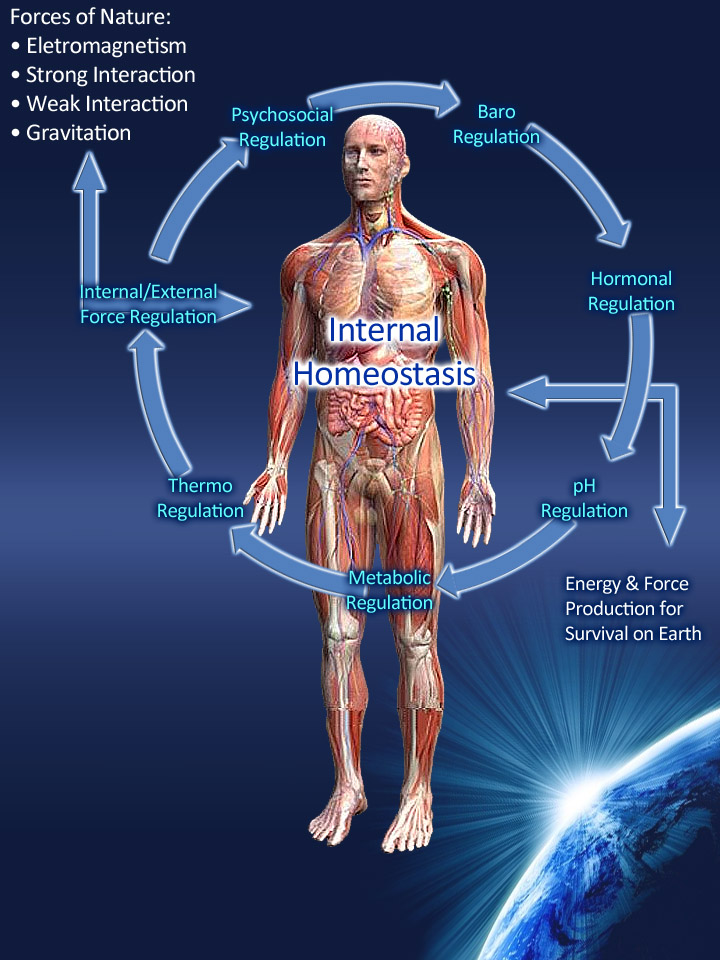


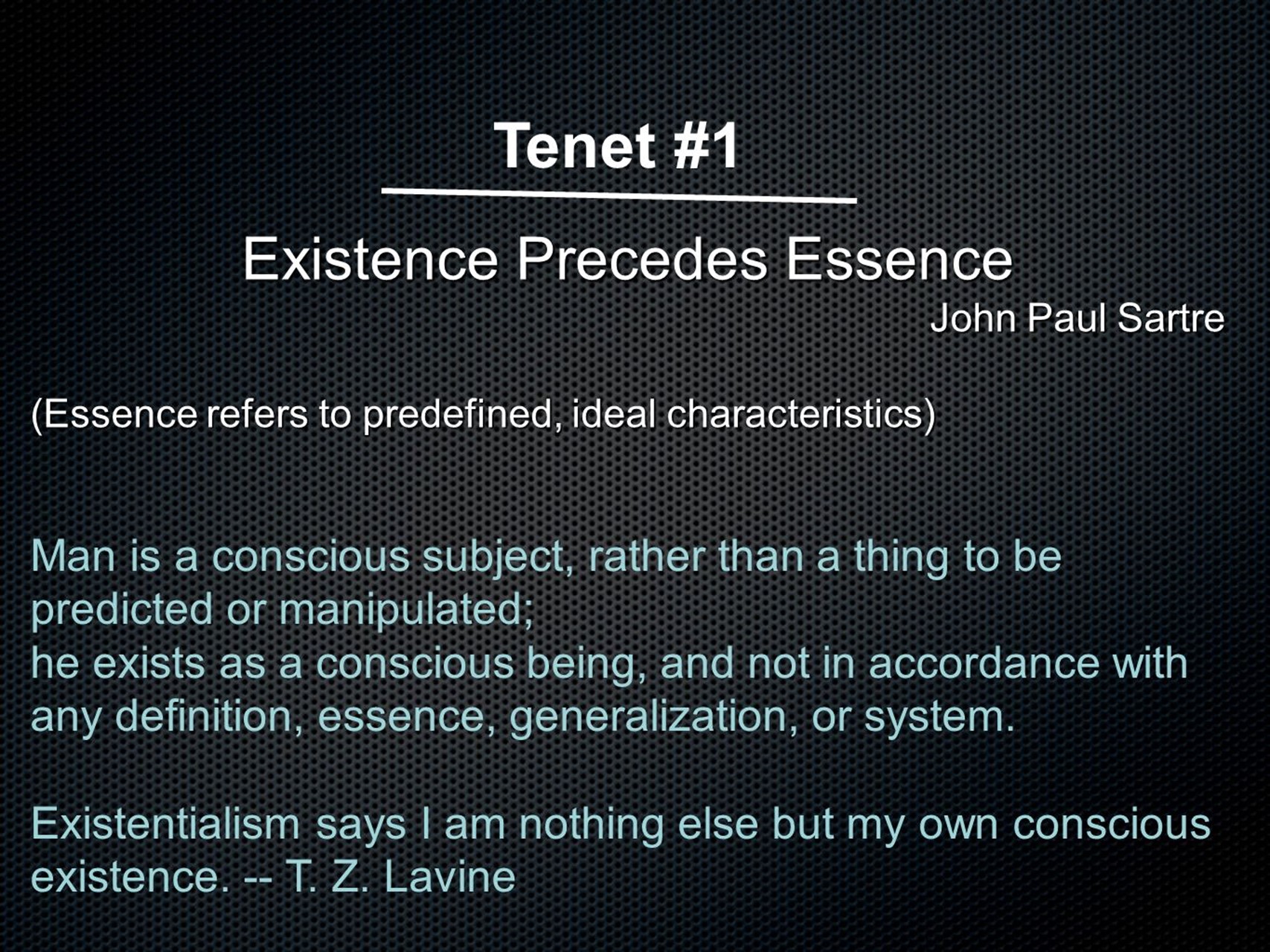



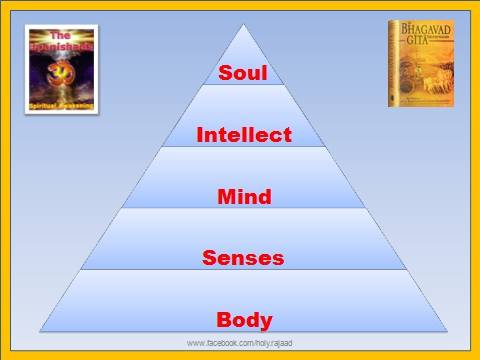





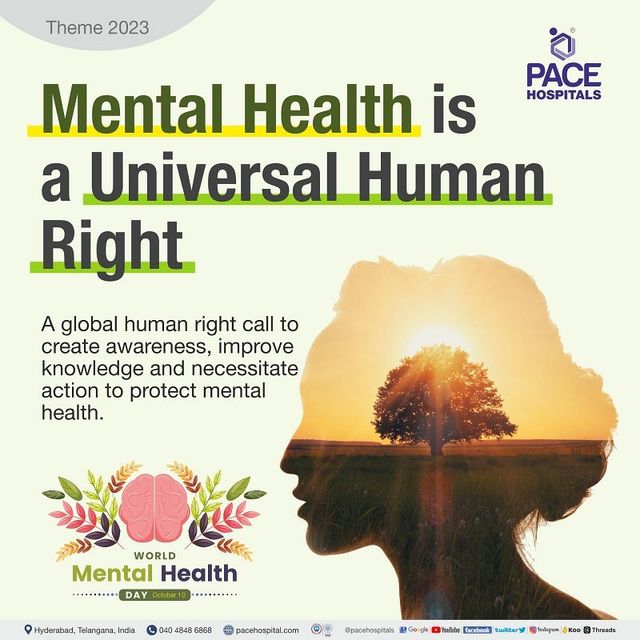


 Whole Dude - Whole Concept