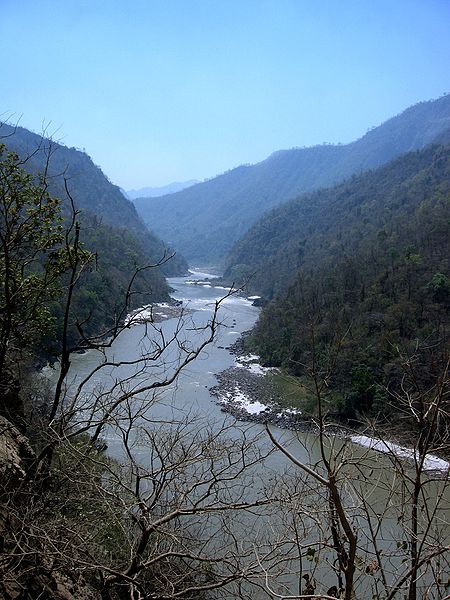
Whole Dude – Whole Ganges

Whole Dude – Whole Ganges: Defining Indian Identity – The Spirit of Nationalism. Mother Ganges is the Spirit of the Nation called India or Bharat.
Whole Dude – Whole Ganges: The Spirit of India

“….The Ganges,above all is the river of India,which has held India’s heart captive and drawn uncounted millions to her banks since the dawn of history.The story of the Ganges,from her source to the sea,from old times to new,is the story of India’s civilization and culture,of the rise and fall of empires,of great and proud cities,of adventures of man….”  

Discovery of India, Jawaharlal Nehru  

Whole Dude – Whole Ganges: Jawaharlal Nehru, India’s First Prime Minister speaks eloquently about River Ganges shaping the lives of Indians throughout History. Mother Ganges is the Spirit of the Nation.

Jis Desh Mein Ganga Behati Hai (The Country Where River Ganges Flows)
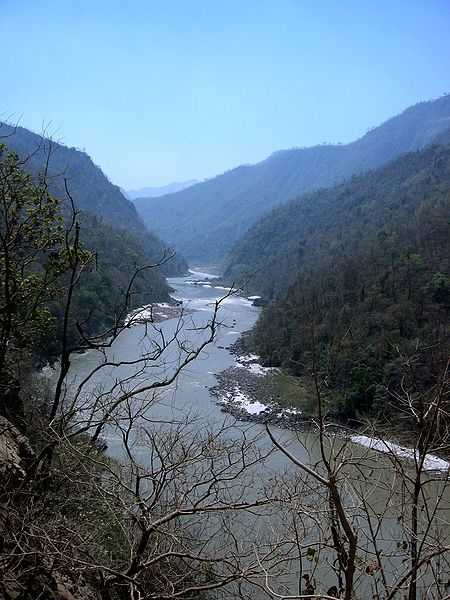
Whole Dude – Whole Ganges: WHAT IS INDIA? INDIA IS DEFINED AS THE LAND OR COUNTRY WHERE RIVER GANGES FLOWS. INDIA CAME INTO EXISTENCE WHEN GANGES STARTED FLOWING THROUGH THIS LAND. RIVER GANGES IS THE SPIRIT OF THIS NATION

Raj Kapoor won Filmfare’s Best Actor Award in 1961 for his portrayal of ‘Raju’, a song writer, in his film titled ‘Jis Desh Mein Ganga Behati Hai’. The picture was released during 1960 when I was twelve years old and was studying in VI-Form (S.S.L.C. Class of March 1961) in Danavaipeta Municipal High School, Rajahmundry, East Godavari District, Andhra Pradesh, India.We had a beautiful marble statue of Mahatma Gandhi right in front of our school.I studied Indian History as part of my school curriculum.I used to score well in my History tests. It was not too difficult for me to remember all those dates,names and other facts that constitute the subject matter of History. I have a deep sense of appreciation for all those leaders who orchestrated the political struggle against the British Rule.The Freedom Movement did indeed foster a sense of purpose and united people to achieve a common goal. It could be true that the fight against the Colonial powers gave a sense of Identity and very often the freedom fighters were called ‘Satyagrahis’. I have great admiration for their sense of patriotism and I am ever grateful for the sacrifices they made to win our independence. I saw this movie ‘ Jis Desh Mein ‘ just once and may have heard the title song on the radio on a few occasions.But the song , “Hotoan pe sachhai rahati hai, jahan dil me safaai rahati hai, Hum uss desh ke vaasi hai, Hum uss desh ke vaasi hai, Jis Desh Mein Ganga Behati Hai” never faded from my memory. 

Whole Dude – Whole Ganges: Defining Indian Identity – Mother Ganges is the Spirit of the Nation called India or Bharat

Ten years after seeing the movie, in the year 1970, at the age of 22 years , I was granted President’s Commission and joined the Indian Armed Forces in the rank of Lieutenant.While joining Service,we accept the risks that naturally accompany such an occupation and reflect upon the motivation that shapes the decision.I understand that the Freedom Struggle was important but that Struggle does not define my sense of National Identity.I have known that the country that we call India has existed long before the invasion by the Mughals,the country that we call India has existed during centuries of British Rule and now the country that we call India exists in spite of the changes in the political landscape and the political fortunes of the Parties that we elect from time to time. My sense of National Identity is not dependent upon the political history of our country. My sense of National Identity does not depend upon the language that I speak at home and it is not related to the regional customs pertaining to food or dress. I have known my country from its Cultural Traditions. In 1970,I joined the Indian Army to defend the country which lives in my mind as the Land where River Ganga flows.

Whole Dude – Whole Ganges: Mahatma Gandhi is revered as the Father of the Nation and had promoted the Spirit of Nationalism during India’s long Struggle for Freedom. But, Mother Ganges is the Spirit of this Nation called India or Bharat.

In my opinion, the country that we call India is not a mere political entity. It is true that India gained its political freedom in 1947. The country is existing ever since the River Ganges started flowing across its Land. 

I am not surprised that the song “Jis Desh Mein” still plays and I still hear the golden voice of immortal Mukesh, whenever my heart dreams about India. Most certainly, the Spirit of Nationalism is inspired by a history which reaches back to a period earlier than the British occupation of India.

Jis Desh Mein Ganga Behti Hai Lyric

Whole Dude – Whole Ganges: Defining Indian Identity – Mother Ganges is the Spirit of the Nation called India or Bharat.

hothon pe sachchaaee rahatee hain, jahaan dil mein safaee rahatee hain
hum us desh ke waasee hain, jis desh mein gangaa bahatee hain
hothon pe sachchaaee rahatee hain, jahaan dil mein safaee rahatee hain
hum us desh ke waasee hain, jis desh mein gangaa bahatee hain
mehmaan jo humaaraa hotaa hain, wo jaan se pyaaraa hotaa hain
jyaadaa kee nahee laalach hum ko, thode mein gujaaraa hotaa hain
thode mein gujaaraa hotaa hain

bachchon ke liye jo dharatee maan, sadiyon se sabhee kuchh sahatee hain

hum us desh ke waasee hain, jis desh mein gangaa bahatee hain

kuchh log jo jyaadaa jaanate hain, insaan ko kam pahachaanate hain

ye poorab hain, poorabawaale, har jaan kee kimat jaanate hain
milajul ke raho aaur pyaar karo, ik cheej yahee jo rahatee hain

jo jisase milaa sikhaa hum ne, gairon ko bhee apanaayaa hum ne
matalab ke liye andhe ho kar, rotee ko nahee poojaa hum ne
rotee ko nahee poojaa hum ne

ab hum to kyaa saaree duniyaan, saaree duniyaan se kahatee hain

hum us desh ke waasee hain, jis desh mein gangaa bahatee hain

Whole Dude – Whole Ganges: Defining Indian Identity – Mother Ganges is the Spirit of the Nation called India or Bharat.

Whole Dude – Whole Baptism

Whole Dude – Whole Baptism: Defining Indian Identity – The Tradition of River Worship. River Godavari at Rajahmundry
Whole Dude – Whole Baptism: Defining Indian Identity. The tradition of River Worship. River Godavari at Rajahmundry.

CULTURAL UNIFICATION OF INDIA – THE PRACTICE OF TIRTHA SNAN ( BATHING IN HOLY RIVERS )

Whole Dude – Whole Baptism: Defining Indian Identity. The tradition of River Worship. River Godavari at Rajahmundry.

Water plays an important role in a variety of Cultures and religious practices prevalent in this world.The role of water constitutes one of the most remarkable aspects of Indian religious life. Hindu religion is often described as Sanatana Dharma. The practice of bathing in a river is an unusual example of the continuance of an ancient tradition and hence I can refer to the practice of Tirtha Snan (The ritual of River Bathing) as “Sanatana” (of great antiquity) in its origin. Simply touching water is a purifying gesture in the Vedas. Pilgrimages (Tirtha Yatras) to holy rivers (Tirtha) was already known in Vedic and Epic times and it remains extremely popular up to the present day. In fact,my impression is that the practice has become more popular and a far greater number of people are participating due to the availability of modern time conveniences for travel and lodging.The news media consistently report that our river festivals such as “Kumbh Mela” and “Pushkarams” have established world records as the largest gathering of human beings upon this earth in one single day and for one single purpose.

The sacredness of a place is often due to the sanctity it derives from its location on the bank of a holy river (Tirtha Sthan or Tirtha Kshetra). The following verse is an example of such belief. The simple act of remembering the various places that River Ganges traverses through, is equivalent to the worship of all Gods and it bestows great blessings (Punya).

Tatra tatra sthita Ganga, Sarva Punya phala prada

Bhaveth smarana maatrena, Sarva Deva namaskruta.

Apart from bathing (Snan), holy waters are used in the ritualistic worship of deities,and the water used in the worship is used to sprinkle upon the heads of the devotees and also consumed by the devotee in acceptance of the blessings from the Deity. The devotee hopes for deliverance from sin or pollution (“Paap”), seeks preservation or enrichment of his religious merit (“Punya”), hopes for a reward such as rebirth in a heaven (“Swarg Lok”)and even total emancipation (“Moksha or Mukti”). There are instances when people had actually traveled to the holy city of Varanasi to die near the holy River Ganges. More often, the cremated remains, the ashes are carried by the loved ones and are physically sprinkled and immersed in the holy rivers such as Ganges to help the onward journey of the departed soul.

Whole Dude – Whole Baptism: Defining Indian Identity. The tradition of River Worship. River Godavari at Rajahmundry.

The worship of rivers and the practice of bathing is a belief that is connected with the traditional Indian views of earthly life. Indians believe in the theory of Karma. They believe that the acts of their present lives and their past lives would be a factor that determines the condition into which a being is reborn. The Karma binds the soul and compels it to go through an endless series of births and deaths. The cycle of birth, death and rebirth is called Samsara. In my previous entry, I described the fear of Samsara as the defining attribute of Indian Identity. The practice of bathing in a holy river is an example of the doctrine of Individualism. Even when millions of people travel and gather together to bathe in a river on one day, each is acting strictly to earn his own merit and to reap his own benefit and the community does not expect any share of the rewards that the bather may be granted. I bathe and wash my own sins and I can not be of any help to others if they carry the burden of their own sins. Each person has to accept individualistic responsibility for their own actions and if necessary they can seek help from others to get to the river and ask for assistance to bathe in the river.

Whole Dude – Whole Baptism: River worship appears to be a communal event but its usefulness is strictly individualistic in nature.

River worship appears to be a communal event but its usefulness is strictly individualistic in nature. Bathing is not viewed as a simple act of personal hygiene, it constantly reminds us of the need to seek purification and makes us aware of our responsibility for own actions and challenges us to face the consequences in our future lives. People are encouraged to seek the blessings that bathing in holy rivers would contribute even while they may be showering at home. The following verse is an example of our connection to the rivers that flow across our Land.

गङ्गे च यमुने चैव गोदावरि सरस्वति ।
नर्मदे सिन्धु कावेरि जलेऽस्मिन् संनिधिं कुरु ॥

Gange Cha Yamune Chaiva Godavari Saraswathi

Narmade Sindhu Kaveri Jalesmin Sannidhim Kuru

Meaning:
1: O Holy Rivers Ganga and Yamuna, and also Godavari and Saraswati,
2: O Holy Rivers Narmada, Sindhu and Kaveri; Please be Present in this Water (and make it Holy).

My introduction to River Worship

Whole Dude – Whole Baptism: Defining Indian Identity. The tradition of River Worship. The celebration of Godavari River.

Culture represents ideas and thoughts transmitted by one generation to the next. It indeed gives me a great pleasure to recall my learning of this unique Cultural Tradition while I lived at my Grandfather’s mansion in Innespeta of Rajahmundry town in East Godavari District of Andhra Pradesh. During 1950s, I lived with my parents,two brothers, grand mother, her sister and my great grand mother. The house had bath rooms and we had regular piped water supply from the municipality. We would generally shower at home and on important festival days, we would bathe in River Godavari. My great grand mother was an exception to this bathing practice. She firmly believed in the practice of river worship and adhered to it every single day and almost till her final days of earthly existence. She was of short stature and she was already in her ninety’s and due to her age, her spine curved and made her even smaller. Her vision had deteriorated and she was able to see only a few feet ahead of her. Our house was located at the corner of Kalabargivari Street and the Ramalayam street.The Lord Sri Rama Temple of Innespeta is a well known land mark and it stands next to the protective river embankment. The river bank is fairly wide, it includes the railway tracks and a motor-able road. Much later, the second rail cum road bridge was built across Godavari River using these railway tracks. My great grand mother would walk to the river all by herself and used a walking stick to support herself. The walk to the river is short but she faced a lot of dangers on the street. Those days, the vehicular traffic was not a problem and crossing the railway tracks was not a problem. The biggest threat was posed by the stray animals such as goats and cows that roam freely on the streets. She was practically defenseless. As young boys at home, myself and my elder brother were often given the chore of escorting my great grand mother during her walk to the river. When we followed her as her escort, the animals always behaved better and would not come to attack her. The reward myself and my brother Pratap reaped was that of getting into the emerald green, crystal clear, cool waters of River Godavari and frolic in the shallow waters as my great grand mother did her worship. But for my great grand mother’s tenacity and perseverance, myself and my brother would never have ventured to make a trip to the river in the morning.

Whole Dude – Whole Baptism: Defining Indian Identity. The tradition of River Worship. Pilgrims at Godavari River.

It was a joyful experience and the Tradition of River Worship gave us some very fond memories of our life in Rajahmundry. The following verse speaks of the importance that we attach to rivers of India and they are treated with great respect as they are deemed to be the same as Ganges:

Whole Dude – Whole Baptism: Defining Indian Identity. The tradition of River Worship.

Kaveri,Tungabhadra cha, Krishnaveni cha, Gautamee 

Bhagirathi cha vikhyata, Pancha Ganga prakirtita.

Whole Dude – Whole Baptism: Defining Indian Identity. The tradition of River Worship. River Godavari Bridge in Rajahmundry.
Whole Dude – Whole Baptism: River worship appears to be a communal event but its usefulness is strictly individualistic in nature.

Whole Dude – Whole Purification

Sanatana Dharma of India. Theertham, Tirtha, Tirthasthan, Tirtha Yatra, Tirtha Snan, and the ritual of Bathing and Purification.

The ancient traditions of India are often described as ‘Sanatana Dharma’. Indians for a very long time recognized the significance of Water and use it in various rituals, particularly for the purification of the human body which is prone to sickness or illness attributed to sinful thoughts, words, and actions. The term ‘Theertham’ refers to water that is sanctified by prayerful thought and by using it in the devotional worship of God.

Sanatana Dharma of India – Theertam, Tirtha, Tirthasthan, Tirtha Yatra, Tirtha Snan and the ritual of Bathing and Purification.

The term ‘Tirtha’ refers to a body of water such as a well, pond, lake, river, or sea which gets an elevated status because of its geographical association with a physical location, place, or position named ‘Sthan’ or ‘Kshetra’. The physical journey to visit the place of Tirthasthan is called Tirtha Yatra.

Sanatana Dharma of India – Theertham, Tirtha, Tirthasthan, Tirtha Yatra, Tirtha Snan, and the ritual of Bathing and Purification.

The act of taking a bath or dipping into the water at a Tirthasthan is called Tirtha Snan.

Sanatana Dharma of India – Theertham, Tirtha, Tirthasthan, Tirtha Yatra, Tirtha Snan, and the rituals of Bathing and Purification.

I ask my readers to reflect on the divine attributes of the Water Molecule. The original, sweet taste of fresh water cannot be discovered by the study of the properties of the Chemical Elements, Hydrogen and Oxygen which combine to form the Chemical Compound called Water. Man, like several other terrestrial creatures, depends upon Fresh Water delivered from Heaven.

Kumbh Mela: Millions of Indians take a holy dip – BBC News

Clipped from: https://www.bbc.com/news/world-asia-india-46860409

Sanatana Dharma of India – The rituals of Bathing and Purification.

Image copyright Ankit Srinivas

Millions of people have taken to the waters at the confluence of India’s sacred Ganges and Yamuna rivers as part of the Kumbh Mela festival – humanity’s largest gathering.

Officials told the BBC some 15m people bathed on Tuesday. They expect about 120m visitors over 49 days.

Hindus believe bathing at the rivers will cleanse their sins and bring salvation.

The holy men were among the first procession to arrive early Tuesday.

Sadhus – or ascetics – smeared ash on their bodies as they came out of the water and chanted “Har Har Gange”, or “Mother Ganges”, and danced while posing for photographers.

Sanatana Dharma of India – The rituals of Bathing and Purification.

Image copyright Ankit Srinivas

The Naga sadhus are the biggest draw of the festival – held in the northern city of Allahabad, recently renamed Prayagraj – and arrived early in the morning in massive colorful processions.

Thousands of the Sadhus – naked and wearing marigold garlands around their necks – were escorted by police to the river as they chanted slogans invoking Shiva, the Hindu god of destruction. Many were waving tridents and swords.

At the last Kumbh in 2013, female ascetics were allowed to bathe at the confluence of the rivers – known as the Sangam – for the first time. A few hundred transgender people were among those who bathed on Tuesday morning.

More than a million foreign pilgrims will also take part in the festival, senior administration official Rajeev Rai told the BBC.

He and other organizers had been preparing for more than a year for the event, which dwarfs the annual Hajj pilgrimage to Islam’s holiest sites in Saudi Arabia.

Sanatana Dharma of India – The Rituals of Bathing and Purification.

Image copyright Ankit Srinivas Image caption Religious sects arrived in processions to take a dip

The mela (meaning “fair” in Hindi) has been held in Allahabad for centuries now, but it has grown into a mega event in the past two decades.

Sanatana Dharma of India – The Rituals of Bathing and Purification

Image copyright Getty Images

This year the gathering will be particularly huge and many believe India’s Hindu nationalist government has organized it with an eye on key general elections due in the summer.

Massive billboards of Prime Minister Narendra Modi dot Allahabad city and the Mela ground. Huge cardboard cut-outs have been placed strategically at the bathing areas.

Sanatana Dharma of India: The Rituals of Bathing and Purification

Image copyright Ankit Srinivas

A temporary tent city spread over 32 sq km (12 sq miles) has been set up to accommodate the masses, complete with hundreds of kilometers of new roads. Hospitals, banks, and fire services have been set up just for the festival, along with 120,000 toilets.

Hundreds of new train services are running to and from Allahabad to tackle the rush of pilgrims and more than 30,000 police and paramilitaries have been deployed to provide security and manage the crowds.

In the run-up to the festival, religious sects held daily processions marked by much pomp and show.

Sanatana Dharma of India – The Rituals of Bathing and Purification

Image copyright Ankit Srinivas

At one such procession on Sunday night, there were elephants, camels, and horses. Brass bands and drummers played, as religious leaders sitting atop several vehicles threw marigold flowers to thousands of devotees.

On Monday – a day before the official start of the festival – tens of thousands of pilgrims bathed at the Sangam. Some then lit clay lamps and floated them along with flowers in the Ganges.

Sanatana Dharma of India: The Rituals of Bathing and Purification

Image copyright Ankit Srinivas

Sanatana Dharma of India: The Rituals of Bathing and Purification

Image copyright Ankit Srinivas

The atmosphere at the mela is festive, and the authorities have announced a calendar of music and dance performances. But there’s plenty of impromptu entertainment taking place by the roadside, with children performing rope tricks and shows by drummers and ballad singers.

Most pilgrims, however, say they are here to “answer the call of Mother Ganges”.

“We believe that bathing here will destroy our sins,” farmer Pramod Sharma said.

“The waters here have regenerative properties. Bathing here can cure your ailments. It also removes obstacles from your way,” Shahbji Raja said.

Sanatana Dharma of India: The Rituals of Bathing and Purification.

Kumbh Mela at a glance

  • A pilgrimage in which Hindus gather at points along the Ganges, Yamuna and mythical Saraswati rivers
  • This year’s event expects 120 million visitors over seven weeks, dwarfing last year’s Hajj pilgrimage in Saudi Arabia which drew about 2.4 million
  • Astrology determines most aspects of the festival, including its date, duration, and location
  • The most recent full Kumbh, held in 2013 in Allahabad, was also a Maha (or great) Kumbh, which happen every 144 years. It attracted an estimated 100 million visitors
  • A lost-and-found camp was set up in 1946 and has since helped reunite countless family members and friends who get separated in the vast crowds
  • This year, 15 lost-and-found camps have been set up. These computerized centers are interconnected and their announcements will be heard across the Mela grounds. Details will also be uploaded on Facebook and Twitter to help trace the missing
India’s Sanatana Dharma. Theertham, Tirtha, Tirtha Yatra, and Tirtha Snan. The Rituals of Bathing and Purification.