Whole Edict – The House of God in Jerusalem


Whole Edict: Rebuild the Temple, the House of God in Jerusalem
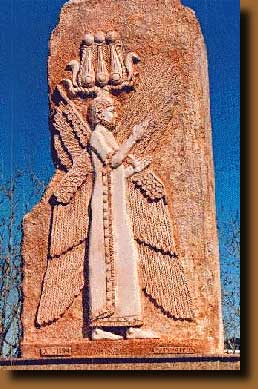
Shahanshah (Cyrus the Great, Emperor of Persia 580-590 B.C., to 529 B.C.)King of Kings,Father of Persian People, Ideal Monarch,Liberator of Jews of Babylonia- The Legend of Cyrus is described by Greek historian Herodotus and Greek author Xenophon. A Shahanshah’s Edict – Rebuild the Temple, the House of God in Jerusalem

SHAHANSHAH, CYRUS II EMPEROR OF PERSIA  

A Shahanshah’s Edict – Rebuild the Temple, the House of God in Jerusalem

Cyrus, the founder of Achaemenid Persian empire and ruled it from 549 BC to 529 BC. The conquest of the great and ancient city of Babylon in 539 BC made Cyrus the ruler of a vast domain from the Aegean and the Mediterranean Sea in the west to the Indus river of India in the east. Nebuchadnezzar II of Babylonia destroyed Jerusalem in 586 BC and forced the Jews to live in exile.

A Shahanshah’s Edict – Rebuild the Temple, the House of God in Jerusalem

Cyrus is famous in the Books of Old Testament of Holy Bible for freeing the Jews held captive in Babylonia. Cyrus had allowed more than 40,000 Jews to return to their Promised Land in 537 BC. He had asked them to take back the gold and silver utensils that were looted from the House of God in Jerusalem.

A Shahanshah’s Edict – Rebuild the Temple, the House of God in Jerusalem

Prophets Isaiah and Jeremiah foretold the destruction of Jerusalem, captivity of Jews and then release with the coming of Cyrus. He is remembered in the Cyrus Legend first recorded by Xenophon, a Greek soldier and author of Cyropaedia. Greek historian Herodotus has described Cyrus as tolerant, ideal monarch, Father of Persian people and as the Liberator of Jews held captive in Babylonia. Cyrus had conquered Lydia, Syria, Babylon, and Palestine. In the year 1971, Iran celebrated the 2,500th anniversary of the founding of the monarchy by Cyrus. He is glorified in the Books of The Old Testament. 

Shahanshah’s Edict – Rebuild the Temple, the House of God in Jerusalem

Book of Jeremiah, chapter 29, verse 10, the LORD says, “when seventy years are completed for Babylon, I will come to you and fulfill my gracious promise to bring you back to this place…”  
Shahanshah’s Edict – Rebuild the Temple, the House of God in Jerusalem

Book of Isaiah, chapter 44, verse 28 : God says of Cyrus, “He is my shepherd and will accomplish all that I please; he will say of Jerusalem, “Let it be rebuilt,” and of the temple, “Let its foundations be laid.”  

A Shahanshah’s Edict – Rebuild the Temple, the House of God in Jerusalem

Book of Isaiah, chapter 45, verse 13 : “I will raise up Cyrus in my righteousness; I will make all his ways straight, he will rebuild my city and set my exiles free, but not for a price or reward,” says the LORD Almighty.  

A Shahanshah’s Edict – Rebuild the Temple, the House of God in Jerusalem

Shahanshah’s Edict of Restoration  

A Shahanshah’s Edict – Rebuild the Temple, the House of God in Jerusalem

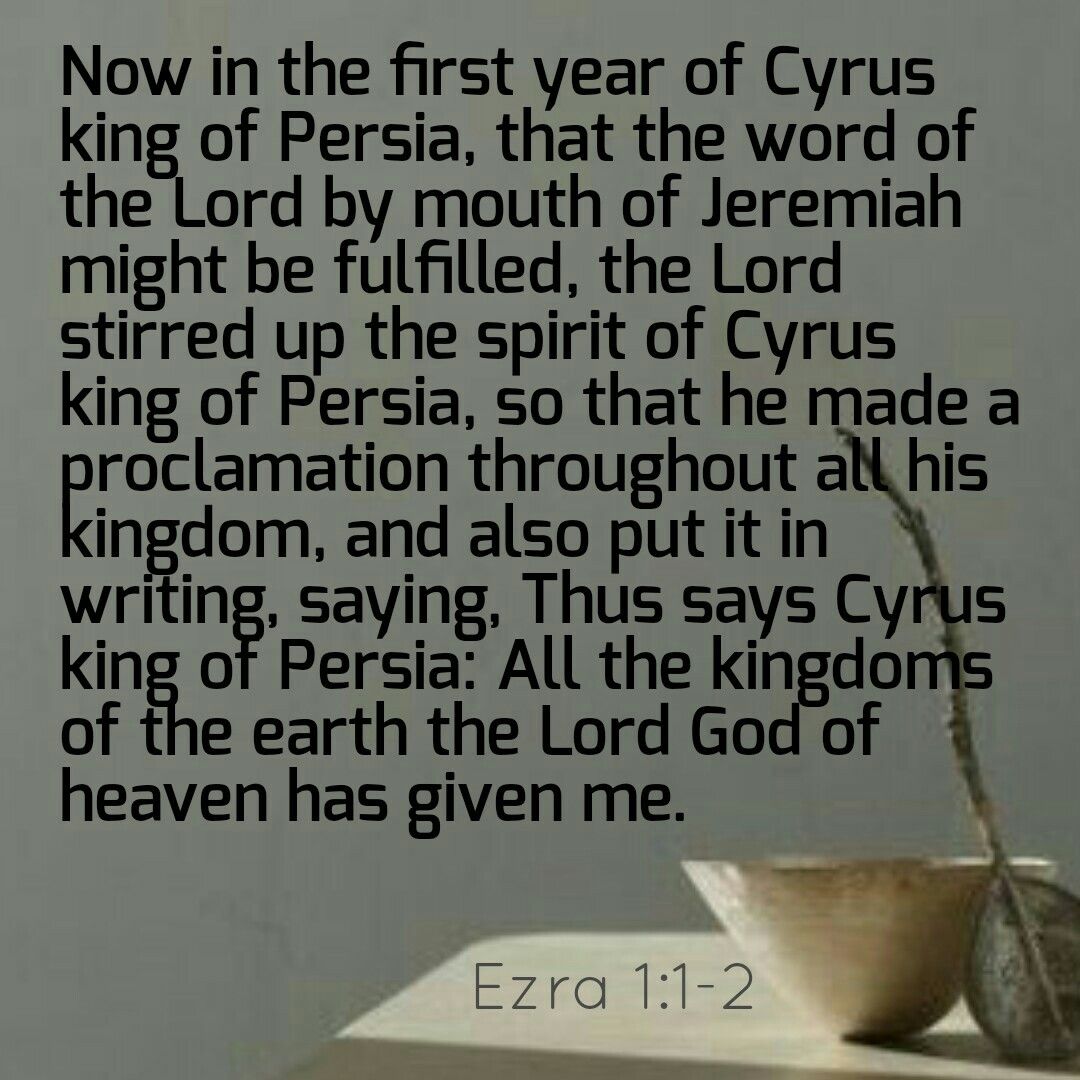
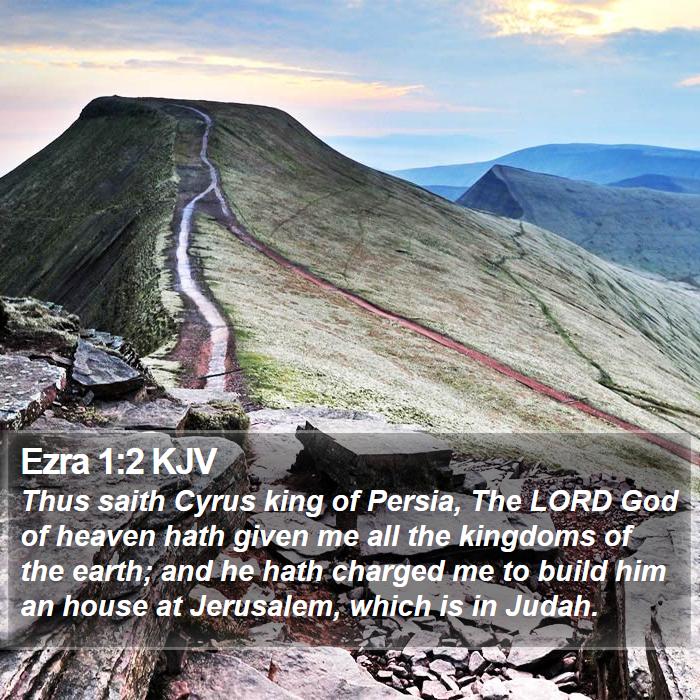
Cyrus’s Edict to rebuild the House of God in Jerusalem is stated in the Book of 2 CHRONICLES, chapter 36, verse 23, and is reproduced in the Book of EZRA, chapter 1, verses 2 and 3.
A Shahanshah’s Edict – Rebuild the Temple, the House of God in Jerusalem

This is what Cyrus King of Persia says;  

“The LORD, the God of heaven, has given me all the kingdoms of the earth and he has appointed me to build a temple for Him at Jerusalem in Judah. Anyone of His people among you- may his God be with him, and let him go up to Jerusalem in Judah and build the temple of the LORD, the God of Israel, the God who is in Jerusalem.”  

CYRUS CYLINDER  
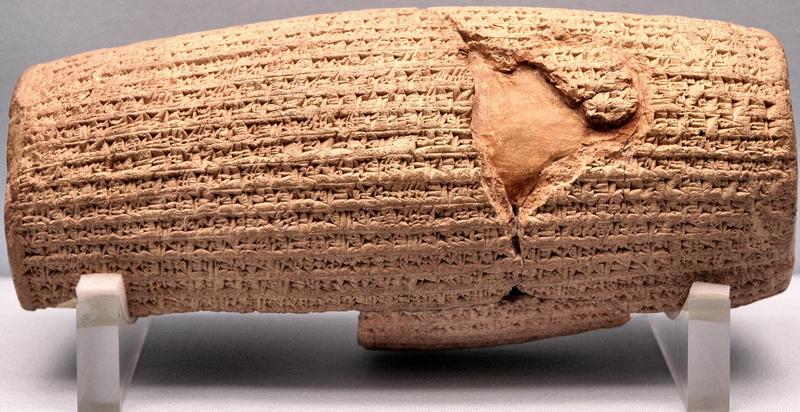
Cyrus Cylinder was discovered in the foundations of Esagila Temple, Babylon. A Shahanshah’s Edict – Rebuild the Temple, the House of God in Jerusalem

A clay cylinder was discovered in the foundations of the Esagila temple dedicated to chief Babylonian god Marduk. In cuneiform script, the following statement was inscribed on the clay cylinder:  

….I am Cyrus, King of the world. When I entered Babylon…. I did not allow anyone to terrorise the land….I kept in view the needs of people and all its sanctuaries to promote their well-being…. I put an end to their misfortunes. The Great God has delivered all the lands into my hand; the lands that I have made to dwell in a peaceful habitation….  

A Shahanshah’s Edict – Rebuild the Temple, the House of God in Jerusalem

The Legacy of Emperor Cyrus  

A Shahanshah’s Edict – Rebuild the Temple, the House of God in Jerusalem

He was more than a great conqueror who founded an empire. He is best remembered for his unprecedented tolerance and magnanimous attitude towards those he vanquished. He showed a great forbearance and respect towards the religious beliefs and cultural traditions of other races. His policy of religious toleration and contribution to the rebuilding of several nations’ temples earned him the homage of all the people whom he had ruled.

A Shahanshah’s Edict – Rebuild the Temple, the House of God in Jerusalem

In the Book of Isaiah, chapter 45, verses 1 to 6, Cyrus is praised as the ‘ANOINTED OF THE LORD’. The Greeks whom he conquered regarded him as ‘Law-Giver’. The Babylonians treated him as ‘The Liberator’. The Iranians regard him as ‘The Father’. He is considered to be upright, generous, and benevolent.

A Shahanshah’s Edict – Rebuild the Temple, the House of God in Jerusalem

The Holy Book of Quran in Surah Al-Kahaf, verse 18 referred to a person known as “ZUL-QARNAIN” or “DHUL-QARNAYN”, a person wearing a crown of two horns like a ram. Cyrus, a Zoroastrian by faith, promised not to force any person to change his religion and faith and guaranteed religious freedom for all.  

A Shahanshah’s Edict – Rebuild the Temple, the House of God in Jerusalem

Rebuild BETH-EL, House of God at Temple Mount, Jerusalem: 

A Shahanshah’s Edict – Rebuild the Temple, the House of God in Jerusalem

The House of God, the Temple in Jerusalem acts as the figurative “footstool” of God’s presence in the physical world.
A Shahanshah’s Edict – Rebuild the Temple, the House of God in Jerusalem

The First Temple was built by King Solomon in 957 BC. It stood for about 375 to 410 years. The Babylonians destroyed it in 586 BC. The Second Temple was completed during 516 BC and the Roman Emperor POMPEY desecrated it in 63 BC. King Herod had renovated it in 19 BC. The Roman troops of General TITUS totally destroyed it in 70 CE. Just the Western outer wall of the Temple still stands today. An Islamic shrine, the Dome of Rock was built on the site of the Temple Mount in late 7th century CE, and the al-Aqsa Mosque also stands in the temple courtyard.

A Shahanshah’s Edict – Rebuild the Temple, the House of God in Jerusalem

The Jews envision the construction of the Third Temple in Jerusalem. The building of religious shrines on top of the ruined monuments of other faiths causes problems for rebuilding the Temple Mount. This is a problem that Indians have encountered repeatedly in all of their holy places such as Varanasi, Mathura, and Ayodhya.

A Shahanshah’s Edict – Rebuild the Temple, the House of God in Jerusalem

If Shahanshah Cyrus is asked to decide on the religious dispute between Muslims and Jews, he would direct us to rebuild the original House of God or Beth-El at Temple Mount in Jerusalem and to restore the faith and the worship of God that it represents. Let us rebuild ‘House of God’ and let its foundations be laid where it belongs.   

The remnants of Second Temple, the Temple renovated by King Herod. The First Temple was built by King Solomon. The most holy site in Judaism is known as the Western Wall or the Wailing Wall. The Minaret of Al-Aqsa Mosque and the Dome of the Rock are seen behind the Western Wall. A Shahanshah’s Edict – Rebuild the Temple, the House of God in Jerusalem

Whole House – A House for God of Israel

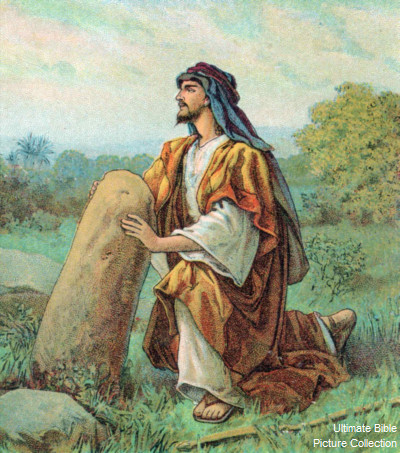
Whole House – A House for God of Israel: Jacob’s Pillow-Pillar Stone marks the site as BethEl, the House of God.

JACOB’S DREAM AT BETHEL 

The story of Jacob is described in the Book of Genesis, the first Book of Old Testament. He was the son of Issac, the grandson of Abraham, and the twin brother of Esau.He was named Jacob as he came out with his hand grasping his older twin brother Esau’s heel (Genesis 25:26).

SPIRITUALITY SCIENCE – THE PROMISE OF GOOD OLD AGE: GOD’S PROMISE OF GOOD OLD AGE WAS MADE TO ABRAHAM. ISAAC, THE SON OF ABRAHAM DIED AT 180 YEARS AGE AND HAD LIVED FOR FIVE ADDITIONAL YEARS AS COMPARED TO HIS FATHER. IN THIS PAINTING, ISSAC WAS GIVING HIS BLESSINGS TO JACOB AND HE WAS DECEIVED FOR HE BECAME BLIND ON ACCOUNT OF THE NATURAL AGING PROCESS.

Jacob received his older brother’s blessing from his father and then flees to Laban in Haran to escape from his brother’s anger. His dream at Bethel is narrated in Genesis, chapter 28, verses 10-17 : 

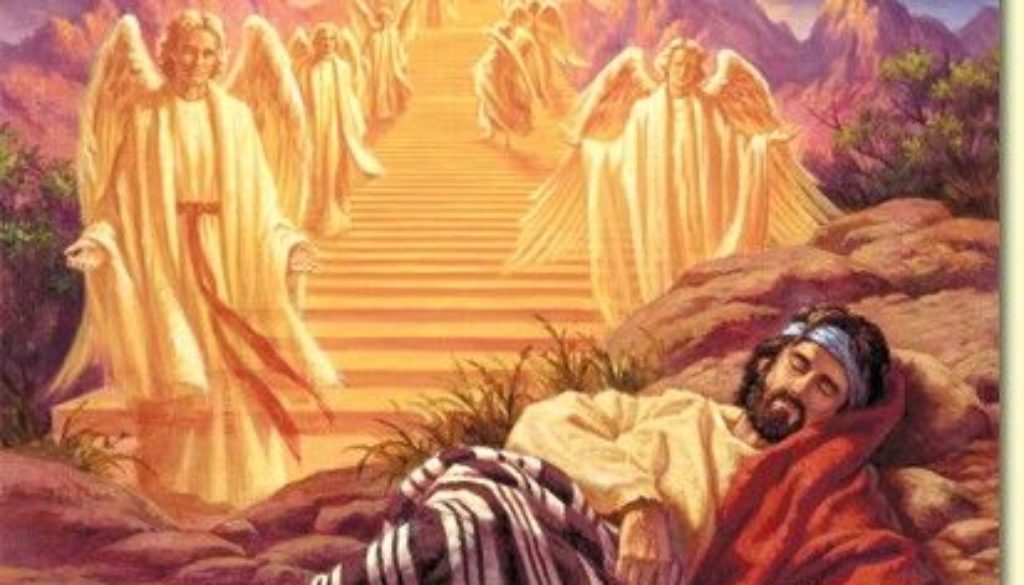
Whole House – A House for God of Israel: Jacob’s Dream at Bethel (Genesis 28: 10-17)

Jacob left Beersheba and set out for Haran. When he reached a certain place, he stopped for the night because the sun had set. Taking one of the stones there, he put it under his head and lay down to sleep. He had a dream in which he saw a stairway resting on the earth, with its top reaching to heaven, and the angels of God were ascending and descending on it. There above it stood the LORD, and He said: “I am the LORD, the God of your father Abraham and the God of Issac. I will give you and your descendants the land on which you are lying….” When Jacob awoke from his sleep, he thought, “Surely the LORD is in this place, and I was not aware of it.” He was afraid and said, “How awesome is this place! This is none other than the house of God; this is the gate of heaven.” Early the next morning Jacob took the stone he had placed under his head and set it up as a pillar and poured oil on top of it. He called the place Bethel, though the city used to be called Luz. He had further taken a vow stating that the stone he had set up as a pillar would be God’s house. 

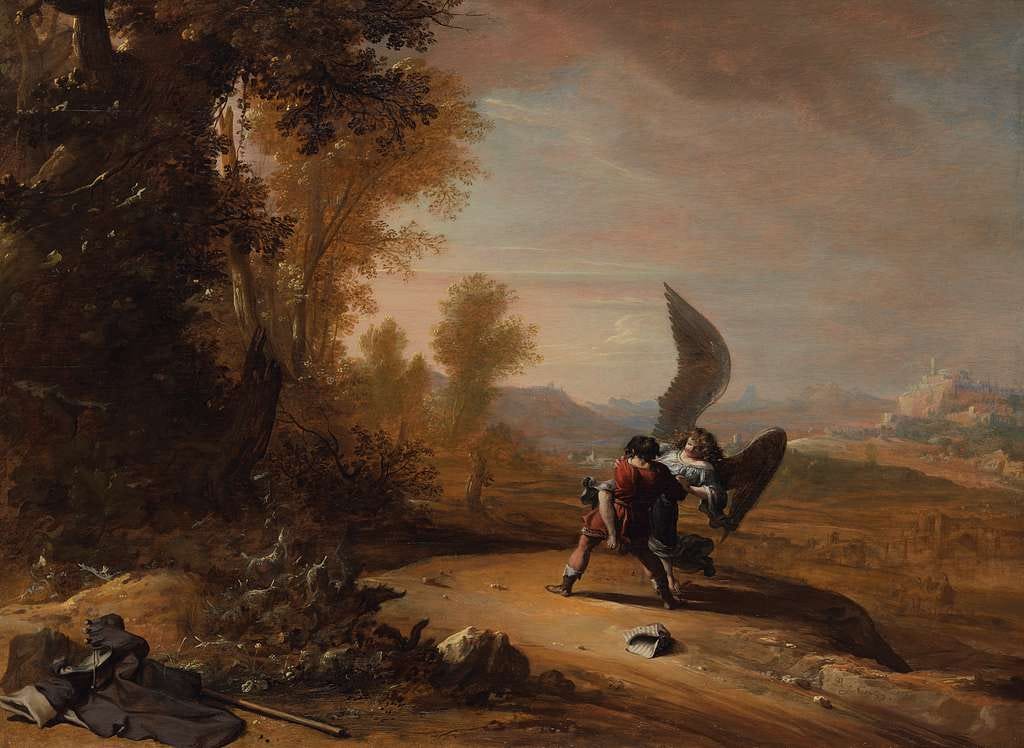
Whole House – A House of God of Israel: Jacob’s Spiritual Struggle at Jabbok (Genesis 32:22-30)

Jacob was the father of the founders of the twelve tribes of Israel. Jacob was given the name of Israel after he withstood a spiritual struggle at Jabbok (Genesis 32:22-30). Jacob had literally wrestled with God who came down in the form of a man. The name Israel is derived from the words ‘Sara’ meaning To Struggle, Wrestle, and ‘El’ meaning God. El is one short form of ‘Elohim’, the name used for God.

THE HOUSE OF GOD AT MOUNT MORIAH

Whole House – A House for God of Israel: God set up Laws for the Israelites mostly regarding holiness and worship. The Old Testament Book of Leviticus, Chapter 16, verse 34 :”This is to be a lasting ordinance for you; Atonement is to be made once a year for all the sins of the Israelites.” The Children of Jacob (the son of Issac, and grandson of Prophet Abraham) need a House for God of Israel.

In Judaism, Mount Moriah is also known as the ‘Temple Mount’, and is the most venerated as the holiest spot on Earth. After liberating Jews from a life of slavery in Egypt, at Mount Sinai, God enters into a ‘New Covenant’ and He had appeared in the form of fire before Moses and other elders.

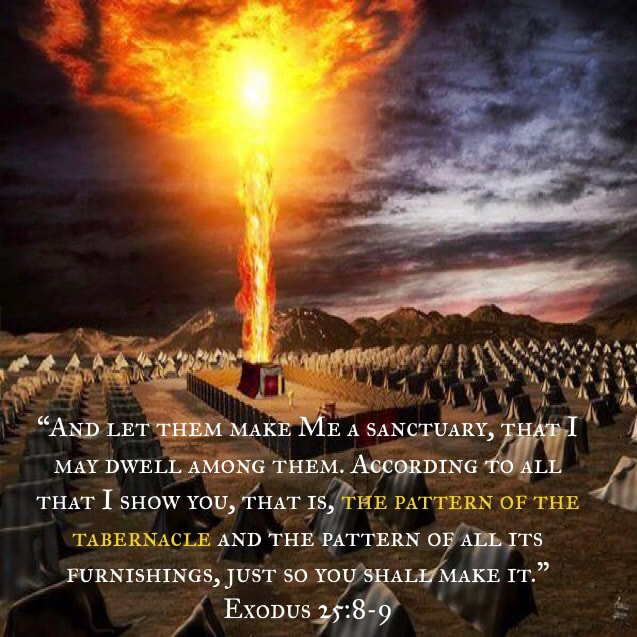
Whole House – A House for God of Israel: Make Me a Sanctuary, a Tabernacle, a House, a Temple.

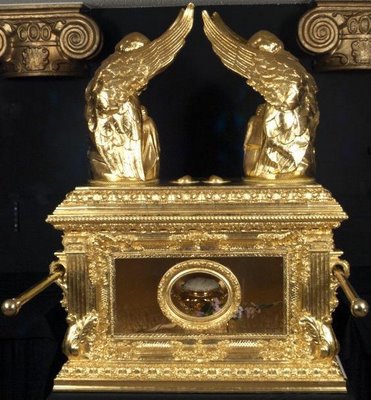
The Book of Exodus, Chapter 25, verses 8-9, God had asked the Jews: “Then have them make a sanctuary for me, and I will dwell among them. Make the Tabernacle and all its furnishings exactly like the pattern I will show you…” The Ark of the Covenant was where God manifested His presence on earth and the Ark went ahead of the Israelites wherever they traveled. The Ark was only housed in a tent for many long years and King David could only erect an altar for God (Book of 2 Samuel, chapter 24:25).

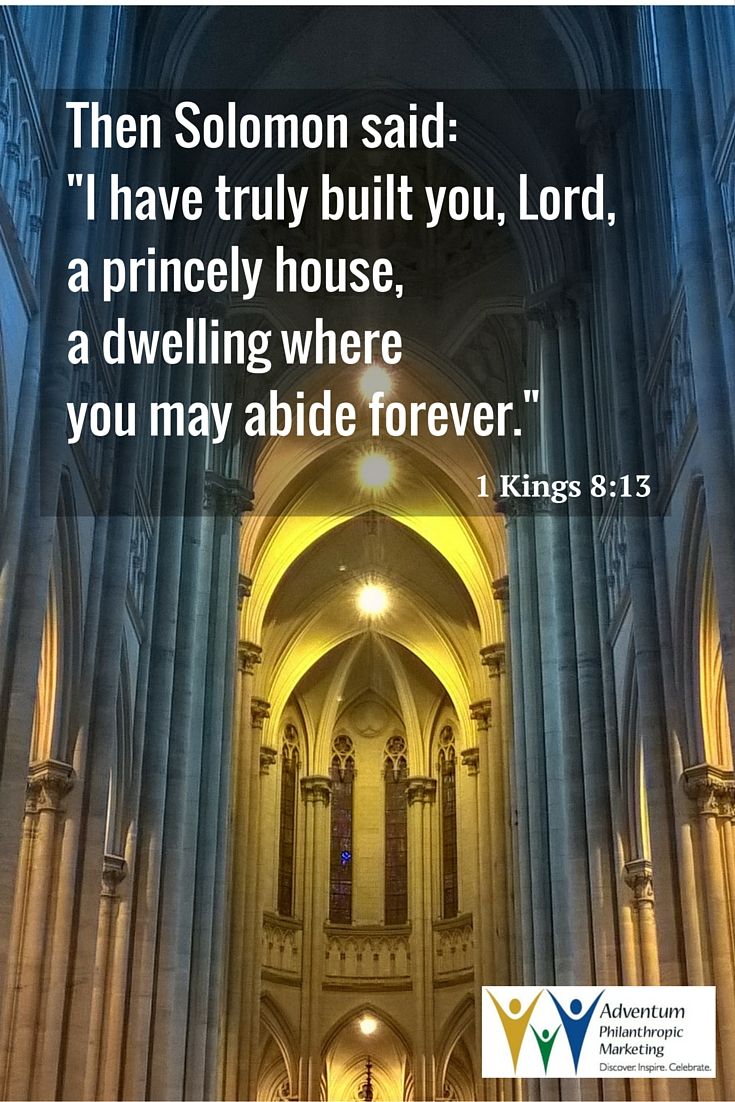
Whole House – A House for God of Israe: 1 Kings, Chapter 8, verse 13l

The opportunity to build a House for God in His Name was given to Solomon, the son of King David. Book of 1 Kings, Chapter 8, verse 13, Solomon declares: “I have indeed built a magnificent temple for you, a place for you to dwell forever.” The site selected by God for the establishment of the Holy Temple in His Name also is considered to be the spot where creation of world began, and Adam the first man was created here. Abraham brought his son Issac for sacrifice at this place. The Jewish tradition known as ‘Midrash’ also claimed that Jacob had a dream and had erected a monument and declared it as the House of Holy One. God had pushed that rock with His right foot and the rock had become the ‘Foundation Stone’, the ‘Corner Stone’, and is also known as the ‘Key Stone’ of Solomon’s First Temple. The Temple of God stands over a stone identified by Jacob as the ‘gate of heaven’. When Solomon dedicated this Temple to God in 957 B.C., God had entered His House in the form of a cloud. 

GOD OF ISRAEL’S  DWELLING PLACE 

Whole House – A House for God of Israel

Psalm 115, song 2-3 says: 

Why do the nations say, 

“Where is their God?”

Our God is in heaven; 

He does whatever pleases Him. 

Whole House – A House for God of Israel: “I have indeed built a magnificent Temple for you to dwell forever.” The remnants of Second Temple stand mutely at a place known as Gate of Heaven. The children of Israel need a House for their God.