

Excerpt: Six is a number perfect in itself. God created the world and the man in Six Days because this number is perfect. For that reason, the man must also choose a Six-Day Work Week, the Whole Culture of Six Days Labor.

The US Supreme Court has upheld the religious protections of the US workers and yet the Human Rights of the US workers are gravely compromised by creating categories among the US workers to decide their eligibility to receive Old Age Retirement Monthly Benefits paid by the US Social Security Administration. Human Dignity is a fundamental Christian Value for God made Man in His own image and defending Human Dignity remains the Core American Value.


Five-Day Work Culture vs Six-Day Adventist Work Culture or Whole Culture

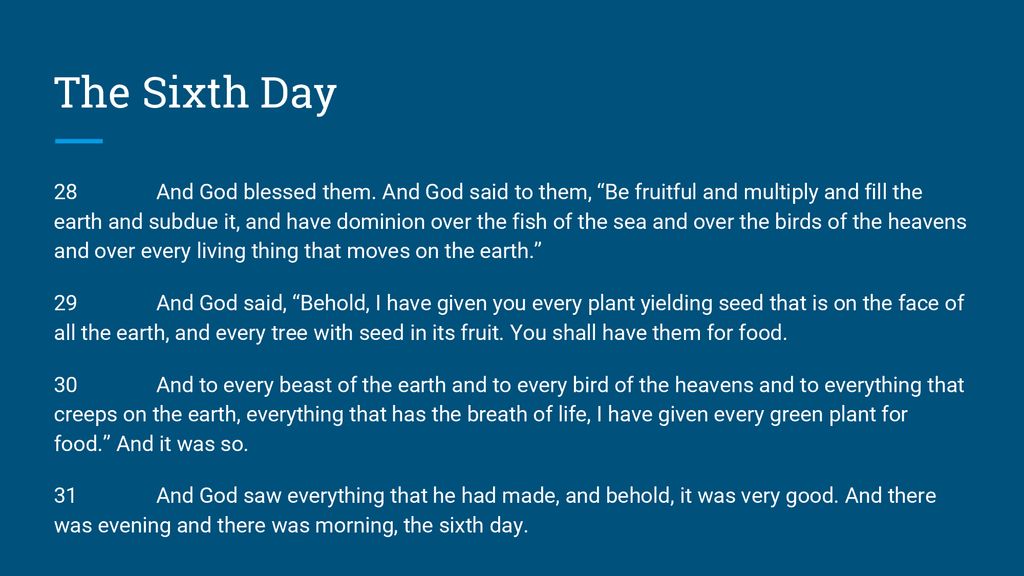
Sixth-Day Adventism – God’s Work for Six Days precede God’s rest on the Seventh Day

The Seventh-Day Adventists believe that the Sabbath should be observed on the seventh day of the week, i.e. from Friday sunset to Saturday sunset. I coined the phrase Sixth-Day Adventist to give my highest priority to God’s Commandment asking man to perform labor or work for Six Days. In my analysis, God ordained a Six-Day Work Schedule without which man cannot seek the blessings of Sabbath. The Rudi-Grant Connection at Whole Foods follows the Six-Day Weekly Work Schedule.

As in most industrialized countries, the Standard Work Week in the United States begins on Monday and ends on Friday. During the Depression, President Herbert Hoover called for a reduction in Work Hours in lieu of layoffs. Later, President Franklin Roosevelt signed the Fair Labor Standards Act of 1938, which established a five-day, 40-hour workweek for many workers.
The Fair Labor Standards Act (FLSA) is fundamentally flawed for it is not inspired by the Sixth-Day Adventist Positive Work Culture.


The Concept of Positive Sixth-Day Adventist Work Culture is inspired by God’s Work Week:

Six is a number perfect in itself. God created the world and the man in Six Days because this number is perfect. For that reason, the man must also choose a Six-Day Work Week, the Whole Culture of Six Days Labor.
Supreme Court broadens religious protections for workers

Unanimous ruling finds employers must show ‘substantial increased costs’ to deny an accommodation
Posted June 29, 2023 at 1:22pm
The Supreme Court broadened religious protections for workers Thursday in a ruling that clarified when employers can refuse religious accommodations for workers.
The unanimous opinion, written by Justice Samuel A. Alito Jr., found that employers must show that granting such an accommodation would lead to “substantial increased costs” in relation to the conduct of its business.
Alito wrote that justices are “brushing away” an incorrect interpretation of a previous Supreme Court case on Title VII of the Civil Rights Act. He pointed out that a diverse group of religious organizations contended that the interpretation had “blessed the denial of even minor accommodation in many cases, making it harder for members of minority faiths to enter the job market.”
The case stems from a suit brought by a rural mail carrier in Pennsylvania, Gerald Groff, who quit rather than deliver Amazon packages on Sundays, citing his Christian religion. He then sued the U.S. Postal Service for discrimination.
The U.S. Court of Appeals for the 3rd Circuit ruled in the Postal Service’s favor, citing a landmark decision from the Supreme Court in 1977, Transworld Airlines, Inc. v. Hardison, which found employers did not have to bear “undue hardship” to accommodate employees’ religious observance.
In court filings, Groff argued that the 1977 decision tamped down on the religious rights of employees that Congress meant to protect in the 1972 amendments to the Civil Rights Act.
The 3rd Circuit and other lower courts — based on a line in the 1977 decision — interpreted “undue hardship” to mean any cost or effort that is more than “de minimis,” Alito wrote in the ruling.
But that interpretation is “erroneous,” Alito wrote, and “may have had the effect of leading courts to pay insufficient attention to what the actual text of Title VII means with regard to several recurring issues.”
“We think it is enough to say that an employer must show that the burden of granting an accommodation would result in substantial increased costs in relation to the conduct of its particular business,” the opinion states.
The Supreme Court found that the law requires that an employer reasonably accommodate a worker’s religious practice, “not merely that it assess the reasonableness of a particular possible accommodation or accommodations.”
“This distinction matters. Faced with an accommodation request like Groff’s, it would not be enough for an employer to conclude that forcing other employees to work overtime would constitute an undue hardship,” the court ruled. “Consideration of other options, such as voluntary shift swapping, would also be necessary.”
Some congressional Republicans had backed such an interpretation in briefs filed in the case.
The Biden administration had argued that the court should leave the issue for members of Congress, who have spent decades considering and rejecting a higher standard to accommodate religious employees.
The Justice Department told the justices that Groff asked “this Court to do what Congress would not” by rewriting the law.
The existing law may provide too little protection for religious workers, according to the Biden administration brief, but “that argument should be directed to Congress, which is better positioned to weigh the competing interests in this sensitive area and strike the appropriate balance.”
U.S. Supreme Court buoys religious employees who seek accommodations at work

By Andrew Chung
June 29 (Reuters) – The U.S. Supreme Court on Thursday bolstered the ability of employees to obtain accommodations at work for their religious practices, reviving a lawsuit by an evangelical Christian former mail carrier accusing the Postal Service of discrimination after being disciplined for refusing to show up for work on Sundays.
The 9-0 ruling threw out a lower court’s decision rejecting a claim by Gerald Groff, a former mail carrier in Pennsylvania, that the Postal Service’s actions refusing to exempt him from working on Sundays, when he observes the Sabbath, violated federal anti-discrimination law.
Groff’s case centered on a federal anti-discrimination law called Title VII of the Civil Rights Act of 1964, which prohibits employment discrimination based on religion and other factors including race, sex and national origin.
Under Title VII, employers must make allowances for a worker’s religious observance or practices unless that would cause the business “undue hardship” – which the Supreme Court in a 1977 case called Trans World Airlines v. Hardison determined to be anything imposing more than a minor, or “de minimis,” cost.
The court in Thursday’s ruling clarified the Hardison precedent. Conservative Justice Samuel Alito, who authored the decision, wrote, “We hold that showing ‘more than a de minimis cost,’ as that phrase is used in common parlance, does not suffice to establish ‘undue hardship’ under Title VII.”
Alito added, “We think it is enough to say that an employer must show that the burden of granting an accommodation would result in substantial increased costs in relation to the conduct of its particular business.”
Groff’s attorney Aaron Streett praised the ruling, saying, “This is an important victory for Americans of all faiths, who may now follow their religious consciences in the workplace.”
Groups representing some religions that are in the minority in the United States including Islam, Judaism and Hinduism had backed Groff in the case, saying they are disproportionately denied religious accommodations, forcing them to choose between their religion and their jobs.
US Supreme Court Issues Historic Ruling Strengthening Religious Accommodation Protections for Workers

In a unanimous decision issued on Thursday, June 29, the United States Supreme Court has discarded decades-long precedent by strengthening legal protections for workers whose religious beliefs conflict with their job obligations. The ruling in Groff v. DeJoy is expected to have a significant impact on job opportunities for Americans of various faiths who have frequently faced challenges due to their Sabbath-keeping practices. The Court’s decision will reshape how businesses offer religious accommodation under Title VII of the Civil Rights Act of 1964.
The legal team representing Groff included Adventist attorney Alan Reinach, who serves as director of Public Affairs and Religious Liberty for the Pacific Union Conference of Seventh-day Adventists. During the appeals process, First Liberty, a prominent religious freedom advocacy group, joined the litigation team and recruited appellate counsel Aaron Streett from the law firm Baker Botts, LLP. The case was argued before the Court on April 18, 2023.

Speaking for the General Conference of Seventh-day Adventists and its North American Division, Todd McFarland, Deputy General Counsel, who also wrote the amicus brief filed by the church, said, “We are very pleased this morning that the Supreme Court took an important step towards protecting people of faith in the workplace. No one should have to choose between their job and their faith. Today’s decision reaffirms that employers cannot use an employee’s religious belief as an excuse to terminate them.”

A diverse group of faith-based and religious liberty organizations filed amicus briefs with the Supreme Court supporting Groff, including the General Conference of Seventh-day Adventists, The American Center for Law And Justice, The Sikh Coalition, the Union of Orthodox Jewish Congregations of America, the Council on American-Islamic Relations, the Church of Jesus Christ of Latter-day Saints, the American Hindu Coalition, the Becket Fund for Religious Liberty, and the Baptist Joint Commission.

Drawing on the 1977 case, employers only had to suffer a bare minimum amount of hardship to justify denying religious accommodation to an employee,” Reinach said. “This standard neutered the law and led to the termination of employment for literally thousands of Americans of all faiths. Seventh-day Adventists were especially harmed in that hourly wage workers are frequently assigned shift schedules including Sabbath hours.”

The Supreme Court’s ruling in Groff v. DeJoy not only acknowledged the unfair burden placed on workers with religious conflicts but also highlighted the need for a more robust approach to religious accommodation.
The ruling is expected to have far-reaching implications for workers across the country. By raising the standard for employers to justify denying religious accommodation, the Court’s decision provides greater protection for employees with sincerely held religious beliefs. It sends a clear message that employers must make reasonable efforts to accommodate their employees’ religious practices, even if it requires some degree of hardship.

The decision in Groff v. DeJoy is seen as a significant victory for religious freedom advocates who have long argued for stronger legal protections. It marks a shift toward a more equitable approach that recognizes the importance of accommodating the diverse religious practices of American workers. As a result of this ruling, employees who face conflicts between their job requirements and their religious beliefs can expect increased opportunities to obtain reasonable accommodations from their employers.

Attorney Mitch Tyner, retired associate general counsel for the church and also a former Capitol Hill liaison, was both pleased and cautious about the Court’s decision. “First, kudos to Todd McFarland and team who finally got the court to right a wrong from fifty years ago,” Tyner said. “I spent more than 40 years working toward that end, and they were able to get the job done. That said, note that the opinion leaves lots of wiggle room for lower courts to decide what constitutes a substantial cost increase in each case. The Court has changed the recipe to be used to arrive at a correct decision. But remember, the ultimate proof is in the pudding, not in the recipe.” As the ruling sets a new precedent for religious accommodation, it remains to be seen how rapidly employers will adapt their policies and practices. Further litigation to clarify the Supreme Court’s new thresholds is anticipated. It is clear, however, that this decision marks a significant milestone in protecting the rights of workers with religious conflicts.











 Whole Dude - Whole Concept