
Trouble in Tibet – No Peace Under Occupation

Peace is true or real experience if that experience is in conformity with facts of external world. If forces of occupation control, rule, govern, reign, or operate conditions of external world, there can be no ‘Inner Peace’ for it is not real or true. For any Tibetan living in Occupied Tibet, his emotions are not his Enemy; the Enemy is visible, the Enemy is real. There is no Calmness of Mind for this Enemy is not yet removed.
“Dalai Lama” Website Launched by His Holiness the Dalai Lama includes Mind Map, and Atlas of Emotions to help people find or discover “Inner Peace.” Spirituality and Science can be blended, but the real issue is that of blending Freedom and Repression. For Repression excludes Freedom, there will be no Peace, neither in Mind, nor in World.
Inner Peace? The Dalai Lama Made a Website for That

The Dalai Lama spoke about the Atlas of Emotions study at the Wilson House on the Sisters of St. Francis’ Assisi Heights campus in Rochester, Minnesota.
By KEVIN RANDALL
May 6, 2016
ROCHESTER, Minn. — The Dalai Lama, who tirelessly preaches inner peace while chiding people for their selfish, materialistic ways, has commissioned scientists for a lofty mission: to help turn secular audiences into more self-aware, compassionate humans.
That is, of course, no easy task. So the Dalai Lama ordered up something with a grand name to go with his grand ambitions: a comprehensive Atlas of Emotions to help the more than seven billion people on the planet navigate the morass of their feelings to attain peace and happiness.
“It is my duty to publish such work,” the Dalai Lama said.
To create this “map of the mind,” as he called it, the Dalai Lama reached out to a source Hollywood had used to plumb the workings of the human psyche.
Specifically, he commissioned his good friend Paul Ekman — a psychologist who helped advise the creators of Pixar’s “Inside Out,” an animated film set inside a girl’s head — to map out the range of human sentiments. Dr. Ekman later distilled them into the five basic emotions depicted in the movie, from anger to enjoyment.
Dr. Ekman’s daughter, Eve, also a psychologist, worked on the project as well, with the goal of producing an interactive guide to human emotions that anyone with an Internet connection could study in a quest for self-understanding, calm and constructive action.
“We have, by nature or biologically, this destructive emotion, also constructive emotion,” the Dalai Lama said. “This innerness, people should pay more attention to, from kindergarten level up to university level. This is not just for knowledge, but in order to create a happy human being. Happy family, happy community and, finally, happy humanity.”
The Dalai Lama paid Dr. Ekman at least $750,000 to develop the project, which began with a request several years ago.
Dr. Ekman recalled the Dalai Lama telling him: “When we wanted to get to the New World, we needed a map. So make a map of emotions so we can get to a calm state.”
As a first step, Dr. Ekman conducted a survey of 149 scientists (emotion scientists, neuroscientists and psychologists who are published leaders in their fields) to see where there was consensus about the nature of emotions, the moods or states they produce, and related areas.
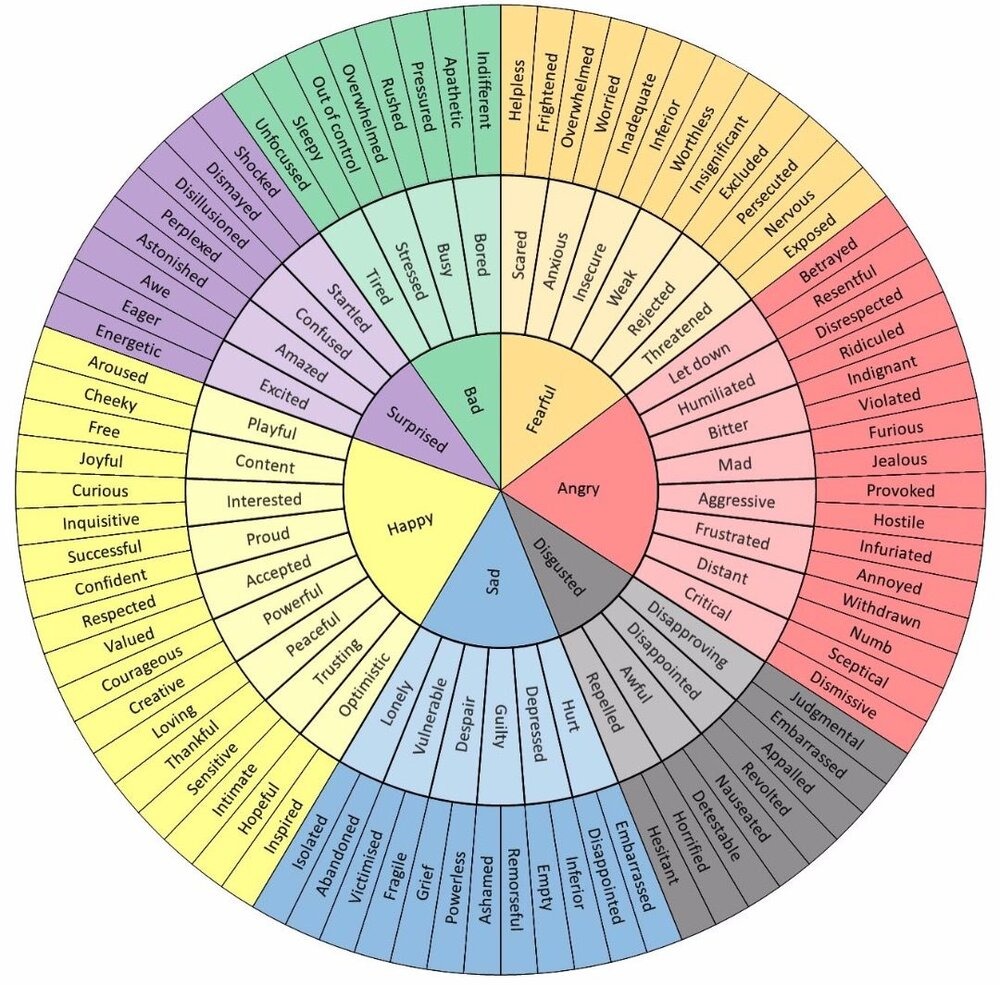
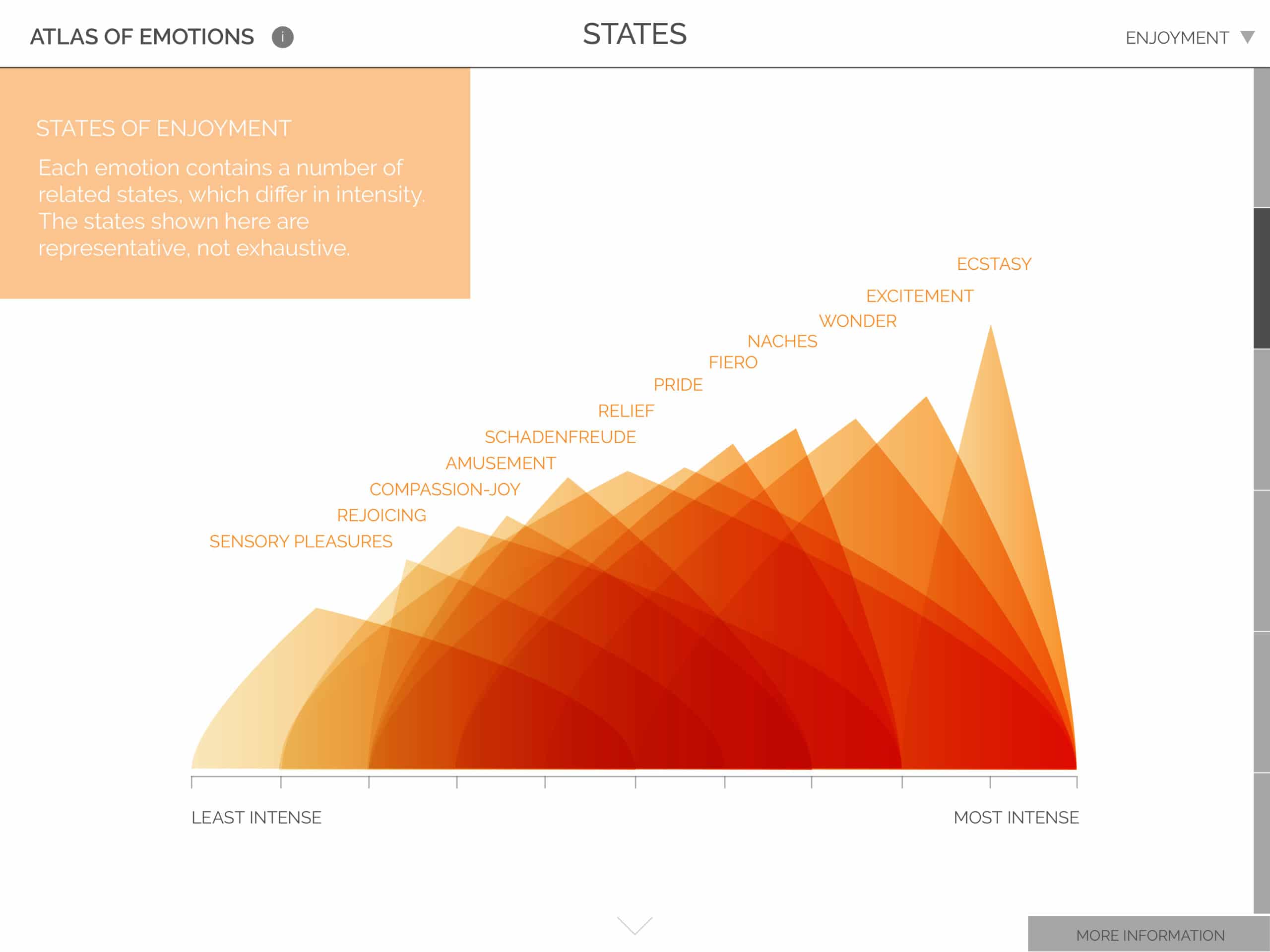
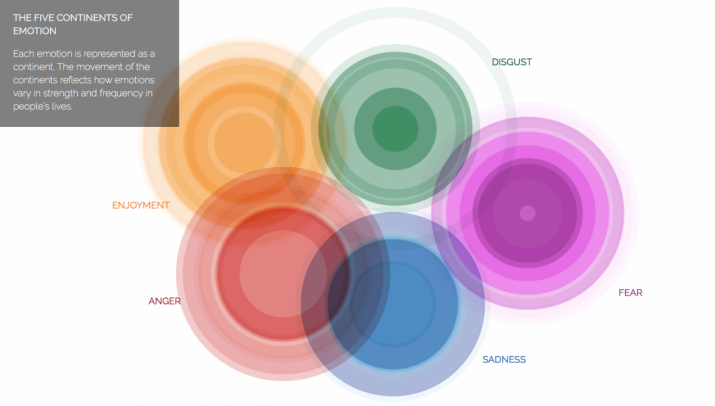
Based on the survey, Dr. Ekman concluded that there were five broad categories of emotions — anger, fear, disgust, sadness and enjoyment — and that each had an elaborate subset of emotional states, triggers, actions and moods. He took these findings to a cartography and data visualization firm, Stamen, to depict them in a visual and, he hoped, useful way.
“If it isn’t fun, it’s a failure,” Dr. Ekman said. “It’s got to be fun for people to use.”

Stamen’s founder, Eric Rodenbeck, has created data visualizations for Google, Facebook and MTV, as well as maps showing climate change and rising oceans. But he said the Atlas was the most challenging project he had worked on because it was “built around knowledge and wisdom rather than data.”
Not surprisingly, getting scientists to reach a unified understanding of human emotions was difficult.
Dacher Keltner, a professor of psychology at the University of California, Berkeley, also counseled Pixar on establishing and depicting the emotional characters for “Inside Out.” He has even advised Facebook on emoticons.
Although Dr. Keltner took part in Dr. Ekman’s survey, the two are not in complete agreement on the number of core emotions. Still, Dr. Keltner said he saw the project as a good step.
“The survey questions could have allowed for more gray areas,” he said. “But it’s important to take stock of what the scientific consensus is in the field.”
Dr. Ekman emphasized that the Atlas was not a scientific work intended for peer review.
“It is a visualization for what we think has been learned from scientific studies,” he said. “It’s a transformative process, a work of explanation.”
The Dalai Lama wants to keep religion out of it.
“If we see this research work as relying on religious belief or tradition, then it automatically becomes limited,” he said. “Even if you pray to God, pray to Buddha, emotionally, very nice, very good. But every problem, we have created. So I think even God or Buddha cannot do much.”
The Dalai Lama said he hoped the Atlas could be a tool for cultivating good in the world by defeating the bad within us.
“Ultimately, our emotion is the real troublemaker,” he said. “We have to know the nature of that enemy.”
The Dalai Lama said he had been encouraged by President Obama’s reaction to the project when he told him about it in India.
“Obama seems, I think, to show more interest about our inner value,” he said. “In the past, compassion was something of a sign of weakness, or anger a sign of power, sign of strength.
Basic human nature is more compassionate. That’s the real basis of our hope.”
While excited about the Atlas, however, the 80-year-old Dalai Lama will probably not be clicking around the interactive site. He is much more comfortable turning the printed pages of a version that was custom-made for him.
“Technology is for my next body,” he once quipped to the researchers.
© 2016 The New York Times Company
Trouble in Tibet – Mind Map of Tibet
“Dalai Lama” Website Launched by His Holiness the Dalai Lama includes Mind Map, and Atlas of Emotions to help people find or discover “Inner Peace.” Spirituality and Science can be blended, but the real issue is that of blending Freedom and Repression. For Repression excludes Freedom, there will be no Peace, neither in Mind, nor in World.
Tibetans want to find or discover “Freedom” which is defined as the state or quality of being free from the control of some other person or some arbitrary power; a being able of itself to choose or determine action freely without hindrance, restraint, or repression. If Tibetans are not “Free” to act, how can Tibetans discover “Inner Peace?” Creation of Mind Map will not create Freedom in Occupied Tibet. Repression in Tibet has to go to discover Inner Peace in Mind Map of Tibet.
Dalai Lama: Website launched by Dalai Lama, Atlas of Emotions, blends Science and Spirituality to create Mind Map and reach global audiences

May 6, 2016
Sally Elliott
The Dalai Lama never ceases his quest to help others navigate the complex human psyche as part of the path to inner peace, and the Dalai Lama’s website is designed to do just that.
In a truly creative and contemporary collaboration between a Hollywood producer, world-class scientists, and the Dalai Lama, a website, named Atlas of Emotions, was launched with a view of helping the world identify and understand human emotions and overcome those that block the path to peace.
The Dalai Lama’s website is the result of a collaboration between Paul
Ekman, an American psychologist, and the producers of 2015 animated blockbuster Inside Out. Atlas of Emotions blends science and spirituality to create a mind map for global audiences — the religious, the spiritual, and the secular.
“It is my duty to publish such work,” the Dalai Lama told the New York Times.
According to the New York Times, Dr. Ekman and the Dalai Lama are good friends, and when he decided on a course of action to help the human race achieve peace, the Dalai thought of Pixar’s Inside Out and its universally comprehensible model of the mind and human emotion.
“Specifically, he commissioned his good friend Paul Ekman — a psychologist who helped advise the creators of Pixar’s ‘Inside Out,’ an animated film set inside a girl’s head — to map out the range of human sentiments. Dr. Ekman later distilled them into the five basic emotions depicted in the movie, from anger to enjoyment,” reports the outlet.

The Dalai Lama is one of the world’s most prolific and widely followed spiritual leaders [Photo by Lisa Maree Williams]
The Dalai Lama’s website is aimed at achieving his lofty life mission guiding the human race to overcome selfish and hateful behavior, practice kindness, self-awareness, and compassion — in a changing world of countless brands of faith.
“‘When we wanted to get to the New World, we needed a map,’ Dr. Ekman
recalled the Dalai Lama telling him. ‘So make a map of emotions so we can get to a calm state,’” reports the New York Times.
Eve Ekman, Dr. Ekman’s fellow psychologist daughter, also collaborated to maximize the engagement and accuracy of the website launched by the Dalai Lama. Atlas of Emotions blends scientific knowledge, which psychologists use to help patients understand and overcome negative behaviors and emotions, and spiritual ideology to provide an interactive guide to human emotions, and it is available to any person with internet access. The website is set to be an invaluable resource for those without the money or opportunity to seek professional help and people seeking to understand their complex emotions on the path to self-awareness, inner peace, and constructive
action.
“We have, by nature or biologically, this destructive emotion, also
constructive emotion. This innerness, people should pay more attention to, from kindergarten level up to university level,” the Dalai Lama told the NY Times.
“This is not just for knowledge, but in order to create a happy human being. Happy family, happy community and, finally, happy humanity.”
The Dalai Lama was the guest of honor at a U.S. Government-hosted PrayerBreakfast. [Photo by Pool/Getty Images]
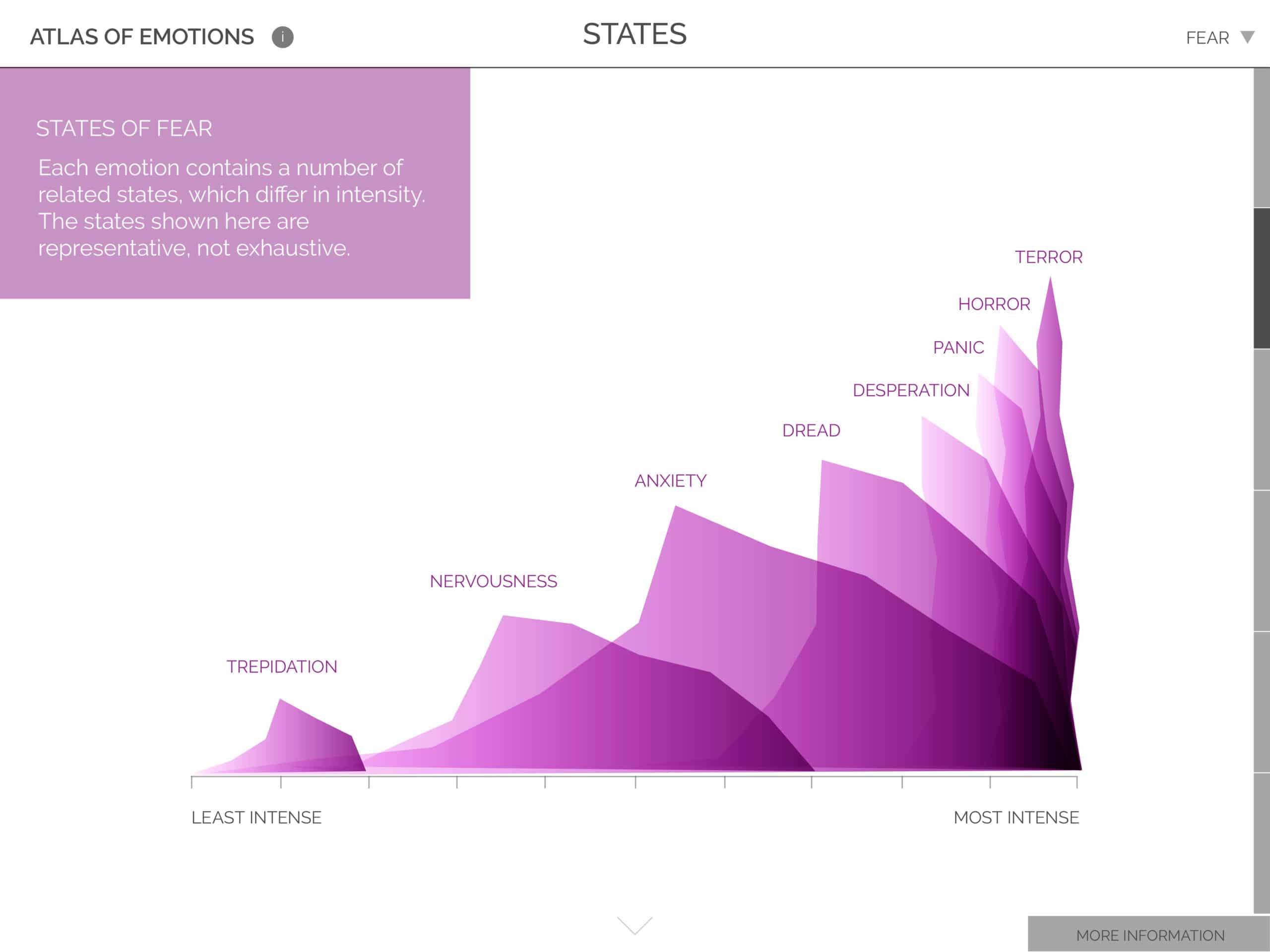
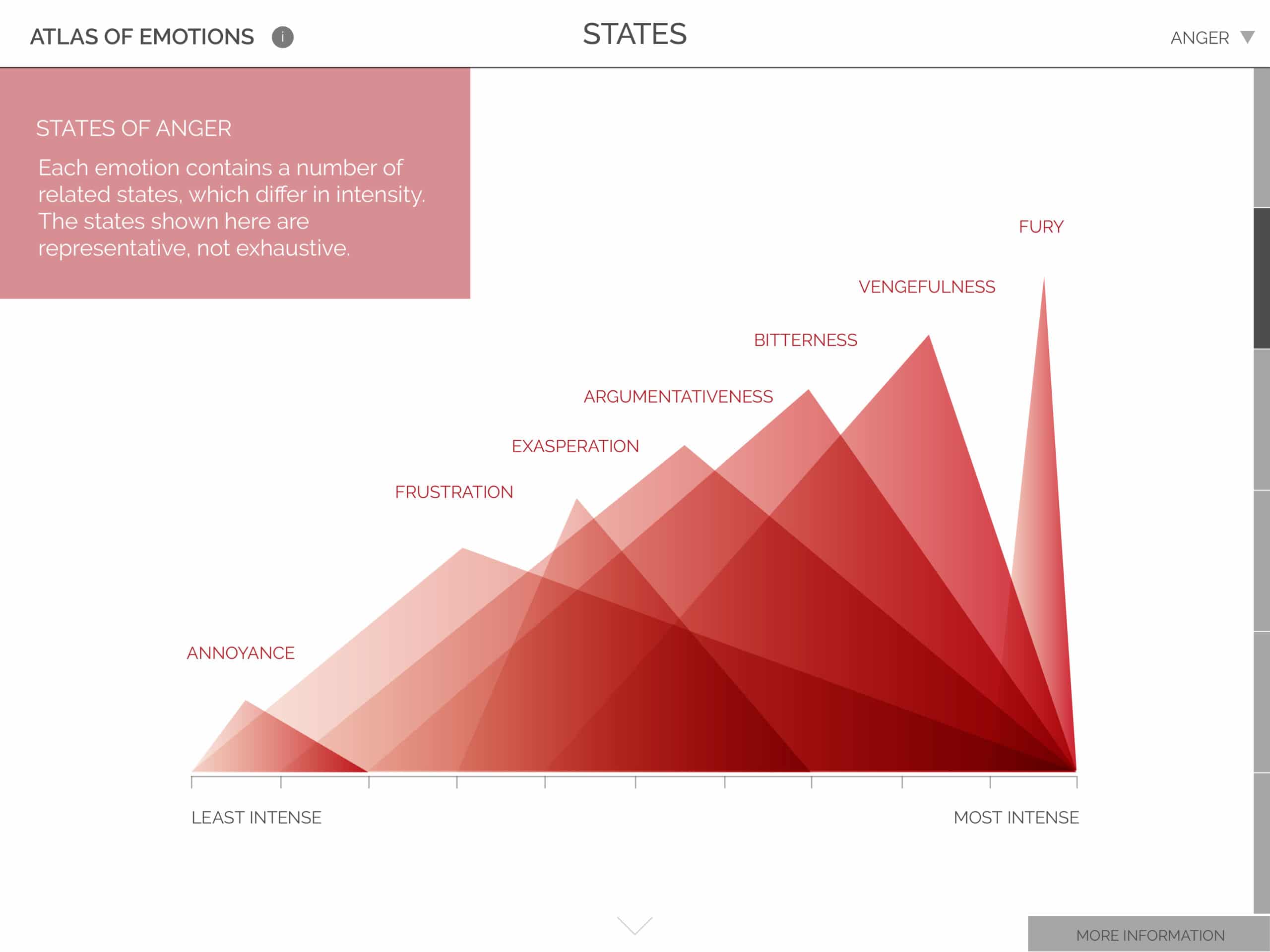
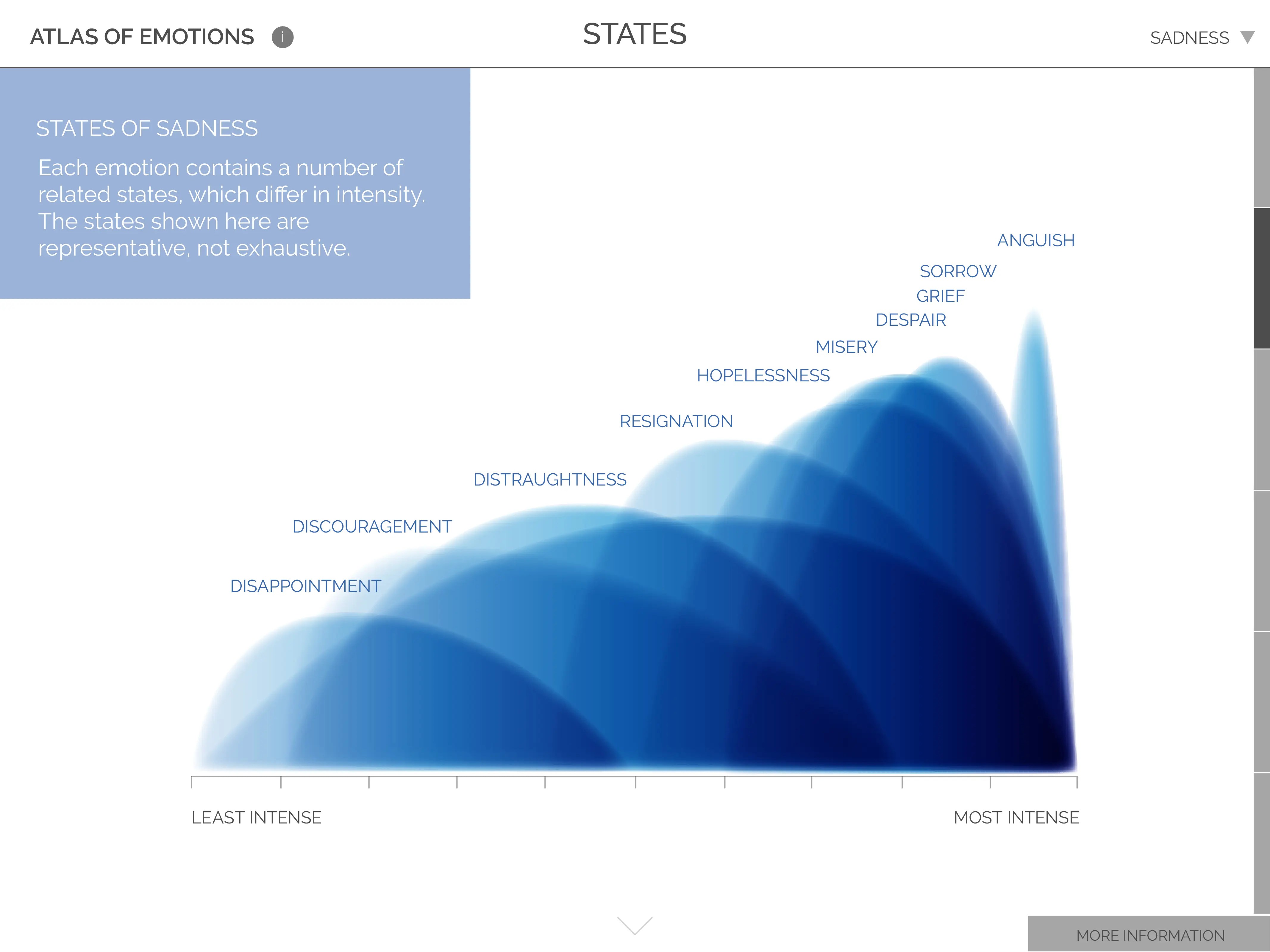
The website launched by the Dalai Lama greets visitors with a simple and sophisticated homepage that outlines five core emotions: anger, fear, disgust, sadness, and enjoyment. Users can navigate through the wealth of scientific and spiritual knowledge through Triggers, States, Actions, Moods, and Calm — explanations of how thoughts and feelings come about, how they are experienced, the actions we take as a result, how those make us feel, and how we can overcome the blocks to inner peace and happiness posed by ignorance or lack of understanding.
New work! We designed an Atlas of Emotions for the @DalaiLama and @PaulEkman
https://t.co/xl2WMeZtqI pic.twitter.com/5hHZVXDDgw
— Stamen Design (@stamen) May 6, 2016
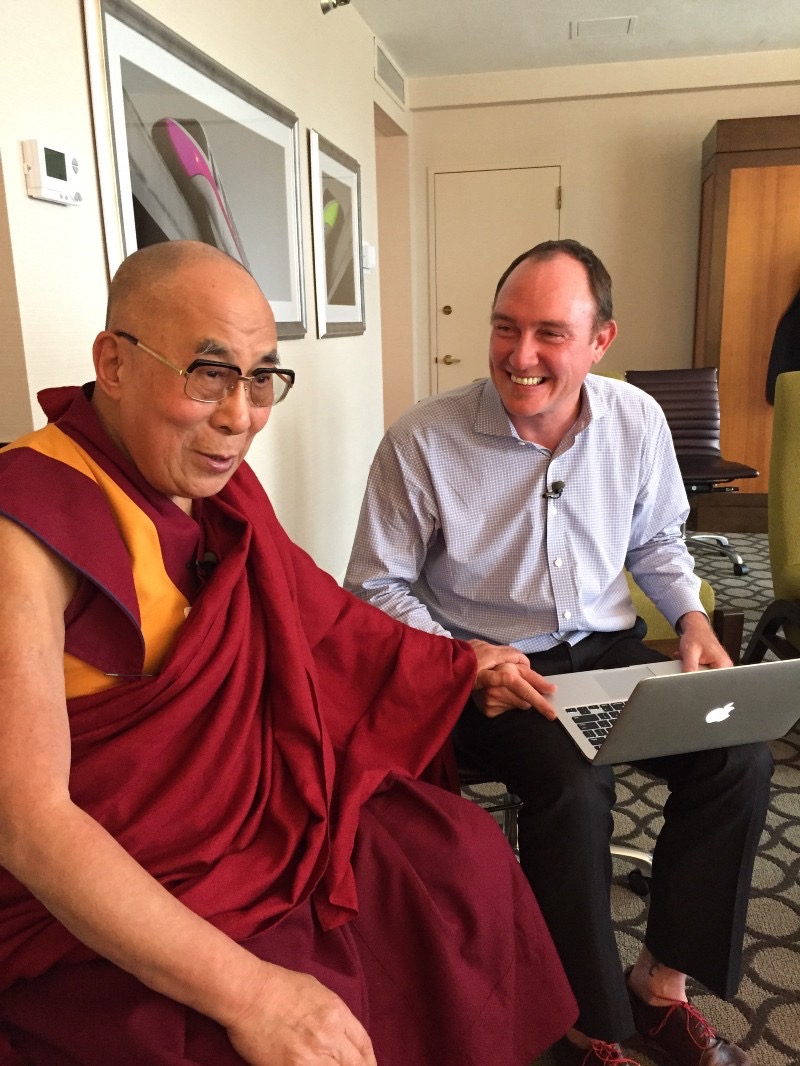
With the highest quality of professional input, the website launched by the Dalai Lama, Atlas of Emotions, which blends science and spirituality to create a mind map, is set to reach global audiences. The potential for engagement is infinite.
[Photo by Chris Weeks/Getty Images]
Author
Sally Elliott
All content © 2008 – 2016 The Inquisitr News.















 Whole Dude - Whole Concept