Trouble in Tibet – Where is the Path to Freedom?
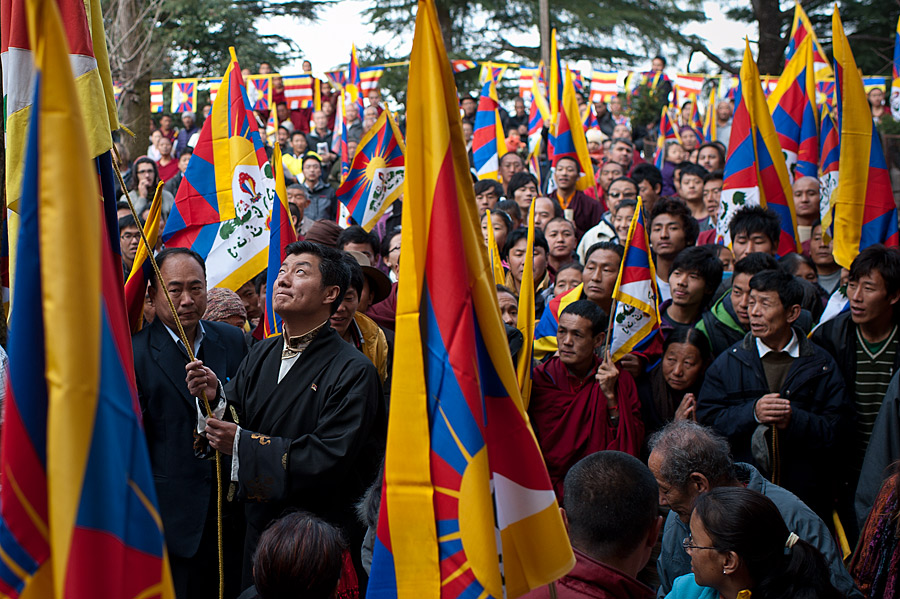
For there is ‘Trouble in Tibet’, we need to continue our search for a Path to Freedom. Tibetan Cause was at the center of America’s Cold War interests. Vague talk of peace Dalai Lama said, “will only disturb some pigeons.” It is imperative to find a clear path to Freedom in Occupied Tibet.
THE WASHINGTON POST
THE DALAI LAMA’S PRACTICAL PATH TO PEACE

The Dalai Lama, center, can be informal and mischievous, as when he rubbed his head into the beard of a very dignified Muslim cleric. (Tenzin Choejor/Office of His Holiness the Dalai Lama)
 By MICHAEL GERSON Opinion writer May 5, 2016 at 8:00 PM
DHARAMSALA, India
When posed a policy question, the Dalai Lama is surprisingly (for a religious leader) un-prone to moralism. What, I asked him, does he think of the European backlash against migration? “In the name of sympathy, for the few who are desperate, [resettlement] is worthwhile.” But Europeans, he continued, “have a right to be concerned for their own prosperity.” Better, he said, “to help people in their own land.” He added: “It is really complex.”
Michael Gerson is a nationally syndicated columnist who appears twice weekly in The Post.
In conversation, the Dalai Lama’s cast of mind is thoroughly empirical. You can see him considering a matter from various angles and revising his views based on new input. He is a Buddhist who recommends “analytic meditation” instead of employing spiritual exercises as a “tranquilizer.” Self-reflection, he believes, should be the basis for action in the world. Vague talk of peace, he said, “will only disturb some pigeons.”
For decades, the Dalai Lama has embodied the Tibetan cause, which was once at the center of America’s Cold War interests. With that cause now something of an international orphan, the Dalai Lama has cultivated a different type of influence — global celebrity based on spiritual charisma.
I saw that charisma up close as the fortunate witness to a singular event. Under the auspices of the United States Institute of Peace, the Dalai Lama spent two days mentoring 28 exceptional youth leaders — men and women doing peacebuilding in conflict zones across Asia and Africa, often at great personal risk.
The Dalai Lama is, despite recent health issues, energetic and apparently (at 80) tireless. He is informal and mischievous (at one point rubbing his bald head into the beard of a very dignified Muslim cleric). He is disarmingly self-effacing: “I am not god,” quoth the 14th reincarnation of the Lord of Compassion. “I don’t know” is a consistent refrain.
But his view of the world is also highly consistent and occasionally controversial. He argues that ethics are primary and unifying, while religion belongs to “a secondary level of difference.” What he calls “secular ethics” can be derived from “common experience and common sense,” which teaches the “sameness of humanity” and the universal capacity for, and need for, love and compassion. For evidence, he turns to neuroscience and social scientific research on child development rather than to scripture. (He has mandated a science curriculum for Tibetan monasteries.) Human beings, in his view, are essentially good and responsible for doing good. “We promote a more compassionate world,” he said, “through education, not through prayer.”
If this sounds familiar, it is not far from the social ethics — not the theology — of some strains of liberal Protestantism. And the Dalai Lama shares something with Pope Francis: an impatience with institutional religion, which he says is prone to be “narrow and rigid.”
The Dalai Lama is keen to argue that “all religions carry the message of love and compassion.” In more careful moments, he says, “all religions have the same potential.” This is true — from a certain perspective. Each of the world’s major religions has resources of respect for the other that can (and should) be emphasized at the expense of less attractive elements.
Some of the faithful will resist the Dalai Lama’s frank insistence that religion be modernized. “Some traditions must change. I tell my Hindu friends, they must change their treatment of outcasts.” In Islam, “the meaning of jihad is not hurting other people.” His own tradition he described as “too close to the feudal system.” “This is not a change in religion. It is changing habits due to social tradition.”
This religious essentialism — defining a core of humane teaching that stands in judgment of a tradition’s cultural expressions — is what helps ensure that religion is a positive cultural force. Conservative Protestants in the United States who dispute this idea still demonstrate it. The treatment of women in most evangelical churches is closer to common American practice than to the Apostle Paul’s first-century attitudes, and it should be.
The uniqueness of the Dalai Lama’s voice in global debates is his emphasis on the inner life. He roots the pursuit of peace in a “calm mind” — and displays it. “External disarmament,” he told the gathered young activists, “begins with internal disarmament. If you show anger, things get worse. A genuine smile and warmheartedness and a joke are the only way to cool things down.”
It is good advice for anyone facing conflict — as well as the only basis for a peace that involves trust, forgiveness and healing.

Michael Gerson is a nationally syndicated columnist who appears twice weekly in The Post.
- © 1996-2016 The Washington Post

Trouble in Tibet – Search for Path to Freedom
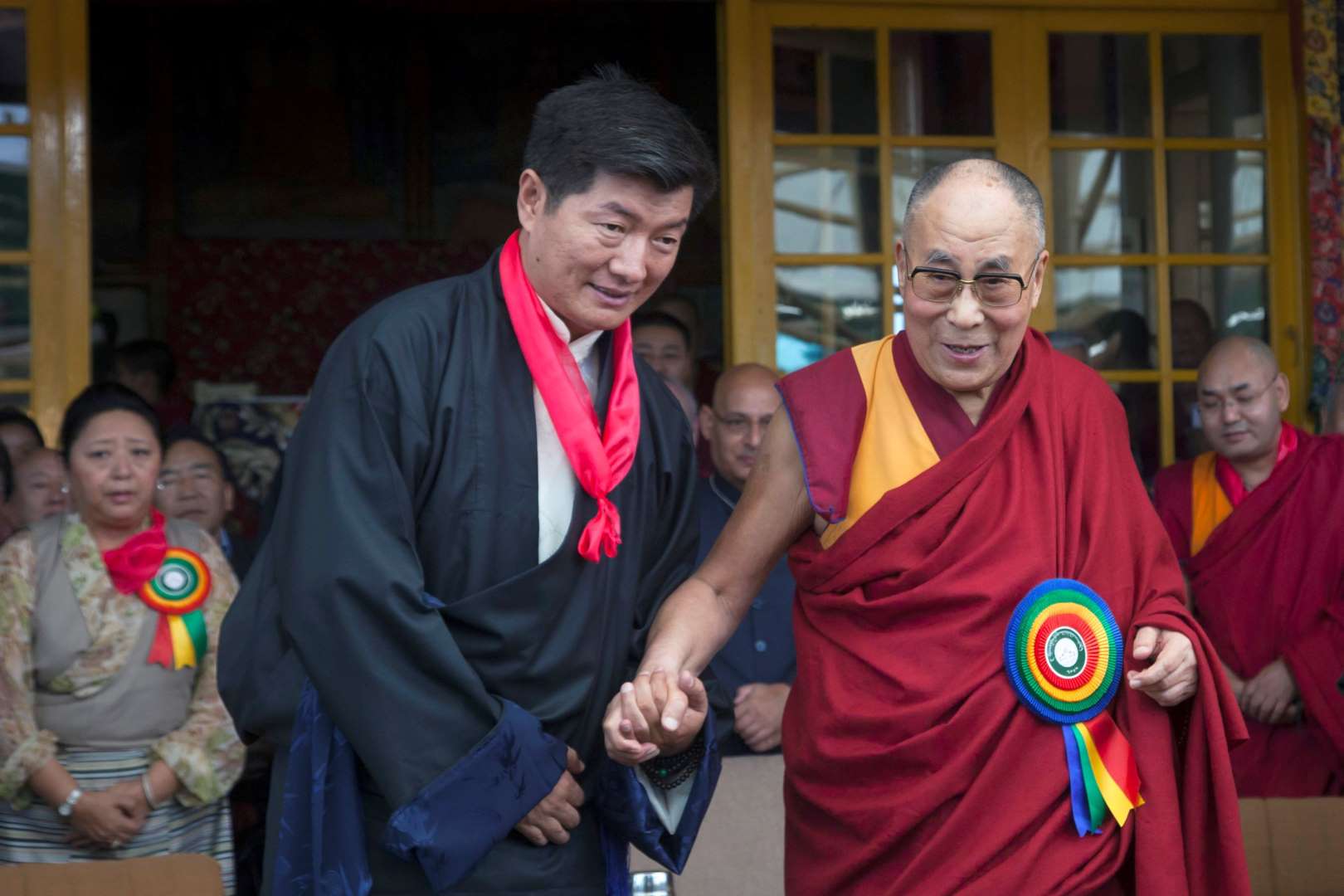
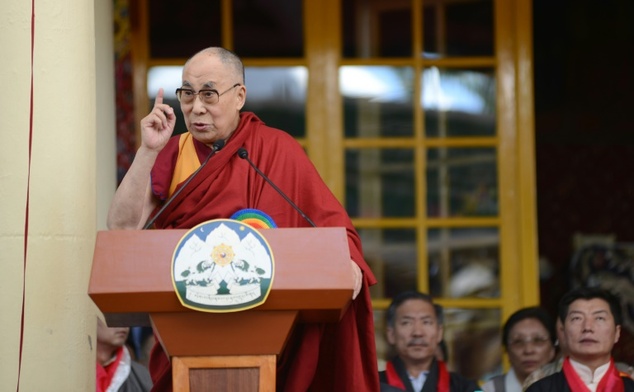
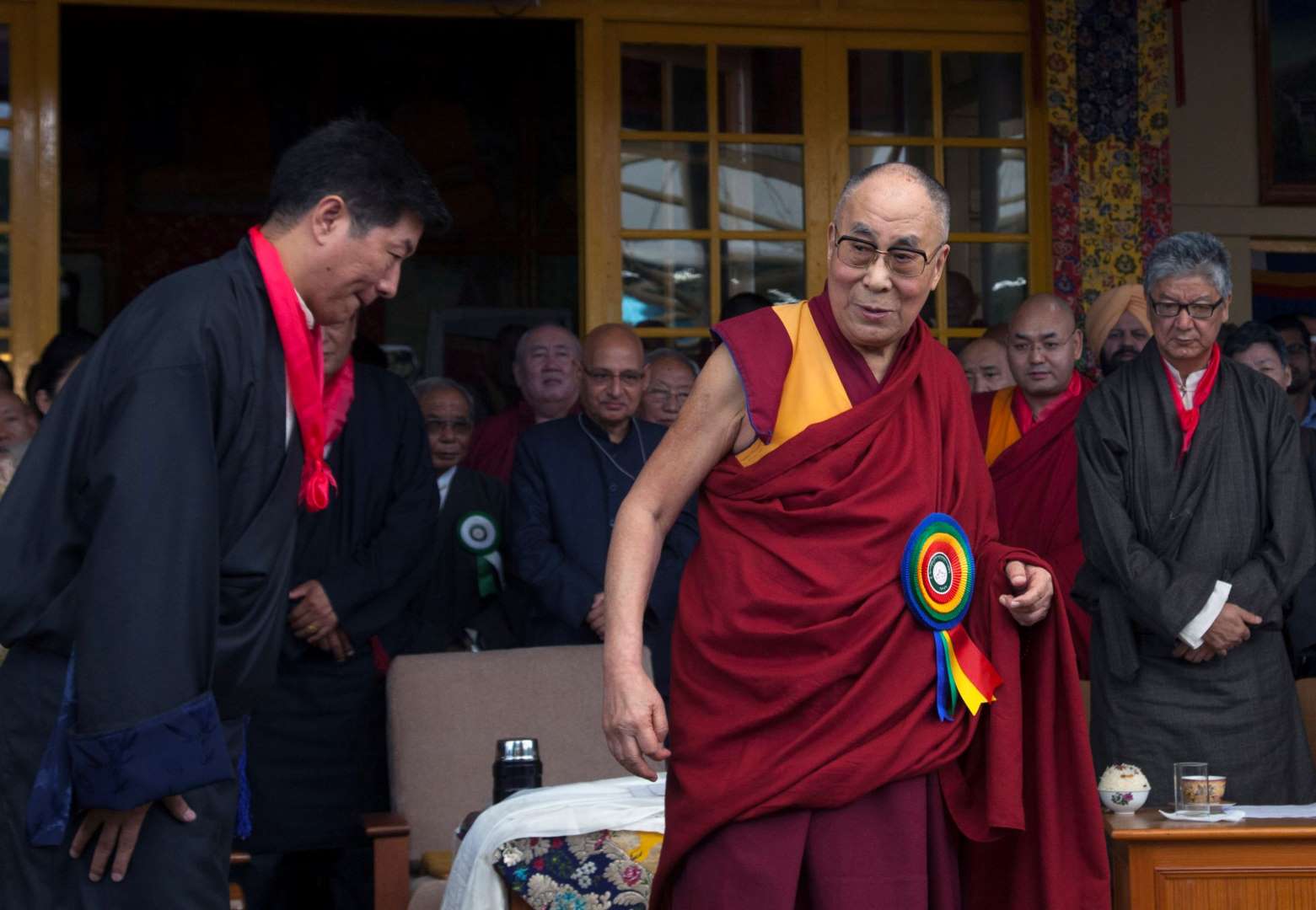
Trouble in Tibet reflects anxiety of Tibetan people as they search for path to freedom they lost in 1950. Talks on Tibetan autonomy are doomed to fail as the proposed dialogue is not about Tibetan nation that existed for centuries with its own identity.
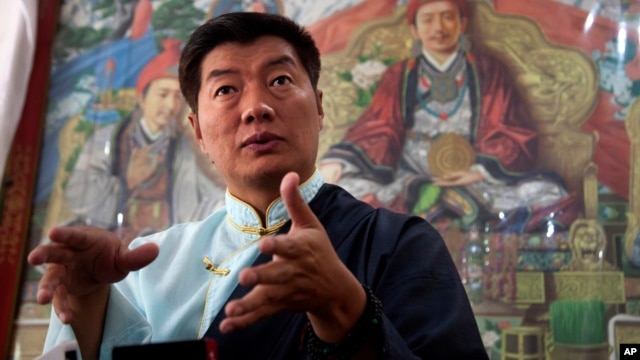
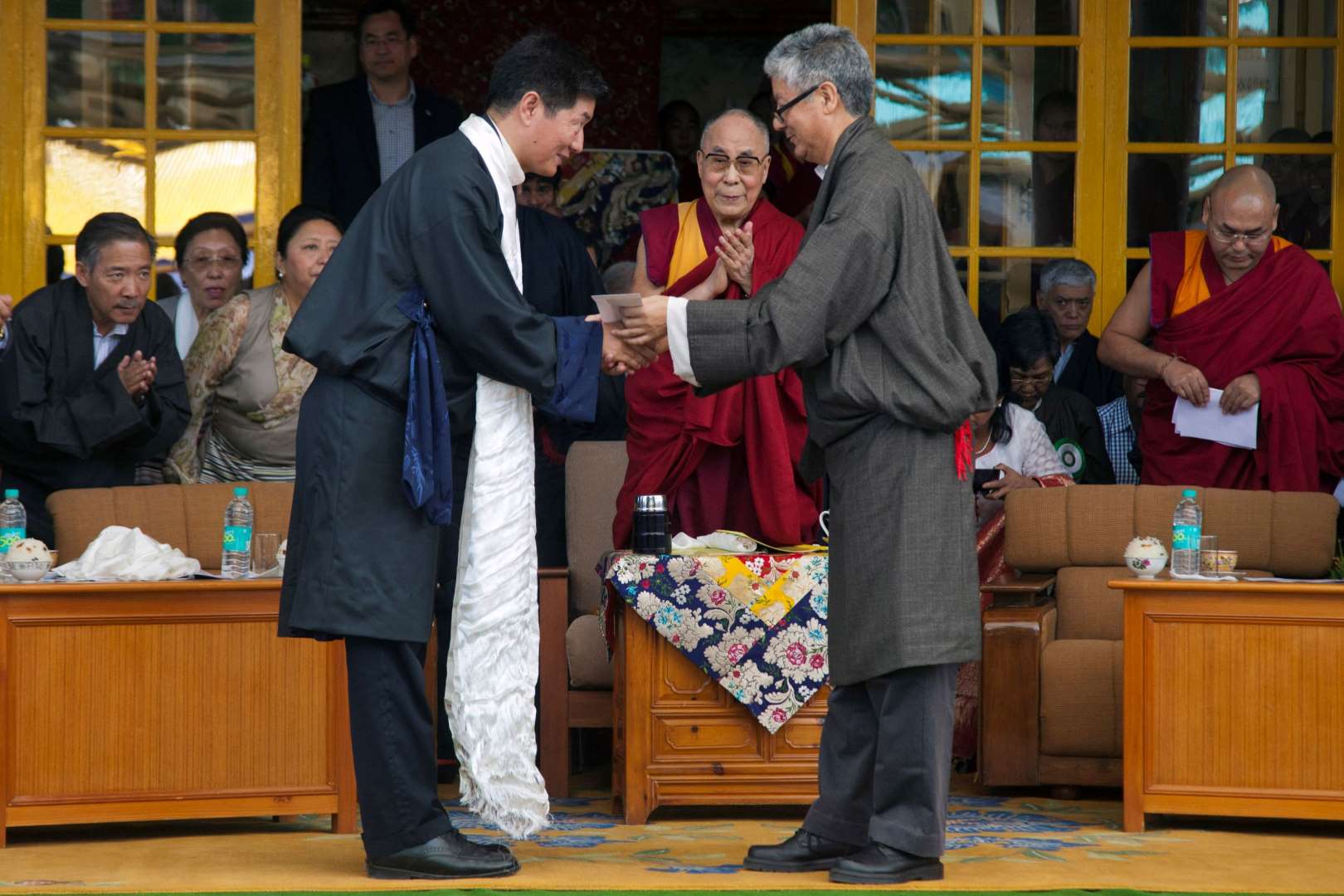
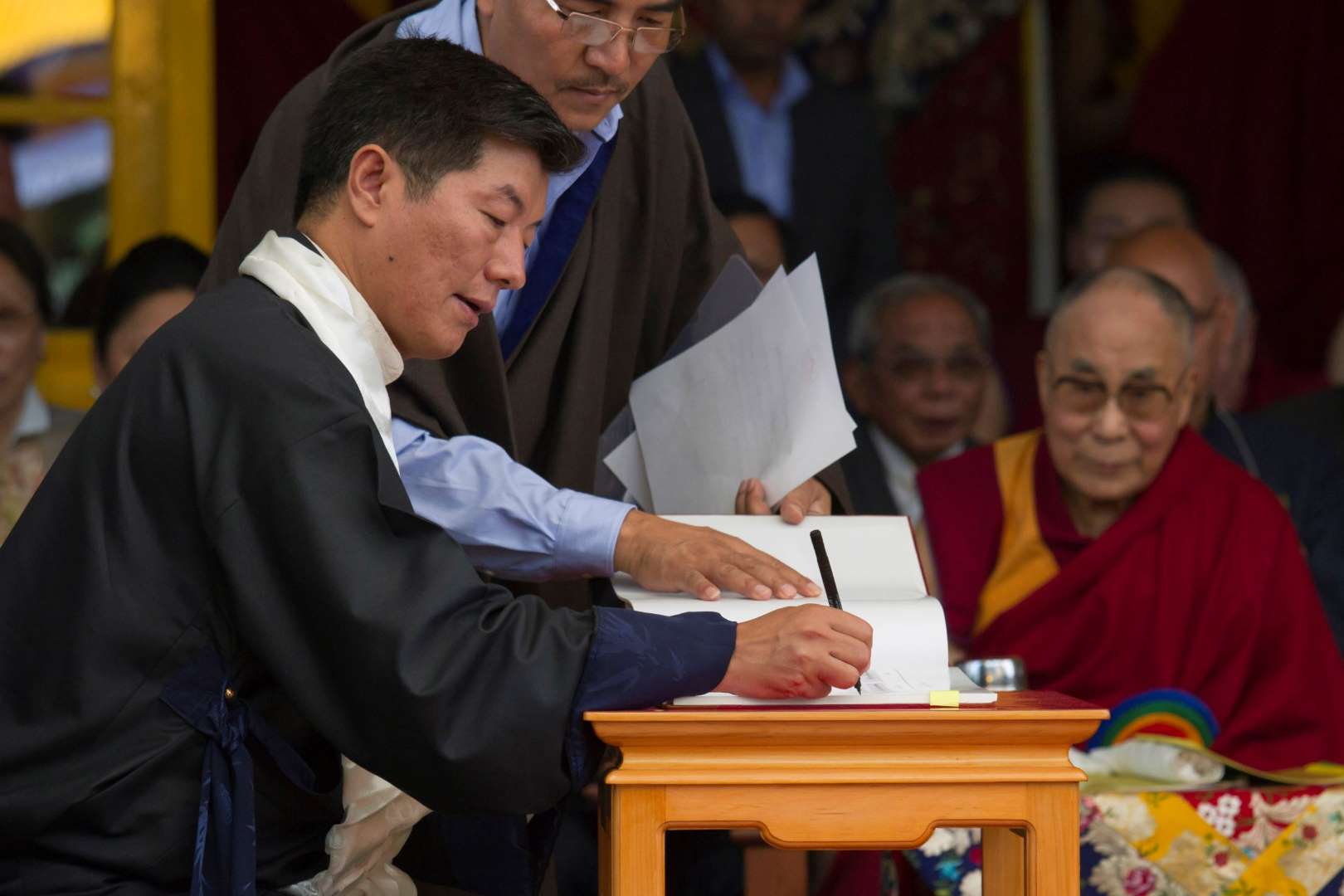
Lobsang Sangay, the incumbent prime minister of the Tibetan government-in-exile, speaks to media after being re-elected for second term in office in Dharmsala, India, Wednesday, April 27, 2016.
Shannon Van Sant
May 16, 2016 3:46 AM
HONG KONG—
The re-election of Lobsang Sangay as prime minister of the Tibetan government-in-exile has renewed hopes among some that dialogue between the Dalai Lama and China’s central government, which stopped in 2010, will begin again.
On the day of his election, Sangay vowed to push for autonomy for the Tibetan people and restart talks with the Chinese government.
“We remain fully committed to the Middle Way Approach, which clearly seeks genuine autonomy for the Tibetan people within China. It is hoped the leaders in Beijing will see reason with the Middle Way Approach, instead of distorting it, and step forward to engage in dialogue with His Holiness the Dalai Lama’s envoys,” he said.
No talks since 2010
Representatives of the Dalai Lama held several rounds of talks with China until they were stalled in 2010 by protests and a subsequent crackdown in Tibet.
Tsering Passang, Chair of the Tibetan Community in Britain, said whether or not talks restart is in Beijing’s hands.
“It’s really up to the Chinese, and due to the current reality, the geopolitical situation, as well as the economic situation, China has the upper hand, so it’s going to be a challenge for the Tibetan leadership,” he said.
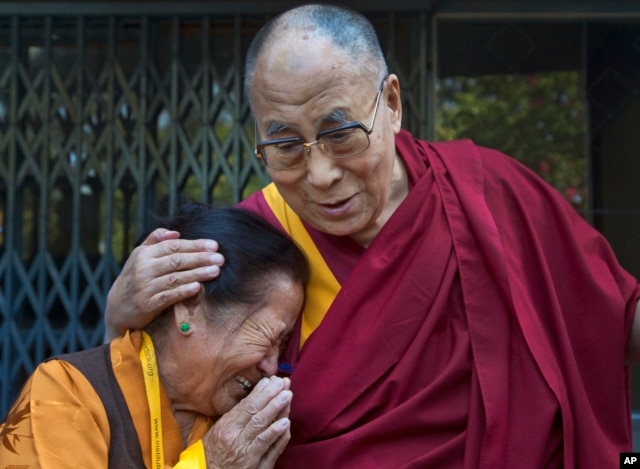
FILE – An elderly Tibetan woman, who was among those waiting to receive the Dalai Lama, gets emotional as the spiritual leader greets devotees upon arrival at the Institute of Buddhist Dialectics near Dharmsala, India.
Sangay defeated challenger Penpa Tsering
Sangay ran against the speaker of the Tibetan Parliament, Penpa Tsering and received 58 percent of nearly 60,000 votes cast. About 90,000 exiled Tibetans are registered to vote in 40 countries.
However, China has largely ignored the elections, with the foreign ministry only making terse remarks on the ballot results when pressed to comment at a recent briefing. Spokesman Hong Lei said the voting was nothing but a “farce” staged by an “illegal” organization that is not recognized by any country in the world.
Robert Barnett, the director of modern Tibet studies at Columbia University, is not very optimistic about the resumption of talks.
“It’s quite disheartening at the moment because there are no signs from the Chinese side of any concession at all, in fact very much the opposite. But of course the Chinese side would not disclose if it was going to make a move. It would be in its interest to move very quickly at a time of its own choosing,” he said.
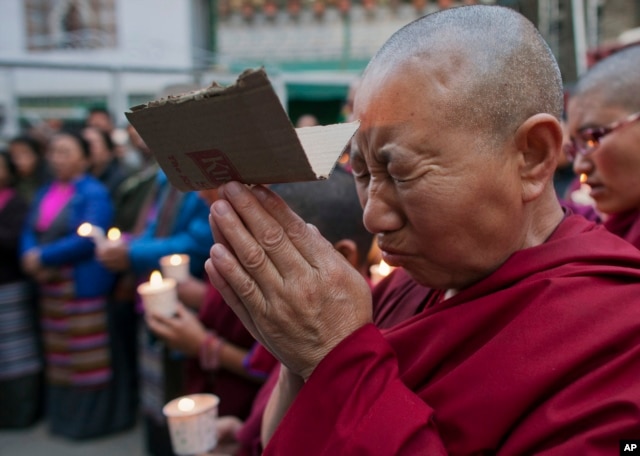
FILE – An exile Tibetan nun cries as she prays during a candlelit vigil in solidarity with two Tibetans, who exiles claim have immolated themselves demanding freedom for Tibet, in Dharmsala, India, Wednesday, March 2, 2016.
China claims control of Tibet for centuries
China says it has maintained control of the Tibetan region since the 13th century, and the Communist Party says it has liberated the Tibetan people through removing monks from power who the party says presided over a feudal system.
But many Tibetans argue they were independent until Communist forces invaded in 1950. Nine years later the Dalai Lama fled into exile after a failed uprising against the government.
While the Dalai Lama remains the spiritual leader of the Tibetan people, he gave up political authority in 2011, and called for democratic elections to choose a prime minister to lead the parliament of the Central Tibetan Administration in Dharamsala, India.
With the current Dalai Lama now in his 80s, the issue of who will select the next Dalai Lama is gaining in importance.
But P.K. Gautam, a Research Fellow at the Institute for Defense Studies and Analyses in India, said any political talks that may develop should not be confused with discussions over who will select the next Dalai Lama.
“So who selects the Dalai Lama is a very separate process, but the political negotiations, for the autonomous region, the way it is desired, that can be taken on by this central administration. So it’s a long-term process; it’s just one of these steps that may lead to a solution so that the Tibet autonomous region regains its pillars,” he said.
Many Tibetans hope Sangay’s election is also a step towards easing discontent throughout the Tibetan community. More than 100 Tibetans have self-immolated in protest against the Chinese government since 2009.

 Whole Dude - Whole Concept