
The Hindu calendar’s Somvati Amavasya, Hariyali Amavasya or Sawan (Shravan) Amavasya is observed in the month of Shravan. It is considered auspicious for the Hindu community. Hariyali Amavasya 2023 will be observed this year on July 17, 2023.

Shravana Amavasya comes in Krishna Paksha of Shravana month, the fifth month in Hindu Panchang. It is also known by the name of Hariyali Amavasya. Prayers are offered to Gods and Goddesses on this day to seek their blessings for good rains and a plentiful harvest following that. Worshipping Lord Shiva on this day is considered highly auspicious. Other than this, offering obaltion (Pind Daan) to forefathers for their peaceful afterlife is also performed on this day.
Calendar and Date Organization

Calendar divisions are based on the movements of the Earth and the regular appearances of the Sun and the Moon, and a calendar typically works by dividing time up into units of days, weeks, months and years. Most of these units are based on objectively verifiable astronomical cycles, although the use of weeks within calendars are dedicated to celestial bodies such as Sun, Moon, Mars, Mercury, Jupiter, Venus and Saturn, and may not be tied to any astronomical cycle.
Types of Calendar

Almost all calendars divide up the days into months and years, but exactly how they do so varies. Most calendars synchronize their periods with the cycle of the Sun or Moon (or both), although some Ancient Egyptian calendars appear to have been synchronized to the motion of the planet Venus and/or the Dog Star Sirius. Because the period of the Moon does not neatly match the period of the Sun, no calendar can be truly based on both, and so a choice must be made, often incorporating periodic adjustments in order to match the two (a trade-off between accuracy and convenience).
The main types of calendar are:
Solar calendar (e.g. the Persian Calendar, the Gregorian Calendar) is synchronized to the apparent motion of the Sun over the year and thus remains in line with annual seasonal changes. It makes no attempt to match the changes in the Moon, and the division into months is purely nominal.
Lunar calendar (e.g. the Islamic Calendar) is synchronized to the phases of the Moon. Because a lunar month is not an even fraction of a year, a purely lunar calendar tends to drift against the seasons.
Luni-solar calendar (e.g. the Hebrew calendar, the Hindu calendar) is based on a combination of both lunar and solar reckonings (i.e. months are based on lunar months, but years are based on solar years), in which most years have 12 months but every second or third year has 13 (including a leap month) in order to realign with the annual seasons.
Intercalation
The insertion of additional leap days or leap months into some calendar years in order to synchronize the calendar to the seasons or moon phases is called intercalation or embolism.
In the case of lunar and luni-solar calendars, the months (known as lunar months or synodic months) approximate the cycle of the Moon’s phases, a period of about 29.5 days, for which many lunar calendars use alternating months of 29 and 30 days. However, because a lunar month is not an even fraction of a year (there are about 12.37 lunar months in a year), a purely lunar calendar tends to drift against the seasons unless adjusted periodically, such as by the addition of a leap month every two or three years.
In the case of solar calendars, the months are fractions of the tropical or solar year (i.e. the length of time the Sun takes to return to the same position in the cycle of seasons, as seen from Earth). Even with a solar calendar, though, the number of days in a year is not an exact whole number (approximately 365.242), so that a system of adding an extra leap dayevery fourth year (leap years) is instituted in many solar calendars, or more complex variations thereof.
Insertion of Leap Month or Adhik Maas or Mal Maas in Hindu Luni-Solar Calendar
In the Hindu calendar, once every three years, an additional month comes, which is called Adhikamas. Adhik Maas in the year 2023 is starting on 18 July 2023, which will end on 16 August 2023. There is no transit or solstice of the Sun in Adhik Maas, that is, there is no change in the sun sign in the whole month. Because of this, this month becomes dirty, that is, it is called Mal Maas.

According to astrology, the process of transition of the Sun from one zodiac sign to another is called Sankranti. Sun God changes his zodiac almost every month. The month in which the zodiac sign of the Sun does not change. That month is called Mal Maas or Adhik Maas.
Adhik Maas has special significance in Hinduism. The proprietor of this month is Lord Vishnu. Even though auspicious works like marriage, naming, house warming ceremonies are prohibited, it is very beneficial to do religious works like worship recitation, chanting, penance, and fast-fasting. It is believed that worship done in this month gives ten times the yield.

In 2023, Adhik Maas will start from July 18 and end on August 16, offering a rare combination with Shravan Maas and providing ample opportunity for devotees to strengthen their devotion towards Lord Shiva and Lord Vishnu. Month Shravan is dedicated to glorify Lord Shiva. Adhik Maas is dedicated to glorify Lord Vishnu.
Dakshinayana 2023

In Hinduism, the 6-month period from 16th July to 13th January is Dakshinayana, while the 6-month period from 14th January to 15th July is Uttarayana. While Uttarayana marks the northward movement of the Sun, Dakshinayana marks its southward movement.

On July 16, 2023, Sun enters the sign of Cancer or Karka and marks the beginning of Sun’s southward journey.
Facts about Dakshinayana

Dakshinayana starts on July 16th. Initially, the days are long. Then they become shorter and shorter over the next 6 months. As summer gives way to winter, the daylight decreases during this period. The Sun’s energy is at its peak when Dakshinayana begins. The Sun is very hot, and we feel tired and drained of energy. Dakshinayana is the nighttime of the Devas. So we need to put in more effort and work harder during this time. A human year is equal to one day of gods in the Hindu religion.
Dakshinayana is the southward path. It is also the path of Yama. It represents ‘bhautikvaad’, meaning that we go after material pursuits and away from the spiritual path. Hence, we should do penance, fasting, prayers, and purification rites to reduce its influence. For this reason, Dakshinayana is called Sadhana Pada, or the period of purification through tapasya and sadhana. During this time, the chakras below the Anahata/heart chakra can be purified very easily, as our energy is flowing downward in these 6 months.
As Dakshinamurthy – Shiva as the cosmic teacher- sat facing the south (Dakshin) in order to pass on his knowledge and wisdom, he has an association with this period. He started transmitting the fundamentals of Yoga to the Sapta Rishis, who were his first seven disciples. He turned south as the Sun turned south. This was the first phase of his teaching, or the Sadhana pada, where he taught the Rishis what they should do. Uttarayan is the Samadhi pada or Kaivalya pada, which is the time for realization.
During Dakshinayana, Vishnu is believed to be asleep for a period of 4 months, between Ashada and Karthika months. These 4 months are called Chaturmasya, and the Ekadasi just before Karka Sankranti is Devshayani Ekadashi.
The 6 months of Dakshinayana are divided into 3 seasons:
Varsha Ritu (monsoon) – Shravana and Bhadra months (Mid-July- Mid- Sept)
Sharad Ritu (autumn) –Asvina and Karthika months (Mid-Sept- Mid Nov)
Hemanta Ritu (late autumn) – Margashirsa and Pausha (Mid Nov- Mid Jan)
Rationalism vs Irrationalism. Man’s Existence is shaped by Flat Earth with Arched Dome Experience

“Earth is Flat.” This statement can be verified using Pure Reasoning, by a rational interpretation of scientific theories called the Geocentric Theory, and the Heliocentric Theory.


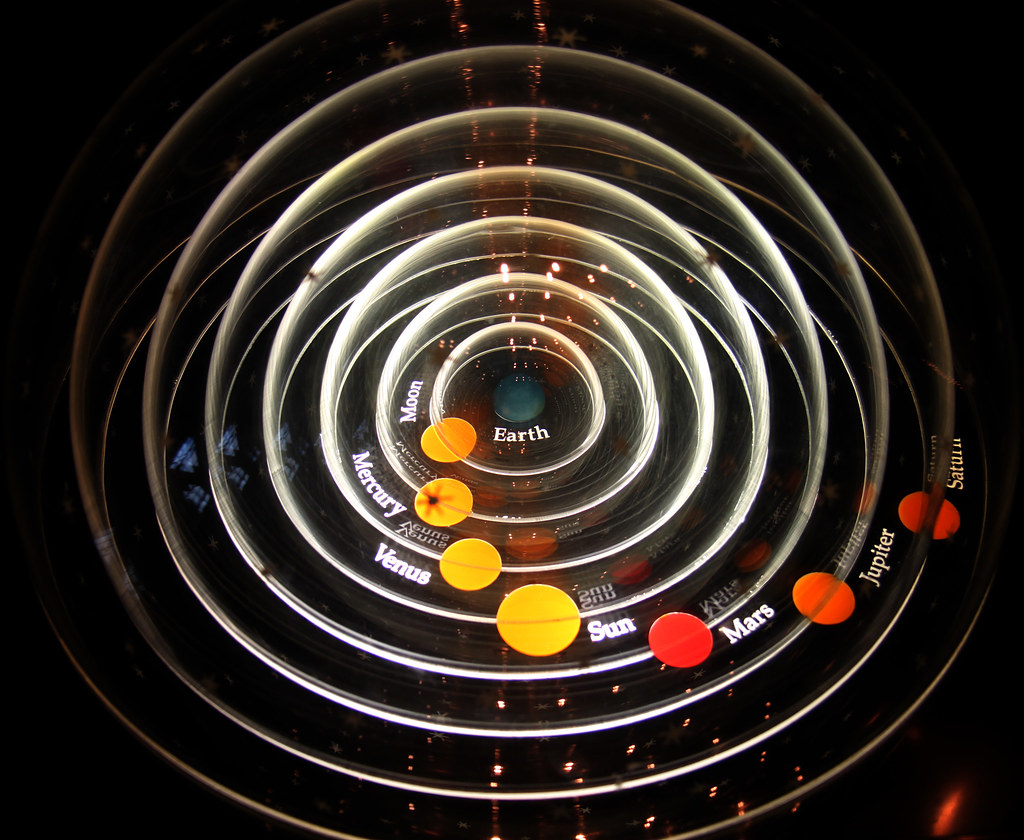
The man experiences the reality of Sun’s ‘apparent’ motion across the Sky. I verify this statement by attaching my reasoning. The man’s days of real, physical, observed, verified existence on Earth’s Surface is determined by “Apparent Motion” (or Ecliptic Path) of Sun and not by Sun’s “Real Motion” around the Milky Way Galactic Center.


The man is able to live and is able to keep his existence for Earth provides the experience of Flat Surface or Flat Disc. No Scientific Information has Power to overcome this direct Sensory Experience that governs all Living Functions or Biological Rhythms. A ‘Rationalist’ will give attention to his own direct Sensory Experience as keeping one’s own Life is the most Reasonable Doctrine.
The rational interpretation of scientific information

The doctrine of Rationalism uses Pure Reasoning to discover truth.
We need a rational interpretation of scientific information. What does Science say about Sun? We need to comprehend Science and make a rational interpretation using reason, and empirical data if not by faith or belief in God.
The First Book of Moses, The Old Testament Book of Genesis claims that Sun and Moon are appointed as lamps in the sky to illuminate world during Day and Night.
Let me know as to which part of Science you do not understand.
Rudra Narasimham Rebbapragada
Ann Arbor, MI 48104-4162 USA
BHAVANAJAGAT


 Whole Dude - Whole Concept