The Material Basis of Spirituality Science. The Study of the man as a living thing

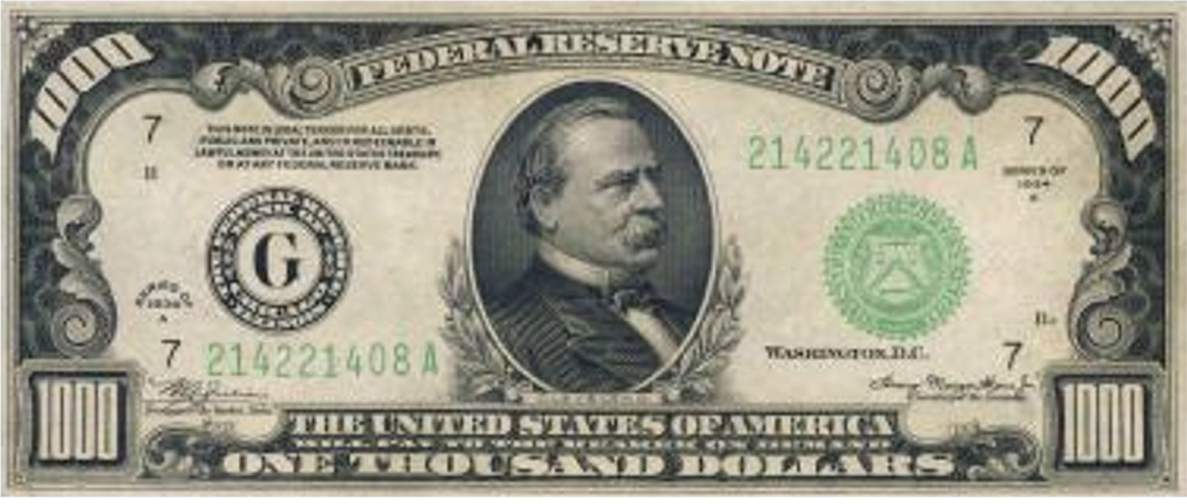
The Material Basis of Spirituality. What is Matter? and What is Spirit? If materialism is about the influence of money and material wealth, I would like to use the Power/Force/Energy called Money to talk about Life and Death. The Law of Conservation is applicable to both the living, and the non-living matter. Therefore, it can be stated, Life is neither created nor destroyed. If any person can refute my claim using valid, scientific information, I would give the person a US $1,000 bill as a reward.

What it is to be a Substance? and What it is to Exist? We need to establish knowledge about the man on a firm basis and the information it provides must be tested for its accuracy and consistency with an external reality. We have to make the fundamental distinction between the living and the non-living matter. The scientific advances of the 19th and 20th centuries reinforced the materialistic position concerning the basic similarity of organic living and inorganic physical matter. The man is viewed as a product of natural evolution and is thought to be subject to the same laws of Physics and Chemistry or mechanistic principles.

We need a methodology to study philosophy and to understand philosophical statements. Logical Positivism, also known as Scientific Empiricism aims to clarify concepts in both everyday and scientific language. It describes analysis of language as the function of philosophy. This analysis of language and of concepts is important to understand questions of belief and ideology which affect what we think we ought to do individually and socially. I would use this method of ‘Applied Philosophy’ to analyze the philosophical doctrine of ‘Materialism’ and to interpret human nature and human existence.

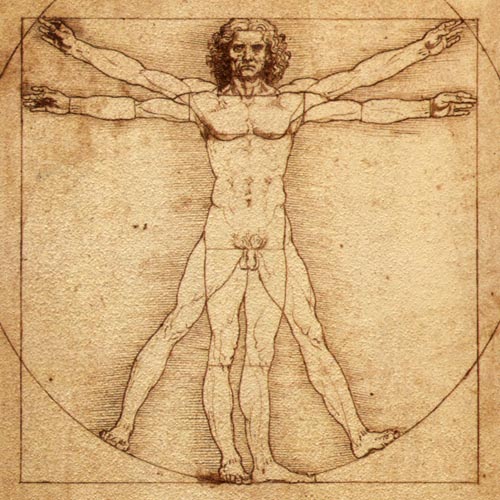
This painting the Vitruvian Man ( c. 1492 ) by Leonardo da Vinci displays a spirit of scientific inquiry. What is Man? The understanding of human nature will help to promote the man’s well-being.

What is Man? The motivation for asking this question comes from a statement expressed in Sanskrit language, ‘Sarvesham Swastir Bhavatu’ which seeks the well-being of all human beings of all races, of all nations, of all cultures, and of all religions. The term altruism describes unselfish concern for the welfare of others. It involves human behavior and actions that appear to favor another individual’s chances of survival and reproduction. The thought expressed in the Sanskrit language reveals human nature. Our efforts to support the well-being of man would be affected by our understanding the ‘real’ or ‘true’ nature of man. All religious and cultural traditions make assumptions about human nature. The basic assumption about human nature is that of finding it displayed in feelings, thoughts, actions, and behavior.If man is viewed as a multicellular organism, we need to discover the human nature of this subject who lives because of the functions of the trillions of cells. Hence, we need to know if human nature is displayed in the functional characteristics that are observable in biotic interactions of cells that constitute the human organism. The objective of this blog post is to explore the universal principles that determine human nature. Human cultures and religions seek to know human nature as reflected in the man’s thoughts, feelings, moods, actions, and behavior. I seek the knowledge of human nature by describing the characteristics of behavior exhibited by the cells that constitute the human individual.

THE STUDY OF MAN AS A LIVING THING:

Greek philosopher and the founder of Biology Aristotle(384 – 322 B.C.) has observed that there is a science which investigates being as being and the attributes which belong to being in virtue of its own nature.

Greek philosopher and the founder of Biology Aristotle ( 384 – 322 B.C. ) has observed that there is a science which investigates being as being and the attributes which belong to being in virtue of its nature. For a thing to come into being, Aristotle describes four kinds of causes, 1. Efficient Cause, 2. Formal Cause, 3. Material Cause, and 4. Final Cause, the end or purpose for which a thing exists. Aristotle describes corporeal substances are composite of two principles, form, and matter. Matter and Form are the Material and the Formal Cause respectively of what comes to be known as a thing. The matter represents the potentiality of the livng corporeal substance and the form represents the actuality of the living thing. The structure and the behavior of things contribute to their individual being and function. Aristotle did not regard the body and soul as two separate entities as the soul is merely a set of defining features. I would like to proceed with my presentation keeping the basic criteria that Aristotle would use to know human nature, 1. the human form, 2. the living matter, 3. the human living thing, its nature being a function of its structure and its behavior. In case of man, the human form undergoes changes during every stage of its existence such as infancy, boyhood, youth, adult, and old age. The living matter or protoplasm continues to live without any apparent changes in its fundamental living properties. The biological functions or the characteristics of the living matter or protoplasm do not evolve or change because of its survival value for the species. The living functions such as consciousness, responsiveness, recognition, communication through signalling, motion, and nutrition are innate properties of the living substance or protoplasm and are not acquired by a learning process. This innate ability of protoplasm to perform functions helps in the development of instinctive behavior that is observed in the organism. It is not surprising to observe that certain important features of human nature are innate rather than learned from experience. There are several factors involved in the development of human nature and in the formation of individual character. We need to recognize the contrast between the innate and the learned, heredity and environment, nature and nurture or social upbringing. The biological properties such as Motion, and Nutrition, the biological characteristics such as consciousness or awareness of its own condition called existence in a given environment, and the biological nature such as responsiveness, communication, and recognition of other living cells present in its external environment could account for an instinctive behavior pattern observed in all living organisms. This instinctive behavior pattern accounts for the nature of biotic interactions among members of a given biotic community. To explain human nature, we need to study the character and behavior of man’s corporeal substance or protoplasm and view man as a terrestrial organism represented by a biotic community of trillions of individual living cells and as a natural host to trillions of microbes that inhabit the man’s gastrointestinal tract. The terms such as spirit or soul must be used by stating its defining features and we need to understand the connection between the feature and the substance that contributes to that feature of soul or spirit that is seen as the vital, animating principle found in all living things.

THE MECHANIST CONCEPT OF LIFE:

There is fundamental distinction between the lifeless and the living, animate and inanimate, living and nonliving matter. The living system cannot maintain its living functions by exclusively using the elementary laws of Physics and Chemistry.

The Mechanist Concept of Life asserts that the phenomena of life are merely processes and transformations obeying elementary laws of Physics and Chemistry. The living system is ultimately reducible to its constituent molecules and atoms. The living cell is a thermodynamically unstable system. This means that without continuous input of energy, a living cell will degrade spontaneously into a nonliving collection of molecules. To maintain life an organism not only repairs or replaces( or both ) its structures by a constant supply of the materials of which it is composed but also keeps its life processes in operation by a steady supply of energy. This functional activity of a living cell is called metabolism. Living systems must be supplied energy for continual synthesis of new organic molecules and to replace, or to repair broken organic molecules. We need to explain this functional ability of a living system to acquire energy from its external environment. This ability is not operated by laws of Physics and Chemistry. For example, in Physics, the force by which every mass or particle of matter including photons attracts and is attracted by every other mass or particle is called Gravitation which is the weakest of the four Fundamental Forces operating in nature. A living system does not use the force of Gravitation to attract a substance to use it for its metabolism. Physics explains the process of diffusion and the operation of Osmosis in which a solvent passes through a semipermeable membrane such as the wall of a livng cell, into a solution of higher concentration, so as to equalize concentrations on both sides of the membrane( the osmotic pressure gradient ). Osmosis is a relevant biological mechanism but it does not fully account for the energy acquisition by a living cell.

HOW DOES PROTOPLASM ACQUIRES ENERGY?

The Biological Membrane or the Plasma Membrane separates protoplasm of the cell from its environment. It allows a highly controlled exchange of matter across the barrier it poses.

The functional activity called metabolism involves a living system’s continual exchange of some of its materials with its surroundings, principally in the process of building up or destroying its protoplasm. The most striking characteristics of protoplasm are its vital properties of Motion, and Nutrition. By Motion is meant the property which protoplasm has of changing its shape and position by some “intrinsic power” and exhibit amoeboid movement. Ciliary movement or the vibration of hair-like processes from the surface of any cell may also be regarded as a variety of the motion with which protoplasm is endowed. Nutrition is the “power” which protoplasm has of attracting to itself the materials necessary for its growth and maintenance from surrounding matter. When any foreign particle comes in contact with the protoplasmic substance, it becomes incorporated in it, being enwrapped by one or more processes projected from the parent mass which encloses it. When thus taken up, the foreign particle may remain in the substance of the protoplasm for some time without change, or may be again extruded. The living substance called protoplasm has the “intrinsic power” of motion and uses its power to ingest and to expel foreign particles in the external environment with which it may come into contact. The Biological Membrane or the Plasma Membrane which separates protoplasm of the cell from its environment allows a highly controlled exchange of matter across the barrier it poses; some compounds are able to pass through the membrane easily, others are completely blocked. The screening effect on the substances that enter and leave the cell is perhaps the most important function of the membrane. The actions and behavior of protoplasm, the corporeal substance is dependent upon its innate “power” and may not be attributable to elementary laws of Physics and Chemistry.

SPIRITUALISM AND HUMAN NATURE:

Red Blood Cells provide a very good example of the adaptive subordination of cells to meet the requirements of the Whole Organism. The specialized functions of tissues and organs of human body are possible because of such functional subordination.

The structural differentiation and the functional organization of various organ systems makes man a very complex living organism. This kind of specialized functions of tissues and organs is possible because of adaptive subordination of the cells to the requirements of the Whole Organism. If altruism describes any behavior that appears to favor another individuals’ chances of survival, we can easily recognize this characteristic in the functions performed by the Red Blood Cells. Each Red Blood Cell lives for a very limited life span of its own and during its short period of existence it serves the purpose of the Whole Human Organism with a sense of devotion, with the spirit of cooperation, to provide assistance to all other cells, tissues, and organs of the body in a selfless manner. I define the term ‘Spiritualism’ as the NATURE of a relationship, a partnership, an association, or bonding between two individual living entities based upon characteristics such as compassion, sympathy, understanding, cooperation, mutual assistance, mutual tolerance, voluntary subservience to provide some benefit to the member participating in the biotic interaction. Spiritualism is innate and is not acquired by learning experience. The very existence of the human being and to perform the characteristic living functions, man depends upon the protoplasmic substance and its innate “power” to acquire energy from its external environment. The human form becomes the actuality that it represents by the NATURE of its spiritual association with the protoplasmic living matter. Man is a spiritual being because of the spiritual nature of his living substance called protoplasm.

Simon Cyrene

The Material Basis of Spirituality. What is Matter? and What is Spirit? If materialism is about the influence of money and material wealth, I would like to use the Power/Force/Energy called Money to talk about Life and Death. The Law of Conservation is applicable to both the living, and the non-living matter. Therefore, it can be stated, Life is neither created nor destroyed. If any person can refute my claim using valid, scientific information, I would give the person a US $1,000 bill as a reward.

The Material Basis of Spirituality Science. The human form vs the human nature

What is Matter? and What is Spirit? If materialism is about the influence of material wealth, I would like to use the Power/Force/Energy called Money to talk about Life and Death. The Laws of Conservation are applicable to both the living, and the non-living matter. Hence, it can be stated that “Life can neither be created nor destroyed.” If any person can refute my claim using valid, scientific information, I would give the person a US $1,000 bill as a reward.


HUMAN NATURE AND HUMAN FORMS: ‘SARVESHAM SVASTIR BHAVATU’

Greek Philosophers Plato and Aristotle – To understand Human Nature, we must know the Human Form, its actions and behavior.

What is man? The motivation to ask this question comes from a statement expressed in the Sanskrit language, ‘Sarvesham Svastir Bhavatu’, which seeks the well-being of all men, of all races, of all cultures, of all religions, and of all nations. Our efforts to support the well-being of man would be affected by our understanding the ‘real’ or ‘true’ nature of man. Aristotle describes corporeal substances are composite of two principles, form and matter. It is important to seek proper understanding of human form and to know the truth about human nature by describing the form. Being born relates the man to the Subjective Reality of his physical existence and the human nature is related to the fact of man’s existence in the physical world and universe. If the Objective Reality of man is non-material, we still need to know as to what exists in the world, and as to how it exists.

PLATO’S THEORY OF FORMS – THE DUALISM OF BODY AND SOUL:

Greek philosopher Plato (427 B.C. to 347 B.C.) describes the human nature by his Theory of Forms. He describes four aspects of human being; 1. The Logical Form, 2. The Epistemological Form, 3. The Moral Form, and 4. The Metaphysical Form.

The Logical Form: It describes the physical being, the physical form and its identity. Each human being has characteristic physical features using which he can be identified as a member of the genus Homo and he has very specific features that establishes his identity that is shared by all the members of a species known as Homo sapiens sapiens. Each member of this species could be further identified as an individual using the present Identification technology. This specific human individual will not exist with the same identifying features during his entire duration of his physical existence. The Logical Form of human is impermanent and is subject to change and eventual death. However, the existence of this physical form is important to support the existence of man and to know his nature. Existence precedes human nature or Essence. The Essence (Who You Are) is defined and is preceded by the Reality of Existence. The human being belongs to a social group, and always exists as an Individual with Individuality while his physical form changes and passes through various stages such as infancy, boyhood, teenage, adult and old age. The Logical Form is subject to change, decay, and death. Hence, the reality of this Form is often doubted. It must be noted that Plato has not known man as a multicellular organism and his description of the Logical Form is not based upon study of Human Anatomy and Human Physiology. 

The Epistemological Form: The term epistemology deals with the Theory of Knowledge. It describes the possible kinds of knowledge and the degrees of certainty for each kind of knowledge. Plato describes the knowledge that human being can acquire through education, a process of learning from sensory experiences, and teaching imparted by others. Plato expects to obtain full knowledge of human forms through proper education. Such knowledge is important to know the Metaphysical Form of man. Self-Knowledge leads to the understanding of man’s true or real nature. The perception of impermanent, material, human body is described by Plato as only opinion or belief and he considers that such perception is not true knowledge of human form. Plato has not given attention to knowledge that is innate or that is not acquired by the learning process. To perform the living functions in support of his existence, man uses biological information that is inherited and not knowledge that has to be acquired through learning.

The Moral Form:  It describes qualities such as Courage and Justice, the observable aspects of human nature that could be described from human action and human behavior.

The Metaphysical Form: Plato claims that the Metaphysical Form is not perceivable by any of the senses. The Metaphysical Form is the real form of the human being as compared to the Logical Form which is considered to be unreal. The Metaphysical Form is not present in space or time, as it is beyond the world of changeable and destructible things. It belongs to the realm of unchanging, eternal forms. This form being true can be fully known through knowledge.

Plato’s Theory of Body-Soul Dualism:

Plato divides human being into two categories; 1.Body, a material entity, and 2. Mind or Soul, a non-material entity which can exist apart from the Body. Plato maintains that the Mind or Soul is indestructible, it existed eternally before birth and will exist eternally after death. He further describes the three parts of Soul as 1. Appetite – the seat of desires and passion such as hunger, thirst, and sexual desire, 2. Reason – the seat of discernment that chooses right from wrong and makes distinctions between good and evil, and 3. Spirit – the seat of self-assertion, self-interest, anger, indignation, and self-pride. Plato considers that the well-being of man depends upon harmonious interactions of the three aspects of the Soul. Plato thinks that such harmonious interactions would only be possible when Reason controls both Spirit and Appetite. To strike this balance and to maintain harmony, man has to obtain knowledge of the eternal, unchanging form. Plato thinks that Justice is revealed as a principle of each thing performing the function most appropriate to its nature, a principle of the proper adjudication of activity and being. The principle of Justice is revealed or discovered in the individual human Soul when each part of the Soul performs its proper and appropriate function. Plato believed that the Human Soul rules the Human Body. The Rule of Reason is required to combine the virtue of temperance with self-mastery and harmony results when all elements agree as to which should do what.

The Five Aspects of Human Existence:

I describe five Forms of human being and each Form can be identified by its own behavior; 1. The Physical Form as described by Human Anatomy and Human Physiology, 2. The Mental Form as described by sciences such as Psychology and Psychiatry, the Form that has intellectual and emotional aspects, 3. The Social Form as described by Social Sciences, the social aspects of man, his activities, and the structure and organization of all human institutions, 4. The Moral Form as described by man’s power of discernment or conscience to make moral and ethical choices, and 5, The Spiritual Form, the aspect that formulates harmonious interactions between the cells, the tissues, and the organs of the human body whose individual functions support the well-being of the singular entity recognized as man. The man’s existence would be at risk if any of these five aspects is adversely impacted. Unless we seek clear, visual images of Human Form in all its aspects, we will fail to understand the man and his purpose in life.

Simon Cyrene

Related articles
What is Matter? and What is Spirit? If materialism is about the influence of material wealth, I would like to use the Power/Force/Energy called Money to talk about Life and Death. The Laws of Conservation are applicable to both the living, and the non-living matter. Hence, it can be stated that “Life can neither be created nor destroyed.” If any person can refute my claim using valid, scientific information, I would give the person a US $1,000 bill as a reward.


The Material Basis of Spirituality Science. What is Intelligence?

What is Matter? and What is Spirit? If materialism is about the influence of material wealth, I would like to use the Power/Force/Energy called Money to talk about Life and Death. The Laws of Conservation are applicable to both the living, and the non-living matter. Hence, it can be stated that “Life can neither be created nor destroyed.” If any person can refute my claim using valid, scientific information, I would give the person a US $1,000 bill as a reward.

SPIRITUALISM AND INTELLIGENCE:

Spiritualism and Intelligence :I would like to pay my tribute to Albert Einstein ( b. March 14, 1879, d. April 18, 1955), German-American Physicist who won the Nobel Prize for Physics in 1921 and who developed the Special and General Theories of Relativity, Photon Theory of Light, Photoelectric Law, and work in theoretical Physics such as the equivalence of Mass and Energy. The scientific inquiry of Intelligence would establish its biological basis and show that all living organisms are Intelligent.

What is Man? I would begin this investigation by sharing my motivation for asking this question. The motivation comes from a statement that is expressed in Sanskrit language: “SARVESHAM SVASTIR BHAVATU”, a statement that seeks the well-being of all people, of all races, of all cultures, of all religions, and of all nations.

WHAT IS MAN? SPIRITUAL BEING AND SELF-REALIZATION. SPIRITUALITY IS NOT LEARNED OR ACQUIRED EXPERIENCE.

The meaning and purpose of life are affected by whatever we think is the real or true nature of man. It is important to recognize that our efforts to support the well-being of man would require correct understanding and knowledge of the real or true man.

WHAT IS INTELLIGENCE?

SPIRITUALISM AND CONSCIOUSNESS: Amoeba proteus is a living organism as it has the ability to perform vital, living functions.

Intelligence can only exist in living matter and living entities. The word Intelligence (Latin. Intelligentia) involves perception, discernment, the ability to learn or understand from experience, and the ability to acquire and retain knowledge. Intelligence is associated with all-around effectiveness of a living organism to maintain its existence. Intelligence influences a broad range of living functions and could be observed in the performance of those functions. The potentiality or capacity called Intelligence has a biological basis. However, in popular usage, Intelligence is used to describe the cognitive (knowing) component distinct from the affective (emotional), and motivational (drive) components of human behavior. Very often, people use the term Intelligence to describe the variations in the ability to learn, to function in society and to behave according to contemporary social expectations. I would like to differ from this conception of Intelligence as an innate ‘brain- power’- a mental faculty which distinguishes the more highly evolved animals from simple organisms, and tries to measure Intelligence levels and the differences among individuals and separate geniuses from average persons. It is not reasonable to think of Intelligence as an exclusive function or faculty of the mind. Psychologists who describe the psychological basis of Intelligence tend to view Intelligence as a combination of the innate characteristics of an individual’s Central Nervous System which is molded by experience, learning, heredity, and environmental factors. Psychologists describe Intelligence as a collection of a large number of highly varied, although overlapping mental skills and abilities. Intelligence may include about 120 specific abilities which are grouped under three categories as: 1. logical processes, 2. the kinds of information processed, and 3. the products of such information processed (eg. classes, systems, relations). It is understandable to know Intelligence as multidimensional and Intelligence serves as the basis for the performance of a wide variety of functions that involve knowing information, use or application of information, and physical performance or observed behavior which could be called Intelligent Behavior. Still, there is no single definition of Intelligence. There is no agreement if Intelligence could be directly observed and be accurately measured. Intelligence remains as a hypothetical ability. There is an abstract faculty that apprehends, conceptually and perceptually, relations among objects. I would like to present this abstract function of Intelligence to recognize relations among objects as a feature of a living cell and its ability to recognize the presence of other living cells present in its environment, its ability to recognize substances present in its environment, its ability to selectively use or dispose of molecules, its ability to express cooperation, tolerance, mutual assistance, defence, communication, and functional subordination in various biotic interactions with its own being, or in its interactions with other living species. My purpose is that of recognizing the fact of Intelligence as the characteristic of all living organisms and living cells and it could be important to recognize the association between Intelligence and Consciousness as the basis for a living entity to exist in its environment. We cannot afford to ignore the fact that millions of human beings have perished because of Intelligence displayed in operation and behavior of a variety of Viruses, Bacteria, Protozoa, other parasites, venomous creatures (eg. spiders, scorpions, and snakes) and carnivorous animals.

SPIRITUALISM AND INTELLIGENCE:

The single fertilized egg cell grows, develops, and differentiates to produce all the tissues and organ systems of the human being. Brain, the chief organ of the Central Nervous System is derived from this fertilized egg cell. This Egg Cell is Intelligent and Intelligence represents an Innate ability and capacity to learn and adapt, to acquire, to retain, and to use Knowledge in the performance of a wide range of living functions.
Spiritualism and Intelligent Behavior: Human Embryo Implantation at about 6 days after fertilization of egg cell is an example of Intelligent Behavior. Intelligence is identified as the Cognitive or Knowing aspect that is distinct from the Affective or Emotional aspect, and Motivation or Drive aspect of Human Behavior. Human Embryo is Conscious and Intelligent for it knows about its condition, or state, and the fact of living.

I suggest that we need to make a distinction between Intelligence and Intellect, the mental function which is associated with thinking. Brain like all other organs and tissues of the human body has grown and developed from the protoplasm of a single, fertilized egg cell. The intellectual abilities of brain are dependent upon the basic, underlying nature and ability of its living matter or protoplasm. Intelligence represents innate ability or capacity to learn and adapt. It has the ability to acquire new knowledge from experience. This potentiality and capacity of Intelligence is reflected in mental abilities like creative thinking and analytical thinking. In my view, both Consciousness, and Intelligence are the defining features of Soul or Spirit and hence I submit that the living matter or protoplasm is of Spiritual nature as it knows to formulate its relations with other living entities with a nature that exhibits traits of Compassion, Sympathy, and Understanding to achieve both internal, and external Harmony, Tranquility, and Peace to support its existence and living condition. Man because of his intellectual abilities entertains thoughts about immortality, eternal life, and everlasting life as he recognizes the potentiality and capacity of his Intelligence that sustains and maintains his living condition.

Simon Cyrene

Related articles
What is Matter? and What is Spirit? If materialism is about the influence of material wealth, I would like to use the Power/Force/Energy called Money to talk about Life and Death. The Laws of Conservation are applicable to both the living, and the non-living matter. Hence, it can be stated that “Life can neither be created nor destroyed.” If any person can refute my claim using valid, scientific information, I would give the person a US $1,000 bill as a reward.

The Material Basis of Spirituality Science. The human essence vs the human existence.

What is Matter? and What is Spirit? If materialism is about the influence of material wealth, I would like to use the Power/Force/Energy called Money to talk about Life and Death. The Laws of Conservation are applicable to both the living, and the non-living matter. Hence, it can be stated that “Life can neither be created nor destroyed.” If any person can refute my claim using valid, scientific information, I would give the person a US $1,000 bill as a reward.

THE MAN’S ESSENCE AND THE MAN’S EXISTENCE:

The Vitruvian Man c. 1492. The painting by Leonardo da Vinci displays the spirit of scientific inquiry. Could we know and understand the human nature or the man’s essence by investigating the man’s mind using the psychoanalytic principles? How does the man exist? What is the basis for the man’s Existence? If there are hidden mental entities, how could they help or support the man’s existence? How could the man display his essence if his existence is not supported? Spiritualism is that potency that sustains the human existence and is reflected as human nature in the structures and functions of the human being.

What is man? The tradition of knowing oneself is a longer tradition than any other Science. This is a study in which the Knower and the Known are one. The object of the scientific inquiry is the nature of the scientist. The motivation to know man comes from a statement expressed in the Sanskrit language, “Sarvesham Svastir Bhavatu” which seeks the well-being of all the men of all races, of all cultures, of all religions, and of all nations.

WHAT IS MAN? THE THEORY OF HUMAN NATURE. THE PURSUIT OF PEACE, HARMONY, AND TRANQUILITY IN THE HUMAN LIVING EXPERIENCE.

Our efforts to support the well-being of man would be affected by our ability to discover the universal principles that describe the ‘real’ or ‘true’ nature of man. All human literary, philosophical, religious, and scientific traditions make assumptions about human nature. The basic assumption about human nature is that of finding it displayed in feelings, thoughts, moods, and mental states of the human individual from where human actions and behavior proceed. All such actions and behaviors that emanate from mental states show individualistic variations. It will not be easy to discover universal principles that could clearly establish the basis of true and real human nature by simply studying human mind and its functions. The structure and behavior of things contribute to their individual being and function. To understand human behavior, we may have to know the structure and behavior of the human living matter or substance to which we attach human identity and recognize it as the human person. I try to know the human nature from the functional characteristics that are observable in biotic interactions of cells, tissues, organs and organ systems formed and developed by the human living matter and constitute the human organism. If a man is viewed as a multicellular organism, I try to discover the human nature of a subject who objectively exists because of the living functions of cells, tissues, organs and organ systems that provide the biological basis for that existence. In this context, I have explored the theories shared by biologist Konrad Lorenz, psychologist Dr. B.F. Skinner, philosopher Jean Paul Sartre and now I would like to review the Theory of psychoanalysis formulated by Dr. Sigmund Freud. It must be noted that all of them and several others have explained the human nature without explaining the connection between the nature that is observed and the biological basis for the existence of the human individual whose behavior and actions they have studied.

PSYCHOANALYSIS AND THE PRINCIPLE OF DETERMINISM:

Dr. Sigmund Freud (1856 to 1939) claims, “No knowledge can be obtained from Revelation, Intuition, or Inspiration.” However, he reasons that knowledge could be obtained from unseen and unobservable mental entities whose existence cannot be tested empirically.

Dr. Sigmund Freud is known as the creator of Psychoanalysis. He is the author of several books; The Interpretation of Dreams (1900), The Psychopathology of Everyday Life (1901), Three Essays on the Theory of Sexuality (1905), Five Lectures on Psycho-Analysis (1909), Introductory Lectures on Psycho-Analysis (1915 -1917), Beyond the Pleasure Principle (1920), The Ego and the Id (1923), The Future of an Illusion (1927), An Outline of Psycho-Analysis (1938), and others. He assumes that all phenomena are determined by the laws of Physics and Chemistry. He considers that man is a product of Natural Evolution and is subject to the same laws of mechanistic principles. According to Freud, every event has preceding sufficient causes within the realm of the mind. He investigated for hidden causes in a person’s mind. Freud suggests that there are uncontrollable causes in every individual’s mind that determine the choices the individual makes. Freud contends that the mind includes ‘unconscious’ items of which the person has no ordinary knowledge. Freud postulates that the ‘unconscious’ mental state is dynamic in nature and that it actively exerts pressures and influences on what a person is and what he does. Freud coined the term Psychoanalysis to describe both the theories of Personality and the method of treating mental illness. Freud profoundly influenced man’s view of himself. Psychoanalysis involves the possibility of ‘unconscious’ mental states which have causal effects on people’s mental life. Psychoanalysis is based upon the idea that people could suffer from some idea or memory or emotion of which they are not conscious, but from which they could be cured by somehow bringing it into consciousness. Freud applied Psychoanalytic theory to the whole of normal mental life, not just to pathological conditions. He evolved a method of treatment to address the problems of neurotic mental disorders. The Freudian concept thus describes the powerful influence of the ‘unconscious’ mind on conscious thought and behavior and the equally powerful influence of the apparently forgotten past on the present. Apart from using terms such as ‘unconscious’, ‘preconscious’, and ‘conscious’, he distinguished three major structural systems within the human mind or personality; the ‘id’ which contains all the instinctual drives seeking immediate satisfaction, the ‘ego’ which deals with the real world outside the person, mediating between ‘ego’ and the ‘id’, and the ‘superego’, a special part of the ‘ego’ which contains the conscience, the social norms acquired in childhood. Whatever can become ‘conscious’ or items that could be ‘preconscious’ is in the ‘ego’ and everything in the ‘id’ is permanently ‘unconscious’. Freud’s concept of man includes his theory of the ‘instincts’ or ‘drives’, the motive forces within the mind. Freud also shares the historical theory of individual human character and the adult character depends upon the experience of infancy and childhood. Freud says that individual well-being or mental health depends on a harmonious relationship between the various parts of the mind and between the person and the real world in which man has to live. When we apply the Psychoanalytic theory to verify the contents of man’s ‘conscious’ or ‘unconscious’ mind, the basic assumption of Freud that man is governed by laws of Physics and Chemistry gets disproved. Human beings are vastly different from the entities studied by Physics and Chemistry. Psychoanalysis could only have individualistic applications. Psychoanalysis does not provide data that could be further tested empirically. We cannot test the usefulness or judge the efficacy of Psychoanalytic treatment in the same manner that is used to evaluate other therapeutic interventions.

SPIRITUALISM AND CONSCIOUSNESS:

Dr. Sigmund Freud uses terms such as ‘preconscious’, ‘conscious’, and ‘unconscious’ without explaining the anatomical and physiological basis to describe the mental function. Consciousness has two components, 1. The Contents of Consciousness, and 2. The Capacity of Consciousness. Freud is concerned with only consciousness that is projected to the cortical areas of the brain and ignores as to how consciousness is composed by the Reticular Formation and other nuclei in the Brain Stem. Apart from being a neurological function, each living individual cell is conscious and is aware of the fact of its existence, it knows its internal condition and it reacts and responds to the conditions of its external environment.
I would like to explain ‘Spiritualism’ as the potency that is evidenced as the presence of consciousness in any given living organism or living cell. It is the chief biological characteristic of living matter. Spiritualism is the power that causes consciousness and awareness that is exhibited in the biological properties of living matter; biological properties such as Motion, Nutrition, and Reproduction by Cell Division. Spiritualism is the biological basis for human existence and it explains human nature which is expressed as an internal, mutually beneficial partnership, relationship, association, connection, and bonding between the cells, the tissues, and the organ systems of the human organism and the Whole Organism that represents the Human Person in the world he lives. Clinical Medicine provides the opportunities to promote the well-being of all people as it includes the principle of verification of the objective, biological basis of human existence. Dr. Freud may explain as to why a man may choose to drink alcohol or use tobacco. But, his Psychoanalysis will not determine the behavior, action, and response of the man’s liver, heart, lungs, blood vessels and other cells, tissues, and organ systems to the choices that the man makes. While man makes mental choices for his actions and behavior, he has no freedom, no free will to make choices on behalf of his cells, tissues, and organ systems. While Freud lays the emphasis on a harmonious relationship between the various parts of the mind and between the person, I speak about harmonious relationships in the Whole Person and not simply between a few unobservable mental entities. We need a theory that recognizes the spiritual nature of man’s living matter and the spiritual relationships that it formulates while developing and building the very complex multicellular human organism.

 Simon Cyrene

What is Matter? and What is Spirit? If materialism is about the influence of material wealth, I would like to use the Power/Force/Energy called Money to talk about Life and Death. The Laws of Conservation are applicable to both the living, and the non-living matter. Hence, it can be stated that “Life can neither be created nor destroyed.” If any person can refute my claim using valid, scientific information, I would give the person a US $1,000 bill as a reward

The Material Basis of Spirituality Science. The New Synthesis

What is Matter? What is Spirit? The New Synthesis

What is Matter? and What is Spirit? If materialism is about the influence of material wealth, I would like to use the Power/Force/Energy called Money to talk about Life and Death. The Laws of Conservation are applicable to both the living, and the non-living matter. Hence, it can be stated that “Life can neither be created nor destroyed.” If any person can refute my claim using valid, scientific information, I would give the person a US $1,000 bill as a reward.
Spiritualism – The New Synthesis. Dr. Edward Osborne Wilson is recognized as the world’s leading authority on ants. He is the foremost proponent of Sociobiology, the study of the genetic basis of the social behavior of all animals including humans.

Dr. Edward Osborne Wilson is recognized as the world’s leading authority on ants. He is the foremost proponent of Sociobiology, the study of the genetic basis of the social behavior of all animals including humans. In his book, Sociobiology : The New Synthesis (1975) he presented his theories about the biological basis of social behavior. It involves the application of the Theory of Evolution to the study of animal and human social behavior. It holds that the Theory of Evolution by ‘natural selection’ applies to behavior in the same way that it applies to structure and physiological functions. He holds that behavior patterns are genetically determined and are governed by the process of ‘natural selection’. Accordingly, he explains that social behavior relies upon the principle that genes are able to influence behavior and will be selected if the behaviors they encourage contribute ultimately to the reproductive success of the individual carrying those genes. The ‘Darwinian Fitness’ of an organism or a gene is a measure of the ability of that organism or gene to project copies of itself into future generations. Because, ‘natural selection’ would influence genetically controlled behavior, he believes that individuals will tend to behave in ways that maximize their ‘Darwinian Fitness’. However, he attributes 10 percent of human behavior as genetically induced, the rest being attributable to environment. It could be indeed true that some behavioral abilities depend upon underlying genetic mechanisms which support the neural and hormonal mechanisms that are required in the performance of actions by organisms. Dr. Wilson recognizes the essentially biological principles on which animal societies are based and could apply those principles to human social behavior. One of Dr. Wilson’s most notable theories is that a characteristic such as ‘altruism’ could be genetically based and may have evolved through the process of ‘natural selection’. Dr. Wilson maintains that altruistic behavior is consistent with ‘natural selection’ in that the sacrifice is made to save closely related individuals who share many of the sacrificed organism’s genes.

ALTRUISM AND SOCIOBIOLOGY:

Spiritualism – The New Synthesis. Altruism as a behavior  is not always a psychological function or ability. It is displayed as pure altruism in the social behavior of worker bees, ants, and wasps.

The term ‘altruism’ (French – altruisme) was coined by Auguste Comte, the founder of Positivism and Sociology. It is considered as antithesis to Egoism. Altruism is behavior that benefits others at some cost to the individual displaying altruistic behavior. Social scientists refer to altruism as the behavior of an individual who consciously comes to the aid of another, without expecting anything in return. Such behavior is influenced by empathy, an emotional response that results from being aware of another person’s emotions. In Ethics, altruism is described as a theory of conduct that regards the good of others as the end of moral action. It describes unselfish concern for the welfare of others. However, biologists view altruism as any behavior that reduces the ‘Darwinian Fitness'(reproductive success) of the altruist while increasing the fitness of another. It is common for animals to share food, help provide for another’s young, defend others against predators, and give alarm calls when a predator appears. Such animal altruism is common and it does not require psychological abilities and functions like sharing of emotions, feelings, and thoughts. Altruism as a behavior  is not always a psychological function or ability. It is displayed as pure altruism in the social behavior of worker bees, ants, and wasps.

SPIRITUALISM – THE NEW SYNTHESIS:

Spiritualism – The New Synthesis: A very good example of Spiritualism is that of altruism displayed by the mature Red Blood Cells of humans.

It must be understood that behavior is a fundamental characteristic of life and of all living entities. All species, whether single-celled protozoans or the largest of mammals possess the capacity to respond to stimuli in their environment. This ability called responsiveness is the fundamental attribute of all kinds and types of behavior. Psychologists like B.F. Skinner tend to focus on the learned components of behavior and stress the importance of environment and its influence on behavior. Biologists like Konrad Lorenz tend to focus primarily on the analysis of the innate components of behavior. Sociobiologists tend to recognize the role of genes and the influence of environment and describe that  behavioral abilities depend on underlying genetic mechanisms that develop the structures and physiological mechanisms that are important to display a given behavior. It may be noted that both Psychologists and Biologists are describing behavior in the context of social relations and interactions between individual and groups of living organisms. Living things behave in ways to maximize their chances of survival. In the entire animal kingdom, most living organisms display parental or social instincts. All animals display social behavior. No animal is ever completely isolated from some kind of environment that may not include members of the same species or other species. Animals form parental societies to care for their offspring. Bacteria come together to live as colonies. Hence, it will be important to recognize social behavior that is displayed by individual living cells. I define Spiritualism as the capacity or the biological ability of an individual living cell to form harmonious relations with others and to participate in or contribute constructively to changes in the social environment. The potency called Spiritualism is reflected in the biological functions of Consciousness and Intelligence. At a cellular level, the social aspect of Consciousness is reflected by the biological abilities of the cell such as  association, cooperation, communication, recognition of other living cells in its immediate environment, and performing actions which have characteristics of functional subservience to provide benefits like survival and reproductive success to other cells. A very good example of Spiritualism is that of altruism displayed by the mature Red Blood Cells of the man. The mature Red Blood Cells have no nuclei and hence cannot divide or reproduce. Each Red Blood Cell has a very limited life span of its own. They sustain their meagre energy needs by a form of anaerobic respiration as they do not have mitochondria like the trillions of other cells of the human body. The Red Blood Cells are passive in nature and they simply exist to provide Oxygen to other cells and tissues, collect Carbon Dioxide while being swept along by the blood stream. Since the mature Red Blood Cells have no nuclei, their behavior is not operated by genes or genetic mechanisms which could be important in their formation, development, and maturation. The social aspects of the Red Blood Cell behavior is related to the spiritual nature of its living substance. I would ask Biologists to give attention to the nature, functional abilities of the living substance apart from the consideration of genes and genetic mechanisms. It may be very clearly understood that the nucleus, the chromosomes, and the genes have no independent existence of their own and they perform their cellular functions while they derive energy and nutritional support from the living substance or Protoplasm that has the biological abilities of Consciousness, and Intelligence which is reflected in its properties like responsiveness, the power of nutrition, and reproduction. Spiritualism is the Science of New Synthesis; the New Synthesis that formulates the relationships between Substance, Structure, Function, Heredity of a Living Organism and its Environment, Behavior, and Social Community.

Simon Cyrene

Spiritualism – The New Synthesis. The Behavior pf the Red Blood Cell can be described as Altruism. Red Blood Cells are packed with hemoglobin. Each Red Cell contains over 600 million hemoglobin molecules.
What is Matter? and What is Spirit? If materialism is about the influence of material wealth, I would like to use the Power/Force/Energy called Money to talk about Life and Death. The Laws of Conservation are applicable to both the living, and the non-living matter. Hence, it can be stated that “Life can neither be created nor destroyed.” If any person can refute my claim using valid, scientific information, I would give the person a US $1,000 bill as a reward.

The Material Basis of Spirituality Science. The Causal Laws of Human Behavior

What is Matter? and What is Spirit? If materialism is about the influence of material wealth, I would like to use the Power/Force/Energy called Money to talk about Life and Death. The Laws of Conservation are applicable to both the living, and the non-living matter. Hence, it can be stated that “Life can neither be created nor destroyed.” If any person can refute my claim using valid, scientific information, I would give the person a US $1,000 bill as a reward.

THE THEORY OF HUMAN NATURE: “SARVESHAM SVASTIR BHAVATU”

The Vitruvian Man c. 1492. The painting by Leonardo da Vinci displays the Spirit of Scientific Inquiry about Human Nature.

What is Man? The motivation for asking this question comes from a statement expressed in Sanskrit language, “Sarvesham Swastir Bhavatu” which seeks the well-being of all humans of all races, of all cultures, of all religions, and of all nations.

WHAT IS MAN? SPIRITUAL BEING AND SELF-REALIZATION. SPIRITUALITY IS NOT LEARNED OR ACQUIRED EXPERIENCE.

Our efforts to support the well-being of man would be affected by our understanding the ‘real’, or ‘true’ nature of man. All human traditions including several philosophical and scientific traditions make assumptions about human nature. The basic assumption about human nature is that of finding it displayed in feelings, thoughts, moods, action, and behavior. I try to know human nature from the functional characteristics that are observable in biotic interactions of cells, tissues, and organs that constitute the human organism. If man is viewed as a multicellular organism, I need to discover the human nature of this subject who lives because of the functions of the cells, tissues, and organs that provide the structural basis of the human organism.

THE KEY TO HUMAN NATURE – EVOLUTION vs CREATION:

Charles Darwin’s great contributions to Biology: “The Origin of Species by means of Natural Selection: Or the Preservation of Favoured Races in the Struggle of Life” (1859), The Descent of Man (1871), The Expression of the Emotions in Man and Animals (1872).

The Anatomically Modern Man’s evolution from ape-like ancestors is thought to be the key to our true human nature. Ethology or the scientific study of animal behavior is based on the Theory of Evolution. In order to explain human condition, ethological theories of human nature appeal to the evolutionary past of man.

Konrad Zacharias Lorenz (November 1903 to February 1989), Austrian Zoologist, founder of modern Ethology which involves scientific study of animal behavior by means of comparative zoological methods. He won the Nobel Prize for Physiology along with two other animal behaviorist.

Lorenz sees the man as an animal who has evolved from other animals. He thinks that human behavior is subject to the same causal laws of nature as all animal behavior. Many patterns of animal behavior show “hereditary coordination” or “instinctive movements” that are innate rather than learned. The ‘instinctual’ behavior is fixed and may not be eliminated or altered by the environment. Instinct is inherited and it is essentially unlearned behavior. Some of the most important aspects of animal behavior are innate. Lorenz studied the nature of instinctive behavioral acts. The instinctual behavior is caused by a ‘drive’ which causes the behavior to appear spontaneously. The “four big-drives” are feeding, reproduction, flight, and aggression. Very often, behavior is activated by two or more basic drives. To account for an instinctive behavior pattern in a species, reference is made to its survival value it has for the genes for that behavior. To explain the existence of any particular organ or behavior pattern, Lorenz looks for its survival value for the species. In his book, “On Aggression” (1963), he explains the natural history of man’s aggressive behavior. He considers that man has an innate drive to aggressive behavior towards his own species like many other animals. Fighting and warlike behavior in man have an inborn basis. He seeks an evolutionary explanation for human innate aggressiveness or ‘Intraspecific’ aggression which is concerned with fighting and threats between members of the same species. The most destructive aspect of human aggression is its communal nature and the fighting is not between individuals but between groups. Humans fight as groups and human beings are the only animals to indulge in mass slaughter of their own species. He explains that this innate aggressive behavior has evolved from the communal defense response of our pre-human ancestors. However, Lorenz made no scientific study of behavior displayed by apes. Among the members of Homo genus, man is the only surviving representative of the Homo sapiens species and hence it will not be easy to validate his conclusions about evolutionary origin of innate human aggressive behavior. If aggression is viewed as a hereditary behavior which is based upon its survival value for the genes for that behavior, it must be noted that all human ancestors had perished and have gone extinct and the behavior of aggression could not be of value in defending their survival as a species.

COMPASSION WITHIN THE INDIVIDUAL AND BETWEEN INDIVIDUALS:

Compassion or sympathy (sym=together + pati=suffer) describes the emotional feelings of sorrow for the sufferings or troubles of another person or others accompanied by an urge to help. Compassion describes an understanding arising from the sameness of emotional feeling. When a man recognizes pain or sorrow in the lives of others, it spontaneously arouses the emotional feelings of compassion. This understanding and the emotional response to the pain and suffering in the lives of others appears to be instinctive. Apart from the “four big-drives,” compassion is operated by an innate drive or it is a motivated behavior. Compassion and altruism (any behavior that appears to favor another individual’s chances of survival) is a response generated by human nature. Compassion acts like a physical force, power, or energy. It has the power to uplift a man from physical pain and mental, or emotional pain or sorrow. The instinct of compassion comes into play and acts as a force, power, or energy when a man experiences sorrow and reacts to the suffering or troubles of another man. I am also suggesting that the emotionally motivated behavior of compassion is found within individuals apart from between individuals. If my experience of pain or suffering does not elicit the emotional response of compassion from others, fortunately, I can derive the benefit of the uplifting power of compassion by simply knowing the source of compassion that exists within myself. When a person is enjoying a state of good health, we find that the cells, tissues, and organs of that human person are interacting with each other in a harmonious manner and these intraspecific biotic interactions display characteristics such as mutual assistance, mutual cooperation, mutual tolerance, and mutual functional subservience to provide a benefit to the human individual who lives because of the functions of these cells, tissues, and organs. The constituent parts of the human body interact with each other with a sense of devotion, sympathy, compassion, and understanding. We often try to find compassion in the actions performed by others in response to the pain, and suffering that we may experience. We describe compassion from the thoughts, emotional feelings, understanding, and sympathetic response that we witness in the behavior and action of others. I recognize compassion in the nature of the interactions between the cells, tissues, and organs of my body and consider that such compassion always operates to keep me the human person in good and positive health. I understand the reality of human existence and suggest that the existence is made possible because compassion is innate to human nature guiding the normal living functions both in health and sickness. I observe the operation of compassion in the wound healing mechanism that is described as ‘Inflammation and Repair’. The emotional feelings of compassion are important for the survival of man who exists to find emotional satisfaction from his living experience. The instinctive behavior of compassion supports the survival of man as it provides an emotional sense of satisfaction and contentment which contributes to the experience of joy and happiness in life.

COMPASSION IS THE KEY TO HUMAN NATURE:

The Key to Human Nature could be discovered by knowing the Cell Structure and Functions. If hereditary behavior is operated by information present in genes, it must be noted that the genes have no independent existence of their own. The nucleus and the genes perform their cellular functions deriving energy from the cytoplasm or protoplasm of the cell. The biological properties, characteristics, and the biological nature of the living substance or protoplasm could account for the instinctive behavior pattern of compassion.

The biological properties, characteristics, and the biological nature of the living substance or protoplasm could account for an instinctive behavior pattern like compassion. Biological functions and characteristics such as nutrition, recognition, awareness, responsiveness, and communication with other living cells have not evolved because of their survival value for the species. At a fundamental level, certain living characteristics or nature is innate or implanted in matter at the beginning of life. The nature called compassion is implanted or innate to the living substance or matter known as protoplasm.

What is Matter? and What is Spirit? If materialism is about the influence of material wealth, I would like to use the Power/Force/Energy called Money to talk about Life and Death. The Laws of Conservation are applicable to both the living, and the non-living matter. Hence, it can be stated that “Life can neither be created nor destroyed.” If any person can refute my claim using valid, scientific information, I would give the person a US $1,000 bill as a reward

The Material Basis of Spirituality Science. Spiritual Nature and Spiritual Behavior

What is Matter? and What is Spirit? If materialism is about the influence of material wealth, I would like to use the Power/Force/Energy called Money to talk about Life and Death. The Laws of Conservation are applicable to both the living, and the non-living matter. Hence, it can be stated that “Life can neither be created nor destroyed.” If any person can refute my claim using valid, scientific information, I would give the person a US $1,000 bill as a reward.

Human Nature and Human Behavior: “Sarvesham Svastir Bhavatu”

Spiritualism: Human Behavior and Human Nature. The Vitruvian Man. c. 1492. The painting by Leonardo da Vinci displays the spirit of Scientific Inquiry.

What is man? The motivation for asking this question comes from a statement expressed in Sanskrit language: “Sarvesham Svastir Bhavatu”, which seeks the well-being of all men, of all races, of all religions, of all cultures, and of all nations.

WHAT IS MAN? SPIRITUAL BEING AND SELF-REALIZATION. SPIRITUALITY IS NOT LEARNED OR ACQUIRED EXPERIENCE.

Our efforts to support the well-being of man would be affected by our understanding the ‘real’ or ‘true’ nature of man. I recognize that man exists with the following seven forms, 1. the Physical Being as described by Human Anatomy, Human Physiology and other Medical Sciences, the human being in health and sickness, 2. the Mental Being, the intellect and emotional aspects as described by Psychology and Psychiatry, 3. the Social Being as described by Social Sciences, 4. the Moral Being as described by Morals and Ethics, the power of discernment used by man to make the distinction between good and evil, and right and wrong, 5. the Spiritual Being as described by the spiritual nature of man’s corporeal substance that develops and builds the cells, tissues, and organs of the human body. 6. the Creative Being that constitutes the man as a specific Individual with Individuality without any further choice, and 7. the Rational Being, the dimension of the man who cannot avoid the use of the reasoning process to know himself and the world in which he exists.

Spiritualism: Human Nature and Human Behavior. BIOTIC INTERACTIONS – SPIRITUALISM VS PARASITISM. RED BLOOD CELLS HAVE INDIVIDUAL LIFESPANS OF SHORT DURATIONS AND THEY EXIST PERFORMING TASKS FOR THE BENEFIT OF REST OF HUMAN ORGANISM THAT HAS A LIFESPAN OF ITS OWN.

While most religious and philosophical traditions explore spirituality by understanding human thoughts, and feelings, I try to know this spiritual aspect of human nature by observing the functional behavior that is displayed in the interactions of cells, tissues, and organs that constitute the human organism. If man is viewed as a multicellular organism, human behavior must be observed in the biotic interactions of cells, tissues, and organs because of whose functions man lives in the world. The five aspects of man contribute to the five kinds of behavior of man; the physical, mental, social, moral, and spiritual behavior. A muscle cell displays the behavior of contraction in response to a stimulus and it is able to contract because of its contractile nature which gives it the power of contracting. I would like to explain that Spiritualism is the human nature that gives the man the power or ability to perform his living functions and display his characteristic behaviors like feeding, and reproduction.

HUMAN BEHAVIOR AND ENVIRONMENT:

Burrhus Frederic Skinner (1904 – 1990), Professor of Psychology at Harvard University (1948 – 1974) proposes that the empirical study of human behavior is the only way to arrive at a true theory of human nature. He had published several books, The Behavior of Organisms:An Experimental Analysis (1938), Science and Human Behavior (1953), and Verbal Behavior (1957).

B. F. Skinner studied behavior and the environmental causes of behavior mediated through conditioning mechanisms. In his opinion, all behavior is a function of environmental variables. He proposed a thesis of ‘Universal Determinism, and thinks that every human event including all human choices has a set of preceding environmental causes. In Indian tradition, the Bhagavad Gita also explains the relation between human behavior and environment or ‘Prakriti’. Chapter XIV, verse 5 states : “Sattvam, rajas, tama iti gunah prakriti sambhavah”, the modes of human behavior such as Sattva (the mode of goodness), Rajas (the mode of passion), and Tamas(the mode of ignorance) are generated by the interactions between human body and the environment in which he lives. At the same time, Indian tradition makes a very clear distinction between true human nature and the three modes of human behavior. The real, or true man is described by the spiritual characteristic of human nature.

Spiritualism: Human Nature vs Human Behavior

The Bhagavad Gita in Chapter XVIII, verse 20 claims that all living entities share a single reality even while they are divided into innumerable forms (“Sarva bhuteshu yenaikam bhavam avyayam iksate” ) and directs us to recognize that spiritual nature as the true reality that is common among different living forms. B.F. Skinner paid attention to the external causes or influences that generate or modify human behavior and has totally avoided the study of innate or inner cause of behavior. He did not give any importance to the role of heredity in human behavior. This internal influence on an organism’s behavior is not directly observable and an experimenter cannot manipulate such internal influences to conduct experimental studies of behavior. Skinner’s findings about external influences and environmental conditioning mechanisms explain several aspects of human behavior but they do not explain the relationship between human behavior and human existence.

Spiritualism: Human Behavior and Human Nature. Purkinje Fibers and Cardiac Contraction. The spiritual nature of protoplasm brings functional unity among the cells, tissues, and organ systems of the human body.

To understand human existence, we have to learn about the nature of man’s substance and the behavior of the cells, tissues, and organs that provide the structural and functional basis of the human organism. Man is a very complex living organism that shows structural differentiation and the functional organization of various tissues and organ systems. The specialized functions of tissues and organs is possible because of the functional subordination of the cells to the requirements of the organism as a whole. In other words, the specialized functions of tissues and organs could be described as ‘altruistic’ behavior, a behavior that promotes the well-being and appears to favor the individual’s chances of survival and reproduction. Man may exhibit behavior under the influence of environment and may act in the modes of behavior such as goodness (Sattva), passion (Rajas), or ignorance (Tamas), but his existence is made possible by his innate human nature which acts as an internal influence and determines the characteristics of the biotic interactions between the cells, the tissues, and organs of his own body.

Simon Cyrene

What is Matter? and What is Spirit? If materialism is about the influence of material wealth, I would like to use the Power/Force/Energy called Money to talk about Life and Death. The Laws of Conservation are applicable to both the living, and the non-living matter. Hence, it can be stated that “Life can neither be created nor destroyed.” If any person can refute my claim using valid, scientific information, I would give the person a US $1,000 bill as a reward.

Life can neither be created nor destroyed by man. The Law of Conservation of Matter and Spirit

What is Matter? and What is Spirit? If materialism is about the influence of material wealth, I would like to use the Power/Force/Energy called Money to talk about Life and Death. The Laws of Conservation are applicable to both the living, and the non-living matter. Hence, it can be stated that “Life can neither be created nor destroyed.” If any person can refute my claim using valid, scientific information, I would give the person a US $1,000 bill as a reward

What it is to be a Substance? and What it is to Exist? We need to establish knowledge about the man on a firm basis and the information it provides must be tested for its accuracy and consistency with an external reality. We have to make the fundamental distinction between the living and the non-living matter. The scientific advances of the 19th and 20th centuries reinforced the materialistic position concerning the basic similarity of organic living and inorganic physical matter. The man is viewed as a product of natural evolution and is thought to be subject to the same laws of Physics and Chemistry or mechanistic principles.

We need a methodology to study philosophy and to understand philosophical statements. Logical Positivism, also known as Scientific Empiricism aims to clarify concepts in both everyday and scientific language. It describes analysis of language as the function of philosophy. This analysis of language and of concepts is important to understand questions of belief and ideology which affect what we think we ought to do individually and socially. I would use this method of ‘Applied Philosophy’ to analyze the philosophical doctrine of ‘Materialism’ and to study the views and philosophy of Baruch Spinoza and his efforts to interpret human nature and human existence.

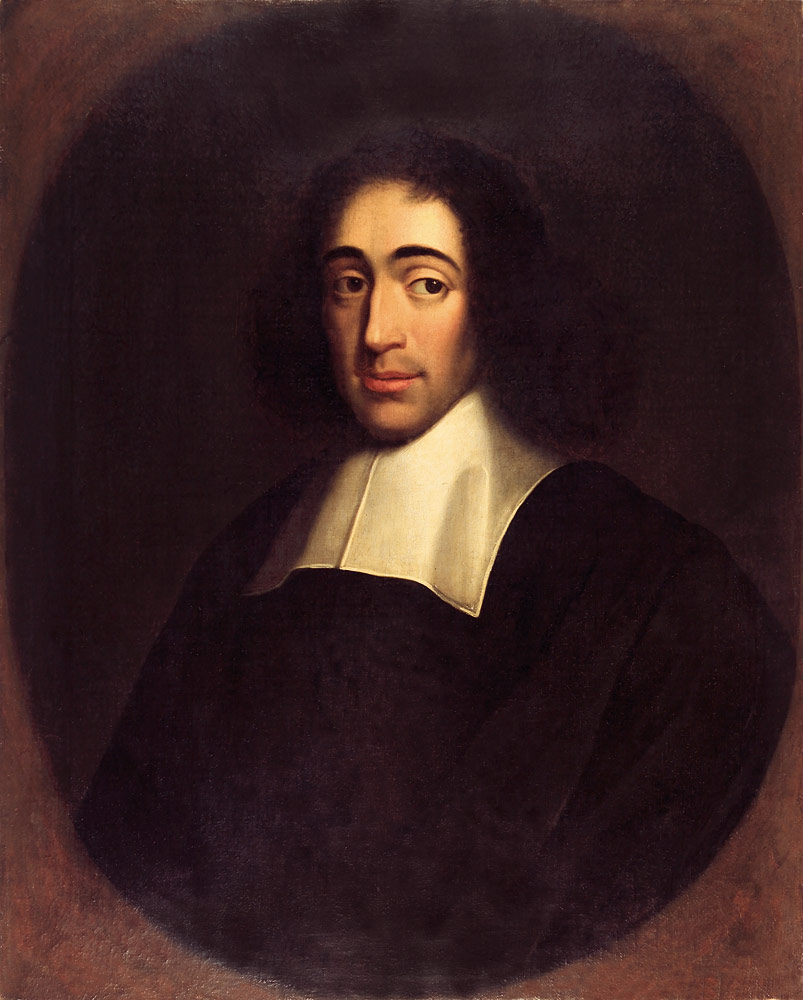
WholeDude - WholeDesigner - Matter and Spirit: Baruch(Benedict) Spinoza(1632-1677) Dutch philosopher taught that there is but one infinite substance called God or Nature having infinite attributes. He held that mind, and body as merely different aspects of a single substance. In his view, God is Nature in its fullness.
What is Matter? and What is Spirit? Baruch (Benedict) Spinoza (1632-1677) Dutch philosopher taught that there is but one infinite substance called God or Nature having infinite attributes. He held that mind, and body as merely different aspects of a single substance. In his view, God is Nature in its fullness.

Matter is an actual substance that has properties such as mass or weight, and occupies space. Matter has other attributes like motion, size, shape, and a form by which it may be recognized.

Materialism is defined as a system of thought that explains the nature of the world as entirely dependent on “matter” the final reality. Materialism as a philosophical doctrine deals with matter as the only reality and that everything in the world, including thought, will, and feeling can be explained only in terms of matter.

Baruch (Benedict) Spinoza, Dutch philosopher taught that there is but one infinite substance, God or Nature, having infinite attributes of which only thought and extension are knowable. He was excommunicated from his Jewish community.

Spinoza held that mind and body as merely different aspects of a single substance. In his view, God is Nature in its fullness. The Matter is immutable or indestructible, and Spinoza explained the indestructibility of matter is established by the uncreated and eternal nature of God. “By Body”, Spinoza writes, “I understand a mode which expresses in a certain and determinate manner the essence of God in so far as He is considered as the thing extended.”

This philosophical doctrine of Materialism is used in modern times to explain that comfort, pleasure, and wealth are the only goals or values of human life and human existence. The idea of materialism is used to contrast it with the spiritual, or intellectual goals, or values of human life.

In my view, man will not be able to define his purpose in life if there is a separation of matter and spirit. Man is a physical being with matter and form. To define the goals, or values of human life, man must understand what it is to be a substance and what it is to exist. If matter and spirit are separated, and if there is no unity between matter and spirit, human life would be simply impossible. The word or term ‘Spirit’ is associated with characteristics such as immutable, immortal, immovable, imperishable, indestructible, immaterial, eternal, and unchanging, or constant nature of a substance which withstands the influence of time.

If God is uncreated and is eternal, Spirit is a natural extension of God’s nature and shares the same attributes. To recognize the spiritual potential of a substance, we have to understand the nature of matter.

THE LAWS OF CONSERVATION – “LIFE IS NEITHER CREATED NOR DESTROYED”:

WHOLEDUDE - WHOLEDESIGNER - MATTER AND SPIRIT: If materialism is about the influence of money and material wealth, I would like to use the Power/Force/Energy called Money to talk about Life and Death. The Law of Conservation is applicable to both living, and non-living matter. If any person can refute my claim using valid, scientific information, I would give the person a US $1,000 bill as a reward.
What is Matter? and What is Spirit? If materialism is about the influence of material wealth, I would like to use the Power/Force/Energy called Money to talk about Life and Death. The Laws of Conservation are applicable to both the living, and the non-living matter. Hence, it can be stated that “Life can neither be created nor destroyed.” If any person can refute my claim using valid, scientific information, I would give the person a US $1,000 bill as a reward.

If materialism is about the influence of material wealth, I would like to use the Power/Force/Energy called Money to talk about Life and Death. The Laws of Conservation are applicable to both the living, and the non-living matter. Hence, if matter can neither be created nor destroyed, it can be stated that “Life can neither be created nor destroyed.” If any person can refute my claim using valid, scientific information, I would give the person a US $1,000 bill as a reward.

THE LAWS OF CONSERVATION OF MATTER:

WholeDude - WholeDesigner - Matter and Spirit: Antoine Laurent Lavoisier(1743-1794) French chemist and physicist, the founder of modern Chemistry. He gave the name Oxygen to the gaseous chemical element discovered by Joseph Priestley. He discovered the composition of Water molecule. He formulated the Law of Conservation of Mass.
What is Matter? and What is Spirit? Antoine Laurent Lavoisier(1743-1794) French chemist and physicist, the founder of modern Chemistry. He gave the name Oxygen to the gaseous chemical element discovered by Joseph Priestley. He discovered the composition of Water molecule. He formulated the Law of Conservation of Mass.

Chemical elements are the fundamental materials of which all matter is composed. There are about 107 known chemical elements. Chemical elements can combine with one another to form a wide variety of more complex substances called compounds. The number of possible compounds is infinite; perhaps a million chemical compounds are known.

When two or more elements combine to form a compound, they lose their separate identities and the product has characteristics quite different from those of the constituent elements. The gaseous elements hydrogen and oxygen with quite different properties can combine to form the compound water which has altogether different properties from either hydrogen or oxygen. Most of the naturally occurring matter represents physical mixtures of compounds.

The indestructibility of matter was explained by Lavoisier as the Law of Conservation. “We may lay it down as an incontestible axiom,” Lavoisier writes, “that in all the operations of art and nature, nothing is created; an equal quantity of matter exists both before and after the experiment.” What appears to be the destruction of a body is merely the transformation of its matter into another physical condition, without loss of mass unless there is an equivalent gain in energy. The total quantity of matter and energy remains constant throughout all physical changes. Material substances undergo changes when they interact with other material substances, but this “change” cannot be described as the permanent reality. The permanent reality describes the unchanging, or constant nature of chemical elements and molecules in spite of their tendency to interact with other elements and molecules.

WHOLEDUDE - WHOLEDESIGNER - MATTER AND SPIRIT: Water is the simplest and most abundant of all the molecules found in all living matter. The chemical composition of living matter reveals 70 to 80 percent as that of water. At the same time, water can exist as simple, physical, or non-living matter. I claim that water molecule has the potentiality to constitute living matter because of its spiritual nature.
What is Matter? and What is Spirit? Water is the simplest and most abundant of all the molecules found in all living matter. The chemical composition of living matter reveals 70 to 80 percent water. At the same time, water can exist as a simple, physical, or non-living matter. I claim that water molecule has the potentiality to constitute living matter because of its spiritual nature. Under the influence of time, living matter is transformed into molecules of non-living matter and yet the properties of molecules is fundamentally conserved allowing the change to proceed in either direction.

The Laws of Conservation are any of the several principles applied in Physics and Chemistry that state that certain properties of an isolated system remain constant with time. Each Law signifies that the nature of a substance or thing that does not change with the passage of time.

However, it must be noted that change is the pervasive phenomenon of the natural world. It is said that “Things in Nature Change with Time.” Although matter may change its form, or shape under the influence of time, its mass always remains the same. The Law of Conservation of Mass implies that matter can be neither created nor destroyed, that is, processes that change the physical, or chemical properties of substances within an isolated system leave the total mass unchanged. Similarly, The Law of Conservation of Energy implies that energy can be neither created nor destroyed, although it can be changed from one form (mechanical, kinetic, chemical, etc.,) into another form such as heat, or the energy consumed in the performance of work. In an isolated system, the sum of all forms of energy, therefore, remains constant. Every conservation law concerns a collection of two, or more objects, isolated from external influence, for which some physical quantity remains unchanged in time, or is conserved, quite apart from the details of what goes on between the interacting particles within the system. An important function of conservation laws is that they make it possible to predict the macroscopic behavior of a system without having to consider the microscopic details of the course of a physical process or chemical reaction. The fundamental character of these conservation laws is evident in the fact that each law may be deduced from or related to a symmetry property of space and time. The symmetry property of space and time determines the periodic frequency with which a natural change occurs while the nature or properties of things is conserved to allow the change to repeat itself in an expected manner.    

 SPIRIT-UNCHANGING NATURE IN A CHANGING WORLD:

WholeDude - WholeDesigner - Matter and Spirit: Many important biological processes involve Redox or Oxidation and Reduction Chemical Reactions. These chemical reactions reveal a dynamic process that is the characteristic of both Life and Death. If Life is explained by a series of chemical reactions, the same process continues into Death.
What is Matter? and What is Spirit? Many important biological processes involve Redox or Oxidation and Reduction Chemical Reactions. These chemical reactions reveal a dynamic process that is the characteristic of both Life and Death. If Life is explained by a series of chemical reactions, the same process continues into Death.

Natural Science, and Natural History is about the natural phenomenon called change. The systematized knowledge of Biological Sciences provide us with information about extinction which is the most common phenomenon in planet Earth’s Natural History. Earth has witnessed several major, and minor episodes called extinction during which certain life forms got wiped out.

While extinction is driven by climate change and its associated environmental change, life continues to exist on Earth without any apparent change in the chemical composition of living matter. Extinction involves the loss of forms and it does not involve a change in the nature of the corporeal substance that has the potential called Life and is known as Living Matter. In other words, it may be stated that if a change is observed in the natural world, it is always supported by an underlying, unchanging principle. While living things are born and die at the end of their lifetime, the matter or the corporeal substance which has the potential to establish Life remains unchanged and its nature is conserved and is not affected by time.

Under the influence of the cyclical flow of time, individual, living things are born and are dying while the Principle of Conservation maintains the unchanging nature of things that constitute Life or Living Matter. Life is established by a vital, animating principle called Spirit; the presence of Spirit can be related to the unchanging or immutable nature of Matter that gets the nature called Eternal, or Immortal, or Imperishable or Indestructible that overcomes the limitations imposed by Time and Space.

The Magic of Creation involves the use of a design, or plan to introduce the abilities such as thought, will, feelings, and cognition into the matter that reveals their presence or absence while passing through stages like Life and Death. The same chemical elements, chemical compounds, and chemical reactions operate in the state called living and death and both are maintained by the same unchanging nature of Matter and Spirit.

In my opinion, it may not be correct to regard Spirit as separate from Matter. It will not be correct to separate man into a physical body or matter, thinking substance or mind, and an immaterial substance called Spirit. There is no human existence if there is disunity or separation of Matter, Spirit, the Body, and the Mind. The uncreated, Eternal, Spiritual nature of God that is shared by Spirit and Matter would lead us to claim: “Life can neither be created nor destroyed.”

What is Matter? and What is Spirit? If materialism is about the influence of material wealth, I would like to use the Power/Force/Energy called Money to talk about Life and Death. The Laws of Conservation are applicable to both the living, and the non-living matter. Hence, it can be stated that “Life can neither be created nor destroyed.” If any person can refute my claim using valid, scientific information, I would give the person a US $1,000 bill as a reward.

Simon Cyrene

What is Matter? and What is Spirit? If materialism is about the influence of material wealth, I would like to use the Power/Force/Energy called Money to talk about Life and Death. The Laws of Conservation are applicable to both the living, and the non-living matter. Hence, it can be stated that “Life can neither be created nor destroyed.” If any person can refute my claim using valid, scientific information, I would give the person a US $1,000 bill as a reward.