

GLORIOUS QURAN – SURAH VIII – SPOILS OF WAR, VERSE 61: “AND IF THEY INCLINE TO PEACE, INCLINE THOU ALSO TO IT, AND TRUST IN ALLAH. LO! HE IS THE HEARER, THE KNOWER.”

THE GOSPEL ACCORDING TO SAINT MATTHEW, CHAPTER 5, VERSE 9: “BLESSED ARE THE PEACEMAKERS, FOR THEY WILL BE CALLED SONS OF GOD “


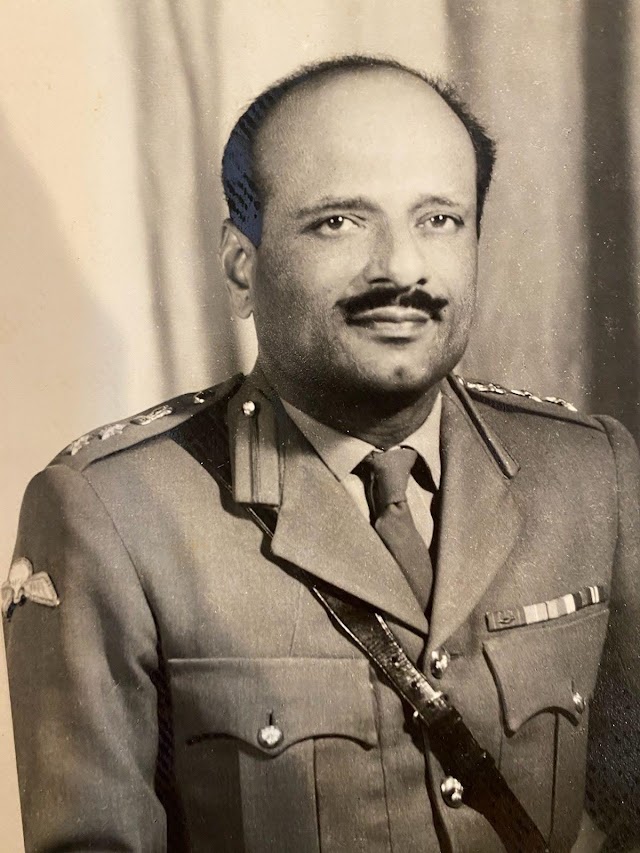
Operation Eagle 1971 was conceived by Prime Minister Indira Gandhi to deliver peace to the people of Bangladesh who had earlier declared their independence from Pakistan. I had the good fortune to serve under the Command of an Islamic Scholar who had performed Hajj and who had retained the entire book of Holy Quran in his memory and a true master of Islamic religious tradition and rituals of worship. Peace is the greeting of the Righteous. The Righteous while engaged in war are inclined towards Peace. My South Column Infantry Unit Commander of Operation Eagle, Lieutenant Colonel B K Narayan belonged to the Regiment of Artillery and during the time I spent with him I learned about the peace traditions of Righteous Muslims. Kindly read my personal tribute to this Islamic Scholar who had served Indian Army in its Olive Green Uniform.


http://bhavanajagat.wordpress.com/2007/09/22/a-sermon-in-kaptai-bangladesh/
A Personal Tribute to Lieutenant Colonel B K Narayan, The Regiment of Artillery, Indian Army. An Islamic Scholar Who Served in Olive Green Uniform. The Imam of Friday Prayer in Kaptai on December 17, 1971.


I was in college from 1962 to 1965 and obtained the Bachelor of Science degree from Osmania University, Hyderabad. I remember this period as the Golden Age of immortal Mohd. Rafi whose melodies still fill my ears. I grew up in this cradle of Urdu language Culture and had acquired my love for ghazals and qawwalis. I spent time in Lucknow, a crown jewel in the Urdu speaking world, where you meet in the market place, ordinary folks who speak in tones that have made the language famous for its sweetness. Much later, I had served in the Royal Oman Army and took my first lesson in Arabic language. My love for Urdu and my Knowledge of Arabic language pales when I write about this Islamic Scholar and Arabic language expert whom I met in India during 1971. He passed away on Sunday, May 2, 2004, in Bahrain where he worked for over 20 years as the Head of the Translation Department at the Bahrain Archives. This is not a tribute about his academic accomplishments, the books that he had published, his military career or about his famous friendly relationship with President Gamal Abdel Nasser and President Anwar Sadat of Egypt. I am writing this tribute to recognize his personal qualities and the values that he had promoted. I am writing this tribute to recognize him as a “peacemaker.” He represents a symbol of hope and the light that he had shown may lead us on to a path of peaceful co-existence.

I met Lieutenant Colonel.B K Narayan in Demagiri, Mizoram in October 1971. He hails from Karnataka, and he grew up as a Hindu. We gathered in Demagiri to make preparations to launch Operation Eagle in support of Bangla Muslims seeking freedom from military dictatorship imposed by Pakistan. In Demagiri, I reported to him to serve as his Medical Officer of the South Column Unit. He had the unique distinction of commanding an Infantry Unit in the conduct of War while he belonged to The Regiment of Artillery. I have not known a ‘GUNNER’ who could plan and execute Infantry Attacks on Enemy posts. Colonel Iqbal Singh, the Chief of Staff at the Force Headquarters also belonged to The Regiment of Artillery. But, the role played by Colonel Narayan as an Infantry Commander during War is exceptional and has no comparisons that I am aware of. I had the opportunity to converse with him for extended periods of time and came to know his admirable personality. It is not the knowledge of Arabic language that has made him unique and sets him apart from all other language experts. He is special because of his love for Islamic Culture and his ability to project the deep understanding of that Culture when he speaks to others. He performed the holy pilgrimage of Hajj and had observed all the rituals of that spiritual journey like a true and devout Muslim. When he narrated his Hajj experience, I could know the sense of joy and the purity of his intentions. His observance of Hajj, a ritual performed by all devout Muslims, was genuine, real to its core.

From Tlabung, Demagiri, South Column marched to Borunasury and then we marched towards Barkal after neutralizing the enemy post at Jalanpara and had encounters with aggressive enemy patrolling to resist our advance at two other locations. Finally, on Friday, December 10, 1971, the enemy fought a very decisive battle on the east side of Karnaphuli River to stop our advance towards Barkal. After losing the battle, the enemy promptly beat a retreat and withdrew from Barkal, Rangamati, Kaptai, and further moved out of Chittagong without putting up a fight. Col Narayan was able to quote the Quran from his memory and would convey his understanding of the verses with great clarity. I personally witnessed his amazing performance in a little town called Kaptai, on the banks of Karnaphuli Lake, Rangamati Division of Bangladesh. He conducted the Friday Worship Service for the local Bangla Muslims and delivered a sermon which was received with great appreciation by the worshipers. His job in Uniform did not impose any obligation to organize such an event. He held that prayer meeting entirely on his own initiative and it was purely an expression of his love to worship in the Islamic tradition and it also affirms his faith that the worship of God is not limited by one single tradition.
The Friday Prayer Service was held at the State Guest House in Kaptai where I stayed after my Unit had captured Kaptai. It had a large Conference Room. Col Narayan contacted the Muslim Clerics of the local Masjid and they were absolutely delighted when they met him. His Scholarship and devotion to Islam had captivated them and they immediately agreed to convene the local congregation at the Guest House and organize the Friday Prayer Service. The Conference Hall got totally packed with worshipers. I could watch the proceedings directly from my room in the State Guest House. The Bangla Muslim Community of Kaptai were truly appreciative of Colonel Narayan and his military campaign for bringing Peace and Joy to their Community.
I knew Colonel Narayan’s great admiration for Arab people. He always described them as peace-loving people. He knew this as a fact and it was based upon his understanding of Islamic Culture and traditions. I would describe Colonel Narayan as God’s humble servant. It is important to remember and pay tribute to such “peacemakers” as we can achieve true peace through reflecting and understanding the revelations from the Holy Scriptures of all people. The Regiment of Artillery of Indian Army must record this historical contribution made by a Gunner officer who served as an Infantry Commander during the Bangladesh Ops of 1971-72.
Special Frontier Force – Establishment Number. 22 – Operation Eagle – Liberation War of Bangladesh 1971:

Mrs. Indira Gandhi, Prime Minister of India initiated Liberation of Bangladesh during 1971 with military action in the Chittagong Hill Tracts. The battle plan of this military action is known as Operation Eagle. She conceived this battle plan to bring peace in that region. She was inclined towards peace. She wanted to deliver peace to people of Bangladesh who had earlier declared their independence from Pakistan. During Operation Eagle, Bangladesh Operations of 1971-72, I served in South Column, an Infantry Unit Commanded by Lieutenant Colonel B K Narayan. He was a great Islamic Scholar. He had explained to me that PEACE is the greeting of Righteous people.



R. R. Narasimham, B.Sc., M.B.B.S.,
Service Number: MS-8466, Rank: Captain Branch: Army Medical Corps/Short Service Regular Commission;
Designation: Medical Officer, South Column, Operation Eagle
Organization: Headquarters Establishment No. 22 C/O 56 APO. Special Frontier Force, Vikas Regiment
My father created the SFF, I commanded it
By Inspector General GURDIP SINGH UBAN (retd)
September 22, 2020 Rediff.com
Major General Sujan Singh Uban, a legendary veteran of the Second World War, was a natural choice to raise, train and command the Special Frontier Force and mould them into a well oiled fighting machine, recalls his son Inspector General Gurdip Singh Uban (retd), who led SFF troops during the Kargil War.
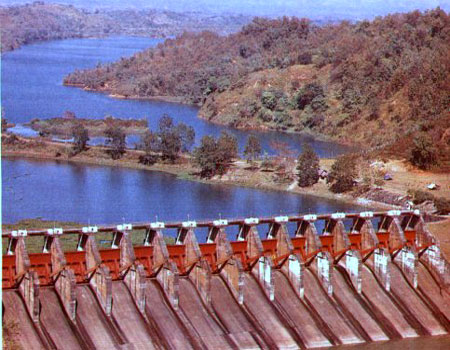
As the Indian Army moved in with their major thrust into East Pakistan, the SFF, while supporting the flank of the Indian Army, by a blitzkrieg, cleared the Chittagong Hill Tracts, destroyed the Kaptai dam and encircled and prevented the escape of Pakistan’s 97 Brigade and No 2 Commando Battalion, all of whom were taken prisoner.
The SFF was poised for the capture of Chittagong port when a ceasefire was declared; a daring move which paid handsome dividends.
This earned them the title ‘Phantoms of Chittagong’.


 Whole Dude - Whole Concept
