Whole Dude – Whole Skepticism

“I am Consciousness, Therefore I am”:

Whole Dude – Whole Skepticism: Descartes, Rene (b. March 31, 1596, d. February 11, 1650), French Mathematician and Father of Modern Philosophy.

Could we extend scientific methodology of investigation into every field of inquiry? Could we find Truth, and Reality as an external experience? Is it possible to visualize Truth and Reality in the realm of Intuition and Conscience? Jean Jacques Rousseau, the French philosopher suggests that man has to find his way to his pure nature, and this through feelings. Man’s duty is to look for his most deep interior feelings and follow them. Rene Descartes advances a philosophy based on certitude. He seeks to devise a method of inquiry for reaching the Truth. He proposes a method for guaranteeing Knowledge. He argues that in order to provide a secure foundation for Knowledge it is necessary to discover “clear and distinct ideas” that could not be doubted and could serve as a basis for deriving further truths. He finds such an idea in the proposition “I think, therefore I am” (“cogito, ergosum”). Descartes stresses a world of metaphysical truths that could be discovered by pure reason. He subjects his beliefs to a series of skeptical hypotheses. He invokes skepticism as a means of reaching certainty. As per his conclusion, “I think, therefore I am” is beyond skeptical doubt.

Cartesian Philosophy – The Value of “Systematic Doubt”:
Whole Dude – Whole Skepticism: Human body is composed of cells and each of these cells is a conscious entity. Consciousness is a biological, cellular function which brings about Functional Unity of the Whole Organism. Cellular consciousness provides the abilities of recognition, association, and cooperation between cells. Cells are characterized by Adaptive Subordination to meet the requirements of the organism as a whole. Rene Descartes proposition to divide human body into two parts; a thinking part, and a mechanical part is incorrect.

I truly admire Descartes for adopting a strategy of withholding his belief from anything that is not entirely certain and indubitable. Skepticism is an attitude that rejects claims to certainty. Its basic philosophical contention is that the possibility of knowledge is limited by the limitations of the mind itself or by the inaccessibility of the object. Descartes is known as the Father of the Mind-Body Problem. He claims that human beings are composites of two kinds of substances, mind and body. A mind is a conscious or thinking being, that is, it understands, wills, senses, and imagines. A body is a being extended in length, width, and breadth. He thinks that minds are indivisible, whereas bodies are infinitely divisible. The “I” of the “I think, therefore I am” is the mind that he claims could exist without being extended, so that it can in principle survive the death of the body. Descartes argues that colors, sounds, tastes, heat, cold, and pain are merely sensations existing in mind/thought and that there is nothing in bodies that resembles the sensation. He thinks that all complex functioning of living organisms including human bodies could be explained solely by mechanistic physics. He even denies that consciousness could be attributed to animals in order to explain their behavior. Descartes influenced the whole course of philosophical enquiry. Using the same Cartesian Philosophy, I find the proposition of Descartes to be invalid and incorrect based upon my understanding of human body, mind, and consciousness. The proposition which I would use is, “I am Consciousness, therefore I am”. This clear, and distinct idea, which is beyond doubt would help me to discover man’s awareness of God or what I describe as the “God Connection”. This “Connection” is the foundation for man’s existence in the natural world.       

Spiritualism: My Spiritual Journey – The Inquiry about Self, Spirit and Soul

Whole Dude – Whole Skepticism: Vitruvian Man by Leonardo Da Vinci (c. 1492). This picture is used as the cover page for Best & Taylor’s Text Book of Human Physiology. Medical Science and Medical Education is knowledge built upon the foundations of understanding and knowing Human Anatomy (Structure) and Human Physiology (Function).

The understanding of ‘self’, spirit, and soul demands the learning of the structure and functional organization of the being that exists.    

The Identity of Multicellular Human Organism:

Whole Dude – Whole Skepticism: Daniel John Cunningham is best known for the excellent series of dissection manuals, namely Cunningham’s Dissection Manuals. Cunningham’s Manuals of Practical Anatomy provide me the learning tools to know and understand Man’s External and Internal Reality and its Identity as described by Cells, Tissues, Organs,and Organ Systems
Whole Dude – Whole Skepticism: Dr. Daniel John Cunningham (1850-1909), Chair of Anatomy, University of Cambridge has provided this Manual of Practical Anatomy to help medical students dissect human cadavers and learn Human Anatomy. Whether humans know and understand Human Anatomy and Physiology or not, they come into existence with full functional knowledge of every constituent cell in the body. The Human Body has Innate Knowledge of its own Structure and Function. I acquired this Knowledge from uneducated individuals who gifted their bodies to promote Medical Education.

 I learned about human body while dissecting the body in a systematic manner. The Manual of Practical Anatomy which guides us through this entire process was published in England. The author Dr. Daniel John Cunningham prepared the Manual while dissecting cadavers of British or Irish citizens. He had never encountered cadavers of Indians. At Kurnool Medical College, Kurnool, Andhra Pradesh, India, where I was a student, the Department of Anatomy obtains dead bodies from  the Government General Hospital and most of the deceased are the poor, illiterate people of that region. None of the deceased had a chance to know this man called Cunningham and Cunningham had no knowledge about the existence of these people who had arrived on our dissection tables. But, as the dissection of the human body proceeded, inch, by inch, we recognized the anatomical parts as described by Cunningham. The manual also lists some anatomical variations and we very often exchanged information between various dissection tables and recognized the variations mentioned. The dissections also involves slicing the organs and studying them, both macroscopically, and microscopically. We did not miss any part of the human body. So what is the Identity of this Human person or Human subject? How does the living Human organism maintains its Identity and Individuality? Apart from the Cultural Traditions of India, several Schools of Religious Thought claim that the Human Individual and its Identity is represented by Human Soul. Where does this soul exist in the human body? What is the location if soul is present in the living person? Does man have a soul?

The Knowledge of Field and The Field of Activity: Kshetra and Kshetra Jnana:                      

Whole Dude – Whole Skepticism: In the Indian tradition, the human body is described as Kshetra or the Field of Activity.

The term soul has to be carefully defined if I have to find it by exploring the human body. In the Indian tradition, the human body is described as Kshetra or Field. The individual who knows and enjoys this body, kshetra, or field is described as Purusha. The knowledge of the body is called Kshetra Jnana. The person called Purusha explores his body called kshetra and acquire knowledge called Kshetra Jnana. So, I explored my body to find out if I have a soul and as to where it exists. I can explore my body while I am alive. If I am dead, only a different living person may get the opportunity to explore my dead body, but he may not be able to discover the soul which may have already departed from the body. If soul exists in the cadaver, Cunningham would not have missed it, and we the diligent students dissecting human cadavers would not have missed it. By definition, soul does not exist in dead bodies. It has something to do with life and the characteristics of a living person or organism. With the intellectual insight I had gained by studying human anatomy, I can explore my living body without placing it on a dissection table.    

The Functional Unity of Multicellular Human Organism:    

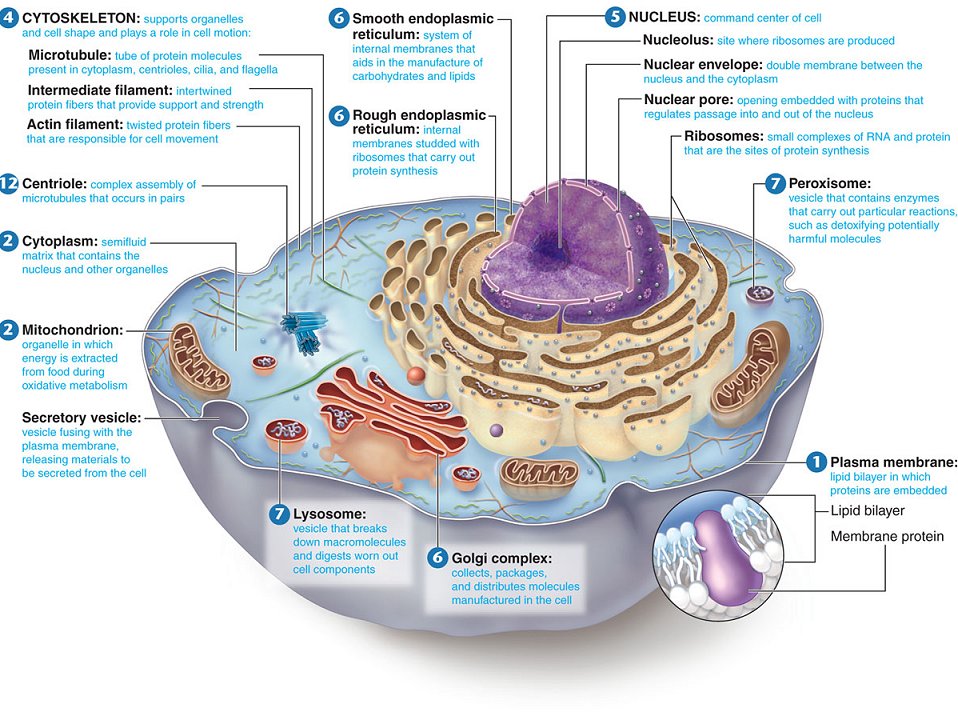
Whole Dude – Whole Skepticism: Adaptive Subordination of Red Blood cells to the requirements of the whole Human Organism. The mature RBCs have no nuclei and they cannot divide. They are exclusively adapted to transport Oxygen and serve the Human Organism. During the life span of Human Organism, the RBCs live for short periods of time and are constantly replaced by new RBCs.

Humans are multicellular organisms. Who or what is the Subject who lives because of the functions of the trillions of cells? Multicellularity found in complex organisms like humans is accompanied by definite capabilities of cells for differentiation. The design of cells has been modified to serve specialized functions of tissues and organs. To achieve proper numerical balance between functionally related cell groups, the death of many cells is necessary for others to reach maturity. This programmed cell death plays an important role during embryological growth and development of human fetus. Waves of genetically driven cell deaths are critical to the proper modeling of organs, and organ systems. Such programmed cell death events are essential if the organism as a whole is to develop its normal final form by which its Identity as an Individual is established. The constituent cells of the organism do not display functional individuality while living as individuals. The cell in a complex organism is not truly an independently functioning unit. The cell exists and functions to achieve Unity of the Organism as a Whole. The one very important part of the environment of a cell is other cells. The Consciousness, the Awareness of individual cells in multicellular organism functions to achieve the Functional Unity of the Whole Organism. Consciousness brings Functional Unity by providing the abilities of recognition, association, and cooperation between all the cells of the multicellular organism. Multicellular organisms are characterized by the ‘Adaptive Subordination’ of the constituent cells to the requirements of the organism as a Whole. For example, mature Red Blood Cells or RBCs have no nuclei and they cannot divide or replicate. They are exclusively adapted to transport Oxygen and serve the whole human organism. The RBCs have short lives as individual cells. The human organism has a life span of its own. During the life time of a human person, RBCs live for short periods of time and are constantly replaced by new RBCs. Thus it may be stated that the purpose of Consciousness at cellular level is to foster Functional Unity of the multicellular organism and establish it as an Individual. If the term ‘Soul’ represents the Identity of this Individual, the Soul is a functional attribute of Consciousness at cellular level.  

The Physiological Basis of Human Soul:

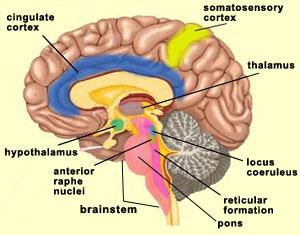
Whole Dude – Whole Skepticism: Reticular Formation is shown as a single ‘red’ bar in this figure. It consists of numerous Brain Stem nuclei. It is a network of nerve pathways and nuclei throughout the Brain Stem. A single neuron in this network may have synapses/connections with as many as 25,000 other neurons/nerve cells.
Whole Dude – Whole Skepticism: The two components of Consciousness: 1.Capacity for consciousness is an upper Brain-Stem Function and 2. the Content of consciousness is a Function of the Cerebral Cortex. The Reticular Formation which is located in the central Brain Stem helps to coordinate and integrate actions of different parts of the Central Nervous System such as regulation of muscle and reflex activity;central transmission and composition of sensory impulses; respiration; cardiovascular responses; behavioral arousal; and sleep.

I explored my body called Kshetra. The Kshetra Jnana, or Knowledge of my body is as follows:
My soul is  represented by an anatomical structure described as Reticular Formation in the Brain Stem.  Just like my body is composed of trillions of individual cells which collectively represent and establish my physical identity in this world, my soul derives its existence and identity from trillions of these individual units or cells that comprise my body. My soul is actually a composite of trillions of units of consciousness of trillions of individual cells that comprise my human body. The Functional Unity in relation to Consciousness is achieved in the Reticular Formation, the site where Consciousness of the Whole human organism is composed and then is relayed to the Cerebral hemispheres. It is just like a picture or a photo which represents trillions of spots of varying degrees of light intensity or brightness. The term soul has to be defined as the manifestation of “Consciousness”. If there is no “Consciousness”, there is no soul. The existence of soul is witnessed by the presence of “Consciousness”. This biological characteristic described as “Consciousness” exists in every single living cell. If a living organism is made up of one single cell, it has a soul as manifested by its “Consciousness”. For the human person, when identified as an Individual, the anatomical location of his Soul is the Reticular Formation of the Brain Stem which receives input from the rest of the body and shapes the information and sends it to Thalamus and to Cortical Areas of the Brain which provide the awareness, the functional knowledge with which the human organism exists as a living entity. Man enjoys an existence characterized by Peace, Harmony, and Tranquility, as the Soul, or the Life Principle operates most of the vital functions of the complex organism without relaying all the information to the cortical areas where it would be then known to the Man who exists because of these vital functions. Thereby, Man is protected from a huge information overload that is not compatible with mental peace and equilibrium.

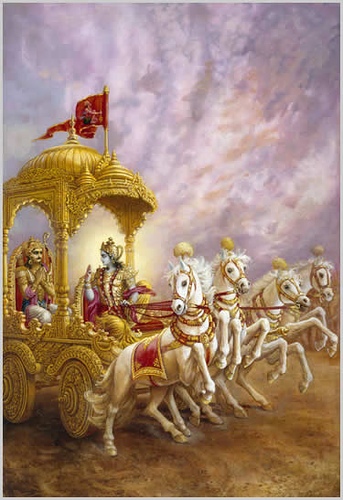
Whole Dude – Whole Skepticism: Lord Krishna in the Hindu Scripture of Bhagavad Gita, Chapter 10, The Opulence of the Absolute, verse 22 claims, “…in living beings I am Consciousness.” Similarly, in Chapter 7, verses 9 and 10, Lord Krishna claims, “I am the life of all that lives”, “I am the Original seed of all existences.”

Whole Dude – Whole Enlightenment

Whole Dude – Whole Enlightenment: Attain Enlightenment -Reason, Experience, and Intuition

Could science and the methods of rational and empirical inquiry help us in knowing the nature and the destiny of humanity? Could we extend scientific methods into every field of inquiry? Could we find truth and reality as an external experience or is it visualized entirely in the realm of intuition and conscience?

Enlightenment – The Age of Reason

Whole Dude – Whole Enlightenment: Attain Enlightenment -Reason, Experience, and Intuition

Enlightenment is a European intellectual movement of the 17th and 18th centuries in which ideas concerning God, reason, nature and man were synthesized into a world view. The thinkers of the Enlightenment were committed to secular views based on reason or human understanding only, which they hoped would provide a basis for beneficial changes affecting every area of life and thought.

Whole Dude – Whole Enlightenment: Attain Enlightenment -Reason, Experience, and Intuition

The Enlightenment was based upon a few great fundamental ideas- such as the dedication to reason, the belief in intellectual progress, the confidence in nature as a source of inspiration and value, and the search for tolerance and freedom in political and social institutions. Central to Enlightenment thought were the use and the celebration of reason, the power by which man understands the universe and improves his own condition. The goals of rational man were considered to be knowledge, freedom and happiness. It instigated revolutionary developments in art, philosophy and politics. Sir Issac Newton is considered to be the true father of Enlightenment. He established the basic idea of the authority and autonomy of reason.

Whole Dude – Whole Enlightenment: Attain Enlightenment -Reason, Experience, and Intuition

The Enlightenment Movement eventually broke up under the impact of new evidence and new insights. Nature, once considered a synonym of reason and visible proof of the existence of God and His benevolence, broke up into something to be studied with scientific objectivity and something to be enjoyed in romantic indulgence. The most significant contribution of the Enlightenment came in the field of social and political philosophy.

Rousseau, Jean-Jacques – The Role of Intuition

Whole Dude – Whole Enlightenment: JEAN-JACQUES, ROUSSEAU(b.JUNE 28, 1712, GENEVA, SWITZERLAND-d. JULY 2, 1778, ERMENONVILLE, FRANCE) FRENCH PHILOSOPHER, POLITICAL THEORIST WHOSE IDEAS INSPIRED THE LEADERS OF THE FRENCH REVOLUTION.

JEAN-JACQUES, ROUSSEAU (b.JUNE 28, 1712, GENEVA, SWITZERLAND-d. JULY 2, 1778, ERMENONVILLE, FRANCE) FRENCH PHILOSOPHER, POLITICAL THEORIST WHOSE IDEAS INSPIRED THE LEADERS OF THE FRENCH REVOLUTION.

Whole Dude – Whole Enlightenment: Attain Enlightenment -Reason, Experience, and Intuition

Rousseau is the least academic of modern philosophers but in many ways he is the most influential. His thought marked the end of the Age of Reason and the birth of Romanticism.

Whole Dude – Whole Enlightenment: Attain Enlightenment -Reason, Experience, and Intuition

Rousseau had a profound impact on people’s way of life. He opened men’s eyes to the beauties of nature and he made liberty an object of almost universal aspiration.

Whole Dude – Whole Enlightenment: Attain Enlightenment -Reason, Experience, and Intuition

He is credited with having introduced a great discovery about the nature of freedom and he emphasized the primacy of individual liberty. The other Enlightenment thinkers pursued the nature of humankind empirically in physiological and psychological studies or in historical and anthropological researches, whereas Rousseau sought the nature of humans in the wholly private realm of intuition and conscience. He looked inward for the fundamental source of moral obligation. Enlightenment has faith in reason which is understood as abstraction from external experience, Rousseau has emphasized that the inner life as a source of truth.

Whole Dude – Whole Enlightenment: Attain Enlightenment -Reason, Experience, and Intuition

Rousseau had shared the Enlightenment view that society had perverted natural man, the “noble savage” who lived harmoniously with nature, free from selfishness, want, possessiveness, and jealousy. In his essay, ‘ A Discourse on the Sciences and the Arts ‘(1750), he argued that the history of man’s life on earth has been a history of decay. Man is good by nature but has been corrupted by society and civilization.

One of the first principles of Rousseau’s political philosophy is that politics and morality never be separated. The second important principle is freedom, which the state is created to preserve. The state is a unity and as such expresses the general will. The general will is to secure freedom, equality and justice within the state and in the Social Contract, individual sovereignty is given up to the state in order that these goals might be achieved.

Whole Dude – Whole Enlightenment: Attain Enlightenment -Reason, Experience, and Intuition

In his political book called ‘ Du Contrat Social ‘(The Social Contract) published in 1762, Rousseau begins with the opening sentence; ” Man was born free, but he is everywhere in chains “. He proposed a society able to cultivate the individual’s moral stature without injury to his freedom. He had expressed freedom and equality of citizens in the idiom of natural and inalienable rights. Rousseau had believed that man has to find his way to his pure nature and to achieve this , man’s duty is to look for his most deep interior feelings and follow them.

Buddha’s Enlightenment

Whole Dude – Whole Enlightenment: Attain Enlightenment -Reason, Experience, and Intuition

Gautama, at the age of 35, attained the Enlightenment or Awakening. In Buddha’s own recorded words : ” My mind was emancipated…. Ignorance was dispelled, science(knowledge) arose, darkness was dispelled, light arose.”

Science and scientific methods bring us knowledge about life, nature and the universe that we live in. But, intuition provides us with the insight to improve the way we live this life. My Guru, Shankara has spoken a word of caution:

Whole Dude – Whole Enlightenment: Attain Enlightenment -Reason, Experience, and Intuition

maa kuru dhana jana yauvana garvam

harati nimeshhaat kaalah sarvam

maayaamayamidamakhilam hitvaa

brahmapadam tvam pravisha viditvaa

Whole Dude – Whole Enlightenment: Attain Enlightenment -Reason, Experience, and Intuition
Could science and the methods of rational and empirical inquiry help us in knowing the nature and the destiny of humanity? Could we extend scientific methods into every field of inquiry? Could we find truth and reality as an external experience or is it visualized entirely in the realm of intuition and conscience?

Spirituality Science – Whole Reason

“I am Consciousness, Therefore I am”:

DESCARTES, RENE (b. March 31, 1596, d. February 11, 1650 ), French Mathematician and Father of Modern Philosophy.

Could we extend scientific methodology of investigation into every field of inquiry? Could we find Truth, and Reality as an external experience? Is it possible to visualize Truth and Reality in the realm of Intuition and Conscience? Jean Jacques Rousseau, the French philosopher suggests that man has to find his way to his pure nature, and this through feelings. Man’s duty is to look for his most deep interior feelings and follow them. Rene Descartes advances a philosophy based on certitude. He seeks to devise a method of inquiry for reaching the Truth. He proposes a method for guaranteeing Knowledge. He argues that in order to provide a secure foundation for Knowledge it is necessary to discover “clear and distinct ideas” that could not be doubted and could serve as a basis for deriving further truths. He finds such an idea in the proposition “I think, therefore I am” (“cogito, ergosum”). Descartes stresses a world of metaphysical truths that could be discovered by pure reason. He subjects his beliefs to a series of skeptical hypotheses. He invokes skepticism as a means of reaching certainty. As per his conclusion, “I think, therefore I am” is beyond skeptical doubt.

Cartesian Philosophy – The Value of “Systematic Doubt”:

Human body is composed of cells and each of these cells is a conscious entity. Consciousness is a biological, cellular function which brings about Functional Unity of the Whole Organism. Cellular consciousness provides the abilities of recognition, association, and cooperation between cells. Cells are characterized by Adaptive Subordination to meet the requirements of the organism as a whole. Rene Descartes proposition to divide human body into two parts; a thinking part, and a mechanical part is incorrect.

I truly admire Descartes for adopting a strategy of withholding his belief from anything that is not entirely certain and indubitable. Skepticism is an attitude that rejects claims to certainty. Its basic philosophical contention is that the possibility of knowledge is limited by the limitations of the mind itself or by the inaccessibility of the object. Descartes is known as the Father of the Mind-Body Problem. He claims that human beings are composites of two kinds of substances, mind and body. A mind is a conscious or thinking being, that is, it understands, wills, senses, and imagines. A body is a being extended in length, width, and breadth. He thinks that minds are indivisible, whereas bodies are infinitely divisible. The “I” of the “I think, therefore I am” is the mind that he claims could exist without being extended, so that it can in principle survive the death of the body. Descartes argues that colors, sounds, tastes, heat, cold, and pain are merely sensations existing in mind/thought and that there is nothing in bodies that resembles the sensation. He thinks that all complex functioning of living organisms including human bodies could be explained solely by mechanistic physics. He even denies that consciousness could be attributed to animals in order to explain their behavior. Descartes influenced the whole course of philosophical enquiry. Using the same Cartesian Philosophy, I find the proposition of Descartes to be invalid and incorrect based upon my understanding of human body, mind, and consciousness. The proposition which I would use is, “I am Consciousness, therefore I am”. This clear, and distinct idea, which is beyond doubt would help me to discover man’s awareness of God or what I describe as the “God Connection”. This “Connection” is the foundation for man’s existence in the natural world.       

Spiritualism: My Spiritual Journey – The Inquiry about Self, Spirit and Soul

Vitruvian Man by Leonardo Da Vinci (c. 1492). This picture is used as the cover page for Best & Taylor’s Text Book of Human Physiology. Medical Science and Medical Education is knowledge built upon the foundations of understanding and knowing Human Anatomy (Structure) and Human Physiology (Function).

The understanding of ‘self’, spirit, and soul demands the learning of the structure and functional organization of the being that exists.    

The Identity of Multicellular Human Organism:
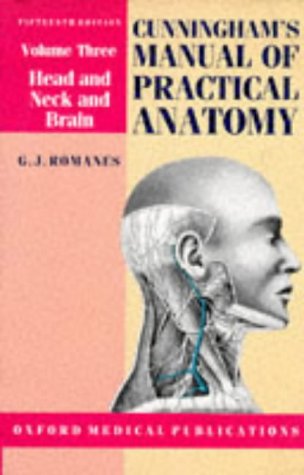
Daniel John Cunningham is best known for the excellent series of dissection manuals, namely Cunningham’s Dissection Manuals. Cunningham’s Manuals of Practical Anatomy provide me the learning tools to know and understand Man’s External and Internal Reality and its Identity as described by Cells, Tissues, Organs,and Organ Systems
Dr. Daniel John Cunningham (1850-1909), Chair of Anatomy, University of Cambridge has provided this Manual of Practical Anatomy to help medical students dissect human cadavers and learn Human Anatomy. Whether humans know and understand Human Anatomy and Physiology or not, they come into existence with full functional knowledge of every constituent cell in the body. The Human Body has Innate Knowledge of its own Structure and Function. I acquired this Knowledge from uneducated individuals who gifted their bodies to promote Medical Education.

 I learned about human body while dissecting the body in a systematic manner. The Manual of Practical Anatomy which guides us through this entire process was published in England. The author Dr. Daniel John Cunningham prepared the Manual while dissecting cadavers of British or Irish citizens. He had never encountered cadavers of Indians. At Kurnool Medical College, Kurnool, Andhra Pradesh, India, where I was a student, the Department of Anatomy obtains dead bodies from  the Government General Hospital and most of the deceased are the poor, illiterate people of that region. None of the deceased had a chance to know this man called Cunningham and Cunningham had no knowledge about the existence of these people who had arrived on our dissection tables. But, as the dissection of the human body proceeded, inch, by inch, we recognized the anatomical parts as described by Cunningham. The manual also lists some anatomical variations and we very often exchanged information between various dissection tables and recognized the variations mentioned. The dissections also involves slicing the organs and studying them, both macroscopically, and microscopically. We did not miss any part of the human body. So what is the Identity of this Human person or Human subject? How does the living Human organism maintain its Identity and Individuality? Apart from the Cultural Traditions of India, several Schools of Religious Thought claim that the Human Individual and its Identity is represented by Human Soul. Where does this soul exist in the human body? What is the location if soul is present in the living person? Does man have a soul?

The Knowledge of Field and The Field of Activity: Kshetra and Kshetra Jnana:                      

In the Indian tradition, the human body is described as Kshetra or the Field of Activity.

The term soul has to be carefully defined if I have to find it by exploring the human body. In the Indian tradition, the human body is described as Kshetra or Field. The individual who knows and enjoys this body, kshetra, or field is described as Purusha. The knowledge of the body is called Kshetra Jnana. The person called Purusha explores his body called kshetra and acquire knowledge called Kshetra Jnana. So, I explored my body to find out if I have a soul and as to where it exists. I can explore my body while I am alive. If I am dead, only a different living person may get the opportunity to explore my dead body, but he may not be able to discover the soul which may have already departed from the body. If soul exists in the cadaver, Cunningham would not have missed it, and we the diligent students dissecting human cadavers would not have missed it. By definition, soul does not exist in dead bodies. It has something to do with life and the characteristics of a living person or organism. With the intellectual insight I had gained by studying human anatomy, I can explore my living body without placing it on a dissection table.    

The Functional Unity of Multicellular Human Organism:    

Adaptive Subordination of Red Blood cells to the requirements of the whole Human Organism. The mature RBCs have no nuclei and they cannot divide. They are exclusively adapted to transport Oxygen and serve the Human Organism. During the life span of Human Organism, the RBCs live for short periods of time and are constantly replaced by new RBCs.

Humans are multicellular organisms. Who or what is the Subject who lives because of the functions of the trillions of cells? Multicellularity found in complex organisms like humans is accompanied by definite capabilities of cells for differentiation. The design of cells has been modified to serve specialized functions of tissues and organs. To achieve proper numerical balance between functionally related cell groups, the death of many cells is necessary for others to reach maturity. This programmed cell death plays an important role during embryological growth and development of human fetus. Waves of genetically driven cell deaths are critical to the proper modeling of organs, and organ systems. Such programmed cell death events are essential if the organism as a whole is to develop its normal final form by which its Identity as an Individual is established. The constituent cells of the organism do not display functional individuality while living as individuals. The cell in a complex organism is not truly an independently functioning unit. The cell exists and functions to achieve Unity of the Organism as a Whole. The one very important part of the environment of a cell is other cells. The Consciousness, the Awareness of individual cells in multicellular organism functions to achieve the Functional Unity of the Whole Organism. Consciousness brings Functional Unity by providing the abilities of recognition, association, and cooperation between all the cells of the multicellular organism. Multicellular organisms are characterized by the ‘Adaptive Subordination’ of the constituent cells to the requirements of the organism as a Whole. For example, mature Red Blood Cells or RBCs have no nuclei and they cannot divide or replicate. They are exclusively adapted to transport Oxygen and serve the whole human organism. The RBCs have short lives as individual cells. The human organism has a life span of its own. During the life time of a human person, RBCs live for short periods of time and are constantly replaced by new RBCs. Thus it may be stated that the purpose of Consciousness at cellular level is to foster Functional Unity of the multicellular organism and establish it as an Individual. If the term ‘Soul’ represents the Identity of this Individual, the Soul is a functional attribute of Consciousness at cellular level.  

The Physiological Basis of Human Soul:
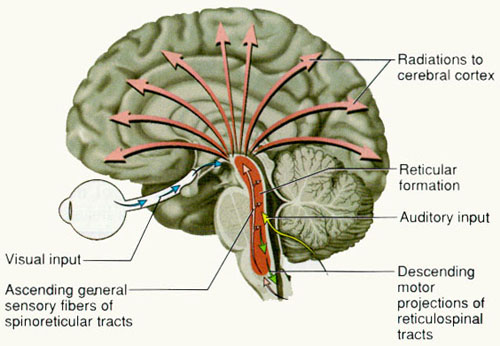
Reticular Formation is shown as a single ‘red’ bar in this figure. It consists of numerous Brain Stem nuclei. It is a network of nerve pathways and nuclei throughout the Brain Stem. A single neuron in this network may have synapses/connections with as many as 25,000 other neurons/nerve cells.
The two components of Consciousness: 1.Capacity for consciousness is an upper Brain-Stem Function and 2. the Content of consciousness is a Function of the Cerebral Cortex. The Reticular Formation which is located in the central Brain Stem helps to coordinate and integrate actions of different parts of the Central Nervous System such as regulation of muscle and reflex activity;central transmission and composition of sensory impulses; respiration; cardiovascular responses; behavioral arousal; and sleep.

I explored my body called Kshetra. The Kshetra Jnana, or Knowledge of my body is as follows:
My soul is  represented by an anatomical structure described as Reticular Formation in the Brain Stem.  Just like my body is composed of trillions of individual cells which collectively represent and establish my physical identity in this world, my soul derives its existence and identity from trillions of these individual units or cells that comprise my body. My soul is actually a composite of trillions of units of consciousness of trillions of individual cells that comprise my human body. The Functional Unity in relation to Consciousness is achieved in the Reticular Formation, the site where Consciousness of the Whole human organism is composed and then is relayed to the Cerebral hemispheres. It is just like a picture or a photo which represents trillions of spots of varying degrees of light intensity or brightness. The term soul has to be defined as the manifestation of “Consciousness”. If there is no “Consciousness”, there is no soul. The existence of soul is witnessed by the presence of “Consciousness”. This biological characteristic described as “Consciousness” exists in every single living cell. If a living organism is made up of one single cell, it has a soul as manifested by its “Consciousness”. For the human person, when identified as an Individual, the anatomical location of his Soul is the Reticular Formation of the Brain Stem which receives input from the rest of the body and shapes the information and sends it to Thalamus and to Cortical Areas of the Brain which provide the awareness, the functional knowledge with which the human organism exists as a living entity. Man enjoys an existence characterized by Peace, Harmony, and Tranquility, as the Soul, or the Life Principle operates most of the vital functions of the complex organism without relaying all the information to the cortical areas where it would be then known to the Man who exists because of these vital functions. Thereby, Man is protected from a huge information overload that is not compatible with mental peace and equilibrium.
LORD KRISHNA IN THE HINDU SCRIPTURE OF BHAGAVAD GITA, Chapter 10, The Opulence of the Absolute, verse 22 claims, “…in living beings I am Consciousness.” Similarly, in Chapter 7, verses 9 and 10, Lord Krishna claims, “I am the life of all that lives”, “I am the Original seed of all existences.”