
University of Michigan and Michigan Medicine must reject the concept of Race and Ethnicity to describe Asian/Indian Identity

The Problem of Selection Bias – Disparities by Race and Ethnicity among adults recruited for a Preclinical Alzheimer’s Disease Trial at Michigan Medicine


Excerpt: As a research participant, Whole Dude investigates the problem of Selection Bias in the Selection Process used by the Research Investigator at University of Michigan. The Selection Bias is inherent in the Selection process for it is gathering information of its human subjects outsides the boundaries of the declared purpose of the Study.
Informed Consent For the Michigan Medicine AHEAD 3-45 Study Screening Procedures

On Tuesday, December 05, 2023, Whole Dude signed the Informed Consent Form for the AHEAD 3-45 Study Screening Procedures. Reference: UM eResearch ID: HUM00178622; NIA & Eisai Inc. / Protocol Number BAN2401-G000-303
I was informed about an Institutional Review Board (IRB) and was instructed to contact the Study Subject Adviser, Advarra IRB to report my concerns or complaints regarding this research study. I contacted Advarra IRB on December 28 to share my concerns about my exclusion from the study due to the problem of Selection Bias. The following is a copy of that communication sent to the Study Subject Adviser:
Dear Study Subject Adviser,
REFERENCE NUMBER: Pro00041484
As a research participant, I am investigating the problem of Selection Bias in the Selection Process used by the Research Investigator at University of Michigan.
I am informed that I am excluded from further participation in this Study and I want to verify the results of the blood and urine samples I provided on December 05, 2023 to ascertain the fact of my exclusion from the Study is consistent with the Research Protocol for which I have given my written consent.
In any case, I shall hold University of Michigan to its primary responsibility to share the lab test results for it has issued me a Medical Registration Number and informed me about this Hospital Appointment and provided me the assurance that the lab results will be shared with the patient.
Whole Dude investigates Whole Bias at Michigan Medicine

University of Michigan and Michigan Medicine must reject the concept of Race and Ethnicity to describe Asian/Indian Identity
Selection bias refers to systematic differences between baseline characteristics of the groups that are compared. The unique strength of randomization is that, if successfully accomplished, it prevents selection bias in allocating interventions to participants. Its success in this respect depends on fulfilling several interrelated processes. A rule for allocating interventions to participants must be specified, based on some chance (random) process. We call this sequence generation. Furthermore, steps must be taken to secure strict implementation of that schedule of random assignments by preventing foreknowledge of the forthcoming allocations. This process if often termed allocation concealment, although could more accurately be described as allocation sequence concealment. Thus, one suitable method for assigning interventions would be to use a simple random (and therefore unpredictable) sequence, and to conceal the upcoming allocations from those involved in enrolment into the trial.
University of Michigan and Michigan Medicine must learn that there is no human race called Indian

Excerpt: The Michigan Medicine AHEAD study is examining the efficacy of a medication aimed at preventing Alzheimer’s Disease in individuals at increased risk of developing the disease. The study has, however, faced criticism regarding its focus on years of schooling and its lack of a research protocol to verify the identity and individuality of the human organism. Critics assert that biological processes like the flow of biological information and protein synthesis are not influenced by education level and that individuality should not be tied to factors such as race and ethnicity. The conceptualization of “life as knowledge in action” and that it is an interplay of cellular function and knowledge must be explored.
The following is a copy of the automated response sent by Advarra Adviser (IRB)
From: Advarra Adviser
Thank you for your email. Advarra offices will be closing at 3pm Friday, December 22nd and will be closed through Monday January 1, 2023 for our Holiday Break. Emails sent during this time will be addressed the following business day, Tuesday, January 2nd.
Please note – questions regarding:
*Compensation
*Scheduling
*Test Results
*Study equipment
*Consent form questions
*Enrolling or withdrawing from a studyShould be discussed directly with the research staff. The research staff contact information can be found on the first page of the consent form.
My reply to the automated response sent by Advarra Adviser (IRB):
Thanks for your email. My concern is about the research protocol for which the research scientist obtained my written consent. I am not asking you about the Consent Form Questions. I am asking you to verify the legitimacy of the Research Project to ask the Questions on the Consent Form. Firstly, the AHEAD Study did not disclose that the Study is constructed on the basis of creating a profile information of each research subject. Secondly, the Questions asked have no scientific validity; the information provided has no relevance to the study of this investigational drug. It seems that there is some other agenda is at work to use this research to gather information about research subjects without any concern for the randomization of the selection of research subjects.
The Selection Bias is inherent in the Selection process for it is gathering information of its human subjects outsides the boundaries of the declared purpose of the Study.
The AHEAD Study is researching the safety and effectiveness of an investigational medication in people who might be at increased risk for developing memory loss associated with Alzheimer’s Disease. The study is looking for participants age 55-80 years old, who have generally normal memory function in daily life, and who are not being treated for memory problems. For individuals age 55-64 years old, an additional risk factor is required, such as a parent or sibling with Alzheimer’s Disease or previous biomarker testing showing increased risk for developing Alzheimer’s Disease. This study sees participants in Ann Arbor. Contact Lauren Mackenzie at spearsl@med.umich.edu or 734-232-2415.
On Tuesday, December 05, 2023, at the Michigan Clinical Research Unit (MCRU) at the Cardiovascular Center (CVC), I was interviewed for participating in the AHEAD Study and I completed the Stage 1A of the Screening process. I am asked to provide information about the most important occupation of my life, my sexual orientation, my race and ethnicity, my place of birth and the country of origin, the total number of years I spent in the School to register my personal identity for participation in the Medical Research Project. The Research Protocol has not identified the basis for discovering the identity of a multicellular human organism. I can answer the questions I am asked. Do I have the ability to communicate my answers to the cells of my own body and reflect that identity in the living functions they perform to keep me alive?
Racial and Ethnic Differences in Plasma Biomarker Eligibility in a Preclinical Alzheimer’s Disease Trial
- December 2023
- Alzheimer’s & dementia: the journal of the Alzheimer’s Association19(S24)
Authors: Doris P. Molina-Henry, Rema Raman, Andy Lou, Oliver Langford and others, University of Southern California
Abstract:
Background: In Alzheimer’s disease (AD) trials, differential screen failure due to cognitive and biomarker requirements may contribute to underrepresentation of racially and ethnically minoritized groups. The AHEAD 3‐45 Study (NCT04468659) is an ongoing program testing lecanemab at the stage of preclinical AD that utilizes plasma biomarker prescreening, acquired before cognitive, clinical, and medical history eligibility assessments, to enrich for participants likely to qualify based on amyloid PET eligibility criteria. Methods: We examined the frequency of plasma amyloid biomarker eligibility among racial and ethnic groups in the AHEAD Study. We assigned participants ages 55‐80 to mutually exclusive groups: Hispanic Black (HB), Hispanic White (HW), Non‐Hispanic Asian (NHA), Non‐Hispanic Black (NHB), and Non‐Hispanic White (NHW). We used univariate logistic regression models to explore group differences in screen failure rates as determined by an algorithm that includes the plasma Aβ 42/40 ratio, age, and APOE status. The algorithm indicates an adequately high probability of elevated brain amyloid (>20 centiloids). We further explored whether APOE ε4 status (carrier vs non‐carrier) contributed to group differences. Results Among 4274 participants undergoing plasma screening, 59 (1.4%) were HB, 622 (14.6%) were HW, 74 (1.73%) were NHA, 329 (7.7%) were NHB, and 3190 (74.6%) were NHW. Screen failure rates were 86% for HB, 76% for HW; 80% for NHA; 77% for NHB, and 62% for NHW. Using NHW participants as a reference group, we observed increased odds of screen failure among all other groups (HB OR = 4.0 95% CI 2.0, 9.1; HW OR = 2.0 95% CI 1.6, 2.4; NHA OR = 2.5 95% CI 1.4, 4.5; NHB OR = 2.1, 95% CI 1.6, 2.7). Observed differences were consistent across APOE ε4 carriers and non‐carriers. Conclusion: Differential rates of amyloid eligibility were observed despite the lack of systematic sample bias due to clinical or cognitive requirements observed in previous studies. Potential explanations for these observations include differences in clinical trial access, incidences of elevated amyloid, needed cutoffs for biomarker assays, and confounding due to comorbidities or other unmeasured covariates. This work is supported by a public‐private partnership between Alzheimer’s Clinical Trial Consortium (U24 AG057437) and Eisai.
Disparities by Race and Ethnicity Among Adults Recruited for a Preclinical Alzheimer Disease Trial
Rema Raman, PhD1; Yakeel T. Quiroz, PhD2,3; Oliver Langford, MS1; et al
Key Points
Question: Are there racial/ethnic differences associated with recruitment sources and reasons for ineligibility among preclinical Alzheimer disease clinical trial participants?
Findings: In this cross-sectional study of screening data for 5945 participants from a preclinical Alzheimer disease trial, Black, Hispanic, and Asian participants were recruited from local efforts compared with White participants who were recruited from more distributed efforts. Adjusted analysis showed that underrepresented racial/ethnic communities were more likely to be ineligible after the first screening visit.
Meaning: These findings suggest that there are racial and ethnic disparities in preclinical AD clinical trial enrollment that will require a comprehensive approach to study design and recruitment strategies to minimize disproportionate enrollment.
Abstract
Importance: Underrepresentation of many racial/ethnic groups in Alzheimer disease (AD) clinical trials limits generalizability of results and hinders opportunities to examine potential effect modification of candidate treatments.
University of Michigan and Michigan Medicine must learn that there is no human race called Indian

The AHEAD Study Research Protocol has not identified the basis for discovering the identity of a multicellular human organism. I can answer the questions I am asked. Do I have the ability to communicate my answers to the cells of my own body and reflect that identity in the living functions they perform to keep me alive?
Whole Dude at Whole Foods rejects the concept of race and ethnicity to identify the Anatomically Modern Man called Homo sapiens sapiens
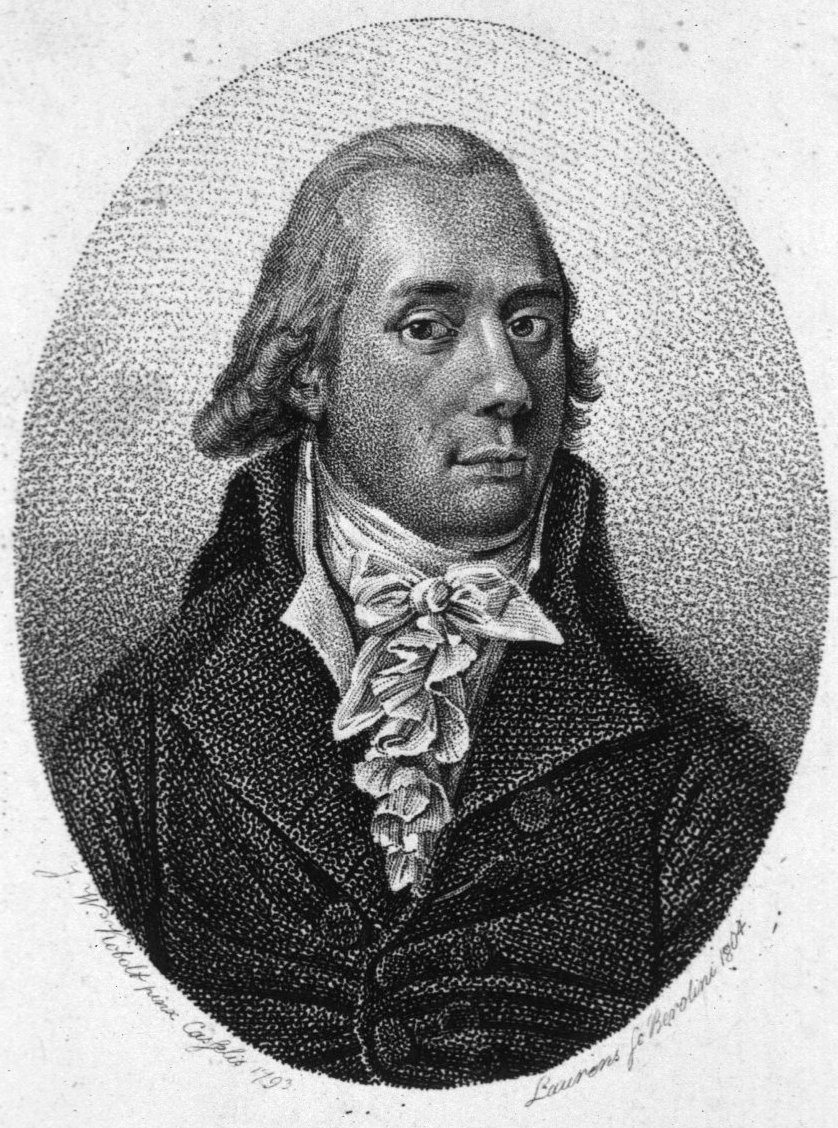

Johann Friedrich Blumenbach is recognized as the Father of Physical Anthropology for his work De Generis Humani Varietate Nativa (1775-76). His research in the measurement of human skulls led him to divide mankind into five great families; Caucasian, Mongolian, Malayan, Ethiopian, and American. Human Species may include varieties that can be grouped into Races by using some common morphological traits.
University of Michigan and Michigan Medicine fail to provide the scientific basis for the racial classification it uses.
Whole Dude at Whole Foods applies the knowledge of Human Anatomy to recognize Human Identity


In 1965, while Whole Dude was a student of Human Anatomy at Kurnool Medical College had the opportunity to know about Dr. J. C. B. Grant (1886-1973), the author of Grant’s Atlas of Anatomy. The 5th Edition of his Atlas was published in 1962 and was available in India in our Medical College Library.
Born in Loanhead (south of Edinburgh) in 1886, Grant studied medicine at the University of Edinburgh Medical School and graduated with an M.B., Ch.B. degree in 1908. While at Edinburgh, he worked under the renowned anatomist Daniel John Cunningham.


Grant became a decorated serviceman of the Royal Army Medical Corps during the First World War before moving to Canada. He established himself as an ‘anatomist extraordinary’ at the University of Toronto, publishing three textbooks that form the basis of Grant’s Anatomy. The textbooks are still used in anatomy classes today, and made unforgettable memories for those who found themselves in his classes nearly a century ago. One of Grant’s many accomplishments was establishing a division of histology within the department.

As a medical student, Whole Dude used Grant’s Atlas of Anatomy, the seminal work of Scottish-born Dr. John Charles Boileau Grant, who would become the chair of Anatomy at the University of Toronto in 1930 and retired in 1965.
John Charles Boileau Grant (1886–1973)

The author of Grant’s Atlas of Anatomy (1943), Grant used to train thousands of medical students around the world. He came to University of Toronto’s Faculty of Medicine from University of Manitoba (and previously Edinburgh), and was Chair of the Department of Anatomy there from 1930 to 1965. Although he is best known for this famous atlas, his research and teaching also included biological anthropology, as evidenced by such work as Anthropometry of the Cree and Saulteaux Indians in Northeastern Manitoba (Archaeological Survey of Canada 1929). The human skeletal collection he formed, the “J.C.B. Grant Collection,” is still a core collection for human osteology in the Department of Anthropology at University of Toronto. He is also remembered in the Grant’s Museum at the Medical Sciences Building at the University of Toronto. This museum, with its displays of anatomical specimens, many of which were dissected by Grant himself, continues to be used in an active learning environment by more than 1000 students each year.
Students continue to use Grant’s textbooks today, and for the more artistic anatomist there’s even a Grant’s Anatomy Coloring Book, published in 2018.

At the University of Toronto, Dr.McMurrich, Chair of Anatomy was succeeded as chairman in 1930 by Dr. John Charles Boileau Grant. Dr. Grant wrote three text books, of which “An Atlas of Anatomy” (published in 1943) rapidly gained international prominence and is still, one of the most widely used anatomical atlases in the world. It is now known as “Grant’s Atlas of Anatomy” and is in its tenth edition. The atlas was based on a series of elegant dissections done either by Grant or by others under his supervision. Many of these dissections are currently housed in Grant’s Museum at the University of Toronto.
The Whole Dude-Grant Connection is about knowing the man, the building blocks and the structural units and organization of the human body. To defend the human existence, the Whole Dude-Grant Connection lays the emphasis on knowing the person who is at risk apart from knowing the agent posing the risk.
The Identity of Multicellular Human Organism:

Daniel John Cunningham was born on 15 April 1850 in Scotland. After his initial schooling at his home town, Crieff, he took up the study of medicine at the University of Edinburgh and passed with honours. He is best known for the excellent series of dissection manuals, namely Cunningham’s Dissection Manuals. Cunningham’s Manual of Practical Anatomy provides Whole Dude the learning tools to know and understand Man’s External and Internal Reality and its Identity as described by Cells, Tissues, Organs, and Organ Systems.


Whole Dude learned the truths about the living human body and about Life while dissecting the dead human bodies in a systematic manner. The Manual of Practical Anatomy which guides us through this entire process was published in England. The author Dr. Daniel John Cunningham prepared the Manual while dissecting cadavers of British or Irish citizens. He had never encountered cadavers of Indian citizens. At Kurnool Medical College, Kurnool, Andhra Pradesh, India, where Whole Dude was a student, the Department of Anatomy obtains dead bodies from Government General Hospital Kurnool and most of the deceased are the poor, and illiterate people of that region. None of the deceased had the chance to know this man called Cunningham and Cunningham had no knowledge about the existence of these people who arrive on our dissection tables. But, as the dissection of the human body proceeds, inch, by inch, we recognize the anatomical parts as described by Cunningham. The manual also lists some anatomical variations and we very often exchange information between various dissection tables and recognize the variations mentioned. The dissections also involve slicing the organs and studying them, both macroscopically, and microscopically. We did not miss any part of the human body.

So what is the Identity of this Human person or Human subject? How does the living Human organism maintain its Identity and Individuality? Apart from the Cultural Traditions of India, several Schools of Religious Thought claim that the Human Individual and its Identity is represented by Human Soul. Where does this soul exist in the human body? What is the location if the soul is present in the living person? Does man have a soul? How does the human organism acquires Knowledge about its own structures and the functions they perform?
How does the multicellular human organism recognizes its own Identity and Individuality?

A brief glance at the face is enough for most people to identify one another. However, man does not exist with the same identity during the course of his life. The word identity describes the condition or fact of being a specific person. Identification is the process by which a person can be identified in an accurate and consistent manner. The morphological or the external appearance of a person is subject to constant changes and it differs in a significant manner during the various stages of life such as infancy, boyhood, adulthood, and old age. The term individuality describes the sum of the characteristics or qualities that set one person apart from others. The condition of being individual, or different from others establishes the indivisibility of man. Man is unique, original, one kind of person who has not existed before and would not also exist in future even when he shares the same identical genome. Two identical twins could be correctly identified as two different individuals. I had proposed the Law of Individuality and Creation which claims that man exists as Individual and has no choice in this conditioned nature of subjective physical existence in the world. Man can only exist as Individual with Individuality.

The Identification Technology:

Biometrics is that branch of Biology which deals with its data statistically and by mathematical analysis. Using Fingerprints is the oldest method of Identification using biometric information. People have tiny ridges of skin on their fingers. These ridges form through a combination of genetic and environmental factors. The genetic makeup, the position of the fetus in the womb, and the composition and density of surrounding amniotic fluid play a role in how every individual ridge on the skin surface of finger will form. Fingerprints are a unique marker for a person, even an identical twin. Fingerprint analysis can define the differences between two fingerprint impressions.

The Fingerprint is electronically read. The corrugated ridges of the skin are non-continuous and form a pattern that has distinguishing features or minutiae. Two varieties of Fingerprint scanning technology are currently used; the optical Fingerprint scanners and the Capacitance Fingerprint scanner that uses a computerized analysis.
Iris Recognition Technology:

Iris Scanners use pattern recognition techniques based on images of the irides(Irises) of an individual’s eyes.

No two irides being the same, even in identical twins, individuals could be identified with accuracy and consistency.
DNA Analysis:

A small sample of DNA is amplified by using Polymerase Chain Reaction or PCR. In a method described as Short Tandem Repeat Analysis, it is examined to find how often base pairs repeat in specific locations or loci on a given DNA strand. These can be dinucleotide, trinucleotide, tetranucleotide, or pentanucleotide repeats; that is repetition of 2, 3, 4, or 5 base pairs. Very often, the investigator looks for tetranucleotide or pentanucleotide repeats in the DNA sample.

The likelihood that any two individuals (except identical twins) will have the same 13-loci DNA profile can be as high as 1 in 1 billion or greater.
Biometric Facial Recognition Technology:

Every face has numerous distinguishable landmarks, the different peaks and valleys that make up facial features. These landmarks are known as nodal points. Each human face has approximately 80 nodal points.

Distance between the eyes, width of the nose, depth of the eye sockets, the shape of the cheekbones, the length of the jawline and other features are used as nodal points. These nodal points are measured creating a numerical code called a face print, representing the face in the database and comparison is made between images of face. 2D or 3D image of a person’s face uses distinct features of the face where rigid tissue and bone is most apparent, such as the curves of the eye socket, nose, and chin to identify the subject.

Unique templates are created from measurements between key points on the face and these measurements provide identification of the individual.
Skin Biometrics – Skin Surface Texture Analysis:


The Surface Texture Analysis algorithm operates on the top percentage of results as determined by the Local feature analysis. This method creates a Skin Print and performs either a 1:1 or 1:N match for verification or identification. It can identify the differences between identical twins.
Identity, Individuality, and Consciousness:

Man describes his identity in terms of his personal name, age, gender, race, ethnicity, place of origin, language, religion, political, occupational, or social affiliation. In reality, the man is an association of trillions of individual cells.

The human organism is a conscious being and the function called consciousness achieves functional unity of all these individual cells and works for the benefit of the individual who always maintains his individuality.

This is possible because individual cells have the ability to recognize the presence of other living cells in their environment and display functional subordination to serve the purpose of the whole organism.
“All of our experience indicates that life can manifest itself only in a concrete form, and that it is bound to certain substantial loci. These loci are cells and cell formations. But we are far from seeking the last and highest level of understanding in the morphology of these loci of life. Anatomy does not exclude physiology, but physiology certainly presupposes anatomy. The phenomena that the physiologist investigates occur in special organs with quite characteristic anatomical arrangements; the various morphological parts disclosed by the anatomist are the bearers of properties or, if you will, of forces probed by the physiologist; when the physiologist has established a law, whether through physical or chemical investigation, the anatomist can still proudly state: This is the structure in which the law becomes manifest.” – Rudolf Virchow


 Whole Dude - Whole Concept