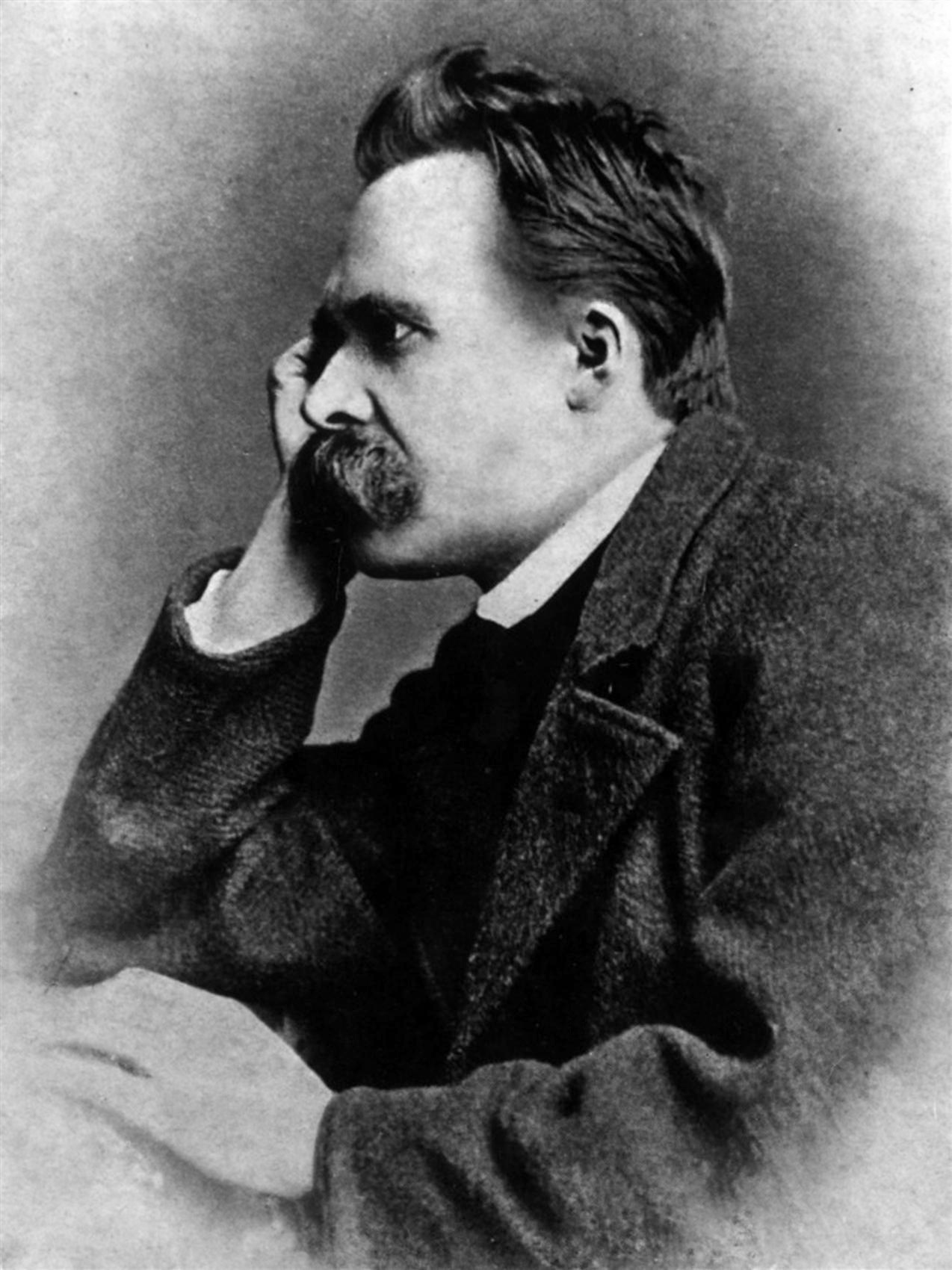
Nietzsche is considered to be the most influential philosophers who ever lived. He is considered to be German language’s most brilliant prose writer. In the words of Sigmund Freud, “Nietzsche had a more penetrating understanding of himself than any man who ever lived or was ever likely to live.” Apart from his critiques of traditional religion, philosophy, and morality, Nietzsche shared a concept called ‘Perspectivism’.

The word ‘perspective’ is stated as the relationship or proportion of the parts of a ‘Whole’, regarded from a particular standpoint or point in time. It describes a specific point of view in understanding or judging things or events, especially one that shows them in their true relationship to one another. Perspective requires the ability to see things in a true relationship. John Godfrey Saxe (1816-1887) provides a perspective in his famous poem “Indian Legend.”

John Godfrey Saxe describes the problem of knowing the reality using the human powers of observation and compares it to the conclusions arrived by the Six Blind Men who had examined a huge Elephant:
“It was six men of Indostan
To learning much inclined,
Who went to see the Elephant
(Though all of them were blind).
That each by observation
Might satisfy his mind.”

Perspectivism is a concept which holds that knowledge is always perspectival, or knowledge demands perception of a range of information, facts, or experience. Nietzsche claims that there are no immaculate perceptions. Nietzsche will not be able to make a similar claim about the impossibility of certain kinds of perception.

I suggest that in the “Immaculate Perception” of the Whole Designer, man exists not because of his perception of reality but with the perception of illusion which protects man from knowing the reality. In Nietzsche’s opinion, knowledge from no point of view is as incoherent a notion as seeing from no particular vantage point.

Nietzsche’s Perspectivism denies the possibility of an all-inclusive perspective which could contain all others. Particularly, there can be no all-inclusive perspective on reality that could make reality available as it is in itself. Nietzsche further explains his Perspectivism and concludes that the concept of such an all-inclusive perspective is as incoherent as the concept of seeing an object from every possible vantage point simultaneously. Man cannot avoid the issue of the problems of perspective and man has to reconcile with the problem caused by the absence of an all-inclusive perspective about the nature of truth and reality.

I approach the problem of human perspective from a different direction. Firstly, man’s ability called perception is always preceded by the fact of man’s existence. There is no existence without the influence called Grand Illusion that blocks aspects of man’s perception of reality. The fundamental basis of human existence on the surface of fast spinning Earth is conditioned by the experience called Grand Illusion which defends existence from the danger of reality and the consequences of experiencing the reality of Earth and the universe in which man exists.
In my opinion, it will be possible to formulate an all-inclusive perspective on illusion even while human beings have a problem to share an all-inclusive perspective on truth and reality.

I am using the term “Whole Perspectivism” to describe an all-inclusive perspective on Whole Existence that demands both Illusion and Reality. In the final analysis, God remains aloof, distant, disinterested, disengaged, separate, and even alienated from His own artistic work that combines illusion and reality which manifests as Creation.

 Whole Dude - Whole Concept
Leave a comment