
The Theory of Evolution has no relevance to the ultimate identity of each individual member of a given species. This identity is dictated by the interplay between the various components of each individual cell and its interactions with other cells. With the same genomes or different genomes, the living entities can only exist as individuals and they have no other choice. The evolutionary connections are not relevant to this identity. To understand the phenomenon of biodiversity, we will be forced to look at each individual member of each given species.
Creation and Conservation:
https://plato.stanford.edu/entries/creation-conservation/
First published Thu Nov 9, 2017; substantive revision Tue Mar 8, 2022
In the philosophy of religion, creation is the action by which God brings an object into existence, while conservation is the action by which God maintains the existence of an object over time. The major monotheisms unambiguously affirm that God both created the world and conserves it. It is less clear, however, whether creation and conservation are to be conceived as distinct kinds of actions.
On the predominant traditional view, conservation is continuous creation. Adherents of this view typically say with Francisco Suárez that God’s creation and conservation of things are “only conceptually distinct” (Suárez 1597, 120). Jonathan Edwards, for example, says, “God’s upholding created substance, or causing its existence in each successive moment, is altogether equivalent to an immediate production out of nothing, at each moment…. So that this effect differs not at all from the first creation, but only circumstantially…” (Edwards 1758, 402). In other words, there is no real difference between the act of creation and the act of conservation, though different words may be used for them. Descartes, Malebranche, Leibniz, and Berkeley all express similar views. More recently, Philip Quinn likewise treats both God’s creating and God’s conserving as species of bringing about a thing’s existence. We call the act ‘creation’ if it occurs at the first time at which the creature exists, and we call it ‘conservation’ if it occurs at a later time, but the action is the same (e.g., Quinn 1988, 54).
Creation – Creationism – Whole Creationism:
Creation is defined as to make or bring into existence an object, something new, original, one of its kind, unique, and distinctive. and to produce an object through imaginative skill or inspiration. As per the Theory of Creation, the natural world in which we exist is the physical manifestation of an act of Creation.
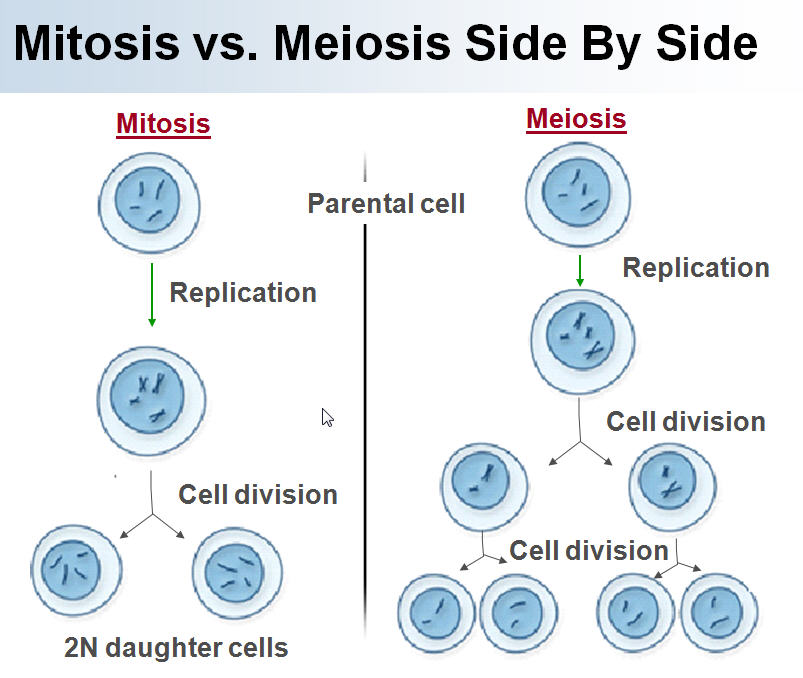
I coined the phrase Whole Creationism to avoid making the distinction between the original act of creating life and its sustenance over a period of time. Both Creation and Conservation of Life deploy the same creative mechanisms such as Meiosis and Photosynthesis in the creation and maintenance of the energy dependent Living Systems.

The Law of Individuality:

I propose the Law of Individuality which governs all the living entities. Either with the same and identical genome or with different genomes, all living organisms have no choice other than that of living as ‘Individuals’. The genes and the genetic codes function in accordance with the Law of Individuality. While the genetic structural organization is the same, there is functional variability due to factors over which the organism has no control. I describe Individuality as a Trade Mark. It is the characteristic of a biological entity. Genes and the genetic codes are the tools that an organism uses to express its Individuality. Each organism assembles its own kind of protein molecules to define its identity and to defend its existence in the natural world.

The concept of Biological Individual and Individuality has to be always defined in the context of the Individual’s relationship with its own Body, Social Group, Society, Time, and the Environment in which the Individual finds the reality of its own Existence.

What is Identity and What is Individuality?

A brief glance at the face is enough for most people to identify one another. However, man does not exist with the same identity during the course of his life. The word identity describes the condition or fact of being a specific person. Identification is the process by which a person can be identified in an accurate and consistent manner. The morphological or the external appearance of a person is subject to constant changes and it differs in a significant manner during the various stages of life such as infancy, boyhood, adulthood, and old age.

The term individuality describes the sum of the characteristics or qualities that set one person apart from others. The condition of being individual, or different from others establishes the indivisibility of man. Man is unique, original, one kind of person who has not existed before and would not also exist in future even when he shares the same identical genome. Two identical twins could be correctly identified as two different individuals.

I propose the Law of Individuality and Creation which claims that man exists as Individual and has no choice over his conditioned nature of subjective physical existence in the world. Man can only exist as Individual with Individuality.
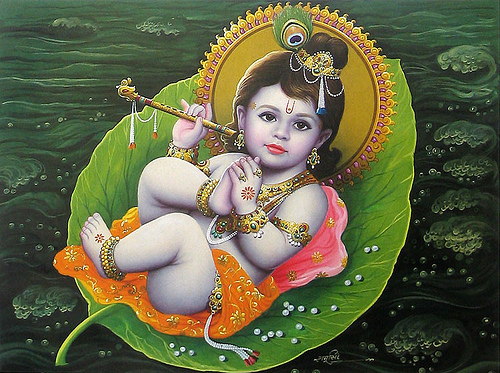
Man describes his identity in terms of his personal name, age, gender, race, ethnicity, place of origin, language, religion, political, occupational, or social affiliation. In reality, the man is an association of trillions of individual cells and each cell lives as an individual with individuality.

People all over the world directly experience the natural phenomenon of Creation. Creation is not merely a past event. Creation is an observable phenomenon of our present times. Creation is a phenomenon that would repeat and perpetuate itself as long as planet Earth exists and the Cosmic Balance, the Cosmic Harmony, and the Cosmic Connection prevails. The reality of Creation gets revealed by its own nature. Creation is a self-evident Truth.

 Whole Dude - Whole Concept